
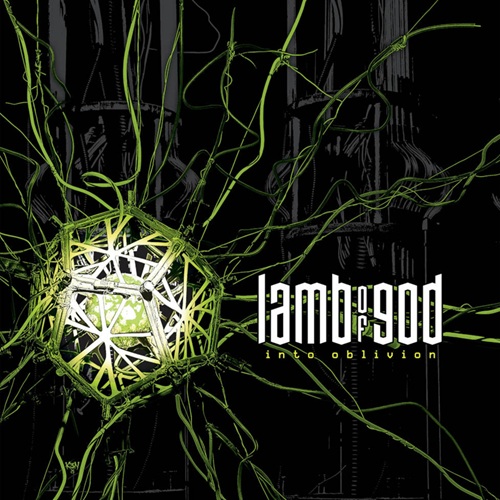
(Andy Synn makes a rare exception to our rule about mainly covering underground bands to share his thoughts on some of the Metal scene’s most infamous sons)
Longevity, as the book I’m currently reading would tell you, can be both a blessing and a curse.
And while Lamb of God have certainly been blessed with a long and successful career, they’ve also been cursed – even if it’s the sort of curse I think most of us would be happy to accept – with having to constantly try and live up to the very high standard set in their early years.
Let’s face it, that initial trilogy – New American Gospel, As The Palaces Burn, and Ashes of the Wake – continues to cast a very long shadow, and while there have certainly been moments of brightness here and there (both Wrath and Resolution in particular have some underrated bangers on them) their work since then has, in hindsight, been more about consolidating their position at the top of the card than trying to re-set the bar.
But that was then, and this is now, and – despite the old truism that you shouldn’t judge a book (or album) by its cover – the decision to switch to a new logo for the first time in 20+ years suggests that there might just be something more going on this time than simply going through the motions or fulfilling contractual obligations.
Is it a rebirth? No, I wouldn’t go quite that far. But a renewal? Now that’s where things get interesting…
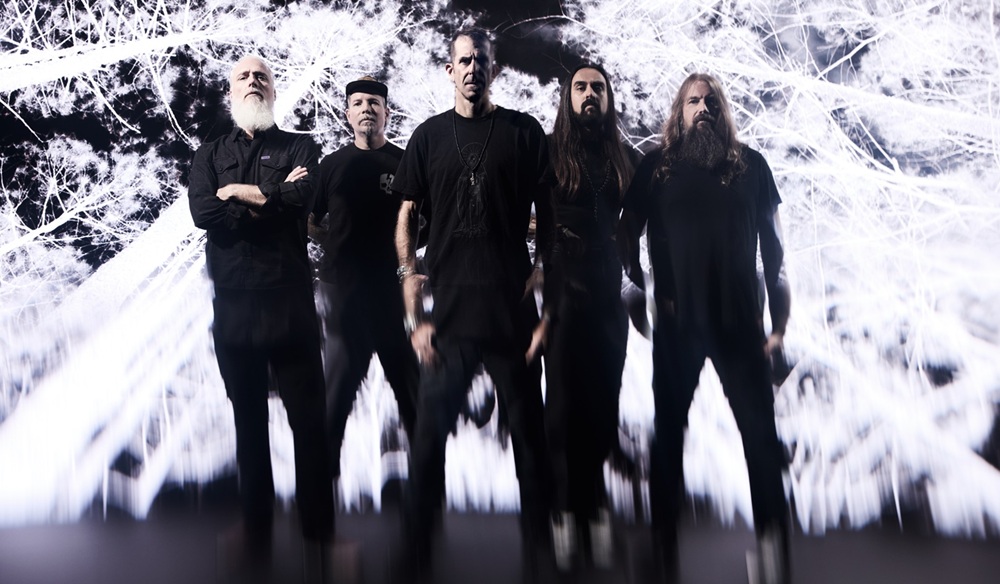
Of course, this isn’t the first time the band have tried to push the “soft reboot” button, by any means but – even putting aside the inescapable effects of “recency bias” – it’s definitely the most successful.
That’s not to say that there weren’t some damn good tracks on their 2020 self-titled (both “New Colossal Hate” and “Resurrection Man” still hit hard) or its fun, if formulaic, follow-up (“Gomorrah” being the major diamond in the rough), it’s just that the whole quintet – 4 of whom, lest we forget, have been playing together for over 30 years now – feel noticeably more engaged and energised here than they have in a long time.
Blythe in particular shows off more character and charisma than most vocalists half his age, eschewing showy vocal gymnastics – though his range, snarling, growling, crooning and commanding the mic like the seasoned vet he is, remains extremely impressive – in favour of intense dramatics and subtle dynamics, while “new” drummer Art Cruz, now on his third album with the band, puts in what is easily his most impressive performance yet behind the kit (just listen to the tough-as-nails opening title-track for evidence of that).
Would it be cliché to say that Into Oblivion is the band’s best, and most consistent, work since Ashes…?
Maybe… but there are definitely times, especially during stand-outs such as the full-throttle barn-burner that is “Parasocial Christ”, the dystopian devastation of “The Killing Floor” (which, sadly, is not a cover of the modern-day Beyond Grace classic of the same name), or the militant chop and chatter of “Blunt Force Blues” – all of which find Mark Morton and Willie Adler cranking out some of the tougest, tastiest riffs we’ve heard from them in some time – where it would be remarkably easy to convince yourself of that, if you were of a mind to do so.
What really stood out to me, however – not just on first listen, but on repeated spins since then – was not just this sense that the band have “gotten their groove back” (and, make no mistake, there are some truly monstrous grooves here, especially when bassist John Campbell, who often feels a little left out when people talk about the band, is given room to really let the low-end rattle the listener’s bones), but that they’ve actually found new ways to make their sound interesting once again… not just to the listener, but to themselves as well.
Take “Sepsis”, for example – which finds Blythe in full-on “Punk Preacher” mode, scowling and howling and issuing apocalyptic proclamations from his proverbial pulpit while the music coils and undulates and writhes beneath him – or the predatory prowl of “A Thousand Years”, which don’t so much rewrite the formula as twist it into much more sinister shapes, while the likes of “St. Catherine’s Wheel” and “Devise / Destroy”, add an extra dose of Hardcore heaviness and thrashy technicality (plus, in the case of the former, a soupcon of proggy nuance) into the mix, proving that it’s still possible for old war dogs like these to learn the occasional new trick.
Sure, I’m not saying it’s a perfect album by any means – I’d be more than happy to trade either of “El Vacío” or “Bully” (neither of which is a truly bad song by any means, even if the latter is a bit too basic for its own good), for example, for the tightly-wound tension of bonus-track “Wire” – but it’s an album brimming with such vim and vigour (and venom) that its hard to believe it’s the product of a band now 10 records deep into their career!
So maybe… just maybe… that new logo isn’t just for show. Maybe it really does signify the beginning of a whole new era for the band. And I, for one, am absolutely here for it.
I love Lamb of God. They are arguably my favorite band. But I’ve been mostly MIA from their discography post-Wrath. Funnily enough, I had Metal Meltdown’s review video paused when this post came on the feed, and while I have not finished it, he seems to share the general sentiments you’ve noted here. Looking forward to checking this out!
(I still think they should’ve kept the Papyrus font logo.)
El Vacio is about Dave Brockie, so that song gets points from me.
Also, seconding they should’ve kept the old logo.