
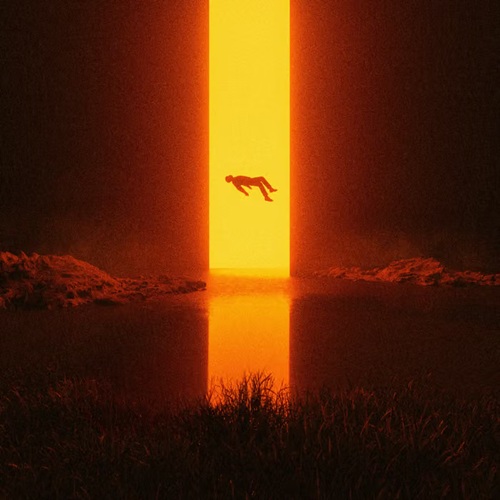
(Andy Synn attempts to separate fact from fiction when it comes to the new album from Gaerea)
A lot of people are probably telling you a lot of different things about Gaerea at the moment, running the gamut from pre-emptively calling Loss a total failure for “abandoning their Black Metal roots” to claiming that it’s a contender for “Album of the Year” that “redefines the Post-Black Metal landscape”.
But while that’s not, in and of itself, a bad thing – diversity of opinion and a variety of viewpoints can lead to rich and rewarding discussions – the main problem is that a lot of these opinions were set in stone before the album was even released, and now everyone is just digging in and doubling down in their ideological trenches, lobbing accusations and recriminations back and forth so fast that any sense of nuance in the conversation has long been… well… lost.
So let me clarify a few things right up front.
One, despite what some of the self-proclaimed “defenders of the faith” have been saying, Gaerea have not suddenly “turned into Sleep Token” (even if some of the more overtly saccharine, pop-friendly moments might occasionally hint at the comparison).
And, two, Loss is absolutely not the “new musical paradigm” that some of the more hyperbolic pre-release promotional materials would have you believe (and the suggestion that they’ve somehow embraced “the openness of Post Rock” by including a few quiet parts is almost insulting to the audience’s intelligence).
So what is it?
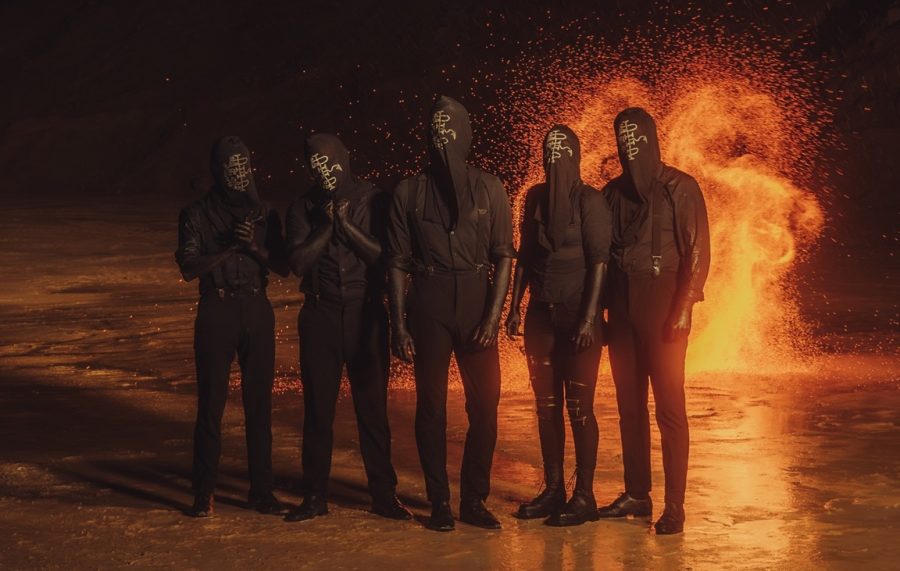
Well it is, essentially, Gaerea‘s big swing at a more “accessible” (by Metal standards, anyway) and polished sound, more suited to their status on a larger label (this being their first release on Century Media), that mostly trades in their remaining “Post Black” sensibilities (while still retaining just enough shimmering melody to ensure that Loss doesn’t sound like the product of an entirely different band) for a more bombastic, albeit somewhat melodramatic, “Blackened Metalcore” sound most strongly reminiscent of mid-00s era Bleeding Through.
Opener “Luminary” in particular is an almost too-perfect example of these sonic similarities, with the song’s simple-but-effective rhythmic verse riffs building, quickly and concisely, to a catchy clean (or clean-ish) sung chorus, followed by some punchy pneumatic chuggery, a sombre atmsopheric interlude, another, even bigger, chorus refrain, and a quick, climactic burst of blastbeats, all vibing closely with the California Metalcore crew’s more mainstream-friendly output.
That’s not, however, necessarily a bad thing (for the most part, anyway) because, while there’s no question that Loss has much wider potential appeal than any of the band’s previous works, the band are still pretty damn good at what they do, with the blastier, catchier, and just generally more intense strains of “Submerged” and “Hellbound”, and the glimmering glory of “Uncontrolled” (which features some sublimely melodic moments that recall the likes of Agrypnie or Downfall of Gaia) in particular managing to successfully marry this more crowd-pleasing style to a decent helping of heart-wrenching (if slightly histrionic) substance.
Which isn’t to say, however, that Loss doesn’t have its issues (even if we deftly sidestep the thorny issue of whether the band has “sold out” or not, which is a whole other topic of discussion I simply don’t have the time, or the energy, to get into here).
After all, this sonic and stylistic shift, while perhaps not as big a leap from their previous work as some would have you think, has definitely flattened some of the existing subtleties of the band’s sound, with the result that things do start to feel a tad familiar after a while (especially during the last third or so, where certain tracks start to feel like lesser re-treads of earlier ones) and the constant pushing of the same emotional buttons, again and again, eventually begins to deaden their overall impact.
In the end, then, it’s easy to tell just why some listeners have loved this album, and others have hated it… but the truth (or The Truth) of the matter is that isn’t a total triumph, or a total failure (in fact I’d be willing to wager it ends up being Gaerea‘s most commercially, if not artistically, successfull record of their career), but will still doubtless lead to bigger and better things for the band in the future.
Of course, if the fact that Loss isn’t a Black Metal album, and Gaerea aren’t really a Black Metal band, any more (some would say they haven’t been for a while, but I don’t want to open that can of worms either) is a deal-breaker then there’s obviously nothing I can say here that will change your mind, but it’d be a mistake not to at least give the group a chance to win you over on their own terms, rather than judging them for what they’re not.
Finally, a balanced assessment of this album. This album didn’t hit with me on the first pass, but as I keep going back to it, I keep finding more to like. This album doesn’t come close to “Mirage”, but sometimes you just want something easily accessible in your ears to make the day fly by.
Thanks for the great work and honesty that you bring to the table. It’s what keeps me coming back.
Thats how a review should be written!
The best reviewers in the underground rhizomic metalverse are here at NCS, in my view.
I was guilty of judging this CD by the advance single, thanks for snapping me out of taking such a simplistic, trope-ridden approach. It is sad however that some of the emotion can be heard as a little formulaic. Genuine emotional intensity has been one of Gaerea’s strengths. I hope they don’t go the way of Soen, a band that has really moved me with their sentiment, lyrics and heartfelt calls to action… but whose emotionality now seems to have become a bit formulaic.
I liked what they’ve released before, and I always thought that Coma was exactly at the right spot in terms of balancing the black metal origins with some post metal sensibilities. I do not hate this album, but I’d rather have it with one less spoon of sugar.
Oh well, I didn’t like Shining by Swallow The Sun for the same reasons when it came out, but it grew on me. Maybe this one will, too.