
(Andy Synn says to expect the unexpected when it comes to the new album from Krallice, out Friday)
Love them or hate them (and, of a certainty, there’s plenty of folks in both camps) Krallice have long been one of the most reliably progressive, artistically provocative, bands in Metal.
Of course, while their avant-garde ambitions and experimental excursions haven’t always paid off – don’t get me wrong, I’m definitely a fan, but I’m also willing to admit that their discography isn’t perfect, although that’s probably to be expected from a group continually trying to challenge themselves and take chances with their sound – it’s to their credit that every release, from Dimensional Bleedthrough toYgg Huur to Crystalline Exhaustion, has presented a slightly different face (or, at least, a subtly different facet) of the band.
And, in that sense, Scour Order is no different.
What does make album #14 (or #15, depending on how you classify 2017’s Loüm) a little different, however – at least in the context of the band’s most recent releases – is how strangely and unexpectedly straighforward it is.
Now, to be clear, that’s always going to be a pretty relative term when talking about Krallice, as tracks like unusually melodic opener “Agonal Shining” and the brooding discordance of “Unceasing Path” still coil and cavort with a characteristic blend of tumultuous technicality and wild, weaving unpredictability, but the overall vibe of Scour Order is one that’s more urgent, more spontaneous, and… dare I say… more listener-friendly than we’ve heard from them in quite some time.
Whether that’s because this album is the band’s first to be recorded at the new Menegroth Studios, or simply due to them reaching the end of their more synth-based creative cycle with 2024’s Inorganic Rites – it’s worth noting that drummer Lev Weinstein shared, in an interview with this very site that, just as Years Past Matter represented the culmination of their early years, Inorganic Rites ultimately serves as the closing of another chaper in the band’s career – Scour Order really does feel like the product of a band “returning to their roots” (and not just because they’ve all returned to their traditional instruments this time around).
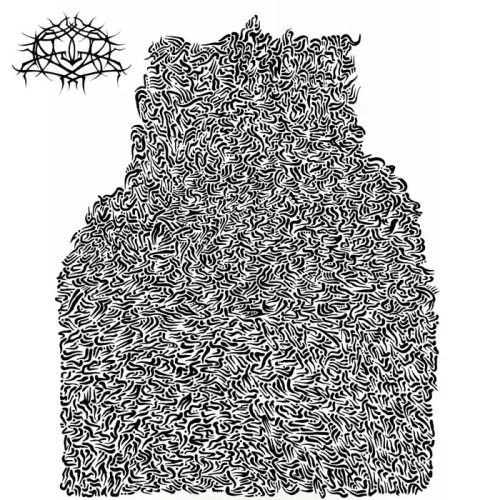
Not only that, but this is – arguably – the most traditionally (although I use that word pretty loosely) “Black Metal” album that Krallice have put out in quite some time, right down to Mick Barr’s monochromatic artwork and the sheer plethora of seething tremolo runs and surging snare patterns that propel the likes of “Grievous Corrector” and “Living Useless Ritual” (two of the record’s most tightly-wound and instantly impactful compositions).
And while the band still employ their signature, seemingly chaotic, compositional style – though there is undoubtedly a carefully calculated order beneath it all – the songs here definitely feel tighter and tauter, spending less time in meditative meandering (although the occasional moment of spaced-out introspection still helps provide a necessary dynamic balance) and more time pushing relentltlessly forwards at such a frantic, frenetic pace that tracks like the pulse-raising, riff-driven “Kill the Guardian” (an early highlight, no doubt) and the caustic cascade of “Indecipherable Divinities” (whose melding of the metallic and synthetic puts me in mind of none other than early Oranssi Pazuzu) positively fly by despite their length.
The one exception to this, perhaps, is “Her Green Arms” which – after having listened to the album multiple times over – does seem to drag a little, for whatever reason, when compared to the undeniable sense of urgency which empowers the rest of the album (a feeling which is only exacerbated by the titanic, thirteen-minute title-track, which successfully maintains its forward momentum through multiple movements even though it’s the longest song on the album by some margin).
That being said, this one minor blemish (if it even is one, as I’m sure some will disagree with my assessment) does nothing to tarnish the overall quality of the album, which – even taking into account recency bias – seems destined to be ranked amongst the band’s best works.