

(Andy Synn, ahem, extols the virtues of the band’s new album, out next week)
Let’s address the elephant in the room immediately, shall we?
Yes, Extol‘s long-awaited sixth album – coming some thirteen years after their seminal (and almost equally long gestating) self-titled record – deserves much, much better artwork, as it’s become painfully clear that Hugh Syme (famous for his work with Rush, Dream Theatre, and even Extol themselves) has been phoning it in for quite some time now.
Thankfully, however, this is one of those times when it’s worth remembering that you can’t always judge a book (or an album) by its cover, as there’s nothing half-assed about the band’s own work on Aura of Decay.
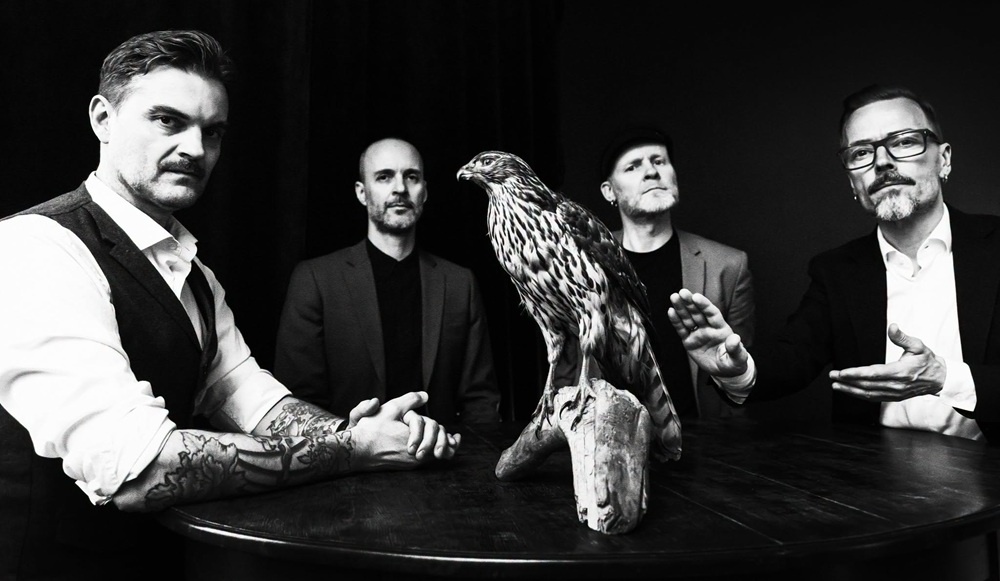
Despite the decade-plus gap between records five and six, there hasn’t been a drastic shift in style/direction for the band this time around (and, let’s be honest, the band’s history makes it very clear that Extol have never been afraid of switching things up, sometimes quite dramatically, from album to album), as Aura of Decay picks up pretty much right where the group left off back in 2013, so if you liked/loved their self-titled then you should feel pretty similarly about this one.
That being said, thinking of it as a simple carbon-copy would be a mistake, especially considering Aura of Decay marks the return of guitarist Christer Espevoll (also of the sadly-defunct Benea Reach, another band I’d love to see make a comeback) to the fold, rejoining both his literal and metaphorical brothers in the studio for the first time since 2003.
Sure, the basic building blocks remain largely the same – the, ahem, impressive synergy of Børud and Espevoll’s tightly-wound guitars combining taut, technical rhythms, agile, proggy arpeggios, and lambent, shining leads over David Husvik’s creative, complex drum work (which remains a highlight throughout) – but some subtle differences and important distinctions quickly become apparent.
There’s a greater emphasis on the more melodic side of things during songs such as “The One and the Many”, “Disintegrate”, and “Phantom Disarray”, for example, which more obviously recalls the band’s Blueprint Dives era – especially when the crooning cleans seize the spotlight – while the more prominent bass presence (“Dimness of Lingering Gloom”, etc) feels like a direct consequence of Espevoll’s reintegration into the group, and the whole album (even taking into account the occasional track that doesn’t quite hit the mark) just feels that little bit moodier and more immersive this time around.
Even so, it’s reassuring to know that, despite the passage of time, the band haven’t lost touch with their heavier side – “Vile Path” is one of the most intense tracks they’ve penned since the Undeceived days, while “Merciless Hunger” features some of the most vicious and visceral vocalisations we’ve heard from Peter Espevoll in at least 20 years – with the second half in particular featuring some of the chunkiest, crunchiest riffs on the entire album, any number of which are sure to please anyone who enjoys their Prog Metal with a bit more emphasis on the “Metal” side of the equation.
And while I’d say that overall Aura of Decay doesn’t feature anything quite as instantly hooky and anthemic as the likes of “Open the Gates” and “A Gift Beyond Human Reach” (though “The One and the Many” gives them a run for their money), it nevertheless possesses more than enough highlights – including the back-to-back brilliance of the aforementioned “Merciless Hunger” and the hammering “Vile Path”, the brooding chug ‘n’ churn of “Shield and Alibi”, and the shudder and shimmer of captivating closer “End of Times” (easily one of the best tracks from this particular crop) – to make the band’s sixth album more than worth the thirteen year wait.
Just, maybe, try not to keep us waiting quite so long for the next one, eh boys?
The singles are tasty, all of them.