
(written by Islander)
Two days from now Snow Wolf Records and Fiadh Productions will co-release a special collaborative split album of black metal inspired by Maltese lore, focusing on the renowned Great Siege of Malta. One of the bands, Mnajdra, is a U.S. band but with a long-standing interest in the history and culture of the island of Malta (indeed, the band is named for a megalithic temple complex found on Malta). The other, Saħħar, is a Maltese band with an extensive discography dating back to its 2007 full-length debut.
In their musical re-telling of the Great Siege, Mnajdra represents the Turkish invaders and Saħħar represents the Knights of Malta. The tracks of the two bands alternate across the course of the album, but the record also includes one song in which the two bands collaborate.
To help spread the word, we’re sharing a full stream of the album today, along with some thoughts about the music, but before we get to that we ought to provide a brief sketch of the Great Siege of Malta for people who aren’t as steeped in that history as Mnajdra and Saħħar.
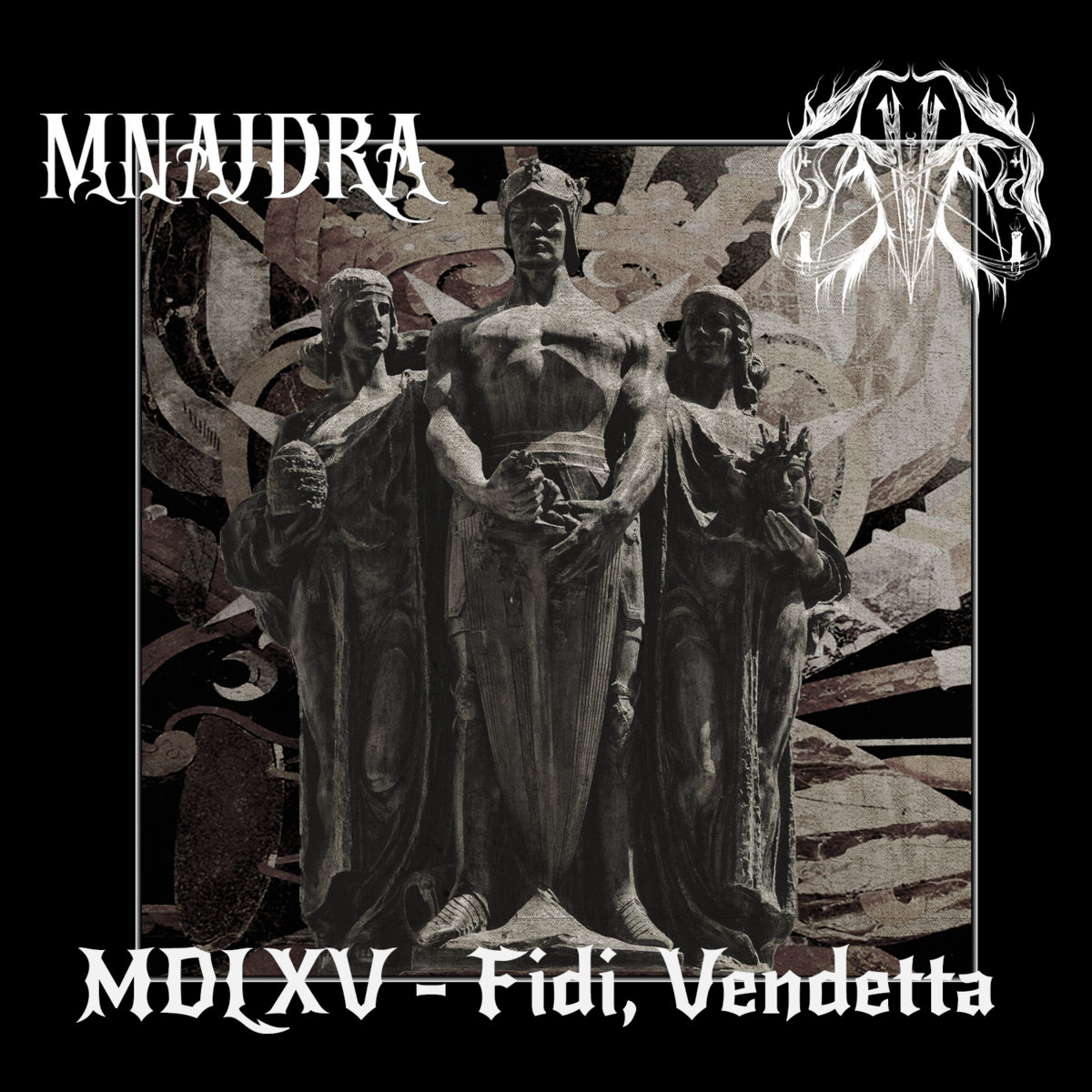
The name of this split is MDLXV – Fidi, Vendetta. MDLXV is the Roman numeral for the number 1565. The Latin word “fidi” can have different meanings, among them “faithful” or “we trust”, whereas “vendetta” means vengeance or revenge.
1565 is the year in which the Great Siege of Malta occurred. In that year the Ottoman Empire attempted to conquer the island, which was then held by the Knights Hospitaller (also known as the Knights of Malta) as their headquarters. As this source reports, “The Turkish armada, which set sail from Constantinople on 22 March, was by all accounts one of the largest assembled since antiquity.” The siege occurred at multiple forts and towns occupied by the Knights and their allies and involved many bloody battles, including warfare at sea, and acts of vengeance by both sides. By 13 September the Ottoman forces had left Malta in defeat.
At least in Europe, the siege was seen as a conflict between Christianity and Islam, and spawned fears that the siege was a prelude to the Ottoman Empire invading European countries, which helps explain why some of those countries sent ships and combatants to assist the Knights.
And with that far-too-brief summary in place, let’s turn to the music.
******
In their role as the invading Turks, Mnajdra open the narrative with “The Drawn Sword of Islam“, a song ominously led by slow, mangled notes that are unsettling to hear and by booming warlike drums with an ancient resonance. A piercing guitar brightly swirls through those twanging and hammering tones, carrying a melody that seems drawn from the musical traditions of the region, which will likely be exotic to Western ears.
The song also charges, with drums hammering, a voice caustically screaming, and riffing that maniacally roils and sears. The music also dramatically softens, making space for a variation on the song’s opening, and the music also eerily rings and writhes, while continuing to hammer, boom, and rabidly scream. The song intertwines sensations that are menacing and haughty, violent and fanatical, sinister and bleak.
Saħħar follow that song with “Nofs Millenju“, a Maltese phrase that might mean Mid-Millennium, and thus might refer to the period near the middle of the 16th century in which the siege occurred. The beginning of this song draws the listener in with a stately organ harmony, medieval in its melody, and then the song grows more fierce, with a blazing guitar-pulse, harrowing howls, and mid-paced neck-cracking beats.
The riffing also darkly churns and seems to miserably writhe, the drums blast away, and the vocals escalate into truly tormented screams and descend into frightening roars. The sounds are frightening and even desperate, especially when the riffing transforms into a dark and darting tremolo’d whir.
Those first two songs help establish the “personalities” of the album’s two participants in the guises they have assumed here. Both of them are dynamic; both of them channel terrorizing vocals; both of them are based on strong melodies of varying dark moods; both of them create tension, and break it with ferocity; but they are not at all musically twins of each other; they play their roles in the narrative well, and distinctively.
******
It also turns out that each band’s other two individual songs on the album aren’t twins of the first ones discussed above — which is as it should be in light of the album’s narrative conception.
Mnajdra’s “Smoke Over the White Sea” mercilessly boils and blasts, feverishly throbs and chaotically convulses, throwing the listener head-long into a harrowing conflict, but still with tendrils of melody that seem to invoke ancient musical traditions of the region, especially in a gentle and haunting mid-song interlude and an equally gentle and exotic (but also haunting) finale. The song also presents episodes of slower and more oppressive bleakness and doom.
Saħħar’s “Salmi għad-demm” (which seems to be Maltese for “Psalms for blood”) is moody and melancholy but it also includes sounds of choirs raising their voices in solemn reverence (reminding us that in this re-telling Saħħar takes the role of the Christian Knights) — as well as savage screams, imperious howls, and dismal chords that rake and sizzle, creating an experience of torment, beleaguerment, and despair.
What follows that is “Iermu’s Last Cry“, the largely instrumental collaborative song performed by both bands. And in this context it’s worth knowing that Forti Sant’Iermu is the Maltese name for the Knight’s Fort Saint Elmo, which is one place where the Ottoman’s siege temporarily succeeded (at great cost).
Mid-paced in its momentum, it includes hallowed choirs, sung harmonies, crushing riffs of dark doom, and a piercing and slowly twining guitar solo that oozes grief throughout an extensive appearance. Definitely more in the realm of doom metal than black metal.
Mnajdra make their last appearance in the split with “Shine on the Ruins“, a blazing and thundering song that once more makes a prominent place for scorching shrieks and exotic melodies that slowly slither. A dark song too, the music also seems to grievously groan and to frantically spasm.
And finally, we have Saħħar’s “Il Gran Soccorso” (The Great Relief). We’ve read that this refers to a Spanish relief force of about 8,000 men that arrived in Malta on September 7, 1565, to help the Knights Hospitaller and Maltese defend against the Ottoman siege, and was crucial in turning the tide of the battle, prompting the Ottoman forces to abandon the siege.
As the final song presented on behalf of the Knights, it again makes use of stately medieval organ melody, somewhat funereal in its aspect, as well as steadily marching drums, harrowing howls, and insane, throat-tearing screams. The riffing also channels grim conflict and feverish distress through a manifestation of Eastern-influenced blackened doom metal. It really sounds more stricken than triumphant, a feeling underscored by the arrival of grieving classical strings in the song’s final phase.
All in all, this is a fascinating and completely captivating split by two very talented bands. And you can hear it now:
MDLXV – Fidi, Vendetta will be released digitally, on digipak CDs from Snow Wolf Records, and in a limited run of cassettes from Fiadh Productions. Find purchase options via the links below.
https://mnajdra.bandcamp.com/album/mdlxv-fidi-vendetta
https://sahhar.bandcamp.com/album/mdlxv-fidi-vendetta
https://fiadh.bandcamp.com/
FOLLOW:
https://www.facebook.com/sahharbm/
https://www.facebook.com/SnowWolfRecords
https://www.facebook.com/fiadhproductions