(written by Islander)
The London band Locusts and Honey released their 28-minute debut record in May 2024. Its title was interesting (and still is): Teach Me to Live That I Dread the Grave as Little as My Bed. It was “inspired by the bog bodies of Ireland and Denmark – people of the Iron Age who were sacrificially hanged and found extremely well-preserved in peat.” They described it as “a meditation on death and living well.”
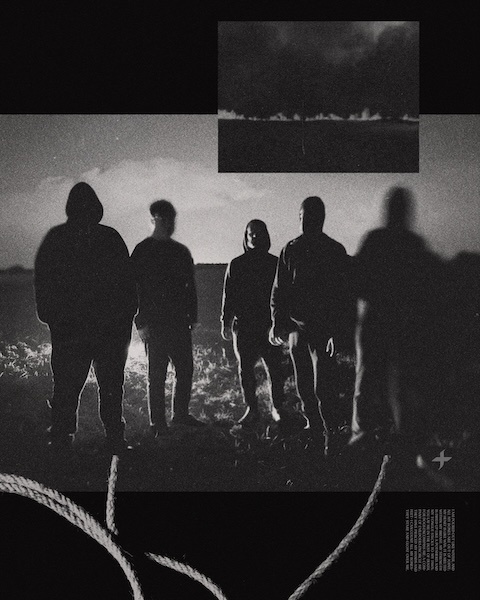
That debut release was the work of a duo — composer and instrumentalist Tomás Robertson and vocalist/lyricist Stephen Murray. Since then the lineup has expanded to five members, and the quintet now have a new EP scheduled for release on November 21st by Toronto-based Hypaethral Records. The title of this one is Shadow of My End. Its inspiration, as described by Stephen Murray, is also interesting:
“The title of the EP is taken from the English Renaissance composer John Dowland’s song, ‘Come, heavy Sleep’ (that title is also echoed by the fourth track, ‘Come, Appalling Sleep’). The link between the separated life — or even oblivion — of sleep and death has long been remarked upon. Daily, weary from our labours, we seek the respite of sleep, and this, I am assured, serves as an important memento mori. It is both night and day, and always standing with us, and it can be found between the warp and weft of this record. The end is promised to us, and though that can be scary, it should also bring us comfort.”
How do Locusts and Honey express these themes in their music? Hypaethral describes the EP as an offering of “biting and bellicose blackened doom, interspersed with more restrained passages, both achingly sad and haunting in equal measure.” As you’re about to find out for yourselves, that’s a good shorthand description. We have a more longhand description in mind.
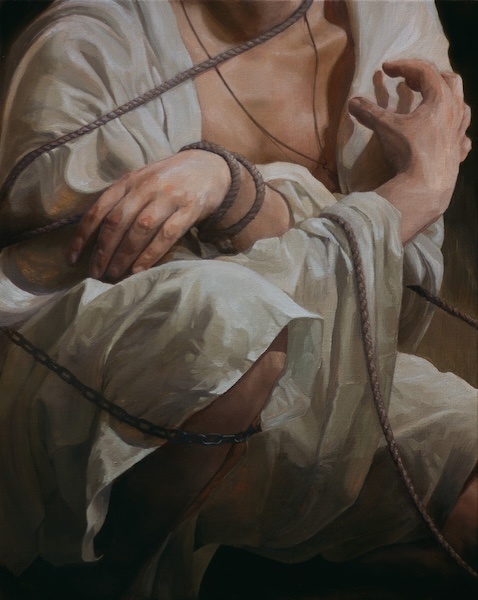
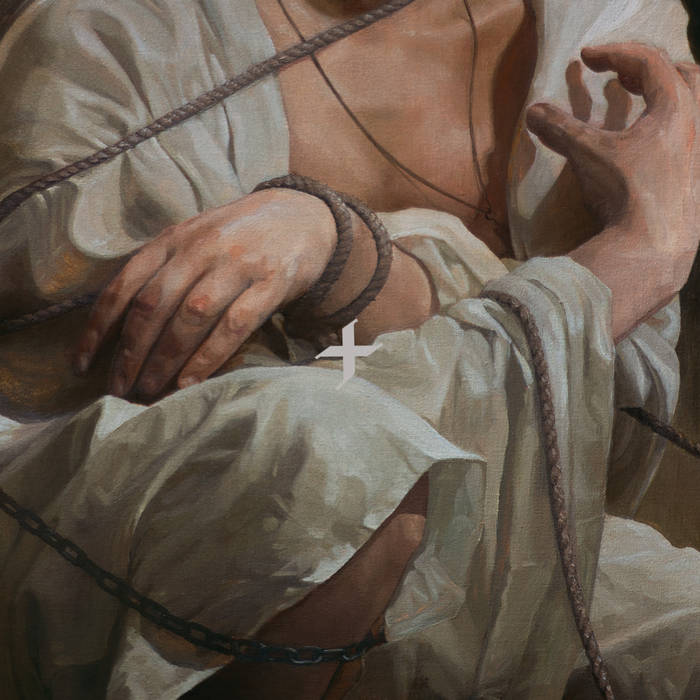
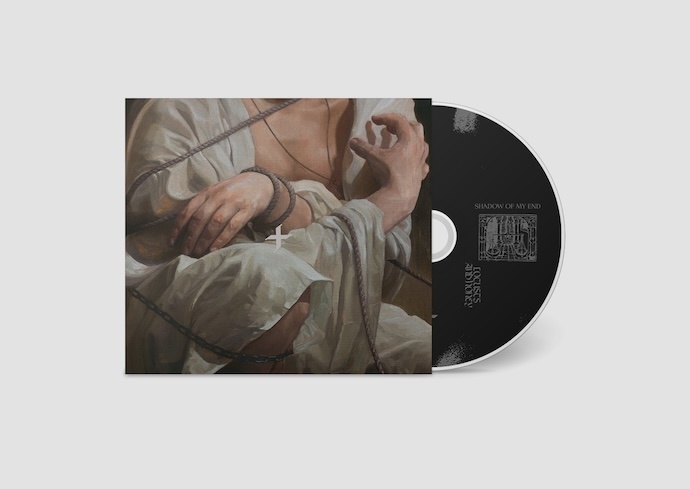
full oil painting by WVNL
The structure of the EP seems to have been crafted carefully, and each song flows into the next one, so that it becomes one unified piece of music, best heard without interruption from beginning to end.
As for the beginning, it swiftly puts a chill on the skin. The opening song, intriguingly named “Cypress Curtain of the Night“, begins almost imperceptibly, with a slow swell of ghostly whispers and shimmering sonic mists. Dismal notes wander their way through those apparitional sensations, and frightening screams emerge, along with murmuring bass tones and audio abrasiveness in different forms that make the music unsettling as well as haunting.
And then comes “The Night Sea-Journey“, which was the first song from the EP publicly released. Here’s how Stephen Murray explains its lyrical inspiration:
“A troublesome one to put words to. When the guys forward me demos for songs they’ve been working on, I can usually hear the vocals on the track as if laid down by some phantom screamer, so it can simply be a case of listening carefully and transcribing what I hear, sometimes filling in where I can’t quite make out a word. Other times, this otherworldly presence will provide a theme, or just drop the thoughts I need to complete the song directly into my head. To find the right words for this one, however, took some patience and listening.
“What eventually came was the thought of the Night Sea-Journey, the metaphorical odyssey into the dark heart of the psyche discussed by the Swiss psychiatrist Carl Jung. It’s a journey so many of us have been on in our lives, but which doesn’t always find expression.
“Having been brought up on the coast, I’m often drawn to imagery from that realm, where land and water and sky all meet. Growing up, I saw many times what the sea looked like when angry. But I also saw many times the streak of orange through the white and grey. The sheer determination of the RNLI (the Royal National Lifeboat Institution which operates lifeboats around the UK), not to overcome the sea — such hubris would be dangerous — but to withstand it long enough to help all those who needed helping. Their respect for the sea and for life left a lasting impression on me. Me, who still dreams of drowning.
“The song ends on a paraphrasing of a curse originally found in Old Norse. A curse now bestowed upon those without that same respect.”
As I wrote when I first heard the song, it has a very daunting but wholly enveloping start, a mix of slow stomping beats, brilliantly searing and dismally churning riffage, and caustic screams that are almost buried by the immensely heavy low-end weight and the higher-range abrasion.
The music seems to both massively groan and to crackle and burn, like some boiling vat of acid and grit. The music ominously looms and heaves like impending catastrophe, but also seems to cry out in the upper elevations like stricken spirits with no hope of release. It slowly crashes and emits screeching feedback and shrieking vocal torment.
In all ways, it’s powerfully devastating and engulfing, a rendering of harrowing calamity, and by the end its collage of ambient tones also prove to be haunting and desolate too. Listening to it, Stephen Murray’s explanation of the lyrical themes makes sense (“dreams of drowning”, indeed).
The song is pulverizing in both its heaviness and its emotional tortion, and because there’s again no break after its nominal ending, the next track (“Suspiria de profundis“) sounds like an extension of it. Like the EP’s opener, it’s ghostly, but the apparitions manifest in a different way, with mournful tones of classical strings and horns (or woodwinds?) expressing a lament — until they’re abruptly cut short, the only real break in the EP’s progression.
Locusts and Honey then begin the EP’s longest song, the afore-mentioned “Come, Appalling Sleep“. Here, the band again resort to gentle audio mists and slowly ringing notes to create feelings of loneliness and sorrow. But soon enough they bring the hammer down, drenching the listener in gritty abrasion and piercing swirls that wail, while heaving ahead in an immense staggering stomp.
The music dismally moans, accompanied by shattering screams, and the guitars feverishly sizzle and convulse in semblances of agony and fear. It’s an unearthly and unnerving experience, somehow even more terrible when the rhythmic momentum briefly ceases. But when the rhythm section return to inflict their punishment again, the guitars find a higher gear of pain, vividly shivering and writhing, and the screams reach shattering zeniths.
It’s difficult to do justice in words to just how paralyzing this music is. Its hopelessness is deep and devastating, its pain is carved with knives, and the band salt the bleeding wounds with despair.
They might have ended the EP there, leaving listeners feeling emotionally crippled and haunted, reflecting on how nightmarish this formulation of doom really is. But rather than close there, the EP includes one more short piece, “No Night There“, which takes us back close to the way “Come, Appalling Sleep” began, which is to say, back to a dismal and spectral place.
And with that, we turn you over to our premiere stream of a genuinely devastating EP:
Shadow of My End was recorded by Stanley Gravett at Holy Mountain Studios (Vacuous, Old Horn Tooth), mastered by James Plotkin at Plotkinworks (Earth, Sunn O))), Khanate, Amarok), and will be available from Hypaethral on CD and digital download, and on cassette tape through Distant Voices, with art and design by WVNL. Hypaethral recommends it for fans of Coltsblood, Mizmor, Dragged into Sunlight, and Corrupted.
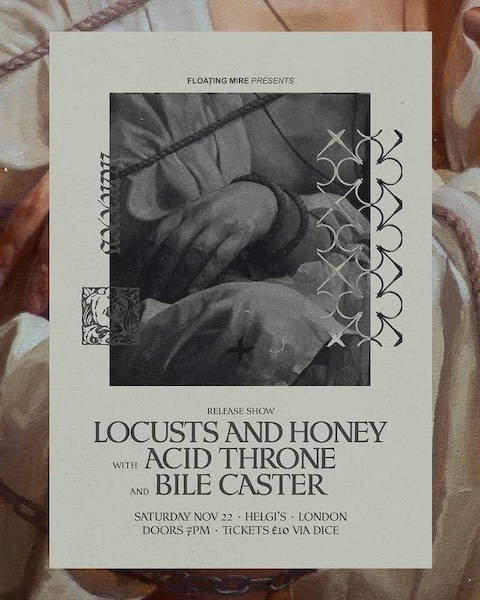
And finally, if you’re in the vicinity of London on November 22nd, you can catch Locusts and Honey’s record release show at Helgi’s, with support from two other heavyweights in the UK doom scene, Acid Throne and Bile Caster.
PRE-ORDER:
https://hypaethralrecords.com/
https://hypaethralrecords.bandcamp.com/album/shadow-of-my-end
https://linktr.ee/hypaethralrecords
LOCUSTS & HONEY:
https://linktr.ee/locusts
https://www.facebook.com/p/Locusts-and-Honey-61573170027669/