
(written by Islander)
Based on photographs, Cesena looks like a pretty place. A small city of roughly 100,000 people, it’s near the Apennine Mountains in Italy and about 15 kilometres (9 miles) from the Adriatic Sea on the east coast of the country toward the north. Of course, like every other place in Italy it has an extensive history, and its old architecture reflects that.
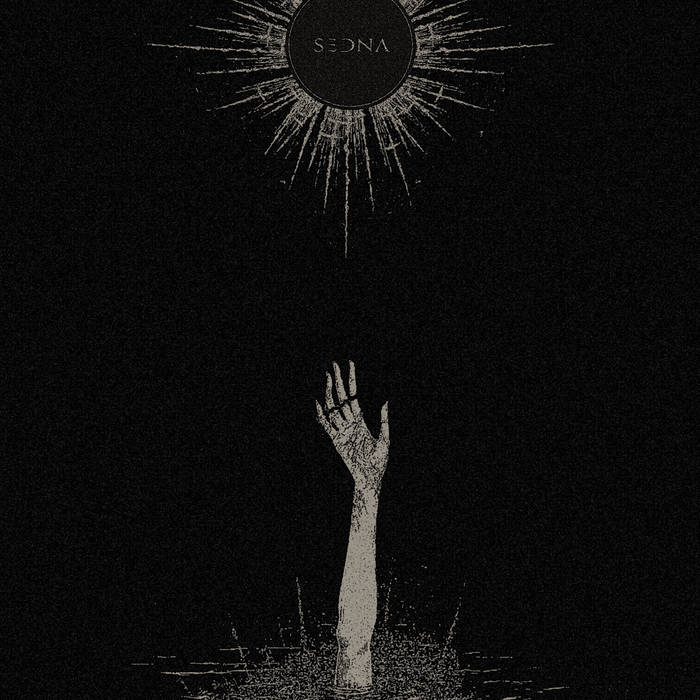
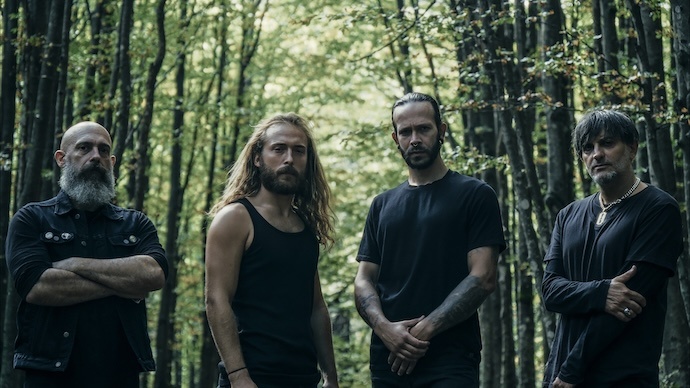
Cesena is home to the genre-bending black metal band Sedna. They have a new album that will be released in two days by the Dusktone label. The name of the album is Sila Nuna, a compound word of ancient origin that means “Sky and Earth”. But the language isn’t one of the many that have been spoken over time in the area of Cesena, or anywhere else in Italy. And you probably can’t guess what that language is, because it is so unexpected.
The language is Inuktitut, a collection of dialects spoken by indigenous Inuit peoples of the Arctic, and one of the principal Inuit languages of Canada. Here is how Dusktone describes the themes of Sila Nuna:
With this new album, SEDNA move away from the mythological and astronomical themes explored in their previous four records to delve into Inuit mythology, narrating myths and legends from the peoples of the ice. From Tulugaq, the Raven god and bringer of light, to Amarok, the shadow wolf who guards the forest, to Torngarsuk, the protector of the spirit realm, passing through Arnajuinnaq, goddess of wind and ice, and finally reaching Sedna, the goddess of the sea.
And yes, the band’s very name is that of the Inuit goddess of the sea, so their interest in Inuit mythology isn’t recent. We should add that Sedna is also the name of a dwarf planet in the outermost reaches of the Solar System, orbiting the Sun far beyond the orbit of Neptune, and Sedna (the band) have said their name reflects that inspiration as well. (The planet was also named for the Inuit goddess.)
As of this writing, we don’t know the source of this Italian band’s continuing interest in Inuit mythology, now reflected most directly in their new album. But it isn’t as strange as you might think, given the nature of the album’s music, which itself is often mythic in its atmosphere, often as dark and violent as an Arctic winter, and yet grounded in human experience — in its questioning, in its agony, and in its resilience despite daunting odds.
As noted above, Sedna’s music on Sila Nuna is also genre-bending, as it has been on previous releases. As Dusktone accurately observes, it “merges the ferocity of black metal and the weight of sludge and post-metal with a refined melodic sensibility.” The results are monumental.
“Niruaq” seems to be an Inuktitut word that means “to choose, to pick one out of many.” Musically, this opening song, which is a “scene setter”, generates a changing range of stylistic ingredients, decibels, and moods. Initially it’s ethereal and haunting, joining together borealis-like ambient drifts, booming tribal drums, and reverent voices elevated in wordless song.
It also includes ominous drones and chilling gasps, as well as horn-like moans, tumbling beats, humongous low-frequency undulations, gigantic stomps, gnawing bass-lines, harsh snarls, and wailing vocals that begin to sound possessed.
As a “scene setter” (and that really does seem to be what it is), “Niruaq” is mystical, ancient, intriguing, and a bit frightening too. But it’s the album’s second song, “Torngarsuk“, that more fully displays the elaborate and genre-splicing nature of Sedna’s songwriting. It’s also one of the five main songs on the album, each of them in the vicinity of 9 minutes long.
At the outset, ringing guitar notes and the musing hum of the bass again create an aura of mystery, but the guitars begin to disturbingly writhe; serrated-edge howls and screams rake the listener; and the music begins to sound like an abrasive avalanche of grit. The guitars seem to moan in misery and to slowly greave in piercing tones, but they can’t match the shattering torment of the raw, ragged, and blood-stained vocals.
Sedna also cause the song to convulse in despair, with drums blasting and the abrasive riffing swirling like a caustic whirlpool. Yet tendrils of high-flying tremolo’d melody come through and expand, tracing moods of melancholy and yearning on a panoramic scale.
Moreover, Sedna build tension and unease with feverish fretwork-throbs, whirring chords that seem to bespeak confusion and fear, and bludgeoning grooves. Cold growls enter the fray, along with tones that slash and savage the listener; the song doesn’t let the listener down easy at the end.
“Torngarsuk” is in many ways representative of the album’s main through-lines. The drumming plays a vital role in keeping the music tethered to its ancient and primitive inspirations. The contrasts between clean melodic guitars and flinty abrasion are equally important in the creation of an atmosphere that combines mysticism and earthiness. And although those clean guitars also create aspects of wonder, the overarching moods of the song are dark — and the vocals are terrifying in their wrenching emotional intensity.
As noted above, the album includes four other main songs of significant length, each of them separated from the next one by much shorter pieces, identified as “Qimmuktuk” I-IV. Those four wordless interludes vary in their instrumentation, some of which is quite exotic (they include mournful bowed strings, mandolin-like ripples, and something that sounds a bit like a Japanese shamisen), but each of the interludes reinforces the album’s ancient, mystical, and haunting aspects.
Those gentle (and spellbinding) interludes also provide necessary breathing room for listeners in between the album’s five big songs, which are very intense in varying ways. “Amarok“, which was the album’s first single, follows “Qimmukruq I“. As I’ve written before, it’s shattering on multiple levels (and it includes a guest guitar performance by Giò Kordzakhia from Psychonaut 4).
The vocals change dramatically over the course of the song, ranging from wailing cries of pain, which seem to be splintering into bloody shards, to grief-stricken singing, savage snarls, and beastly roars.
Meanwhile, the music dismally groans and heavily heaves, and seems to crash as it staggers and falls. It also boils and burns, like senses-submerging manifestations of untreatable pain and terrible despair. And it also becomes panoramic again, and again melancholy in its expansive beauty, setting the stage for a truly astounding guitar solo that slowly swirls and warbles, then thrillingly ripples and spirals high.
The music also reaches a much softer and even bucolic phase in which a violin and a strummed acoustic guitar lend their mournful voices, and sung vocals solemnly intone a haunting melody.
A grumbling and growling bass and vividly rumbling drums provide the bridge toward greater intensity, where the harsh and harried vocals and vividly whirring riffage and strings return. But in that final phase the music also brutishly pounds and viciously slashes; the singing voice dramatically soars — and so does the music.
Rather than attempt to chart the paths of the remaining long songs — “Tulugaq“, “Arnajuinnaq“, and the closer “Sedna” — it’s probably enough to say that they are as dramatic, as elaborate (vocally as well as instrumentally), and as variable in their progressions as “Torngarsuk” and “Amarok“.
They again braid together ingredients of black metal, post-metal, and sludge, while also making room for gentle acoustic instrumentation, ephemeral emanations of gossamer lightness, and (in “Sedna“) stunning guest vocals by S. D. Ramirez of Psychonaut 4 and Agnese Alteri, whose pure singing voices help make that song into the album’s peak of heart-aching, heart-bursting emotional intensity.
The changing moods with those songs also include feelings of wonder and torment, of despondency and fury, of haunting grandeur and ruinous grief. They’re also capable of creating visions of catastrophic upheaval and spiritual uplift. And they’re never far away from connections to Sedna’s ancient and mythical inspirations.
And now, before we leave you to listen for yourselves, we’ll share this quote from the band:
“Sila Nuna was a difficult, complex and intricate album to conceive, compose and above all record. It shattered us and put us back together, took pieces of us away and replaced them, made us clash, die and be reborn countless times. But in the end, it was worth it. Its genesis dates back about two years, with a lineup that was three quarters different from the current one, and it required a change of mindset and approach both in terms of composition and in the idea of music we had in mind — an idea that stayed with us until the album’s completion. Shorter, more aggressive tracks that evoked the feel of a narrative, and therefore were structured to leave room for spoken or clean parts, also including a certain epic quality that was inevitable given the themes we were dealing with.
To enrich everything, we experimented with more dreamlike passages, aiming to give the listener the impression of truly being inside the story — whether it was the fire of the bonfire or the caw of a raven. We tried recording noises and sounds from the forest, bones and chains, sand, and later brought in Federico Palmucci, who handled the soundscapes and interludes throughout the album.
From a purely sonic standpoint, the writing required a more specific search than in our previous works, precisely to find the right balance in all the songs between black metal and post-metal, while pursuing a personal touch that would give life to the entire work. Even though much of it often came out spontaneously and instinctively, as always, we faced numerous setbacks and interruptions — lineup changes, a busy concert schedule, and moments of crisis when we found ourselves searching for something that was more than just an album. We’re very satisfied with the result… Clearly, with hindsight, we would have handled some things differently, but every part of the process was necessary to bring Sila Nuna to life.”
Now, please listen for yourselves:
ALBUM LINE-UP:
Alex Crisafulli – Vocals/Guitar
Rolando Giulio Ferro – Drums
Edoardo Martinelli – Vocals/Bass
Fabion Dautaj – Guitar
CURRENT LINE-UP:
Alex Crisafulli – Vocals/Guitar
Rolando Giulio Ferro – Drums
Mirko Abà – Guitar
Lucio Minghetti – Guitar
Sila Nuna was recorded by Mirko Abà in Ravenna (guitarist of Stygian and now bassist of Sedna), and it was mixed and mastered by Jack Shirley. Dusktone will release the album on November 21st, on LP vinyl (marbled gold and black), jewelcase CD, and digital formats. It’s available for pre-order now:
PRE-ORDER:
https://dusktone.bandcamp.com/album/sila-nuna
https://www.dusktone.org/?s=sedna&id=113425&post_type=product
SEDNA:
https://sednablack.bandcamp.com/
https://www.instagram.com/sedna_o/
https://www.facebook.com/Sedna.O/
The most emotional album of 2025 I listen to (again and again)
Thank you for leaving this comment. We agree, it is a great album.