
(written by Islander)
By definition, “concept albums” are based upon narratives or themes that connect the songs. Most often, the concepts are represented lyrically. Often, the lyrics are written independently of the music, even after much of the music has already been written. Although listening to the riffs and melodies might inspire the lyricist’s development of concepts, sometimes there may be no evident connection at all between an album’s “conceptual framework” and what the songs sound like.
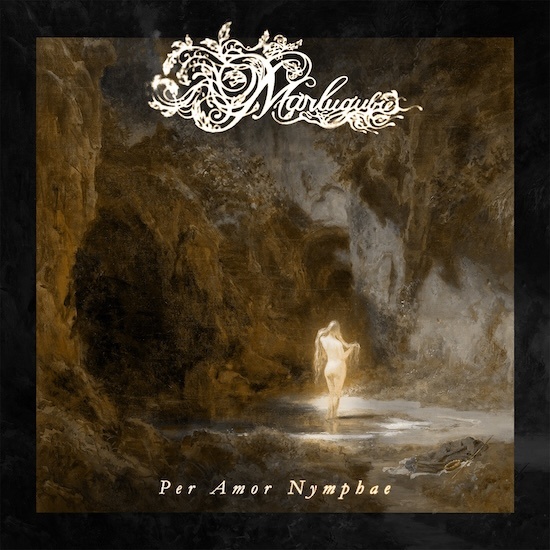
Which brings us to a new concept album by the Italian artist Marlugubre. The name of the album is Per Amor Nymphae, and as that title signifies (it translates to “Through the Love of the Nymphs”), the songs are based upon the mythical figures of nymphs. Deeply rooted in Greek mythology, the songs include tales of the primordial figure of Nyx from Hesiod’s Theogony, of Chloris, of the tragic myth of Scylla and Glaucus, and of perhaps the even more tragic story of Orpheus and Eurydice — which is the subject of the song from Per Amor Nymphae that we’re premiering today in advance of the album’s February 27 release by Dusktone.
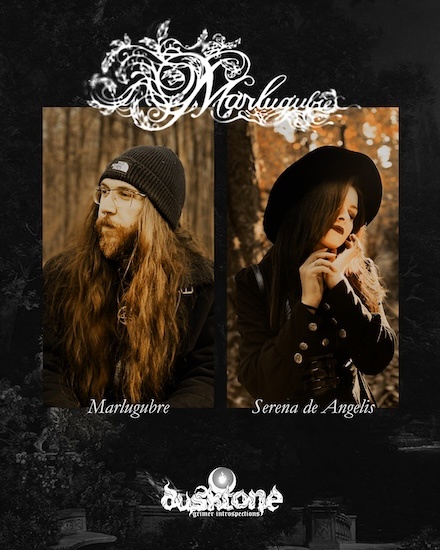
In the case of Marlugubre there is likely a greater connection between the song’s music and their lyrical concepts because the musician and the lyricist are one and the same person, although Marlugubre’s solo creator is joined on Per Amor Nymphae by a second vocalist, Serena de Angelis.
The connection seems intentional because the music is itself so well-suited to the subject matter. Drawing inspiration from such bands as Opeth, Alcest, and Deafheaven, it is an atmospheric blending of post-black metal and progressive death metal designed to convey “romanticism, fragility, and a sense of timeless beauty, letting the music be a narrative tool rather than mere composition” (to quote from the label’s description). Perhaps needless to say, the music also has a mythic, unearthly quality — though it makes room for blood-rushing savagery as well.
The song we’re premiering today is “She Nigh His Death“. It’s based on Virgil’s rendering of the tragic tale of Orpheus and Eurydice, though it doesn’t seem to follow the entire story from start to finish. You can find a complete translation of Virgil’s poem here, but as a brief reminder:
In the story, the beautiful Eurydice was wandering in a forest with nymphs (the Dryads) when the shepherd Aristaeus saw her and, beguiled by her beauty, made unwanted advances and began to chase her. While fleeing, Eurydice was bitten by a viper and perished. Her stricken husband Orpheus ventured into the underworld in an effort to return her to the living world, and used his lyre (a gift from Apollo) to play a song for Hades and his queen Persephone which was so heartbreaking that they allowed Eurydice to follow Orpheus as he ascended back to the surface world — but on the condition that he not turn back to look at her. As he neared the exit, however, he did look back — and thus lost Eurydice forever. His own life then had a terrible end.
In the song, Marlugubre sets the stage with a gently ringing and melancholy clean-guitar melody and a backing swarm of harsher riffing. Those harshly whirring sounds then take center stage along with gritty roars, greatly magnifying the music’s intensity. The opening melody doesn’t vanish but soars above blasting drums, and sounds more distressing as it does so.
The music also furiously surges; a dual-guitar arpeggio creates a mood of confusion; and the music becomes a maelstrom of instrumental and vocal torment, pierced by rapidly vibrating melodies and searing sensations in the music’s upper range.
Somber spoken words appear along with gleaming strummed chords, pastoral swaths of glimmering sonic beauty, Serena’s beautifully sad singing, and seductive, ethereal keys — which altogether create a spellbinding chapter in the song’s narrative.
But without warning Marlugubre explodes the spell in a burst of furious drumming, waves of boiling layered riffage (partly grim and partly shining), further outbursts of roaring and screaming vocals, and melodic accents that grievously wail and hopelessly throb.
As the intensity diminishes, the music segues again, creating a beautiful finale of strummed acoustic guitars, shimmering flutes, and softly caressing keys.
As it moves from phase to phase, the music itself has a narrative quality and strikingly channels a changing range of moods and energies. It proves to be gentle and ravishing, dreamlike and distraught, beautiful and harrowing, melancholy and mad.
(We’re also told that an official videoclip for the song is planned for after the album’s release.)
Dusktone will release Per Amor Nymphae on jewelcase CD and digitally, and recommends it for fans of Deafheaven, Alcest, Aquilus, early Green Carnation, and Opeth. Pre-orders are avalable now. After the links we’ve also included streams of the first two singles from the album, “The Beloved Scylla” (which opens the record) and “Like A Dim Moonlight In Her Heart“.
PRE-ORDER:
https://dusktone.bandcamp.com/album/per-amor-nymphae
https://www.dusktone.org/product/marlugubre-per-amor-nymphae/
MARLUGUBRE:
https://www.facebook.com/marlugubre
https://www.instagram.com/marlugubre
https://marlugubre.bandcamp.com/