
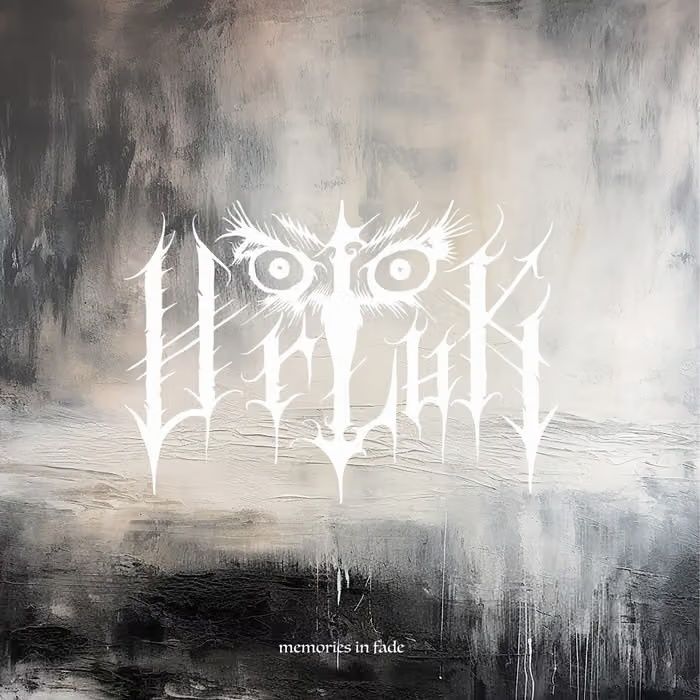
(written by Islander)
Last month we published an interview by our Comrade Aleks with the two members (U. and M.) of the Italian band Urluk, focusing on their new album Memories In Fade. Aleks introduced it with an explanation that although the band had remained true to their haunted lyrical themes, the music has changed direction significantly as compared to their last album More. Urluk’s U. acknowledged the change, commenting in the interview that “[t]he atmosphere surrounding Urluk today is less about aggression and more about reflection, decay, and memory — things slowly dissolving rather than burning violently.”
In the interview, the band’s members provided further insights into their music’s evolution from the doomed black metal of their last album. As U. described, “Memories In Fade draws from a broad palette: Post Black, Gothic Rock, post-punk atmospheres, touches of Dream Pop, and even hints of 60s folk-blues. Keyboards play a larger role this time, sometimes creating that bittersweet, almost life-affirming melancholy reminiscent of Type O Negative.”
What we have for you today is a full stream of this very interesting new album in advance of its April 10 release by Pest Records. Before we get to our own thoughts about it, let’s share one more excerpt from the interview which compares the new album with the one before it:
Conceptually, the albums are connected, but musically they stand quite far apart. More was still deeply rooted in black metal — dense, abrasive, and very direct in its emotional expression. Memories in Fade feels like the aftermath. If More was about the weight of experience, this new record is about the residue it leaves behind: fading memories, nostalgia, and the strange calm that follows turmoil. The sound has become softer in some ways, yet more vulnerable.
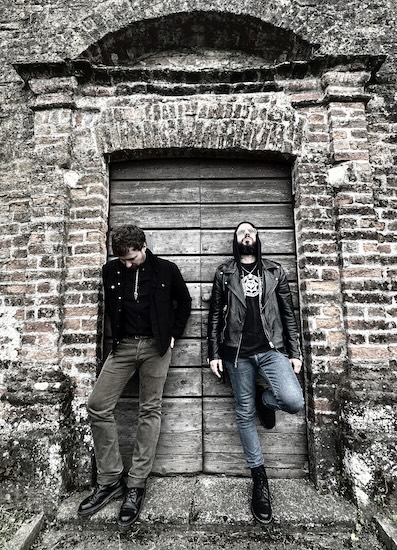
photo by Isabella A.
Each of the album’s five songs differs from the others in important ways, and if your musical horizons are broad enough you can identify the wide-ranging influences mentioned above. But all the songs join together to create a genuinely haunting and (as the label accurately portrays) cinematic experience. As one the above quotations remarks (also accurately), it succeeds in channeling reflection, fading memories, and decay — but it includes moments of fierce desire and genuine turmoil as well.
The opening song “Angles of Hauntology” is the album’s longest one, reaching into the 11th minute, and it does seem to sheer off in a variety of haunting (and menacing) angles. It includes mysterious strings, eerie piano notes from a bygone era, gasping and groaning exhalations, and other strange ambient tones.
It also includes craggy and ominous riffing that carries forward from the piano melodies and then begins to devilishly warp, accompanied by big bass-throbs and big booming and popping beats. Eventually clean-sung vocals arrive and rise in captivating fashion. Gothic organ tones and whistling fretwork occasionally float above the music, along with strangely quavering electronics. Harsh growls enter from stage left with fangs bared, and center stage features a beautifully wailing and brilliantly ringing guitar solo.
“Lying There” is also long, but not quite as long as the opener. It’s a slower and more dismal and doom-influenced affair, more longing in its moods. It again includes a vocal tandem, but this time the clean singing is more steeped in gloom, and the gritty harsh vocals seem more tormented (but just as ravenous and frightening as in the opener).
Gradually, the pace increases and Urluk bring in other musical accents, including quivering strings and shimmering keys, but then they stagger even more slowly than before, trailing abrasive throbs of ruin crested by the haunting wail of another guitar solo. They continue to surge and slow, and instrumentally to deploy grit and gleams, ragged moans and ethereal whispers.
“Yesterday’s Letters” has a throb of a different kind, one made with acoustic guitar strumming, which evolves and becomes brighter in its mood, backed by glimmering sonic glows and a soulful harmonica. The album’s shortest and softest track, and with no vocals, it’s a piece of spellbinding melancholia.
After that entrancing folk interlude, Urluk return to much heavier and more unnerving territory with “Liminal Vortices“. Again, the riffing dismally throbs, building tension, with an overlay of shrill, quivering keyboards providing a spooky contrast with tones from many decades past. The harsh vocals command attention first, not only snarling but also screaming, and only later trade off with captivating clean singing. Near the end, bells toll, and ambient sounds wash over the listener like ghostly tides.
The album closer, “The Last Watch“, swells gradually, and the singing starts lower than before, a kind of dark folk expression, and eventually a second voice joins in. As ever, the rhythms are heavy-hitters and muscle-movers. As ever, Urluk shift the music as they go, adding different accents, some acoustic and some electronic, some vibrant and some saturated in gloom.
They move between melancholy folk music and much heavier and more brooding and hopeless sensations, and thankfully for listeners, the song includes one more wonderfully wailing guitar solo, which is a real heart-breaker. But in the song’s penultimate phase the drums bolt into a manic gallop, the riffing becomes a swarm, and the harsh vocals attack — but old folk instruments still gently ring through.
What else is there to say? Well, actually a lot more could be said. A musicologist could have a field day dissecting and analyzing these songs, because they freely range through time, styles, and instrumentation. But not being musicologists, we won’t attempt that. And besides, the true strength of these songs lies in the feelings they communicate in such unusual and often mesmerizing fashion — which you can understand for yourselves now:
URLUK:
M.: clean and nocturnal vocals; drums and percussion
U.: clean vocals; electric and acoustic guitar; bass; harmonica
SPECIAL GUESTS:
Francesco Cucinotta (Felis Catus and Sinoath): synth effects, arrangements, sampling, and acoustic guitar
Claudia (Sinoath): backing vocals
The album was recorded and mixed at Orion Recording Studios, and mastered by Riccardo Parenti at Elephant Mastering. The cover artwork is “White Radiance” (2023) by Aleksandr Kryushyn. The album includes graphic design by Azmeroth Szandor.
Pest Records will release the album on CD and digital formats, and recommends it for fans of: In The Woods…, early Katatonia, Anathema, and Woods Of Desolation.
PRE-ORDER:
https://pestrecords.bandcamp.com/album/urluk-memories-in-fade
URLUK:
https://urluk.bandcamp.com/
https://www.instagram.com/urluk_official/
https://www.facebook.com/urlukofficial
PEST RECORDS:
https://pestrecords.bandcamp.com/
https://www.instagram.com/pest.records/
https://www.facebook.com/pestrecords