
(written by Islander)
Some metal albums are essentially collections of singles, songs that don’t have any thematic connection to each other. Others are “concept” albums, in which the songs have their place in some unifying pre-conceived vision by the artist(s), whether lyrical or musical or both. Such concepts might be relatively simple or not terribly distinctive, while others really stand out as the product of careful thought about unfamiliar subjects.
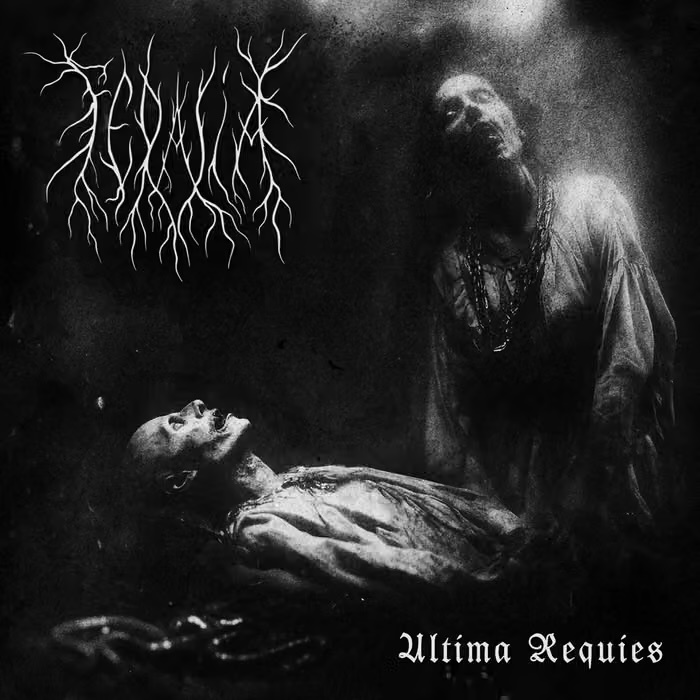
The new album Ultima Requies by the Italian black metal band Feralia falls into the latter category. Press materials circulated by ATMF (the label that will release the record later this month) describe the album as one “drawing from arcane and occult dimensions tied to the archaic Roman world,” in which “each composition unfolds as a passage, evoking forgotten rites, liminal states and the tension between life and death, presence and absence.”
Even the album’s frightening cover art fits into the narrative. To quote again from the press materials:
The artwork of Ultima Requies [depicts] a reinterpretation of the necromantic ritual of Erichto, the Thessalian witch described in De Bello Civili by Lucan. A figure feared even by the gods, Erichto was said to raise fallen soldiers from the battlefield during one of the most turbulent phases of Roman civil war. This imagery embodies the album’s core: a confrontation with death not as an end, but as a threshold to forbidden knowledge.
Feralia have themselves provided a description of the Ultima Requies narrative and the concepts that inspired it, and we will quote that in full a bit later in this feature, but for now we want to turn to the song from the album we’re premiering, “Ballata Avernale”. This is the album’s opening song, and here are Feralia’s comments about it:
“Ballata Avernale” tells of the Avernian Nymphs, spectral companions of the goddess Hecate. They dwell upon the cursed shores surrounding Lake Avernus, the ancient volcanic abyss believed to be a gateway to the underworld near Pozzuoli.
The song evokes their shifting and unfathomable powers: at times seductive and ethereal, at others cruel, nocturnal, and devastating. Their presence moves like blackened mist across dead waters and sulphurous winds, embodying both grace and doom. Through elegant yet malevolent dances, the nymphs lure wanderers toward madness, revelation, or eternal descent into the infernal depths.
The atmosphere of the piece is steeped in occult mysticism and archaic Mediterranean darkness, blending ritualistic imagery with the desolation of volcanic landscapes. “Ballata Avernale” becomes a hymn to liminality, where beauty and terror, seduction and death, merge beneath the moonlit dominion of Hecate and her infernal retinue.
The song includes features clearly associated with raw black metal, from the abrasive textures of the riffing to the shrill, larynx-threatening intensity of the shrieked vocals. And yet the song’s opening melody unfurls over relatively steady beats and immediately reveals another dimension: It fluidly flows in a way that’s both vast and melodically memorable, spectacular in its tidal power but anguished in its mood.
Feralia reveal other dimensions as well: The layered guitars ring as well as scathe, and they piercingly writhe and roil, still tormented in their mood but also diabolically elegant. The drums erupt in blasting tirades; devilish yet also reverent singing emerges in the midst of the screams; and synths enhance the core melody’s expansive and soaring scope.
The song presents quite a breathtaking cavalcade of increasingly ecstatic experiences, but Feralia also pull back from their crescendo, silencing the drums and making room for acoustic guitars to deftly deliver a medieval-sounding melody that seems to mysteriously beckon listeners above a sinister and dismally buzzing backdrop.
That interlude creates an intriguing and sublime break before Feralia heat up their cauldrons of sonic grandeur once more, again backed by changing drum cadences and fronted by contrasting vocals — those that reverently sing and those that violently shriek — and they again pepper the music with swift, jolting outbursts, and cap the song with an electrifying guitar solo that sizzles, swirls, and soars.
Thinking back on Feralia’s comments about the creatures to whom the song is dedicated, the music is itself elegant yet malevolent, at times seductive and ethereal, at others cruel, nocturnal, and devastating — and intensely memorable in all those ways. It’s not the kind of thing you hear everyday (far from it), so please give it your full attention now:
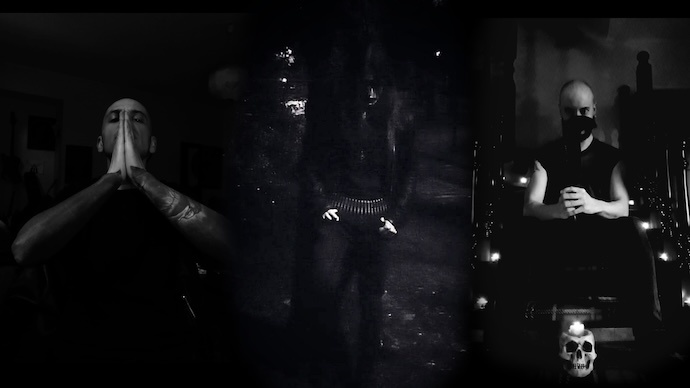
FERALIA Lineup:
Krhura – bass
Raijinous – Guitars, Vocals (backing), Synth
Erymanthon Seth – Vocals, Guitars, Synth
Summum Algor – drums
And now here is Feralia’s own further discussion of what what inspired Ultima Requies and what it represents:
Ultima Requies draws its conceptual essence from witchcraft, esotericism, and the most obscure dimensions of Ancient Roman spiritual tradition. Across its seven tracks, the album unfolds as a ritualistic journey through forgotten symbols, arcane figures, and ceremonial practices deeply rooted in the sacred and funerary imagination of Rome.
The narrative begins within the shadowed realm of the Avernian Nymphs, entities tied to the volcanic and infernal landscapes surrounding Lake Avernus, long believed by the Romans to be a gateway to the underworld. From there, the record traverses the sacrificial rites associated with the Ver Sacrum, the “Sacred Spring”, an ancient ritual of consecration and offering performed in times of crisis, where devotion to the gods intertwined with blood, destiny, and exile.
As the album descends further into darker territories, it evokes the terrifying figure of Erichtho, the infamous Thessalian witch described in Roman literature as a practitioner of grotesque necromantic rites, capable of communing with corpses and disturbing the natural order between life and death. Alongside these visions emerge references to the defixiones: lead curse tablets engraved with invocations, names, and maledictions, used to bind, torment, or condemn their targets through occult forces.
Through these recurring motifs, Ultima Requies becomes more than a collection of songs — it is an invocation of the hidden, mystical, and death-bound aspects of Ancient Rome, where religion, superstition, and forbidden practices merged into a single dark spiritual continuum.
ATMF will release the album on June 26th, on CD and digital formats. Find pre-orders and more info via the links below. We’ve also included a stream of the album’s first single, “Pharsalia“, which follows “Ballata Avernale” and the afore-mentioned “Ver Sacrum” in the track list.
PRE-ORDER:
https://metalodyssey.8merch.com/product/feralia-ultima-requies-cd-pre-order/
https://atmfsssdtp.bandcamp.com/album/ultima-requies
FERALIA:
https://feraliablackmetal.bandcamp.com/
https://www.facebook.com/feraliablackmetal/
https://www.instagram.com/feralia_black_metal/
The title “Ballata Avernale” sounds intriguing. What’s the vibe of the music like?