
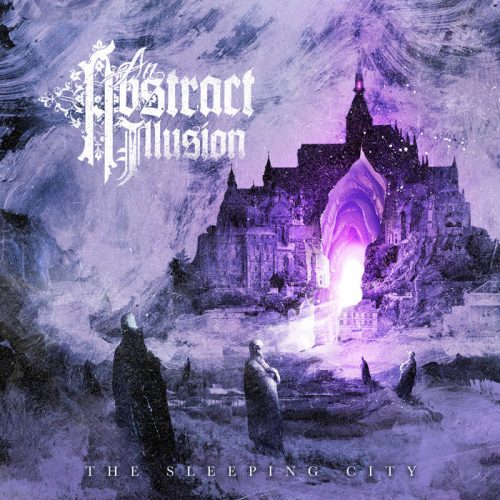
(Andy Synn asks you not to sleep on the new album from An Abstract Illusion, out this Friday)
There are differing schools of thought about when/whether, as a reviewer, you should read what other people have written about an album prior to publishing your own take.
On the one hand, yes, there’s the danger of being overly influenced by the opinions and perceptions of others (something which often leads to a cringeworthy sense of “critical consensus” that largely relies on the fact that no-one wants to rock the boat or suggest that, just maybe, the emperor is a little bit naked).
But, on the other, there’s always the chance that another writer will stumble upon something insightful that could help inform your own unique thoughts and help you consider things in a different light.
Whichever side you land on, however (and, in general, I try not to read much/anything by other writers when I know I’m going to be reviewing something), it’s always worth remembering that any review is always in conversation with a lot of different things… not just the music itself, but also the artist’s history, their public perception, and their previous critical reception, meaning that you’re never fully writing in isolation.
And so, while I’ve tried my best to avoid seeing what others have written about The Sleeping City – though I’ve already spotted a couple of slightly hyperbolic 10/10s here and there – one thing I made sure to do was to go back and re-read my own review of the band’s show-stopping second album, Woe, simply because there’s no way to discuss the former without comparing it to the latter.
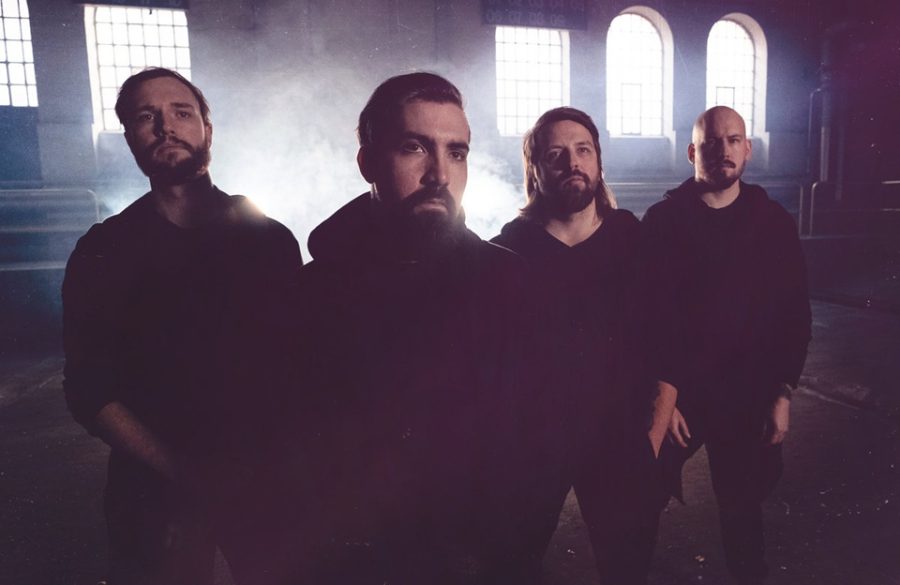
Smartly, of course, the band seem to have realised this pretty early on in the writing process and have taken great pains to ensure that The Sleeping City is not just Woe, Part 2.
The main way they’ve done this, of course, is by further emhpasising their more Prog-inspired side – shades of Pink Floyd, King Crimson, and YES now colour the music with an even brighter, bolder hue – while also giving their more atmospheric ambitions (especially the prominently proggy keyboards, whose presence reaffirms my belief that the group have been spending a fair bit of time sailing the topographic oceans over the last few years) more room to breathe.
All of this, of course, should be immediately apparent to any listener from the moment the sweeping, sci-fi synthscapes of “Blackmurmur” unfold from the speakers, opting for a majestically melodic slow-burn, rather than a full-force attack, which incorporates the band’s more metallic elements – the richly textured, intricately arranged guitar and bass work, the commanding, cathartic growls of Christian Berglönn (which are then complemented by the crooning, Extol-esque cleans of Robert Stenvall) – as just one layer in the band’s sublimely multifaceted sound.
The trade-off of this proggier, more textural approach, of course is that – for better or worse – there aren’t quite as many ear-catching highlights to be found here as there were on Woe (which, in many ways, was just one impressive highlight after another), with the focus being more on creating an overarching, holistic sense of atmosphere across these seven tracks.
This isn’t to say the group don’t get chance to shine, either individually (Westerlund’s shred-tastic soloing during “No Dreams Beyond Empty Horizons” definitely leaves a big impression, while drummer Isak Nillsson – making his recording debut with the band – puts in a consistently impressive performance, emphasising technique over “technicality”, on every track) or as a group (with the booming heaviness and brooding melancholy of “Like A Geyser Ever Erupting” allowing their more metallic and atmospheric ambitions to coalesce in a single song), but it’s clear that feel is more of a priority than flash this time around (though there’s still plenty of that).
That being said, if you’re looking for the moment when the album peaks, when it finally hits the same heights as its pheomenal predecessor, then look no further than the moody, synth-laced and reverb-drenched “Frost Flower”, whose utterly gorgeous vocal melodies and grandiose sense of space and scale (especially during the song’s soaring second half) make it the album’s clear stand-out – reminiscent, in part, of the likes of Borknagar and Black Sun Aeon at their most emotionally vulnerable/powerful – and without doubt one of the best tracks of the band’s career (with Prog-Metal powerhouse “Emmett” being not far behind it).
As you may have guessed, however, The Sleeping City isn’t perfect – unsatisfying instrumental “Silverfields” either needed to be further developed into a proper song, or left on the cutting room floor – and despite only being a minute or so longer than Woe it does eventually begin to feel, after multiple listens, like it drags a little in places (especially when the group, in the words of the great Rusty Venture, end up stuck in a “Floyd-hole”), with the overall experience lacking some of the tightness and tension of the band’s big breakthrough album.
But, and let me be clear about this, it’s still head and shoulders above most other releases of this type/style this year… in fact, I’d go so far as to say that The Sleeping City is a great album, which should delight fans both new and old with its alchemical array of melodic, atmospheric, and metallic elements, and which rewards close attention and careful consideration with even more to discover and uncover with each and every spin.
And if it isn’t quite as good as its predecessor? Well, that’s not for lack of trying by any means, and rather represents what inevitably happens when you set such a ridiculously high bar for yourselves!