
(written by Islander)
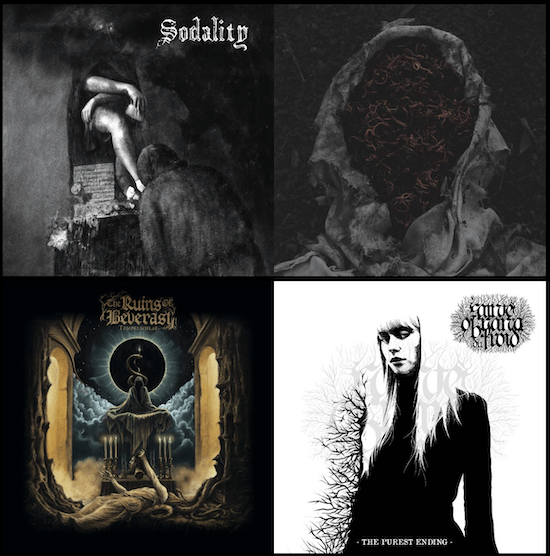
Greetings on another Sunday morning. As you can see, I have only four selections to recommend for today, but that’s mainly because two of them are complete albums just released on Friday, and thus it took me some time to get immersed in those and try to wrestle my thoughts about them into some kind of order. I’ve positioned those two as bookends around singles from two forthcoming albums.
I can’t say these choices were the kind that put me in a fugue state. Each one is very different from the others, and the shifts are pretty dramatic, maybe especially the changes wrought by the last one, the debut release of a band I knew nothing about before listening (unlike the first three). But I think you’ll also discover a kind of through-line that ties all four selections together, and I’ll touch on that as we go.
As always, I hope at least one of the four, if not all four, will resonate with you in some powerful way.
SODALITY (Poland)
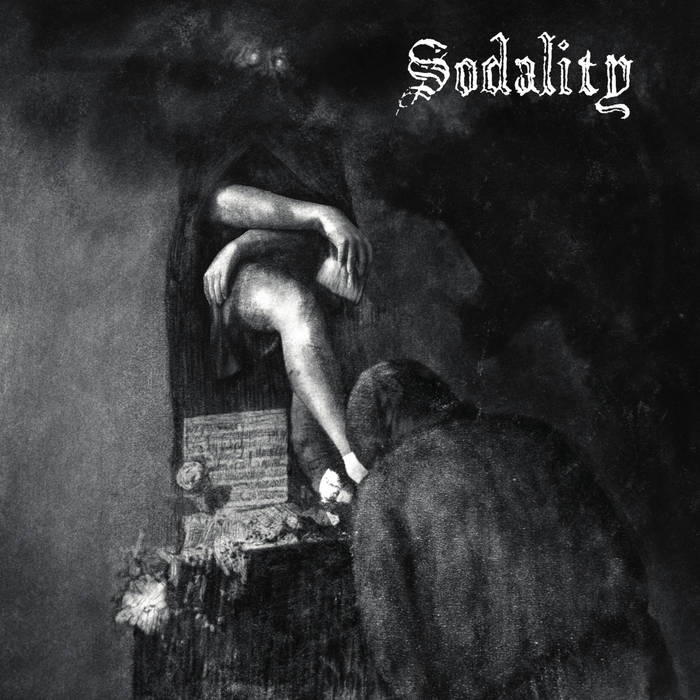
The name Sodality hit me in a way that made me think I must have heard some or all of their last album, 2023’s Benediction, Part 1, but I can’t find any evidence of that (for example, no one here has written about them before). I might have gone back to listen to that album first, but I haven’t done that yet, instead only listening to their followup full-length Benediction, Part 2, which NoEvDia released two days ago.
The new album floors me. Only after hearing it did I resort to M-A to learn who is behind it. I should have guessed the participants’ resumes would be meaningful: multi-instrumentalist T. Kaos (from Death like Mass, Enthroned, Lvcifyre, ex-Hödur, ex-Sons of Serpent, ex-Adorior) and vocalist Mark of the Devil (from Cultes des Ghoules, Death like Mass, ex-Doombringer).
I remember that once upon a time black metal brandished high, tinny riffing tones, high raspy vocals like sheets of paper being torn, muted drums blasting in nonstop fevers, and nearly invisible bass strings. We’re obviously way past those times, and you couldn’t find better evidence than what Sodality do here.
On the album’s opening song “Precious Blood” the rhythm section sound like rumbling boulders hurled by an avalanche and the heavy pulse of a monstrous heart. As for the vocals, they vary dramatically. There’s an opening scream that seems to go on longer than human endurance could support, backed by other sounds equally searing. But there are also haughty cries that phase into nearly strangled dictatorial howls.
That opening song also changes pace, creating dismal moods, and it also rings like spooky chimes. The riffing punches, wails, and writhes in ecstasy, and the rhythm section continues vividly booming, battering, and bouncing. Speaking of ecstasy, there’s a guitar solo that sounds exactly like that, and the music also gets freakishly psychedelic by the end.
Not surprisingly after that first song, the following four tracks are also heavily muscled head-spinners. Produced in a way that causes every ingredient to stand out, they incorporate an array of changing tremolo’d riffs, many of them drilling and poisonously dissonant, augmented by a plethora of piercing lead-guitar convulsions. They channel moods of unhinged cruelty, abysmal agony, magisterial malignancy, and quivering dementia.
Sodality also continue inserting strange, clear-toned, bell-like accents, but also occasionally adding haunting organ chords both low and high
The songs also continue bringing forward a changing array of fanatical vocals, some of which continue sounding like a demented ecclesiastical authority proclaiming behind his grand pulpit or like monastic voices reverently echoing off a cathedral vault, and others manifesting as a choking demonic lord. In every respect, the vocals are frightening and spine-tingling.
To return to near where we began, the “rhythm section” (it’s all T. Kaos) is lights-out all the way through. The drums and bass heavily stalk and erupt in harrowing upheavals, but the bass performances repeatedly demonstrate a nuanced and often warm-toned nimbleness, and the drumming shifts gears on a dime and executes electrifying fills.
Put all this together and you have an album that’s creepy and crepuscular, poisonous and predatory, twisted and tormented, a seeming portrayal of ecclesiastical authority as a duplicitous and degrading power whose reverent solemnity is a concealing curtain for horrors.
The Bandcamp page for the album describes it as “Five love songs for the time-ridden, mouldy Catholic cunts… Only lubricated by Christ’s breath!”, and further as “Five hymns for ruinous faith [that] echo through a cathedral of spiritual collapse, upheld by the smothered breath of saints, the weight of silence, and the violence of belief.”
https://sodality.bandcamp.com/album/benediction-part-2
GORRCH (Italy)
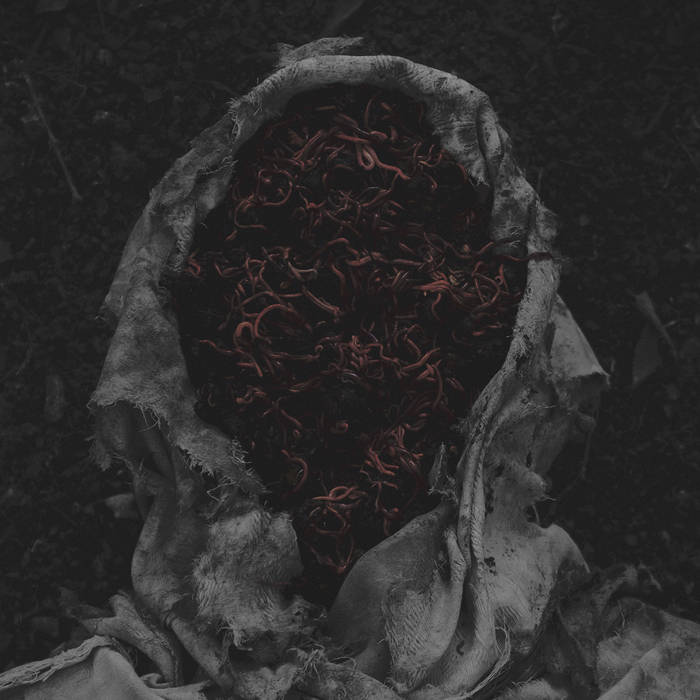
We’ve written about the music of Gorrch four times over the last 9 years, most recently in commenting about their 2020 EP Introvertere. The through-line of the writing has been to call out the sheer blazing insanity of the music — its explosiveness, its speed, its chaotic and yet somehow also addictive derangement.
I see that Gorrch released two songs on a split with Tenebrae in Perpetuum after that last EP, and I must have overlooked it. Now they have a new album named Stillamentum slated for release by Avantgarde Music on January 30th. Based on its opening song, it’s quite clear that Gorrch have sought no treatment for their violent lunacies in the handful of years just passed.
“Nimbus” is the song’s name. I knew the word nimbus describes a cloud formation, but I’d forgotten what kind. Turns out the modern term is nimbostratus, defined as “a multilevel, amorphous, nearly uniform, and often dark-grey cloud that usually produces continuous rain, snow, or sleet, but no lightning or thunder.”
Listening to the song made me wonder if Gorrch intended a different meaning for its title, because the song is neither dark grey nor free of lightning. Nimbus does have a different accepted meaning, referring to “a crown of light rays, circle or disk of light that surrounds a person in works of art,” i.e., a halo. There are aspects of the song which make me think this is the correct meaning in this context.
As mentioned, insanity and chaos still reign with a mighty hand in the song itself. After just a moment of deep and disturbing monk-like chanting, it explodes in a ferocious surge of blasting drums, maniacally contorting riffage, and acid-strength snarls. Gorrch segment the chaos with quick pauses and sharp booms, and magnify the madness with clear-toned fretwork spasms that sound simultaneously possessed and desperate.
Somehow, the bass manages to make its vibrantly bounding presence known despite the surround-sound impact of all the layered guitar derangements and the sharply-switching drumwork. The vocals also convert into hallowed singing harmonies backed by august keys), which in their reverence greatly contrast with the utterly berserk nature of the guitars.
Quite a breathtaking song this one, and if you’re like me you’ll draw connections between it and the Sodality album up above.
https://avantgardemusic.bandcamp.com/album/stillamentum
https://www.facebook.com/avantgardemusiclabel
THE RUINS OF BEVERAST (Germany)
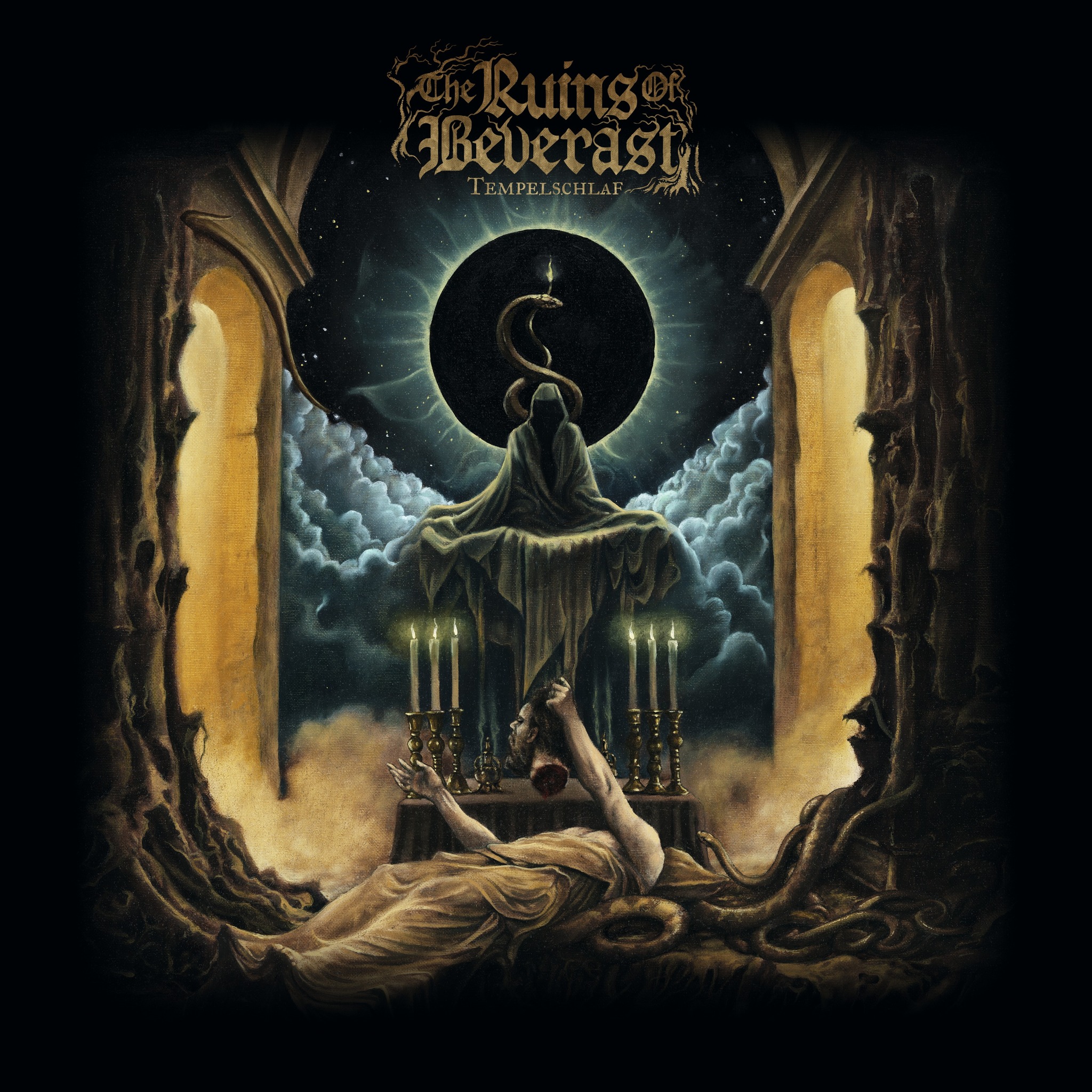
As forecast, you’re about to experience another dramatic shift in style and mood, thanks to the most recent single released from The Ruins of Beverast’s new album Tempelschlaf. (I commented about the first one, “Alpha Fluids“, here.)
This new one, “Cathedral Of Bleeding Statues“, arrived in tandem with a lyric video, and as you’ll see, the words are chilling — and even more so because they’re expressed through abyssal growls of monstrous mien and harsh howls of fanatical intensity. The music is chilling too. Though the drumming is a rumbling and tumbling thrill to hear, the music unfurls in a display of ominous grandeur, but then descends into audio visions of desolation.
For the third song in a row, the vocals make a change and include reverent monastic chanting, as well as warped singing. The music also heaves and lurches, becoming even more desolate, like a funeral march beneath sodden skies, and in keeping with that vision the lead guitar twangs and rings out a stricken lament and seems to whir in the fevers of pain.
There is a dreamlike aura to this song, or more accurately a nightmarish one. It comes across like a horrible hallucination.
Tempelschlaf will be released by Ván Records on January 9th.
https://theruinsofbeverast.bandcamp.com/album/tempelschlaf
https://www.facebook.com/the.ruins.of.beverast/
SAINTE OBYANA DU FROID (France)
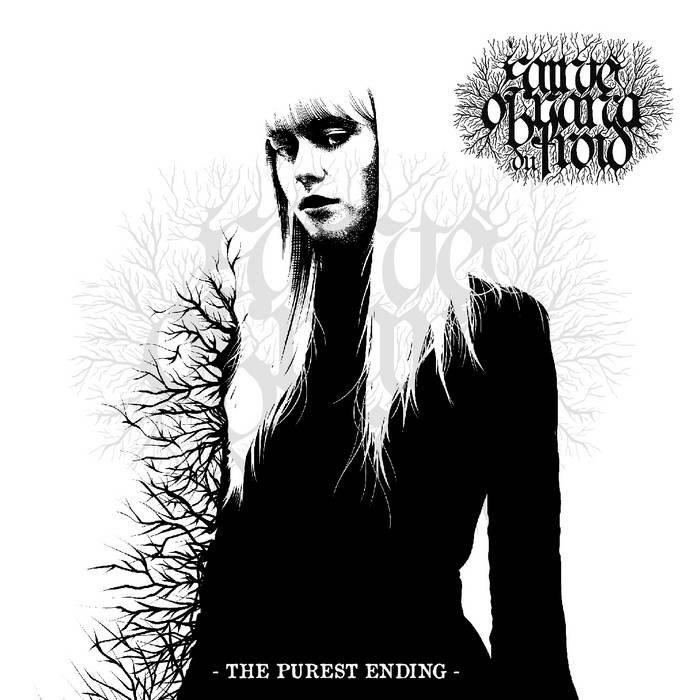
Now to close, we have the other bookend mentioned at the outset, and another dramatic shift in musical style and moods. As also mentioned earlier, it’s the debut album (and first release of any kind) by a French duo who call themselves Sainte Obyana Du Froid — identified as “Hylgaryss (all music) and Obyana (clean and screamed female vocals)” .
The album, released two days ago and titled The Purest Ending, consists of three compositions, all three of them quite long — “One With Winter” (14:39), “Each With Infinity” (10:19), and “The Purest Ending” (18:53). It provides music that’s well-calculated to cause listeners to wholly lose themselves in the experience, to lose track of current place and of time passing, but without becoming too spellbound or at all somnolent.
To be sure, a great deal of the music is spellbinding. The first spell is cast during the first 2 1/2 minutes of the first song, through a combination of beautifully shimmering and slowly drifting ambient melody, ethereal in sound, as well as solemn choral vocals with an ecclesiastical solemnity (there’s today’s through-line again), and crystalline-pure female singing (also reverent).
But after a brief pause, the music shows the band’s other side, a side in which the bass hammers, the drums race, and the music — though still expansive and majestic — is more like a harrowing and emotionally despairing storm.
Slowly drifting flute-like tones, glittering fretwork, and bestial howls rise above the clattering beats and dense waves of sound. Other changes also ensue — the percussive momentum changes repeatedly; the mood of the music seems to become wondering and yearning; whether it be flute-like or horn-like, piercing sounds wail as the music surges again with symphonic power. And then the band start spell-casting again, but this time it’s a more haunting spell they weave, and again with a kind of ecclesiastical air.
That spell doesn’t last long, shattered by tormented screams, slowly pounding beats, and an immersion of glittering tonal sprites. Then the music really soars and sweeps in demonstrations of celestial glory while the drums below go mad and the vocals seem to snarl and bay in agony, though only sorrow seems to remain at the end.
Trust me, I won’t try to dissect the other two long songs like I have this one. It’s probably enough to say that in them Sainte Obyana Du Froid continue generating sharp contrasts. On the one hand they generate lush and elegant overlays with both medieval and much more modern connections, often symphonic and celestial in their breathtaking and eye-popping scale, but just as often heart-aching in their mood.
In the third song they also bring back the reverberations of those monastic choral harmonies and that beautiful-sounding female soloist, as well as voices that sound like apparitions, primitive ritual drumming, and ghostly piano keys.
On the other hand, they also set the drums loose in maniacal gallops, they uncage harsh vocal extremity (something that also happens in the more pastoral and cosmic passages), and they dial up the searing and storm-like intensity of the surrounding music.
And on the third hand, in keeping with the continuing ebb and flow generated by their compositional tendencies, they sometimes silence almost everything, to make room for ethereal drifts and sparkling notes, or droning symphonic strings or vibrations of whistling eeriness.
Of the three songs, I think the title track is the best of them, and the most complete and wholly absorbing representation of what Sainte Obyana Du Froid bring to the table.
The album certainly won’t be for everyone (what is?), but if you have a taste for symphonic and/or medieval black metal with considerable vocal variety and hints of dungeon synth in the mix, and you don’t mind getting lost for about 45 minutes, this one’s worthwhile.
https://transcendance-bm.bandcamp.com/album/sainte-obyana-du-froid-the-purest-ending
https://www.facebook.com/transcendance.bm
So down for a new Ruins. Also anyone else see the song that Shining and Sigh put out?
Damn, no I hadn’t, but thanks to your comment now I’ve found it (and more Shining tracks with other vocalists besides Mirai):
https://shiningblackmetal.bandcamp.com/album/feberdr-mmar-del-tv-2
New song from Fuath is also worth checking out. Prefer Fuath to Saor.