
(For our final LISTMANIA installment of for 2025 [other than the still-evolving infectious song list], we present Daniel Barkasi’s Top 25 list.)
Arriving at the tail-end of Listmania is the one you haven’t been waiting for. Yup, it’s my year-end list of stuff that kept me going for another spin ‘round the record that is life. I chronicle my recent happenings in my monthly Obscurities column, so yes, we’re going to subject you to a quick synopsis.
This is being written post-move to the mountains and frigid cold of West Virginia. Unpacking will take a while, and most of my end-of-year downtime has been spent packing, moving, and unpacking. Not exactly relaxing as we’d like to unwind before going back to the day job, but it had to be done, and we’re settling in nicely. The pups and cats are doing great, and the sheep/pigs have a lot more space (and warm enclosures to shield them from this). I’m sure the new neighbors have enjoyed my cursing the high winds and temperatures in the teens we’ve endured the last few days. Being a Florida resident for a decade certainly changes one’s perspective on temperature, and I’ll be spending as much indoor time as possible until March or April. Whenever it becomes suitable for a human to exit the house.
As a theme park nerd, we’ll miss the ease of access to all of that Orlando offers, but we’re also closer to a lot more people that we’ve missed for a while now, so that’ll balance out. Florida friends, we still plan to visit a few times a year, and who knows – maybe we’ll get to be snowbirds someday. My frozen extremities would like that very much.
I’m not going to go on about the state of the world – draw your own conclusions, but it certainly hasn’t been great for many. Reflecting on my family, we’ve been extremely lucky, and hope to continue that going into 2026 and far beyond. Having wonderful people around you makes the difference. It isn’t lost on me that there are many much less fortunate, and if you’re struggling, know that you’ve got a friend in us at NCS. We all collectively try to fill your time with music that we’re passionate about, and the loyal readership’s response is no less than inspiring. I consider myself lucky to be a small part of it, and thank everyone who enjoys (endures) my ramblings.
My annual search on Encyclopedia Metallum for how many full-lengths and EPs dropped this year gave me 14,901. Now of course, there’s plenty that don’t get logged in the Archives for a variety of (sometimes perplexing) reasons, so that of course isn’t all-inclusive. That’s a decrease from last year (which grew from 15,642 when I wrote my 2024 year-end to 17,478 as of today for 2024), but by that evidence, there’s a lot of late additions that seem to happen. Such is the nature of a user-driven archive. In short, that’s a lot of damn music. More than pieces of mail that Newman didn’t deliver because it was raining. I admire his defiance to not work when it’s raining. I, too, was never that big on creeds.
Nevertheless, even the most insane don’t listen to a fraction of that (or are absolutely full of something), and while we take in as much as time allows, you’re always going to miss somebody’s favorite. With that, this list is by no means meant to be definitive. It’s very matter of factly the albums that left the biggest impression on me – music that was returned to many times over, and will continue to be into the future. You may find a bunch of your favorites, or none at all. Such is the nature of these lists; all very personal and infinitely subjective. The hope, however, is that you find something that you hadn’t listened to before that scratches an itch. Or, maybe you’ll laugh and move on – and that’s cool!
What follows is my top 25 full-lengths, and sticking with this final ranking was, as always, excruciating. There were many, many more than 25 that we absolutely loved in 2025, so here’s a literal cluster of indulgent honorable mentions (with Bandcamp links for ease of listening) that are absolutely worth your time investment – some of which have featured in writings on NCS this past year by both the amazing group of aficionados here and myself:
प्रलय (Pralaya) – Beyond the Tattered Curtain of Unspeakable Madness
Hæresis – Si Vis Pacem Para Bellvm
The Ominous Circle – Cloven Tongues of Fire
Proscription – Desolate Divine
Der Weg Einer Freiheit – Innern
One of Nine – Dawn of the Iron Shadow
Lamp of Murmuur – The Dreaming Prince in Ecstasy
Hooded Menace – Lachrymose Monuments of Obscuration
Rothadás – Töviskert… a kísértés örök érzete… lidércharang
Puteraeon – Mountains of Madness
Cryptopsy – An Insatiable Violence
Castrator – Coronation of the Grotesque
Depravity – Bestial Possession
Pillars of Cacophony – Paralipomena
Gloombound – Dreaming Delusion
Inritvm – Ex Nihilo ad Nihilum
Tribunal – In Penitence And Ruin
Noise Trail Immersion – Tutta La Morte In Un Solo Punto
Omegavortex – Diabolic Messiah of the New World Order
Solfatare – Asservis par l’espoir
The Acacia Strain – You are Safe from God Here
Cult Burial – Collapse of Pattern, Reverence of Dust
The Halo Effect – March of the Unheard
Cult of Fire – The One, Who Is Made of Smoke
Dessiderium – Keys to the Palace
Drofnosura – Ritual of Split Tongues
Abigail Williams – A Void Within Existence
Terror Corpse – Ash Eclipses Flesh
Malakhim – And In Our Hearts the Devil Sings
Caustic Wound – Grinding Mechanism of Torment
Dyssidia – Deeper Wells of Meaning
Escarnium – Inexorable Entropy
Hadopelagyal – Haematophoryktos
Whitechapel – Hymns in Dissonance
With all of that, what the hell could be left, you ask? Plenty! It’s time to move on to the countdown. Thank you for reading, and we’ll have lots of good stuff coming in 2026!
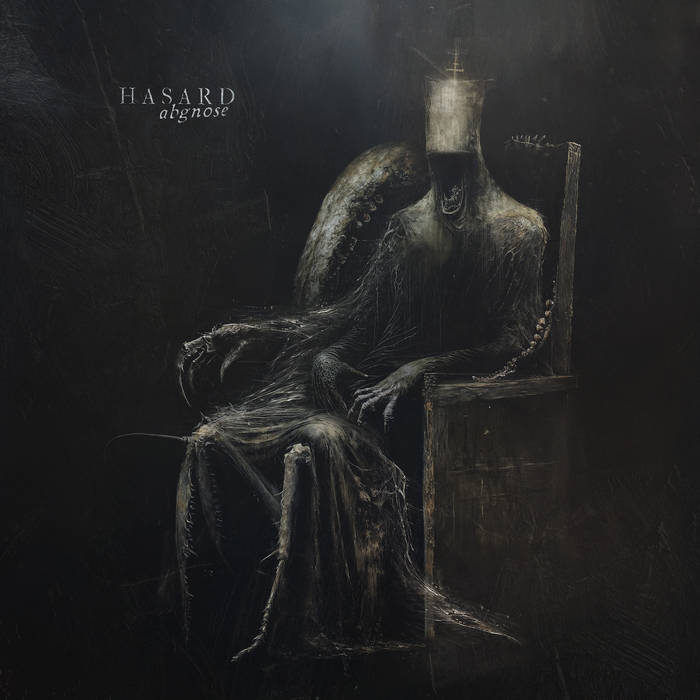
- Hasard – Abgnose
Starting with a demented nightmare, we have the unparalleled Hasard with his second release under this moniker, Abgnose. His other project Les Chants du Hasard is mostly orchestral, whereas this is more rooted in haunting black metal that’s immensely intense but painstakingly detailed, retaining the grandiose symphonic elements of his longest-running endeavor. Debut record Malivore was my #6 ranked album of 2023, and the follow-up provides a similar vibe (reviewed eloquently by our own Islander), executed with elegant derangement.
Previously describing the music as “an audible nightmare” remains apt; Abgnose is frightening, ominous, and visceral. There’s a thread of disparity in this morose fever dream – tracks such as “Senestral” wail and pursue one’s innermost fears of nothingness. Pulsating and violent whilst balancing the forlorn air that envelopes each arrangement is a difficult balancing act, but Hasard does it unlike any other. “Negascendance” weaves a stirring web of epic soundscapes and horrifying intonation, where “Antienne Estrale” makes the listener’s skin crawl as the track slithers further into fearsome landscapes of desolation. Like its predecessor, Abgnose emits a tension coupled with fierce torment, itself being a continuation down the path begun by Malivore.
His creations have no obvious comparison; an increasingly difficult achievement in a proverbial sea of releases. Creativity such as this can be intimidating, as it’s wholly its own animal, but we find it inspiring and invigorating. Hasard maintains our attention with every work he conjures, and Abgnose is a manically divine introspection into his and your own most prominent aversions.
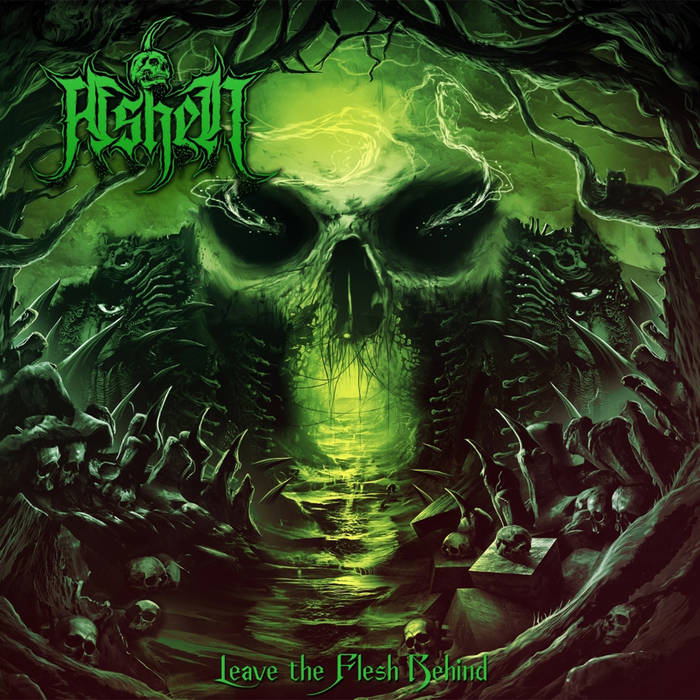
- Ashen – Leave the Flesh Behind
Australia is a hotbed of heavy music that more need to keenly observe, always treading their own path, not subservient to any particular trend. In the death metal world, there are several examples of excellence, with Perth’s Ashen being one of the more recent revelations. Their debut Ritual of Ash was a vicious slab of riffs and pinpoint craftsmanship, and the eagerly awaited second album Leave the Flesh Behind leaps the band into more exalted air.
Ashen skillfully possesses slick songwriting skills and the crushing riffs required to ram the blade deep into the listener. Leave the Flesh Behind begins with inspired, chunky riffs, moving to a steady stomp that lays all of their intent bare. The lead riff of “Ancestral Gate” pummels without prejudice, setting up a quick-yet-smashing track, where the title track and “Reincarnate” dial the doom influence up a notch with roaring, infectious guitar work via Shannon Over and gruff, commanding snarls from Richard Clements (who has since departed the band), emitting an Asphyx meets Grave type of stylization. Every track lands a devastating punch, and more importantly, they’re memorable and stick in the listener’s head.
Ashen stray just enough from the tried-and-true to stand out, and combined with their innate ability to write delectable riffs within intriguing song designs and hooks galore to keep you coming back, we have an absolute winner. More ears need to be serenaded by these fellows, and Leave the Flesh Behind is as salivating of a death metal record the year graciously provided us.

- Patristic – Catechesis
Italy had a banner year musically, with a wide variety of standout albums coming from the peninsula. Hideous Divnitiy’s Enrico Schettino has been a busy bee outside of his main band, releasing a dynamite debut record with the startlingly poignant and differing Bianca (who barely missed this list). With the black/death metal project Patristic (meaning, stated by the promo materials, “the study of the early Christian writers who are designated Church Fathers”), Schettino this time joined forces with Frostmoon Eclipse vocalist Lorenzo Sassi (replacing Bedsore’s Jacopo Gianmaria Pepe) and drummer Sathrath for the debut full-length Catechesis. Conjoining the subject of the fall of the Roman empire and pagan philosophy, Catechesis took plenty by surprise via its unabashedly violent nature and cunning musical twists.
A true sense of place is established throughout Catechesis, all wrapped in a stinging blackened death shroud. Split into two chapters, the first is a pair of tracks titled “A Vinculis Soluta” that treads a fluid course, entangled with melodies that drag the listener further into the tale being told. It’s not a constant, thick wall of sound, but a steadfast affront with plenty of meaty bits amidst gobs of nuance.
When Patristic exudes their most aggressive moments, they crumble all in the vicinity, but the straining dissonance when the reigns are pulled back a bit is where the record makes a defined mark. Second chapter “Catechesis” comprises four sections (I – IV); the first etching a bleak picture by way of riveting strings and thumping guitar work to dial the discomforting aura to a different place. Part II builds slowly but surely, tearing away to lead into explosive moments of discordant strife, where III and IV increasingly lean into strident aversion.
Catechesis is a transportive journey into antipathy and historical significance; an album that’s impossible to forget, further ingraining itself the more attention that is given to its complex structures and undeniably virulent musical nature. A major pleasant surprise of 2025.
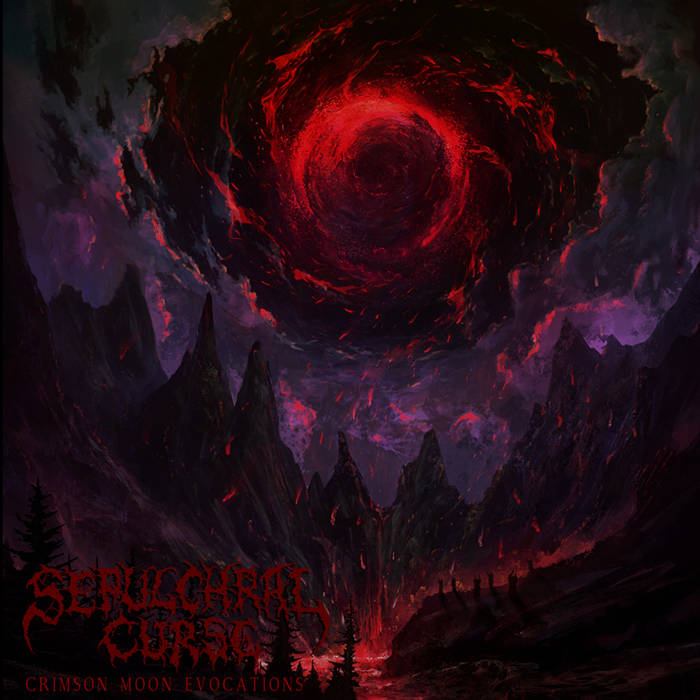
- Sepulchral Curse – Crimson Moon Evocations
Finnish death metal act Sepulchral Curse has never been a traditional meat-and-potatoes band, opting to infuse hints of black and doom into their evolving recipe. Those influences, alongside a knack for writing exceptional songs and riffs-a-plenty, have defined the band’s output. Their first release on Dark Descent Records is this year’s Crimson Moon Evocations, perhaps representing their most focused and divergent release so far.
Their black metal influences are more frequent here – evident on opening track “Wildfires” and the searing tremolos of “The Locust Star.” At the same time, there’s a bigger sense of downtrodden melody all throughout, specifically highlighted on cuts such as the doomy “House of the Black Moon” and the ripping frenzy that is “The Currents of Chaos.” Death metal purists will no doubt salivate at the riff extravaganza “Beneath the Dismal Tides,” while closer “Crimson Passages” brings all lines of thought together in a monstrous finale.
Having scribed a full review of this at Dead Rhetoric earlier in the year, I’ll borrow a quote from it to sum up this catchy beast of a death metal record, which has only grown on me further since penning the below back in April:
“Crimson Moon Evocations is an album overflowing with terrific earworms and searing savagery, with just the right amount of melodic sensibility to enhance their already delectable flavor palette. Their evolution has been a continuously effective one, with Crimson Moon Evocations being the tightest and most indelible work in their still burgeoning trajectory.”
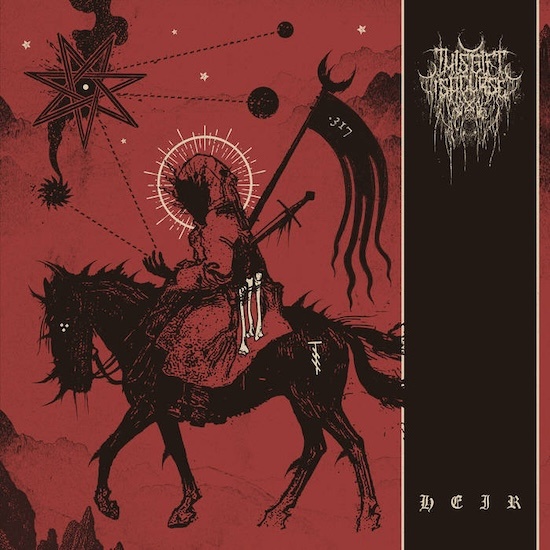
- This Gift is a Curse – Heir
A band that perplexes me for not getting enough word-of-mouth, Sweden’s This Gift is a Curse unleashed a fireball of intensity with Heir that continues to blast through walls of concrete without strife. I covered this record in the March edition of Obscurities, describing their approach as such:
“Delicately combining the chilling side of black metal with the droning bleakness of sludge and the abrasive, in-your-face attitude of hardcore…”
Heir is hyper-aggressive, foaming at the mouth to eviscerate in every way imaginable and unimaginable. It’s detailed, fierce, and angry as hell with every intent on making their protestations your problem. Within that is a variance of mood changes, with this record being the most diverse influence-wise, while also being the most poignant. That guitar tone cuts incredibly deep, too – “Kingdom” being the first salvo to set the intent crystal clear, with Patrick Andersson’s versatile and raw vocal delivery that takes This Gift is a Curse to the next level.
Entries such as “No Sun, Nor Moon” are, as previously described: “…soaked in a malignant sludgy atmosphere and a heaping load of build, penultimately boasting a repeating chorus that blows the proverbial doors off. Those damn riffs are pure filth, in the best way.”
Concurrent themes throughout are a finite attention to detail and a dedication to complete aural annihilation. Without doubt, Heir will leave the listener exhausted, thrilled, and desperate to put the record on repeat. We’ll complete this with one more quote from my original review, out of laziness and frankly not being able to re-describe it better:
“Virulent as Alta Rossa and as diabolical as Hexis, This Gift Is a Curse is a scourge that this writer will gladly take on. Heir is as noxious, contentious, and refined as anything we’ve heard this year, and no doubt we’ll be discovering new things as this receives plenty more plays in our rotation.”

- Tómarúm – Beyond Obsidian Euphoria
For debut albums, it’s difficult to concoct one as rich and impactful as Ash in Realms of Stone Icons by Atlanta’s Tómarúm. Their vision for progressive black metal is of their own; keenly refined and wholly enormous in ambition and sonic landscape. The follow-up was highly anticipated, and admittedly, we likely had unreasonably high expectations. However, those were somehow met and surpassed with Beyond Obsidian Euphoria, a record that showcases further compositional maturity and a bold attitude not shy of taking chances.
Opening with “In Search of the Triumph Beyond… (Obsidian Overture),” we’ll borrow a poorly humorous thought from my review: “A dazzling composition that’s equal parts beauty and ferocity, we’re presented with a dense layered song that has more nooks and crannies than a Thomas’ English muffin.”
The collaborative writing of Beyond Obsidian Euphoria bore fruitful results, resulting in further cohesion yet willing to try new things, such as clean vocal harmonies and connective narratives and bridges between tracks, amounting to a bevy of twists that always have a good reason for the pathway taken. Tómarúm never sits still, continuously dazzles, and manages to accomplish all of this whilst never once abandoning their molten blackened death metal core. From harder hitters “Blood Mirage” to the progressive-yet-biting “Shed this Erroneous Skin,” the band embraces a wide array of fluctuating sounds while never losing imperative focus.
We again borrow from my review to close, where these thoughts have only been emboldened since:
“The fearlessness and dynamism exclaimed by Beyond Obsidian Euphoria is as technically impressive as it is fervidly gratifying. Quite the achievement, again, by a band whose only limit is their own imagination; a characteristic that seems to literally have no ceiling.”
- Trivax – The Great Satan
The best music is made without fear or restraint. Trivax epitomizes those traits, whose founder and guitarist/vocalist Shayan was born in Iran, a country that due to the government’s theocratic ways can land one in prison for making or even listening to this kind of music. To start a band in that environment takes guts and passion that most don’t possess (check out Shayan’s podcast Iblis Manifestations, where he has some episodes where he talks about his origins in depth).
Having relocated to the U.K., Shayan has worked tirelessly to put forth Trivax’s amalgamation of black and death metal that’s absolutely singular in sound and feel. Their sophomore album Eloah Burns Out is where we first came across the band, leaving quite a lasting impression. The Great Satan serves as a definitive statement; a record that elevates Trivax to new heights both creatively and spiritually.
The band’s message and fiery anger are authentically poignant, coming from deeply personal experience with oppression and religious fundamentalism. Defiant and blazing a pathway of their own, cuts such as “To Liberation and Beyond” slash to the bone with electric hooks, huge riffs, and a message of fighting to the bitter end against tyranny.
“Here Comes the Flood” cleverly builds into explosive moments around every turn, while “Daemon’s Melancholia” emits key moments of melody and impactful cleanly sung segments amongst a mid-paced beast of a dynamic composition, showcasing Shayan’s ever increasing songwriting prowess. He knows when to pull back and create tension, and when to unleash furious bursts of black metal animosity.
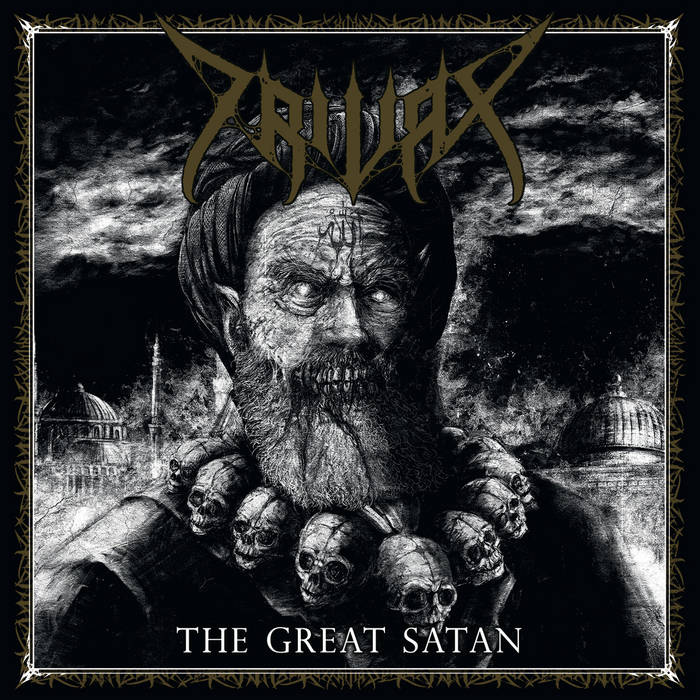
“Operation Ramadan” winds the album down on an expressive and weighty note, being the standout on an album that has no song that’s less than stellar. The Great Satan has everything, including the brilliant artwork by Silere Omnia depicting Ayatollah Khomeini in unfettered irony.
Trivax is as real as it gets (careful usage of Middle Eastern instruments, vocals in Farsi, and unapologetic truthfulness of the subject matter), making their music resonate to this writer’s core. On the surface, this is black metal of its own design, but when you dig deeper, you’ll learn a thing or two, ultimately coming away with a memorable record that will stand as a tentpole in Trivax’s history.
- Nihilvm – Ancient Cosmic Emanation
Hearing a new band that simply nails it is a unique feeling; a rush of enthusiasm that wills one to recommend said music to everyone who will (maybe) listen. Upon hearing Nihilvm’s debut Ancient Cosmic Emanation, that serotonin rush arrived again. As stated in the July edition of my Obscurities column, this album is a “visceral, bleak, and menacing attack on the senses.”
Nihilvm oozes black metal’s defiant spirit from every pore through a debut that’s staggeringly well-built, to the level of eclipsing many seasoned genre veterans. Tracks such as “Transcendencja” equate to (by my earlier thoughts) “a virile, high-velocity wall of pestilential riffs and a beastly percussive display”, while large-scale productions like “Srebrzyste ostrza gwiazd” obliterate while mesmerizing.
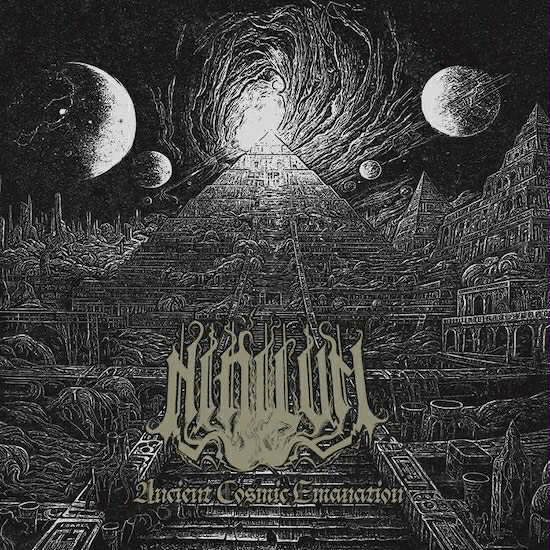
“Zjadacze światów” rends mercifully by way of muscular rhythms, whereas “Nihilizm ostateczny (zawiła droga ku boskości)” is, to quote myself again, “as sinister and foreboding as it gets with guitar work that’s flat out mean and unforgiving.” Another album that’s the full package, with some of my favorite cover art of the year (created by Kataraxia), of which the t-shirt was ordered, but we’re still awaiting it, thanks to the mess of disorganization that is the tariff. We’ll proudly sport it when/if we can get it!
By my original closing words, we’ll conclude: “Ancient Cosmic Emanation is a triumph of towering proportions, a record that should cement Nihilvm as an entity to follow closely and with the highest level of anticipation and expectation.”
- Centuries of Decay – A Monument to Oblivion
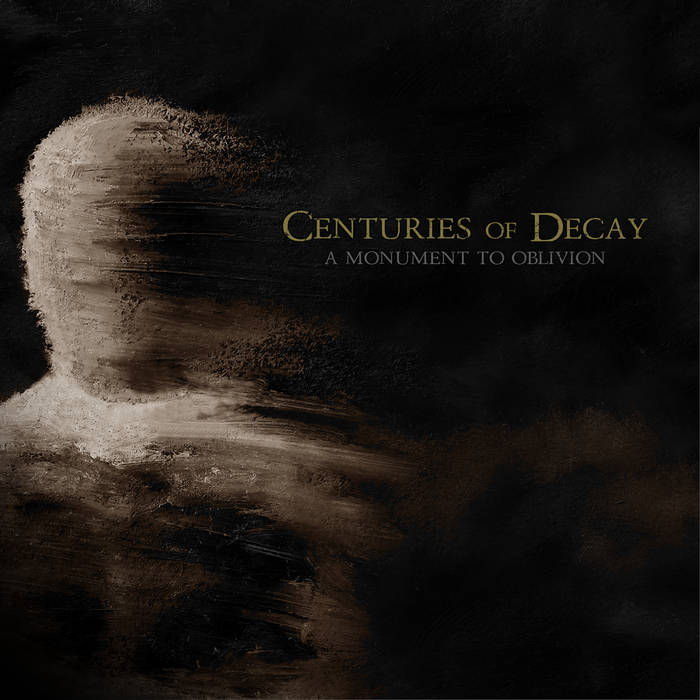
Perhaps the most unexpected of any of the inclusions on this list is Canadian progressive death metal act Centuries of Decay. We were familiar with their 2017 self-titled debut, but album #2 A Monument to Oblivion is unbelievable on the quality level, giving a similar feeling to our first listen to An Abstract Illusion’s Woe – total shock and utter delight.
We of course covered this album back in the August edition of our monthly jaunt, waxing poetic on the opening track and the album as a whole: “The mammoth opener ‘Cauterize’ is as smooth as it is abrasive, all packaged in slick and forward-thinking songwriting that always has the next movement plotted out in great detail. Every song goes somewhere enticing, and many times not what one would expect.”
A Monument to Oblivion is a record of innately detailed craft and differing tonality; “The Great Divide” is a track that we stated “eerily dabbles in death/doom territory without losing the core of what Centuries of Decay are trying to portray”, and “Between the Waves of Grief” is able to (lazily quoting myself again) “dish out considerable punishment whilst aligning with melodic tidbits and watershed moments to keep proceedings interesting and bombastic all at once.”
If death metal that isn’t afraid to go to new and exciting sonic landscapes while not foregoing the more powerful elements of their base stylization sounds enticing, then Centuries of Decay have a treat in store. Continuing to borrow from my already published words (why rewrite the same feeling), we end with this:
“There’s so much going on with A Monument to Oblivion that it can be very easy to miss important details, so be sure to give this one at least a half dozen spins to properly evaluate it. That’s a time investment, as the album clocks in at just over an hour, but the fruits of your labor very likely will be rewarded. If you’re anything like me, you’ll get hooked early and spend days repeating this glorious album like a madman. Centuries of Decay breathes oxygen into a style that absolutely needs new blood, and if justice prevails, A Monument to Oblivion will become a genre staple – a landmark release from a band who are frighteningly just getting started.”
- Tombs – Feral Darkness
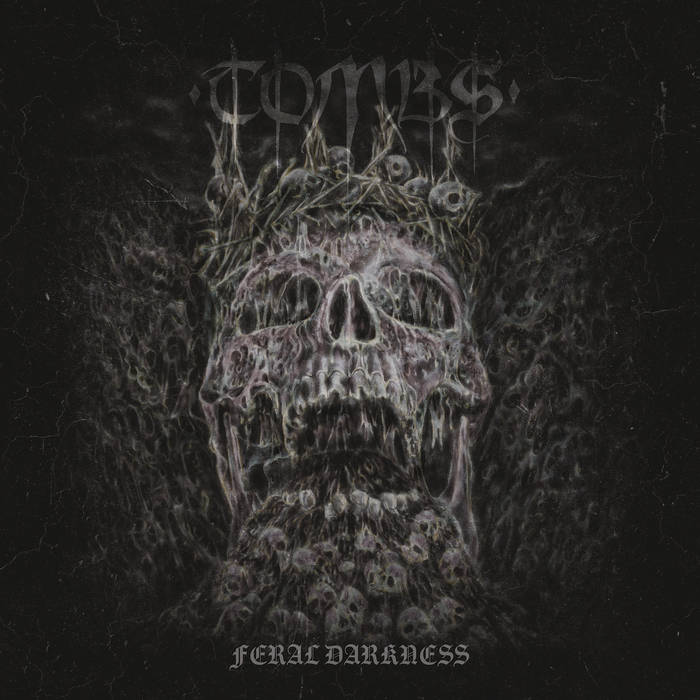
Tombs, much like central member Mike Hill, march to the beat of their own eclectic drum (seriously, the drum work is punishing). Their discography is one of variance, and to tell the truth, we’ve been a fan of all of it, though their material clicks best when it’s especially filthy and visceral. Feral Darkness is a punchy, grimy leviathan that will crush listeners into a bloody mass, and you’ll be ever thankful for the experience.
We penned a writeup about this release on my other locale for my brain droppings (borrowing that term from the great George Carlin), and we’ll utilize a few excerpts, with this one describing what to expect overall from Feral Darkness:
“As one who enjoys a thick, robust sound to their black metal and adjacent acts, Tombs has dialed in a tone of absolute nastiness and fury on Feral Darkness. Expect a weighty, cavernous, and suffocating soundscape that doesn’t give a whole lot of room to breathe within its dense, multi-faceted compositions. That said, don’t expect each song to sound similar – this is Tombs, after all – and the variance provided is harmonious as to not be jarring or disruptive, but rather refreshing by way of just how much Hill nails the aura that he’s after consistently.”
Moreover, this album is a noteworthy earworm – take the main riffs from the title track that’s every bit fierce as it is groove-laden, to which we dare you to not want more. Wanting a gritty sludge-heavy piece, “Granite Sky” is as heavy as Crowbar, a band this scribe holds in the highest of esteem. How about a tinge of gothic atmosphere – “The Sun Sets” has you covered; conversely, “Black Shapes” will pulverize by way of malevolent riffage of the death metal variety. Yet, with all of those differing influences, Feral Darkness is coherent and tightly woven, never coming close to falling into the dreaded trap of disjointedness.
We conclude:
“Feral Darkness is a rousing achievement from an act in Tombs that has evolved significantly since debuting in 2007; showcasing Hill’s compositional prowess at perhaps his most confident and resolute. An album that is doubtlessly essential listening for all who crave dark, gritty, and mercilessly heavy music, of which will be highly positioned in our rotation for a long time.”
- Werewolves – The Ugliest of All
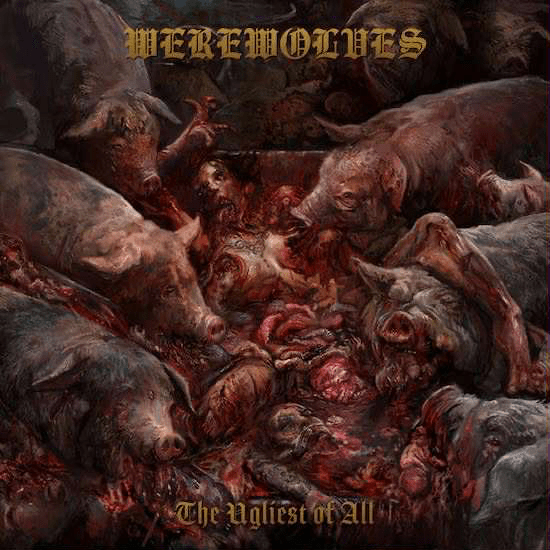
We now move on to disgustingly violent and merciless death metal that’ll make the old and/or new school squeal with delight. What is now an Australian death metal institution, the mighty Werewolves delivered like clockwork another slab of grotesque, noxious death metal that’ll leave one feeling dirty in the best way via The Ugliest of All.
Obscenely heavy and slimy, we spoke of this piece of filth back in our September column, stating: “One may inquire if they could somehow manage to be more brutal here like they have on each subsequent album. Well, Werewolves have surely upped the ante again, somehow getting more abrasive, more candid, and more disgustingly violent – just how nature intended.”
Vocalist Sam Bean is amazingly more aggrieved – “Fools of the Trade” and “Skullbattering” serve as pointed examples. Matt Wilcock is a riff-spewing machine, with the whole album beating the listener from all directions by way of some of the most murderous rhythm work that’ll impose itself onto your hapless ears all year and beyond. Then there’s David Haley – only one of the most skilled drummers in the scene, and he outright pummels the low-end with pointed potency – take the well-titled “Slaves to the Blast” and the delightful “The Enshittification.”
The Ugliest of All is just that – like Kramer after he experienced a lifetime of smoking in 72-hours – with brown teeth and crinkly skin, amounting up to the perceived overall hideousness, except unlike the K-Man’s catchers-mitt face, we can’t look away.
Signing off with a portion of my original concluding thoughts: “We dare you to not have a good time with The Ugliest of All. This record has been the most fun, crushing, and pure joy of a death metal album these ears have been rattled by this year. Werewolves simply have the ‘it’ factor in spades, and it’s a crime that more folks aren’t screaming about them in maniacal enthusiasm. What can’t these guys do?”
- Blut Aus Nord – Ethereal Horizons
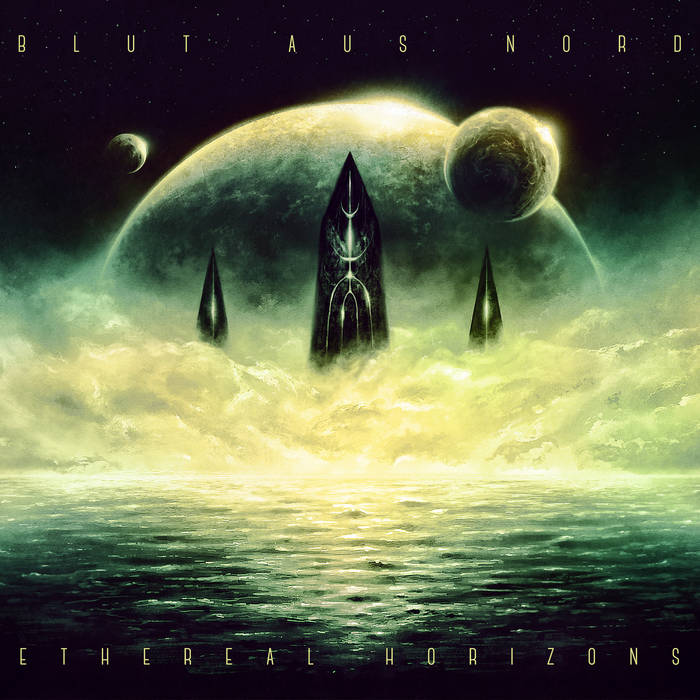
At this juncture, what can’t Blut Aus Nord mastermind Vindsval do? His feature project has undertaken countless changes in direction, all of them somehow making sense and amounting to phenomenal records of the most esteemed quality. That considered, it’s no surprise that the latest opus Ethereal Horizons has found its way onto my list, and it’s per always extremely well earned. By the way, naturally, it of course represents a change in sonic path.
Stealing from my full review from another music writing planet:
“On offer isn’t a work that delves deeper still into dissonant and suffocating territory, but rather invoking lucid, celestial formulations. For comparison’s sake, Ethereal Horizons transports to the dreamlike state of 777 – Cosmosophy, the psychedelic expressions of Hallucinogen, and even Memoria Vetusta II – Dialogue with the Stars in its most black metal moments, all while still connecting with the previous Disharmonium albums in select fits of dreary rage. Combined, that adds up to a whole that embraces airy, atmosphere-dense but still barbed black metal compositions that contain a deft balance of approaches, ultimately producing a new sonic horizon.”
Best digested as a full entree vs individual small bites, there’s much to discover here – from the grinding bleak aura melded with the surreal in “Shadows Breathe First” and “The Fall Opens the Sky,” with pieces like “Seclusion” and “What Burns Now Listens” being more downtrodden and murky, aiding the connectivity with the previous album.
Blut Aus Nord frankly don’t miss, and we don’t expect that to ever change as long as Vindsval keeps cranking out new music, with Ethereal Horizons serving as a fulfilling, exciting next chapter to the project’s extensive, elaborate story. We finish with this:
“What kind of sound will pulsate from your listening device of choice is and has been difficult to predict, though what’s given invariably will singularly be Blut Aus Nord. What Ethereal Horizons accomplishes is an exceedingly compelling reset from their more recent discordant, disquieting output to a callback of the band’s many more empyreal past faces, ultimately emerging as its own entity.”

- The Great Old Ones – Kadath
With the bevy of releases that come our way, it can be easy to nearly forget an album that you had pegged for this list quite a while ago, even for a meticulous lunatic such as myself. Being the consummate data nerd, I compile a detailed spreadsheet of releases that I listened to throughout the year, with categorizations that allow me to label if an album is in the running for year-end consideration, a possibility for my monthly musings here, or if it’s something that was just plain enjoyable, along with a bevy of filters and nonsense. All of that considered, even with my enthusiastic review of their set at Fortress, The Great Old Ones and their latest Kadath weren’t even in the damn document. We corrected that quickly, thankfully, and here we are!
Lovecraftian metal isn’t a stranger in my listening (a hint on another entry to come, perhaps), with the aforementioned Blut Aus Nord and Sulphur Aeon being all-time favorites. The Great Old Ones’ penchant for post-black metal doesn’t lose its power as many others do; robust yet refined, there’s plenty to interpret within their music, with Kadath overflowing with ambition and conveyance.
Their triple guitar affront is used to great effect throughout, with opener “Me, The Dreamer” being a thick wall of menacing sound, from layered clean guitars ringing through at the right timings surrounded by floods of rhythmic bliss. Every tool at their disposal is honed with precision and force. Furthermore, the band’s songwriting has taken an uptick in impactfulness, with the highs being that much more memorable and biting than their last few albums (all excellent in their own right) and the whole narrative of the novella The Dream-Quest of Unknown Kadath being the overarching story portrayed.
Seeing several of these songs played at Fortress only aided in enhancing their imprints deeper, such as the meticulous and mysterious “In the Mouth of Madness” and hair-raising monstrosity “Under the Sign of Koth.” The band has over an hour of music presented on Kadath, and not a second is misused or unnecessary – even the fifteen minutes of “Leng” are exceedingly introspective with much to unearth, as this is a record that reaps rewards with time invested, as many of the best do.
Kadath ranks closely to Tekeli-li for this writer’s top The Great Old Ones record, and is a testament to the band’s evolution album-to-album. Constantly challenging themselves and their listeners alike, the Frenchmen continue to produce black metal with depth, subtlety, and indignation that make them a constant force not to be trifled with.
- Darvaza – We Are Him
My most recent piece for NCS is indeed my full review of the next record on the list – Darvaza’s We Are Him. An enthusiastic observation, to be certain, and that feeling has only emboldened in the short time since. We’ll be borrowing heavily from that piece, beginning with the opening sentence:
“When attempting to think of an active band who embodies the essence of what black metal is, can, and should be, the name Darvaza should be at the forefront of thought.”
We Are Him is the duo’s second – and highly anticipated – full-length, and at a minimum it solidifies their standing amongst the best the genre has to offer, while harnessing easily identifiable characteristics that are undoubtedly theirs, such as the grisly rasp of vocalist Wraath, and the hypnotic, catchy, and abrasive tonality of Omega’s guitar work, as stated in my review, “is a recognizable one throughout his projects, always filled to the brim with seething animosity.” Diving deeper:
“Opening with a grandiose symphonic choir is a divergent maneuver, but it works, serving as a fine lead-in to the opening riff on “Holy Blood” to show that they’re not fussing about. Darvaza have always produced unreasonably catchy black metal, and this first offering is the definition of that self-imposed doctrine. The guitars cut and hammer profusely; every note is plotted with unholy purpose, with each progression increasing the tension to a fever pitch. Whenever you think they couldn’t possibly toss another infectious riff at you, they have three in their pocket.”
Songs such as “A Last Prayer in Gethsemane” and “Lazarus” give big grooves and hooks wound with trance-inducing, revelatory moments. Yet conversely, flashes of imposing directness are ever-present: ““Blood of No-One” leans a hair more towards the urgent, frenetic styling, punching the accelerator to tweak Darvaza’s form to show a differing angle. Unreluctantly, a song that aims straight for the throat and refuses to miss the jugular.”
We’ll finish with the following unquestionable praise:
“We’ll be the first to admit that after the untamable beast that was Ascending into Perdition, if the band could find a way to maintain that level, they’d remain unstoppable, but the idea of topping it would be difficult. While only time will tell if We Are Him becomes Darvaza’s most celebrated thus far, what we can state without doubt is that this record is at the very least just as tight, and at times further virulent and indelible than anything the band have provided previously.”
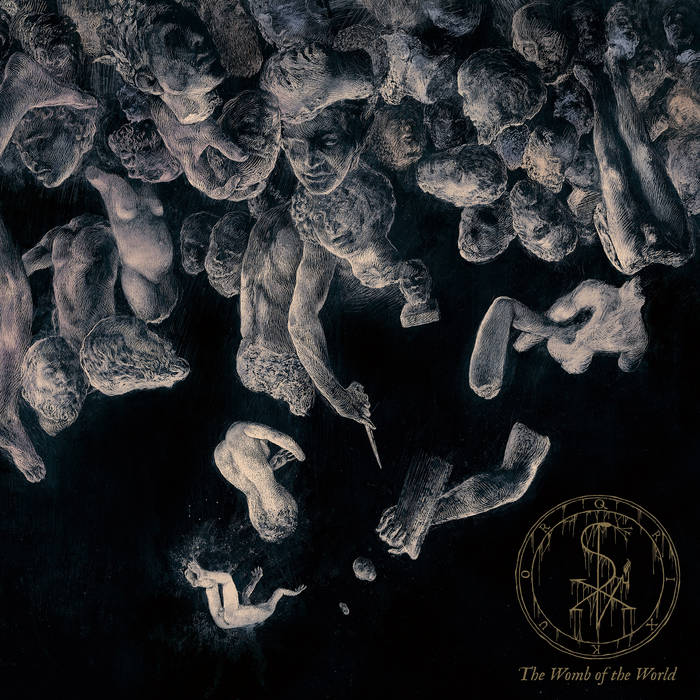
- Qrixkuor – The Womb of the World
The next two slots are acts who are near impossible to mimic, each possessing their own viewpoint of audible madness. The buzz on this album in a lot of circles we’re familiar with has been fervent, and obviously there’s an agreement on this release – Qrixkuor’s The Womb of the World. Their oddball amalgamation of death and black metal can loosely be compared to Swallowed, Mitochondrion, and the like – bands who experiment without adhering to so-called genre norms. That kind of mindset is one that’s easy to jive with. Qrixkuor turned this head with their Zoetrope EP back in 2022, and three years later they came at us with their most enterprising and atypical release yet.
For what Hasard has done with black metal – complex orchestrations stirred with black metal to create maniacal nightmare fuel – Qrixkuor does that with a largely death metal center, though that black metal aesthetic is without doubt present. Comparatively, the resultant is quite different, but the feeling to these ears is similar, with bombastic orchestral pieces manifesting a horrific atmosphere that’s played with oppressively powerful death and/or black metal to combine for a demanding yet wonderful effect.
Womb of the World is on the whole incongruous, vast, and fastidious. Each of the four tracks on offer is an all-encompassing experience unto itself, and when combined, they create a vicious record that never loosens its ghastly grip. “Slithering Serendipity” slowly escalates in trepidation as the song creeps forward, with symphonic pieces that would fit in the best kind of Japanese horror film, accompanied by violent, despondent death metal to add heft and ill-intent.
This duo simply knows exactly what each connective piece of the song and album requires to hold the listener tightly, and just when to smash them to smithereens. “And You Shall Know Perdition as Your Shrine” is about the most disturbing piece of audio you’ll hear this year, and in many others, portraying mesmerizing visions of deep fear and anxiety. The title track closer and all of it’s nearly seventeen minutes definitively represents Qrixkuor at their thus-far creative zenith; majestic, callous symphonic death metal that isn’t soaring or enthusiastic like many contemporaries, but instead grim and hopeless, as it should be.
Womb of the World is beyond worthy of the attention it has mustered, with belief that narrative will continue well into 2026. Strap in for quite a ride that will leave you shaken and aching for another round, for Qrixkuor are undeniable.

- Veilburner – Longing for Triumph, Reeking of Tragedy
Another late release that proves that one shouldn’t be so quick to decide on their final list too early, the wonderfully quirky and productive Veilburner are back with another slice of avant-garde madness in the form of Longer for Triumph, Reeking of Tragedy. From our November column look at this grandiose, off-center release:
“…there’s a dose of Oranssi Pazuzu’s oddness, Hail Spirit Noir’s ability to combine rock and black metal into a hypnotic trance, and a bit of Ackercocke’s brazen memorability. The duo of instrumentalist Mephisto Deleterio and vocal wizard Chrisom Infernium work with peak productivity while dialing the madness to eleven consistently. The twisted vocalisations offered on ‘Longing for Triumph…’ will make one quiver in bemusement, as the labyrinth of guitars spin a beautifully wicked web of trance-inducing mania.”
Divulging deeper still:
“Tracks like ‘Rigor & Wrath’ and ‘Ouroboreal Whorl’ add an airiness to proceedings with a dose of the bizarre; ‘That Which Crypts Howls Grandeur’ takes a darker yet no less unpredictable route, boasting some of the nastiest string work present on Longing for Triumph, Reeking of Tragedy. ‘Matter o’ the Most Awful of Martyrs’ ups the pace by way of galloping, imposing riffs and demonic groans, becoming one of the band’s more standout entries in a catalog filled with them.”
Having written plenty about this band, it’s still a task to attempt to nail them down, as every release is wickedly intelligent and demonstrably different than anything they’ve done previously. Their productivity dictates that we’re likely to see another major release this year (they’ve already got a new song on Transcending Obscurity’s 2026 sampler that’s an absolute treat), so prepare oneself for more. Focusing on this record, however, I’ll leave you with part of my original final musings:
“Their close attention to every minute detail, tight and unhinged instrumental and vocal demonstrations, and inborn talent to craft creative music cannot be denied, as the twosome known as Veilburner have gifted yet another harrowing chapter of music that’s impossible to forget.”
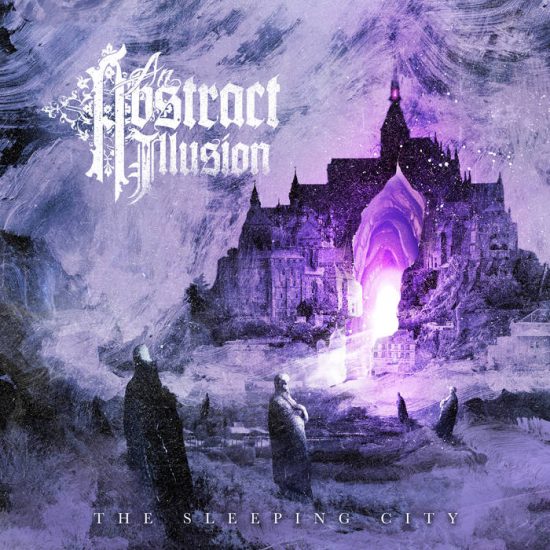
- An Abstract Illusion – The Sleeping City
It’s difficult to find an album that rearranged what I thought progressive metal could be more than An Abstract Illusion’s Woe. A harrowing, cinematic record that broke every rule and forged something extraordinary. Desolate and cutting, densely atmospheric, and profoundly inventive, they reminded of Opeth and Ne Obliviscaris, mainly in their wildly varying influences and homogeneous framework. Hell, this is the album that inspired me to come out of my music writing slumber.
To say that An Abstract Illusion is held in high regard by yours truly is a certain understatement, and when it comes to the next chapter in their story, The Sleeping City, the unrealistic expectations that many had were just that. My wish was that they wouldn’t make a sequel to Woe, and continue on their unfettered imagination in whatever way they saw fit. To that, I’ll add from my very wordy review in other lands of musical expression:
“What The Sleeping City represents is a band not resting on their laurels; putting their necks on the line to again leap over creative boundaries and again invoke something different in ways that one may not completely expect.”
At the time of writing that back in October, we hd listened to the record an obscene number of times (like anything we write about), and since then one could tally a hell of a lot more spins. The Woe Strikes Back this isn’t (hold tight, for an equally awful pun on this comes later), and it’s inspiring to hear that bursting creativity – The Sleeping City is a warmer, more synth-laden affair, baring fangs at times, but also showcasing swoons of welcoming melody, whilst still containing the fervent, tear-you-to-shreds bits that keep them so very intriguing.
Like all of their work, the devil is in the details, and truthfully, we’re still discovering new elements to embrace, making The Sleeping City the ultimate grower, and the rewards to reap are so very plentiful. Karl Westerlund definitely was inspired by plenty of soundtracks and synth music in the making of this, with a film score-like quality being one of the stronger pieces of connective tissue throughout, and the keys being intoxicatingly stunning.
As I’ve raved in the past, synthwave is one of my very favorite genres, and while there’s a lot of samey stuff out there, the best artists strike an emotive nerve unlike most in music. I hear plenty of The Midnight in the synth work, but in a very An Abstract Illusion sort of tone. “Frost Flower,” “Emmett” and the title track very much signify that feel and sonic twist in their ever changing approach; gorgeous and hard-hitting. There’s still those moments of utter fury – “Like A Geyser Ever Erupting” and “No Dreams Beyond Empty Horizons” — to satiate that craving, so fear not, as these fellows haven’t jettisoned what got them to the proverbial dance.
To wit, we’ll close with this:
“An Abstract Illusion could have chosen to play it safe and drop a Woe: Part Deux on us, and it likely would have been a crowd pleaser if that was so. Choosing to specifically not to do that is both commendable and considerably risky. The Sleeping City exists as an ambitious record that stands on its own strength and gumption; a showcase of resourcefulness by a band that refuses to sit still. We often state that the more intricate musical offerings require a time investment. Unsurprisingly, The Sleeping City is certainly that, and for most who enjoy music outside of the norm, An Abstract Illusion should firmly capture your attention once again. A triumph of a different flavor, but just as savory and bursting with texture, The Sleeping City keeps these talented fellows at the summit of progressive, impactful music.”
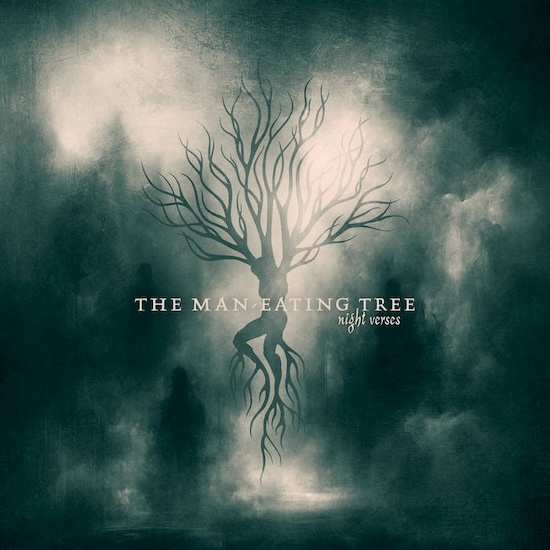
- The Man-Eating Tree – Night Verses
It’s reaffirming when an old favorite can return to give a performance that holds up with their best past efforts in a completely new skin. Ghost Brigade and their gothic doom approach captivated these ears with their touch of melancholy and massive, unforgettable hooks. Their surprising dissolution in 2015 was quite a disappointment, and one wondered if we’d ever hear that croon of vocalist Manne Ikonen in this fashion again. After some turbulence, Janne Markus (of Poisonblack notoriety) started anew with his project The Man-Eating Tree, which had Ikonen’s iconic voice as part of that revival.
The resulting record is Night Verses, which I opined about in my April column:
“Obviously, the project’s fourth album Night Verses is way more than just Ikonen and Markus joining forces, but more of a rebirth of the project with four new members. In some ways, the album carries the blistering emotional heft that Ghost Brigade perfected, but this is a different painting altogether, even though Ikonen’s one-of-a-kind croon is highly distinctive and will always be connected to his illustrious past band. Night Verses is heavier than previous efforts, but also fuller melodically, and is even a step up in the songwriting department from The Man-Eating Tree’s previous efforts.”
Another album that as time passed, it became more deeply ingrained in my skull. Emotively, this album truly sings to my soul, as corny as that sounds. It’s beautiful, downtrodden, filled with anxiousness – feelings that as somebody who struggles daily with anxiety and depression in many forms strike deeply, and music as poignant and reflective as Night Verses are therapeutic to my oddly-wired brain.
When it comes to individual details, these two excerpts:
“The moody, dreary, yet gorgeous ‘Days under the Dark’ sets the tone for the entire record. The serene and morose are skillfully combined with a bleak heaviness that results in a Michelin Star worthy recipe that we haven’t heard in this sort of music in a long time.”
“Tracks like ‘Seer’ and ‘All Our Shadows’ burst with energy and melancholic charm, excelling by way of pinpoint craftsmanship and spirit that raise the hairs on your neck.”
Ultimately, Night Verses is about as personal of an album as I’ve heard in all of 2025, with only The Midnight’s Syndicate eclipsing it (that album isn’t on this list, as we tried to stick to metal and metal-adjacent here). We’ll finish with this prophetic tidbit:
“The Man-Eating Tree is now at its creative zenith, yet the potential for more with this powerhouse lineup is vast. A riveting journey that only the likes of Counting Hours have been able to provide in recent times, done in a manner that acknowledges a wide array of iconic sounds and makes them their own. Anyone who even enjoys the aforementioned approaches slightly need to add Night Verses to their list of required listening. This one has year-end accolades written all over it.”
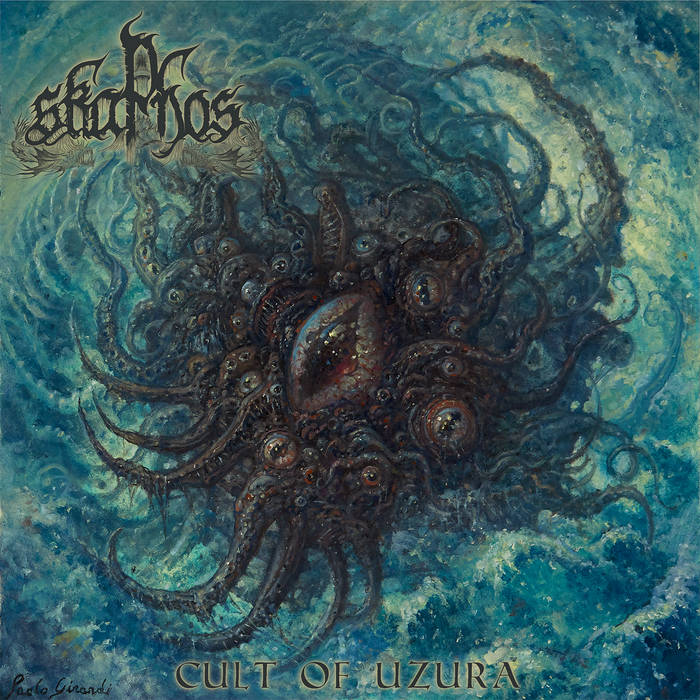
- Skaphos – Cult of Uzura
We said when speaking about The Great Old Ones that Lovecraftian-inspired works would appear again, and here we are with Skaphos’ Cult of Uzura – an album that’s as huge of a realization of promise as anything on this list. Many bands who sign to Transcending Obscurity are right at that point of dropping something special, and once again, label owner Kunal’s keen ear was ever timely and perceptive.
There’s a resemblance to Sulphur Aeon in both sound and theme, but with their own take on thick, murky death/black metal. A notable element of Skaphos is the vocal delivery, described in my full thoughts written at my other online presence:
“The multi-pronged vocal approach is a standout feature of Cult of Uzura, ranging from harmonic chants, guttural growls, wails, glass-shattering screams, groans, you name it. The usage is all calculated, so there’s no throwing a bunch of approaches at the proverbial seawall and seeing what sticks. No, there’s artistic craftsmanship to Skaphos’ here that they hadn’t reached on their first two records. Examples such as ‘One Eyed Terror’ and ‘Abyssal Tower’ are intricately composed as they are fierce; dancing with discordant moments and gargantuan riffs, traversing to different tempos and moods to keep your ears guessing.”
Zooming out, the dark recesses of the deep sea are put to music on Cult of Uzura, with a sound profile that’s unrestrained and colossal as the compositions require. Plus, that signature Paolo Girardi artwork is one of 2025’s coolest covers, bringing it all together with the perfect visual accompaniment.
To summarize, well, let’s go with my still relevant firstly published overview:
“Cult of Uzura is the definition of what this scribe would label as a breakout album, as it’s far and away the best work of Skaphos’ still young, burgeoning career. There’s been a high number of quality albums in the black and death metal realm in 2025, but suffice to say, this measures up to one of the best we’ve heard during this celestial cycle. Some may state that the length of the album – just under 50 minutes and 13 tracks – is a bit long in the tooth (a tired, lazy criticism for those without an attention span in this case), but the all-important pacing doesn’t suffer, and we couldn’t pull away for a second. When it’s put on even after many rotations, we still can’t, and that’s the mark of a record with true staying power. Immerse yourself in the deep waters that Skaphos have metastasized, and allow the monsters of the darkest depths enthrall you.”
- Dormant Ordeal – Tooth and Nail
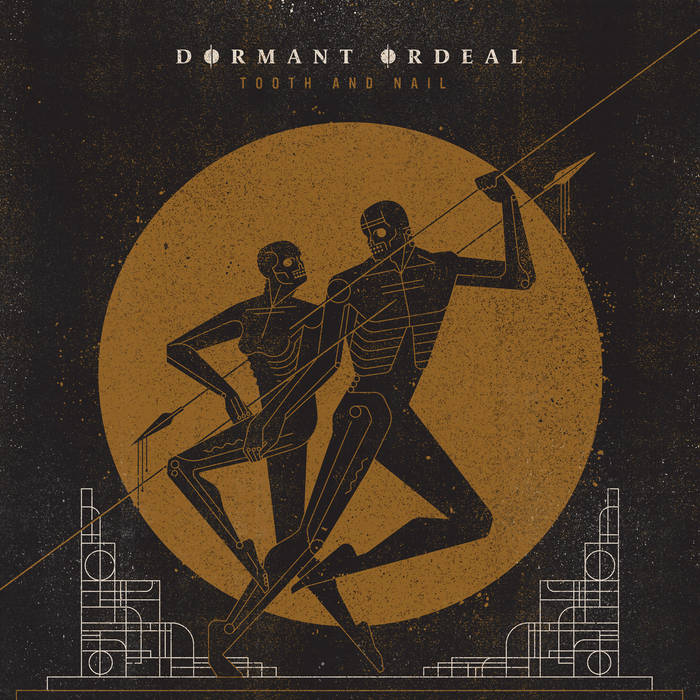
Death metal that nails the aura and torches the listener like a blazing inferno is always a sort that we’ll be attracted to, and Polish act Dormant Ordeal have delivered with brazen gusto and stark consistency. The thought of them ever topping 2021’s The Grand Scheme of Things is a difficult scenario to surmise, yet here they are with Tooth and Nail, which may have accomplished the impossible by doing just that.
Dormant Ordeal have always had a massive, overwhelming air to their records, and with Tooth and Nail that trend continues, but the tone is somewhat deeper into the dirt; desolate, disconsolate, yet explosive. The snappy, visceral “Halo of Bones” smashes all in the vicinity into dust while “Orphans” grinds and eviscerates with cold confidence. As the album moves, the dynamism is dialed up in the progressive-yet-bruising “Solvent,” the blackened tinges of “Against the Dying of the Light” and the chilling, refined brute “Everything That Isn’t Silence Is Trivial.”
Compositionally, this is as forward and diverse as Dormant Ordeal have reached, bringing the polar opposites of blunt force and cagey dexterity into solidarity. More than just a collection of songs, Tooth and Nail epitomizes the strength of the whole, with a distinctive tide being present where each individual piece is a pillar for what comes next. Primary songwriter/guitarist/bassist Maciej Nieścioruk constructed the most complete Dormant Ordeal effort he’s mustered thus far, and you feel that there’s much more to come. Additionally, vocalist Maciej Proficz puts in his most commanding effort, with his booming roar never sounding so dominant and in control, enhancing the instrumentation to together implant deeper into the listener’s psyche.
This also was the first record without long-running drummer Radek Kowal, instead employing Chason Westmoreland as a session drummer, and he puts in a herculean performance – varied, precise, and explosive, his percussive skills and standout style fit Dormant Ordeal just so – hopefully he sticks around on future efforts.
Simply put, everything clicks on Tooth and Nail. Without question one of Poland’s top death metal exports, and up to now one that hasn’t gotten enough proper due with the strength of their discography. It seems that they’ve turned plenty of heads this time around, likely garnering your attention, too, if they haven’t already. A record that hooked me in the first listen and has only endeared itself more with each return spin, Dormant Ordeal have all the tools to be a major player, and with releases of this esteemed quality, it’s only a matter of time before ascending to even higher planes of existence.
- Abduction – Existentialismus
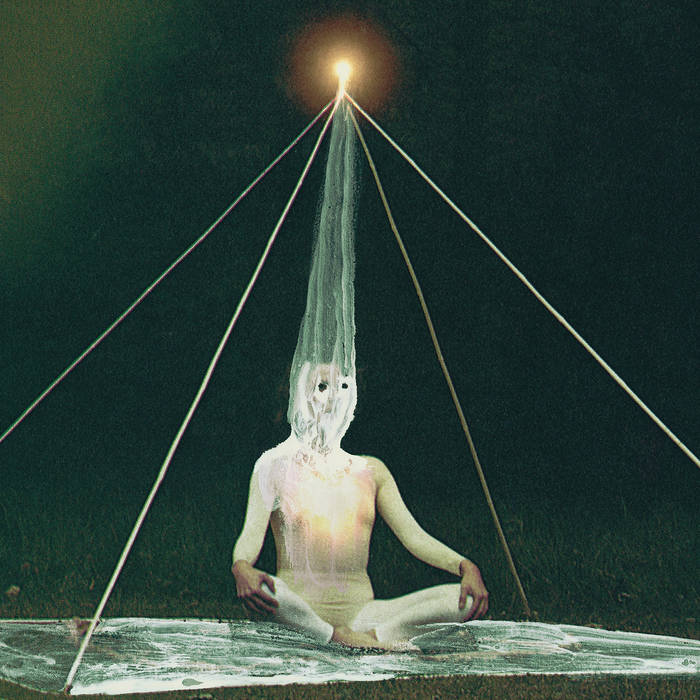
Another group whose creative talents have continued to evolve and advance, Abduction have been a top act in the UK black metal scene for a time now. 2022’s Black Blood is a record we return to often, and with the follow-up Existentialismus, we have an animal of a different persuasion, representing the most advanced and memorable form of Abduction yet.
As stated in my February column, Existentialismus is the first Abduction album not completed solely by composer/vocalist A|V himself – this time recording as a full band. We continue from that review:
“Thematically, this is Abduction at its bleakest, expressing the grim current and future state of humanity. That feeling permeates Existentialismus both musically and vocally, shaping the ultimate output profoundly. What’s presented is a direct and dense record – possibly a little less dynamic in some facets than Black Blood, but somehow even more fierce and impassioned.”
Just like The Great Old Ones at Fortress, Abduction’s performance at said festival also left a mark via the material of this album, but took it farther by playing Existentialismus in full. That performance holds as a favorite amongst a lot of fantastic shows witnessed through the past year, showing that the album holds up extremely well on stage as it does in recorded form. Existentialismus would still be on this list regardless, but such a performance only solidified its standing.
Going further into the record:
“’Truth Is as Sharp a Sword as Vengeance’ proves ambitiously expansive via a liquid song structure and further tweaked vocal deliveries, all while collectively brimming with fiery purpose. Chilling clean sung passages open ‘Razors of Occam’ ominously before erupting swiftly into slick blackened guitar overtures and reverberant snarls, while finisher ‘Vomiting at Baalbek’ signs off in a glorious over 11-minute composition that’s dark, brooding, and filled with venomous anger.”
Apathy shall prevail once more, as I’ll finish with my closing statement of what is one of the most well-written and executed black metal records we’ve heard in the last few years:
“Abduction indeed has continued its constant transformation, never feeling forced or contrived. Rather, Existentialismus is an album bred by A|V’s astute societal observations and an innate ability to craft those thoughts into musical expression that’s without comparison. More people need to know about Abduction, and with such an efficacious effort, nothing short of human self-annihilation can get in the way.”

- Jade – Mysteries of a Flowery Dream
A band who completely understands how to invoke atmosphere in death metal, Spain’s Jade left an impression with their debut The Pacification of Death in 2022. An album that ticked a load of boxes with a harrowing, singular style that felt like only the beginning of nearly unlimited possibilities for the three-piece. With Mysteries of a Flowery Dream, they’ve taken a hugely defiant long jump forward that even these keen ears didn’t expect so quickly.
There’s a similarity with Ruins of Beverast in some mechanics, but largely, Jade is a difficult one to completely pin to any extremely close comparative, though Sulphur Aeon in the complex approach to structuring songs comes to mind, along with the dissonance in the guitar work. Still, Jade manages to carve their own niche, and to blatantly use an absolutely stupid pun, Mysteries of a Flowery Dream represents the band in full bloom. Told you it was bad, but childish humor aside, this is a record containing so much to unearth that it’s difficult to competently grasp what Jade has constructed without a high number of rotations. Once their manifestations connect completely, you’ll be frantically scouring for more.
Opener “The Stars’ Shelter” is a full-on tension build; the following “Light’s Blood” erupts with precision and vigor, giving the listener an ardent payoff, only to lead down a winding road filled with unexpected dynamic changes and impactful moments that reward the enduring. There’s a theme of restraint throughout Mysteries of a Flowery Dream that aids in making the crescendos all the more satisfying; proof of a maturity in songwriting skill.
Speaking of compositional flexes, “Shores of Otherness” represents Jade at their most compelling; allowing the weaving dynamo of a track to grow into itself throughout, adding more elements as it builds. A microcosm of the entirety of Mysteries of a Flowery Dream, to be certain, a record that bobs and weaves with grace and purpose, never quite going where you might expect, and being all the better for it.
Mysteries of a Flowery Dream has a little of everything – melody, melancholy, grit, smoothness, and an overarching ability to construct infinitely fascinating music that will twirl you around its finger with ease. Jade were one of the most promising new acts in death metal, and now they’re amongst the most exciting and innovative. What happens next will assuredly be an event we won’t miss.
- Teitanblood – From the Visceral Abyss
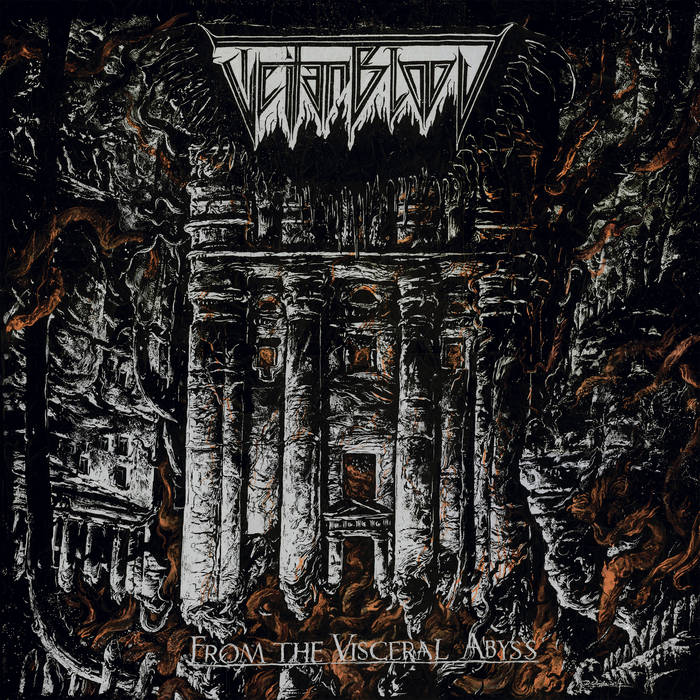
We’re into the top three, and our stay in Spain has been extended for Teitanblood and their fourth full-length, From the Visceral Abyss. There was every intention to pen a full review when it was released, but somehow we never seemed to get to it. That’s my mistake, of course, but we’ll try to make up for it now. When one believes a band may not possibly get any more potent and nefarious, they up the ante and knock expectations back with what they’ve summoned. That’s the scenario for 2019’s The Baneful Choir – a record so dialed-in that it was inconceivable to top it, but here we are six years later, and From the Visceral Abyss sets a ridiculously high standard.
Begrimed, uncontrollable, and also intrinsic, their mangled combination of the dirtiest of death, black, war metal, and every other deranged influence one can throw into the sludge can come across as challenging at first pass, but the closer one listens, it’s evident that Teitanblood maintain a clear focus whilst remaining unhinged. Opening arrangement “Enter the Hypogeum” begins as a grinding, murky mass, as a gargantuan riff sets proceedings into further action. Their ability to meld black and death metal into a single congruent entity is immensely effective, taking the atmosphere and the quickness of the former along with the power and shattering low-end of the latter, then stitching it together with mud and bile. In short, bruising and all-encompassing.
We’ve always heard a connective tissue with Grave Miasma, and tracks such as “Sepulchral God” and “Strangling Visions” solidify that feeling further. Both masters of their respective sounds, with Teitanblood more often opting for the overarching feeling of their conjurings than waves of imposing riffs, though there are imperious ones present without doubt. The sometimes squealing and other times subtle lead play from Javi Bastard drives the album, and the wild drum patterns of J add further depth and intensity.
The title track and cuts such as “And Darkness was All” invoke an Archgoat meeting with Beherit and deciding to make a death metal scenario, and we’re here for it. Then there’s the complex closer “Tomb Corpse Haruspex” – nearing fifteen minutes of all-of-the-above with significant moments of doom, strife, and a Bolt Thrower-esque mauling, all in a formation that defines the feeling of impending annihilation.
To simplify, if you want disturbing, murky, dragging in the filth death/black metal, Teitanblood remains vital and rarely unrivaled. From the Visceral Abyss is a record that’ll be incessantly difficult to move on from, not that you’d want to, for it’s a beacon of how gripping and furious this style of music can be while being infinitely deep with juicy, blistering detail.
- Martröð – Draumsýnir Eldsins
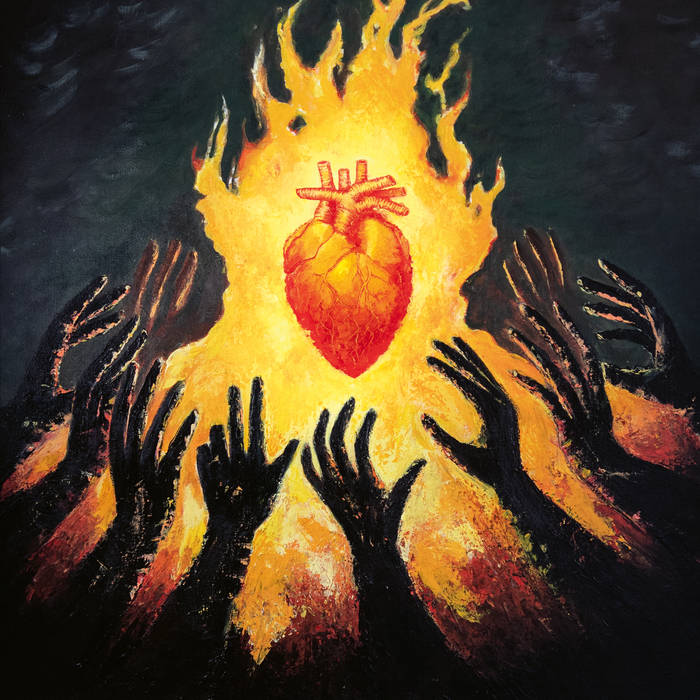
There’s an intriguing similarity between the two acts who top my list this time around, and it’s not a common one in terms of member dynamics – both are Icelandic bands in their inherent musical substance, but also have primary members from the US. That combination of geographical influence may add additional flavor, but when it comes down to it, there’s a fiery determination and a highly standout writing style that conclusively elevated them. For #2, we have Martröð, an act that had been dormant since their debut EP Transmutation of Wounds nine years ago, with a surprise first full-length in December. Debemur Morti sure saved the best for last, as Draumsýnir Eldsins represents a black metal approach that’s as intoxicating as it is invigorating.
Primary songwriter Alexander Poole has quite a list of credits (including the always excellent Krieg, Ringarë, and the sadly defunct Skáphe) and was busy in 2025 (Osgraef and Vörnir both dropped very good records), so his creative juices are absolutely flowing. Combining with vocalist H.V. Lyngdal (also of Osgraef and Vörnir, in addition to his solo venture Wormlust and the stunning collaboration Sól án Varma), they’re a formidable twosome, and not to overstate the tired cliché of “This is the best thing they’ve ever done,” it can’t be avoided when said feeling won’t depart. Intricate, pulsating black metal with an emphasis on ambient sounds, swirling psychedelic passages, and a mood that radiates utter ruination.
Amounting to four meticulously built tracks, Draumsýnir Eldsins packs in plenty within its sub-forty-minute runtime. Beginning piece “Sköpunin” lays the intent bare – weighty, layered instrumentation, mesmerizing in its intricacy, conveying a disquieting, sullen sound profile that submerges the listener into an unending void. Lyngdal’s voicings possess a wide range of inflections within a high level of expressiveness. As the song bends from chaotic whirlwinds to trance-inducing mantras, his snarls and howls permeate like daggers to complete the overarching sonic design.
Moving deeper into the record with “Líkaminn” gives an extraordinary amount of tension as the track slowly introduces new layers, increasingly gaining momentum, and just when you think the crescendo is arriving, they pull back just a little to keep your fully engrossed mind on edge. This is what honed, outside-the-box songwriting sounds like, fully realized in hypnotic, raging form. Spilling over into “Tíminn” maintaining a similar-yet-different unorthodox pathway; this being somewhat more subdued without loosening the strings, at times more direct and pulsating while adding haunting moments that stick with the listener (the spoken-word mantra transition to mangled growls is delicious), ending on a decisive, vehement manner.
Finale “Dauðinn” is the most varied and mysterious offering; calm and minimalist to start, before erupting into guitar work that’s sharp as an ancient, finely-forged sword, holding steadfastly on Draumsýnir Eldsins’ unpredictable nature before a frenzied conclusion. Session drummer Jack Blackburn (also of Ringarë, Imperial Crystalline Entombment, Unaligned, Abyssalis) puts in a dignified, signature performance, and the same can be said of session bassist Magnús Halldór Pálsson (Beneath, Vetur) – both of whom we hope stick around, as their contributions are immense.
Martröð breathes rarefied air, cultivating the best elements of caustic, dissentient black metal, spawning a debut that’s riveting at every turn, adept at conjuring enigmatic structures and fire with an immaterial essence. Draumsýnir Eldsins is an irrefutable, special record from an act that can bend the genre to their every whim.
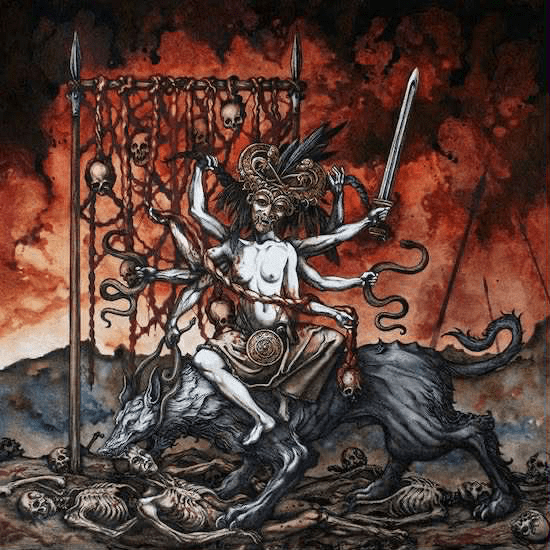
- Nexion – Sundrung
We’ve arrived at the end of the ride, folks. Wait until the vehicle has come to a complete stop before exiting and all that. But wait, before you do, we have the other side of the Icelandic/US split in the form of Nexion and their searing second full-length Sundrung to top this marathon.
We dissected this gem back in September, and here’s an excerpt as to the feel of the record:
“Ritualistic, spellbinding, and razor-sharp, Nexion propagate an audible experience to engross in. Opener ‘Uþarpaspa’ is as enormous as it is biting, from frigid guitar work, engulfing chants, and intricacy that few can equal. ‘Gandr’ follows, offering an unrelenting march that tears all in its path to shreds.”
The twin-guitar affront by way of Óskar Rúnarsson and Jóhannes Smári Smárason foams with efficacy and jagged, icy tonality. Vocalist and lyricist Josh Rood’s expertise in Norse history serves the band well in their approach to their sound, and we summed up his singular, alluring voicings:
“The vocal variety presented by Josh Rood is vast and cathartic, a standout feature of Nexion. Hymnic rasping screams, scintillating howls, and mesmerizing harmonic mantras combine to form an incantation that consumes the air around you – ‘Hymn of the Valkyrjur’ (further enhanced by some guest vocals) being a prime example of this gripping mixture.”
No record in 2025 eclipsed Sundrung’s ravishing design and execution, giving the listener a full-bodied encounter whose uncommon artistry and unwavering purpose proved a dominant, intoxicating elixir:
“Structurally, this is Nexion’s most dynamic effort, weaving intricate passages with layer upon layer of detail from start to finish. There’s so much going on that it’s near impossible to take in every element, but once the music fully hits, there’s no going back. Entries such as ‘When Raven Steals the Sun’ and ‘Visions of the Seventh Fire’ rank amongst the band’s most immersive formulations, spewing magma with style and viciousness.”
There wasn’t a metal album that we spent more time with and unearthed more brilliant treasures from than Sundrung, further elevating Nexion amongst the very best that black metal has to offer (and there’s a lot of quality, as evidenced by this and many other lists at NCS). We’ll close with these final thoughts from September:
“Nexion is leading the pack in the realm of black metal at its most creative and forceful. Sundrung is an immense accomplishment that gives an infinite number of reasons to return to breathe in its hypnotic trance. There’s even more to come from this immensely talented group, as they further establish themselves amongst the elite.”
Spotify Playlist:
This is worryingly aligned with my own EoY list, and absolutely brilliant to see Jade and Patristic get some much needed recognition.
Hey, great minds and all that!
Jade and Patristic were both excellent for differing reasons, no doubt! What were some of your favorites, and anything that I missed that you’d suggest?
Just wanted to say thank you for bringing Nexion – Sundrung to my attention. I can’t stop listening to this album! Never heard of these guys but this is some incredible stuff.
Icelandic black metal is nearly always top-tier. The Nexion fellows are immensely talented, and obviously, I can’t stop listening to it, either! Spun it today, in fact. I hope you checked out Martröð – another Icelandic masterclass.