
(written by Islander)
Recently we have been reminded by photos from the vicinity of the Moon that in many respects the Earth is a verdant, beautiful, and serene place. Closer to ground level, however, it still often remains ugly, violent, saturated with suffering, and shrouded by death. Of that we don’t need reminding, because the evidence is all around us, every day.
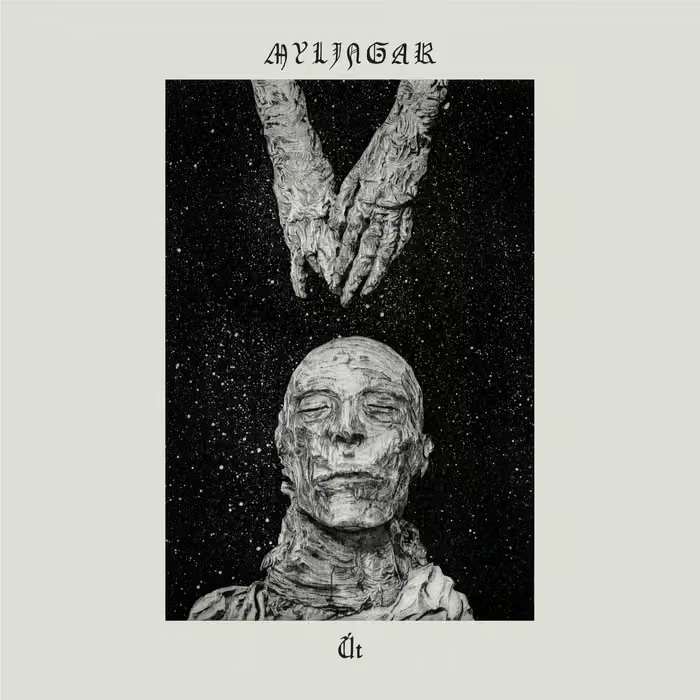
The music of the anonymous four-person entity known as Mylingar has always drawn its fuel from the worst that humanity has to offer and the perspective that the world is a killing machine, or so it seems when you listen to their ruinous black/death assaults. And now, nearly seven years after their last album, we’re reminded of that by a new one named Út, which will be released in cooperation with Amor Fati Productions on April 17th.
But as we’ll explain, and as you can now discover for yourselves, there’s even more going on in the album than you might expect based on Mylingar’s previous works.
Mylingar’s first three releases — Döda vägar (2016), Döda drömmar (2018), and Döda Själar (2019) — formed a trilogy, with the titles of each release running from “dead roads” to “dead dreams”, and on to “dead souls” (if Google Translate is to be trusted). We premiered full streams of all three, each premiere accompanied by wordy reviews that struggled to describe just how monstrous and annihilating those experiences really were.
Út is the beginning of a new trilogy. It includes seven songs and runs for 45 minutes. The title of each song is a single word in what appears to be old Norse (or Icelandic), and collectively they form a sentence: “Megi blóð mitt rækta jarðveginn af neðan“. Resorting to a translation tool, we find this means: “May my blood cultivate the soil from below”.
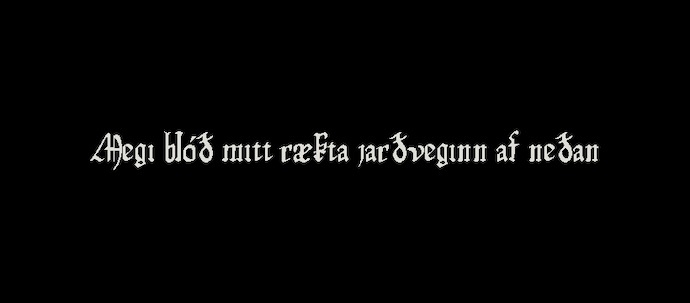
That sentence is a signifier that the passing of nearly seven years since Mylingar’s last album hasn’t made them less morbid or more hopeful. The new album’s opening song “Megi” also demonstrates that their musical preoccupation with sulfur, chaos, and death has not only survived the years but, if anything, has been translated into even more harrowing and horrific forms.
In one of those previous reviews I described Mylingar’s vocals as bestial atrocities which reach “levels of horrendous power and lunacy that would be deemed exceptionally macabre even in our mutilated listening circles.” They remain a hideously inhuman presence within “Megi” and throughout Út, viciously expelling grit-choked, gagging, bellowing, braying, and screaming forms of extremity that manifest as hatefulness, insanity, and shattering torment.
“Megi” also inflicts dense, distorted riffing that creates a diseased and dismal swarm of sound. The chords maniacally vibrate but slowly writhe as they rise and fall. The sound is filthy but also searing, murderous but also miserable.
The guitars simultaneously abrade like a belt-sander but also piercingly ring, wail, and whistle in ways that create an un-real but also anguished atmosphere, and those sensations do seem to reflect a change in Mylingar’s stratagems. Especially when the manic pace of the rhythm section slows, the music becomes mystical and eerily mesmerizing — not pretty, to be sure, but nonetheless haunting.
Speaking of the rhythm section, their performance in “Megi” goes beyond the typical blast-and-trample found in the sonic warfare of many black/death metal bands. There’s noticeable nuance in both the throbbing bass lines and the changing drum patterns. They not only shift gears repeatedly but also vitally add to the song’s more hallucinatory aspects, most especially when they slow down near the end of the track.
And so the opening song proves to be intriguing as well as violently eviscerating and wrenchingly morbid. The subsequent songs fortify this perception of the music as intriguing and multi-faceted. The riffing and the vocals channel disease, distress, and full-blown chaos, but the guitars continue to warp, to writhe, and to dissonantly ring like mutilated or melting bells, bringing experiences of confusion and pain to the forefront.
The band also add strange ambient electronic experiences at the conclusion of some songs or the beginning of others, which enhance the album’s unearthly aspects (and is that a ghost singing at the end of “jarðveginn“?). But those aspects are present in other ways as well — just take one listen to the desolately ringing lead-guitar performances that take over in such songs as “mitt” and “rækta“, or the screeching string tortures that surface and re-surface nearly everywhere.
The subsequent songs also repeatedly demonstrate how interesting and adventurous the rhythm section have become. Thankfully, the shocking vocals, the dense abrasiveness and unsettling dissonance of the riffing, and the unnerving peals of the lead guitar don’t obscure the mercurial musings of the bass (I might even call them prog-influenced, though this band might view that as an insult) or its feverish gnashing and gnawing, nor does it obscure the punkish gaits, the booming eruptions, and the strangely skipping frolics created by the drummer. (And you might even headbang a bit when the band start jackhammering in “af” just before a guitar goes off like a warning siren.)
It bears re-emphasizing that while these songs are unmistakably diseased and violent, putrid and destructive, they are equally steeped in suffering and frequently hallucinatory and even psychedelic, like waking nightmares. In creating those desolate and phantasmagoric experiences the songwriting is more intricate than you might expect. The music employs dissonance in different ways — as mentioned, the guitars peal and wail or quiver and shiver as often as they rip and scathe. It’s never very comfortable but the shapeshifting is (to use the word again) intriguing.
Also worth mentioning: the album’s final song “neðan” is an 11-minute pageant of psychosis. Mylingar use the minutes well, indulging their idiosyncratic and experimental impulses perhaps to an even greater degree than before. During some of those minutes, wild voices cacophonously and fanatically cry out in the midst of a poisonous sonic miasma; guitars eerily ring like fractured chimes; a distorted voice agonizingly moans and gasps against a backdrop of sizzling static
So to close, let’s observe that anyone who attempts to sum up Út as merely a disgusting or rudely offensive black/death abomination hasn’t listened closely enough. Yes, it is those things, but it’s also much more, so relentlessly transfixing that it should keep at least aficionados of more chafing forms of metal extremity rooted in place all the way through.
And with that, we’ll step aside and leave you to it:
Út was mixed and mastered by D. at Blackout Studios in Brussels, Belgium. Its cover art was again created by Beyond Art, and the layout by Dan Fried.
It is available to order on 12″ vinyl LP, digipak CD, and digital formats.
PRE-ORDER:
https://mylingar.bandcamp.com/album/t
https://shop.amor-fati-productions.de/en/14238-mylingar-ut-lp-pre-order
AMOR FATI:
https://amorfatiproductions.bandcamp.com/
https://shop.amor-fati-productions.de/en/
https://www.facebook.com/amorfatiprod
FOLLOW MYLINGAR:
http://www.facebook.com/mylingar
Excellent review. What an impressive band.
Thank you! This really is one of those albums that stays with you after you’ve heard it.