
(written by Islander)
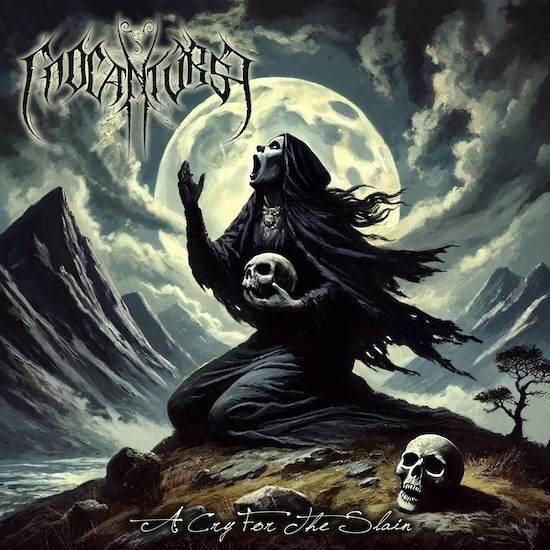
For those of us who were electrified and bewitched by Cnoc An Tursa’s first two albums, The Giants of Auld (2013) and The Forty Five (2017), the wait for something more from these Scots has brought its fair share of woe, because the wait has been so long. But even though it’s rarely true that all good things come to those who wait, something exceptionally good has at last arrived from Cnoc An Tursa, a new album named A Cry for the Slain.
The album richly rewards the long-suffering patience of the band’s fans. As their label Apocalyptic Witchcraft describes (and as we might have expected) it is “an evocative tribute to the history, the folklore, the unique magic of their homeland,” a compendium of songs “that bring together mourning and defiance, mystery and fear, pride and passion.” The band themselves have said:
“With this new album we feel like we are going back to our roots with a more guitar-driven style and bringing back some of the folk elements musically and lyrically which was the original inspiration for the band.”
Of course, we have thoughts of our own to share about the album (many of them), though the main purpose of this feature is to provide the chance for you to hear it in its entirety in advance of its release on April 24th by Apocalyptic Witchcraft.
In the interest of full disclosure, I should begin with a personal confession: I am a died-in-the-wool Scotophile, despite having no Scottish ancestry that I can find.
I am not well-traveled outside the U.S. at all, but I have visited Scotland three times, ranging from the Lowlands to the Highlands and the Hebrides. For 20+ years I’ve attended a Burns Supper in January to celebrate the birthday of Scotland’s greatest bard. I own an inordinate number of bagpipe recordings, poems and novels by Scottish writers, and a couple of tartan kilts, which for some reason are more difficult for me to strap on than they used to be. Over time I have eaten a tonnage of haggis and drunk enough single malt to float a battleship (though I haven’t developed much of a taste for Irn-Bru).
And so it’s merely honest to say that Cnoc An Tursa’s music has always seemed made for me personally (though I’m sure this is a feeling shared by most metal-loving members of the global Scottish diaspora). I am innately prone to enjoy their blending of black metal, traditional Scottish music, and lyrical themes deeply rooted in the history and culture of their homeland.
Does this mean I’m incapable of thinking about their new album “objectively”? It’s a fair question, especially since the album includes a song based on one of my favorite Robert Burns poems in the Scots dialect, “Address to the Devil“. But I’ll do my best to step back from my stronger-than-usual predisposition toward this music and attempt to provide more reliable guidance for those who aren’t Scotophiles (including even wretched Anglophiles).
One thing that makes the album so thoroughly absorbing is that these eight songs differ from each other in both their mechanics and their moods. The band’s label is correct in stating that they “bring together mourning and defiance, mystery and fear, pride and passion”.
The opening statement “Na Fir Ghorma” will likely make you think about the name of the album and its wrenching cover art. It creates a hybrid sound of storm and apparitional agony that’s disturbing, and that provides the setting for guitars to slowly ring out their grief and a soaring voice to sing its own. But this compact song becomes much heavier and more dramatic as the vocals transform into a reverent but sky-high harmony and the band deliver a hard-hitting rhythmic thrust.
Even that relatively brief introductory track displays impressive production qualities, a union of clarity and separation where needed and spine-shaking power, qualities that are evident again in the following song, “The Caoineag“. Its mood is far more ferocious and frightening, but like the introductory track it’s also otherworldly (and indeed the entire album repeatedly creates an ancient, mystical, and even diabolical atmosphere, very much in line with the songs’ lyrical themes).
“The Caoineag” introduces the listener “to a highland banshee who foretells death and tragedy and sings her laments beside the deep lochs and chill waterfalls”. To do this, Cnoc An Tursa discharge thundering drums and swirling blizzards of black-metal riffing that also flow in broad waves. But they also down-shift into a beleaguered march overlaid with high, stressful tones and fronted by tormented howls and scorching screams.
The music creates visions of panoramic grandeur, but the guitars also intriguingly glitter while old acoustic tones ring and keys ethereally shimmer. As in the opening track, this one also slugs damned hard, and the whirring riffage also brings in melodies with a traditional aesthetic. You will hear the grieving banshee speak as well, just before the music explodes in a ravishing display of vast and violent intensity.
When you listen to “The Caoineag” you might well wonder how Cnoc An Tursa could follow up such an astonishing spectacle — such a moving, viscerally compelling, and immediately memorable experience. It sets the bar very high.
It also lays out many of the songwriting techniques that make all the rest of the songs equally gripping. The other songs include proof that Cnoc An Tursa can hold their own with the most savage of black metal bands but are also highly capable of dynamically changing momentums and intensity, unfurling melodies that draw upon their country’s folkloric traditions and become memorable, employing synths to paint majestic and mystical soundscapes, and creating a changing tapestry of moods as well.
At times their piercing melodies resemble the skirl of pipes or the strumming of a lyre; at times their rhythms feel like galloping steeds or thundering cannonades, but also like the downcast procession of broken souls. The music will regularly punch your pulse, but also provoke haunting thoughts. It creates periods of heart-bursting splendor, but might also make you imagine fiends giving chase beneath full-moon midnights. The vocals are persistently explosive and near-unhinged in their ferocious and shattering passion.
Beautifully wailing and gloriously spiraling guitar solos seize attention in “Baobhan Sith” and by themselves make that song a standout (though it stands out for other reasons too). The big rocking beats and dancing notes in the fiercely but also joyously anthemic Am Fear Liath Mòr hint at post-punk. The racing “Alba In My Heart” goes the other direction, generating an exhilarating and barbarous charge, but it also becomes a channel of both sweeping, heart-felt reverence and crushing sorrow. (Forgive the use of the overworked term “epic”, but that’s what “Alba In My Heart” really is.)
And of course we must mention the Burns-inspired “Address To The Devil“. As one of the album’s longest songs, it creates a changing musical narrative, one that’s blistering and frightening, viscerally sinew-moving but also eerily seductive (thanks to cleanly trilling guitar melodies and a talented guest female vocalist), and tormented and grief-stricken in its mood as well.
Cnoc An Tursa close with another short song, like the opener. “The Nine Maidens Of Dundee“, a wordless and mesmerizing piece, features bright (but also haunting) piano melodies and other acoustic instrumentation as well as sounds of mysteriously glimmering symphonic strings. To quote from the evocative press materials, it “leads us down from the peaks once more, with a head full of dreams and a belief that magic may still exist in the less travelled glens of the northlands”. That is indeed what it does.
With all those many words now behind me, I’ll turn you over to our premiere stream of A Cry For The Slain, if you haven’t started playing it long ago. It’s a tremendous record, and one I hope you’ll indulge from beginning to end.
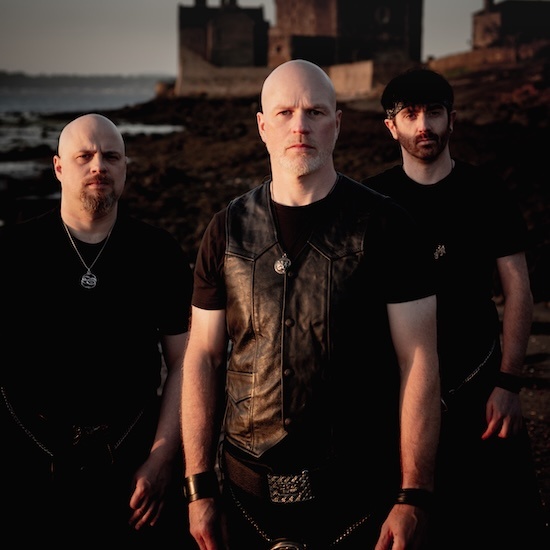
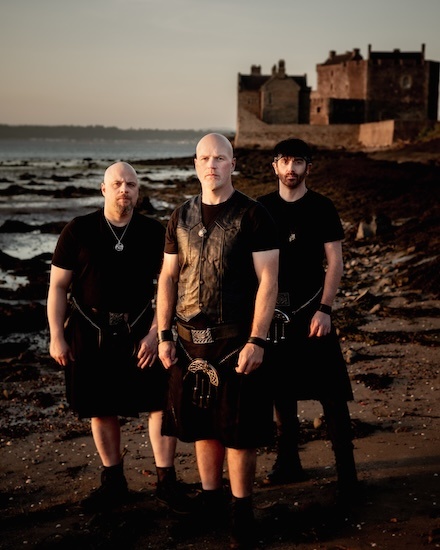
CNOC AN TURSA Line-up:
Alan Buchan – Vocals
Rene McDonald Hill – Guitars, Keyboards
Bryan Hamilton – Drums
The album was mastered by Jaime Gomez Arellano (Paradise Lost, Primordial, Hexvessel, etc.). The striking cover art was created by Olga Kann (Winteria, Withered Land, Ruadh, etc.).
Apocalyptic Witchcraft will release A Cry for the Slain on vinyl LP, CD, cassette tape, and digital formats, and they recommend it (rightly so) for fans of: Primordial, Winterfylleth, Saor, and Forefather.
PRE-ORDER:
https://apocalypticwitchcraft.bandcamp.com/album/a-cry-for-the-slain
https://apocalypticwitchcraft.co.uk/
CNOC AN TURSA:
https://www.facebook.com/cnocantursa/