
(written by Islander)
I had enough time between yesterday and this morning to make this week’s SHADES OF BLACK collection a large one. It includes a trio of EPs, a pair of singles, and one full-length album, all of which got their claws on me in very different ways.
I suppose I could have sub-titled this collection “Best of British”, because three of the bands are from that green and pleasant land (that place of clouded hills and Satanic mills, to complete Blake’s famous references). However, my friend Andy claimed that phrase for his own reviews long ago, and anyway the following collection also includes bands from Czechia, Texas, and Iran. Hope you enjoy everything here.
NECROLIGION (UK)
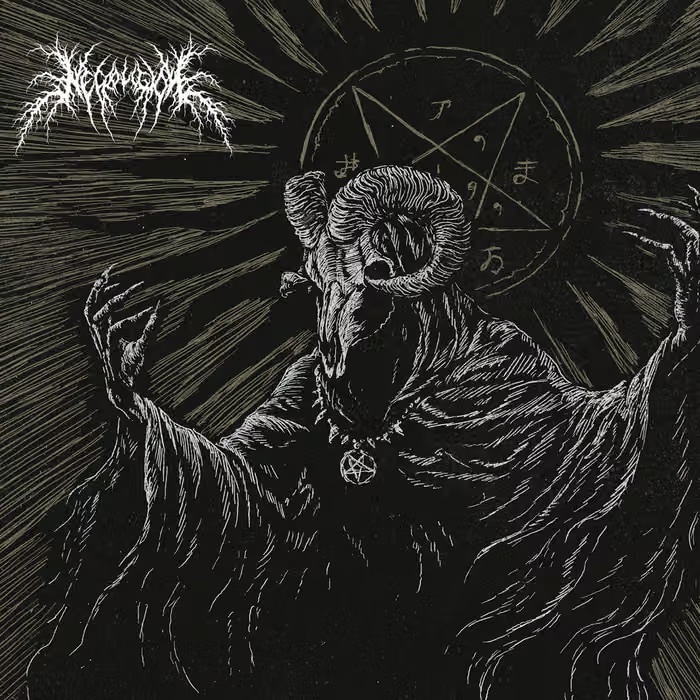
For reasons I’m not entirely sure of, I decided to begin with the most powerfully vicious music in today’s collection. It’s the self-titled debut EP of Necroligion, the British trio of Russell Barron, Aaron Moore, and Bruno Clay which was released 10 days ago by the Cumbrian label Wulfhere Productions on CD and by Eggy Tapes on cassette (though it appears Bruno has departed the band after completion of the EP).
I have to applaud the way Necroligion chose to begin the EP. On the one hand it’s an “Intro” track (explicitly labeled as such), and intro tracks are quite often throwaways that don’t have much musical connection to the songs that follow them. On the other hand, this one’s scary as shit (it was created by dark ambient artist Prior), and thus an entirely fitting preview for what lies ahead (even though what lies ahead has more dimensions than you might suspect).
At first the Intro sounds like the eerie reverberations of a slowly struck gong, but those reverberations become more abrasive, and they’re eventually surrounded by a swelling cacophony of yelling and screaming voices that put nerves on edge.
“Screaming Void” then follows, and the guitars carry forward those gong-like tones, which begin to ripple and swarm as immense booming detonations ensue. Chaos breaks open with blasting drums, terrorizing screams, heavy undulating bass-lines, and dense riffing that continues to ripple and swarm (the sound is both ringing and caustic).
Necroligion segments the assault with enormous stop-start throbs, brutally surging thrusts, and riffing that maniacally writhes and vibrantly flickers. The throat-ruining shrieks descend into malignant roars, and the music seems to tower — but the fretwork also mysteriously pulsates and wails.
The song “Necroligion” is more ominous, more cloaked in gloom, more steeped in misery, but it too thrives from its layering of multi-toned guitars that manifest as both maniacal and stricken, and from both the enormity of the bass presence and frequent changes in pace. Sounds of acidic sizzling wash through the background, and the ringing tones pierce through in gripping (and often fiendish) ways. In this song too, Necroligion inflicts battering-ram thrusts and bursts of swirling delirium.
“Spiritual Declension” brings the EP to a close in spectacular fashion. The same musical ingredients revealed in the two preceding songs are still present, including the piercing ring of the lead guitar, the wild terrors of the vocals (which here layer together the shrieks and roars), and the turn-on-a-dime changes of pace and mood. By turns, the music is oppressive, malicious, ecstatically violent, and viscerally gut-loosening — and it rocks out too.
Perhaps needless to say at this point, I thoroughly enjoyed this first strike from Necroligion, happily paid the £6.66 for a digital copy, and look forward to further strikes.
https://wulfhereproductions.bandcamp.com/album/necroligion
MOORAH (Czechia)
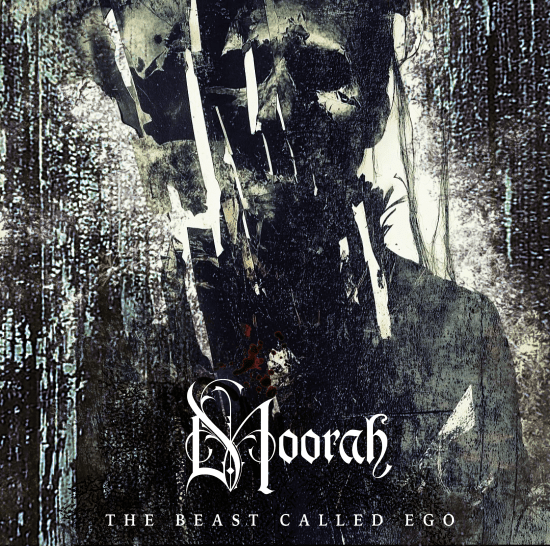
To kind of settle and re-set your mind after that Necroligion assault, I’m turning to the second single from a forthcoming second album by the Prague black metal band Moorah. The name of the song is “Left Hand of Darkness“, but I gather that its lyrical themes are different from what you might guess based on that title. This is from a press release we received:
Far from the traditional genre tropes of pure nihilism, Left Hand Of Darkness takes a cerebral approach, drawing its conceptual weight from deep psychological and philosophical dualities. The lyrics dismantle the barrier between opposing forces — light and dark, life and death — framing them not as enemies, but as interdependent halves of a whole.
In the song’s opening minute Moorah use synths to spread a gentle, pastoral melody across the listener, like lying down and gazing at the sky in a sunlit field. Deeper orchestral tones join in, and then the lead guitar slowly rings a plaintive melody adapted from the opening, and the bass and drums join in. The music’s layered amalgam of ringing instrumentation is mesmerizing, yet also haunting.
But the rhythm section eventually accelerate the pace, the guitars heat into a distressing fever (though without losing the thread of the central melody), and then the riffing creates an even stronger feeling of distress just as jagged snarls and deep growls begin savagely venting the words.
The sweep of the music expands, but it’s a very different and more anguished kind of panorama, yet the ensuing guitar solo seems unwilling to yield — still stressed but also defiant — and a second vibratory solo again pulls forward the song’s central melody, which by this point has already become deeply rooted.
A very moving and memorable song that does indeed juxtapose different moods of light and shade, and manages to find a synthesis of them.
Moorah’s new album is named The Beast Called Ego. It will be released on November 6th by Art Gates Records.
https://bfan.link/left-hand-of-darkness
https://artgatesrecords.com/artists/moorah
https://www.facebook.com/MoorahMusic/
SÁRR (UK)
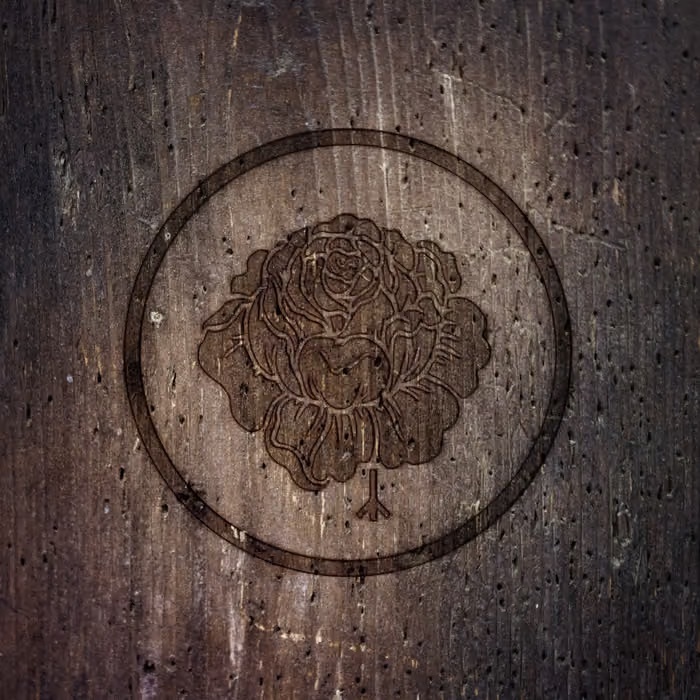
I found out about this next EP through a Bandcamp message from Miracles From the Gutter, a message I received because I’ve bought music from them in the past. The message reported that the label’s owner Tim Nyss is stepping away from “making and producing music for the foreseeable future, although not indefinitely.” It also reported that the label’s last new release would be this EP, The Gallows Rose, by Sárr, which is one of Nyss’s personal musical vehicles. He dedicated it “In memory of Béla Tarr & Steve Albini”.
The title song begins with a grim and grieving melody slowly rendered with guitars that are both ragged and ringing. The sound swells and shimmers (still ringing but also searing) as skipping beats, a heavily humming bass, and wretched screams join in. The melody burrows in deeper as it goes, and grows even more distraught in its mood.
Sárr briefly reduces the song’s intensity, and it rings in a way that sounds wistful. When the song’s intensity expands again, the music seems to plead as well as grieve, and a rapidly rippling guitar solo generates those same feelings. Near the end the clear-toned lead guitar rapidly flickers, seizing attention because it sounds frantically jubilant (or maybe frantically desperate). The drums vibrantly pound, the vocals shriek, the music burns and batters, and then synths create a vast panorama before the music expires, simultaneously dismal and mystic.
The opening of the second song “Eptir” also joins together ethereally glimmering radiations and slowly clanging notes with a rusted and ruined aspect. They create a mood of loneliness and hopelessness, even as the synths swell and envelop the listener in swaths of celestial wonder. When the drums arrive, it’s with a marching, military cadence. When the vocals arrive, their screams are again terrifying.
Brittle bass notes also prominently shiver, moan, and throb beneath the gleaming overlays; the drums also hurtle; and a voice gasps. The song has been building toward something, and what arrives is an experience of surging calamity, followed by a finale that circles back around to the way the song began.
If this is EP is indeed the swan song of Nyss and Sárr, it’s a tremendous farewell.
https://miraclesfromthegutter.bandcamp.com/album/the-gallows-rose
https://www.instagram.com/miraclesfromthegutter/
NAMU (UK)
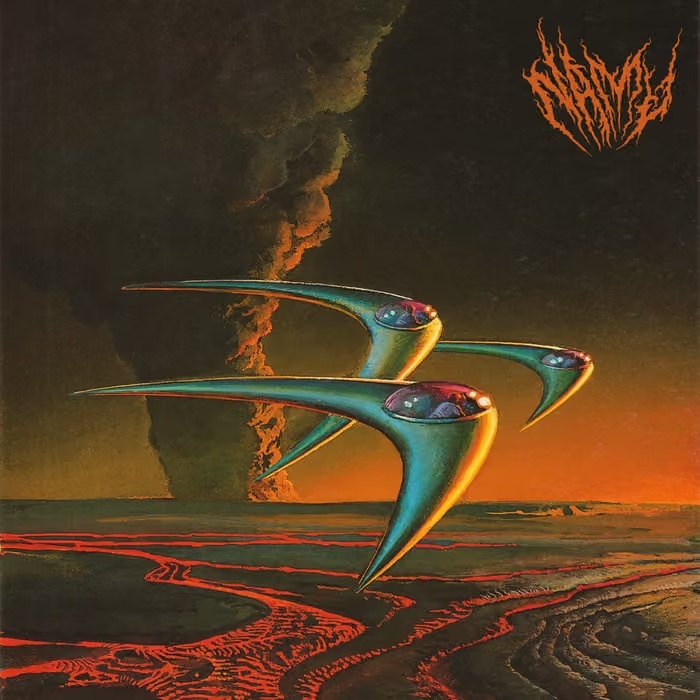
Now I’ll turn to the one album in today’s collection that I mentioned at the outset. Titled Wretched Spawns of Iniquitous Orders, it’s the quite recent debut release by the London-based solo project Namu, a 45-minute rendering of progressive black metal that heavily revolves around sci-fi and cosmic themes.
Interestingly, the album’s Bandcamp stream begins with its final song, and the longest one, “Triptych“, so I’ll begin there too. It starts with a collage of symphonic strings and futuristic electronic swirls, and then adds the slowly wailing ring of a solo guitar, which adds to the music feeling of intrigue. The layering continues with heavily groaning low frequencies, and maybe distant screams.
Namu follows that momentous overture with punishing percussive blows, scalding vocals, and a grand swell of keys and guitars (in which that pealing lead guitar can still be heard), and then begins branching out, creating a different phase of musical intrigue, before punching the detonator on an assault of furious black metal. To be sure, the instrumentation is still elaborate and expansive, but the drumming is explosive, the riffing vicious, and the vocals furious.
The song is full of changing surprises, and the one that comes next is a glorious prog-metal guitar solo. After another outburst of black metal hostility, the music glitters like a field of stars and then heavily stalks, setting the stage for another solo, one that sounds a bit like a woozy saxophone that eventually finds a gloriously higher pitch.
Well, I can understand why Namu would set a song like that to play first — it’s quite an eye-opener, and it persuasively justifies Namu’s description of their creations as progressive black metal with prominent sci-fi and cosmic themes.
If it fascinates you enough to pull you back to the beginning of the album, as it did me, you’ll find six more marvels that lead up to “Triptych“. As did “Triptych“, those six songs create amalgams of ravenous black metal, star-spanning symphonics, futuristic synths, and all sorts of changing prog-metal adventures.
Namu keeps the tempos constantly in flux with dramatic variations among them, and periodically punctuates the adventures with brutish, bone-smashing rhythmic assaults or drifting and dreamlike melodies that include acoustic guitars or strange electronic transmissions. Namu also brings to bear immense low-end heaviness when needed, and lots of dynamic drum progressions.
The vocals are almost relentlessly ravaging, however, and, depending on the mood of the music, they might strike you as terribly tormented, torn by pain, or as desiring nothing more than to tear open your own throat with their teeth. “Almost“, because in “Edict of Absolution” and again in “Aberration of Light“, Namu’s creator proves he can really sing, with a range that moves from low and sultry to soaring. (All the “heavy vocals” are credited to “ICanBeFree“, the only other performer on the album besides Namu.) The music is so elaborate and so kaleidoscopic, it makes sense that we should experience some of that in the vocals too.
Much more could be written about the changing features among the songs, but this should be enough to clue you in. If your tastes lean to both black metal and prog metal, this album is one you shouldn’t miss, and if on top of that you enjoy sci-fi and visions of the cosmos, it’s a command performance. Truly remarkable that it’s almost entirely the work of one person.
As so often before, I’m grateful to Rennie from starkweather for turning me on to these wretched musical spawns.
https://namurtus.bandcamp.com/album/wretched-spawns-of-iniquitous-orders
DUSKSEEKER (U.S.)
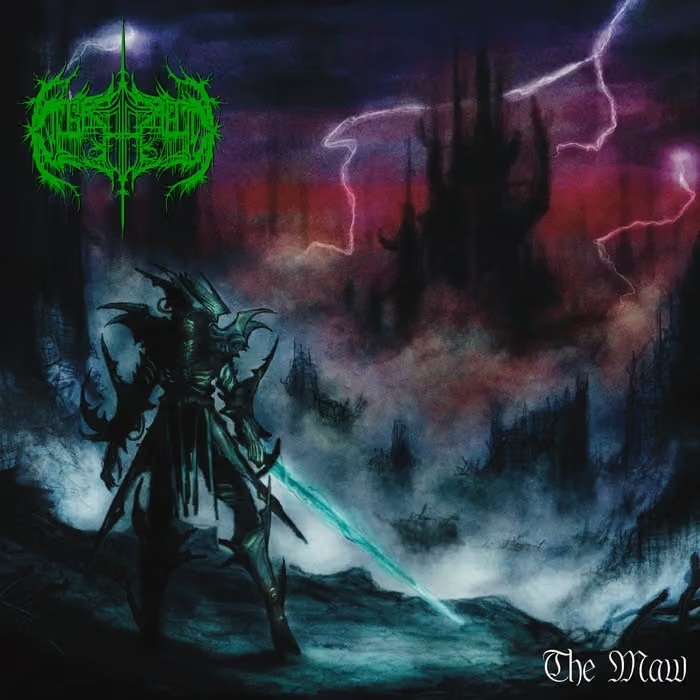
Just yesterday brought the release of an EP by Duskseeker from North Texas. I had a very positive reaction to a previous Duskscape album (Spiralscape, reviewed here) and favorable experiences with other musical endeavors by the person behind the project (Patrick Michot), so I decided to check out the EP. Its title is The Maw, and it pulled me into its maw.
The music is an unusual synthesis of black and death metal in which synthesizers play a variety of prominent roles. That becomes evident in the opening song, “λ“. There, Duskseeker brings forward the kind of jumping beat that gets dance floors shaking, and surrounds it with lots of musical swirls and flares.
But the scalding black-metal vocals aren’t the kind you’re likely to hear in a dance club, and the song shifts gears in other ways that would also throw people off balance — shifts in the drum grooves and tempos, spritely (but kind of fiendish) calliope-like finger exercises, lusty bass adventures, operatic female vocals (or something that sounds like them), and more.
Like that opening song, the other four have the aspect of a baroque musical carnival, one that’s set up its big tent and its mid-way right on the outskirts of Hell, because you don’t want the demons to have to fly or amble very far to get what they want. The music is elaborate but wild, often quirky or downright demented, rich in its layers and theatrical in its presentation but just vicious enough to satisfy blood-lusts while it’s spinning heads.
Like the opening song, the other four also don’t let listeners settle in for very long before they throw us for a loop (many loops), though each of them includes certain repeating motifs that make a valiant effort to tie things together. Among these songs, “Facing God” probably takes the grand prize for viciousness, and it sounds futuristically dystopian as well as baroque, while “Moonlight Blade” might be both the most maniacal and also the most magisterial (the feverishly darting keyboards in that song are certainly among the EP’s most exhilarating ingredients).
All in all the EP makes for a hell of a show. It’s highly unlikely to appeal to black metal purists, but for the more demented (and perhaps more drunken) among us, it’s boisterous entertainment.
The Maw is available digitally from Duskseeker, on CD from Fiadh Productions, and on cassette tape from Realm & Ritual:
https://duskseeker.bandcamp.com/album/the-maw
https://fiadh.bandcamp.com/album/the-maw
https://realmandritual.bandcamp.com/album/the-maw

AKVAN (Iran)
To close, I’ll turn to new music from اکوان (Akvan), whose new music I always check out (and write about frequently). I might have jumped into this particular song, “زیر درخت کاج (Beneath the Pine Tree)“, even more quickly than usual because of the cover image (I am a caretaker of cats), though I did read Vizaresa’s extensive comments about it first — and you can and should read them yourselves, along with the lyrics, at Bandcamp. I’ll just excerpt this part of it:
This composition is the second inspired by the writings of Sadegh Hedayat. Drawing from his 1932 short story Three Drops of Blood, Beneath the Pine Tree enters a world of isolation, fractured identity, and the terrifying uncertainty of a mind slowly losing its hold on reality. Within the walls of an asylum, Hedayat’s story unfolds between memory and delusion, where perception becomes unstable and the boundaries of the self begin to dissolve.
Composed in the Iranian dastgah Chahargah, Beneath the Pine Tree does not approach the mode through its traditional melodic language, but as a psychological terrain. Its dissonance, tension, and the microtonal colors of A and D Koron (half-flat) become expressions of an inward descent…a gradual unraveling into confusion, paranoia, and dissolution.
I don’t pretend to understand the quoted description of the music’s songwriting modes and melodic language, I can only try to describe what I hear. And what I hear is an unusual amalgam of traditional Persian instrumentation (which is most notable in the song’s entrancing final phase), sky-high swaths of distraught melody, rapidly varying drum patterns which include gallops, somersaults, and blasts, and riotous screaming.
The music vibrantly sparkles and seems to cry out in agony, to go mad and to indulge rage, and to reach heights of daunting elegance as well. As mentioned, the song’s final part is quite different from everything that precedes it, and quite remarkable.
P.S. The cover image is described as “a black-and-white rendering of ‘Cat and Canary Cage’ by Kamal-ol-Molk, one of Iran’s most influential painters and a contemporary of Hedayat”. Its relevance to the song’s themes is described at Bandcamp.
https://akvan.bandcamp.com/track/beneath-the-pine-tree
https://www.instagram.com/akvanblackmetal
https://www.facebook.com/akvanblackmetal