
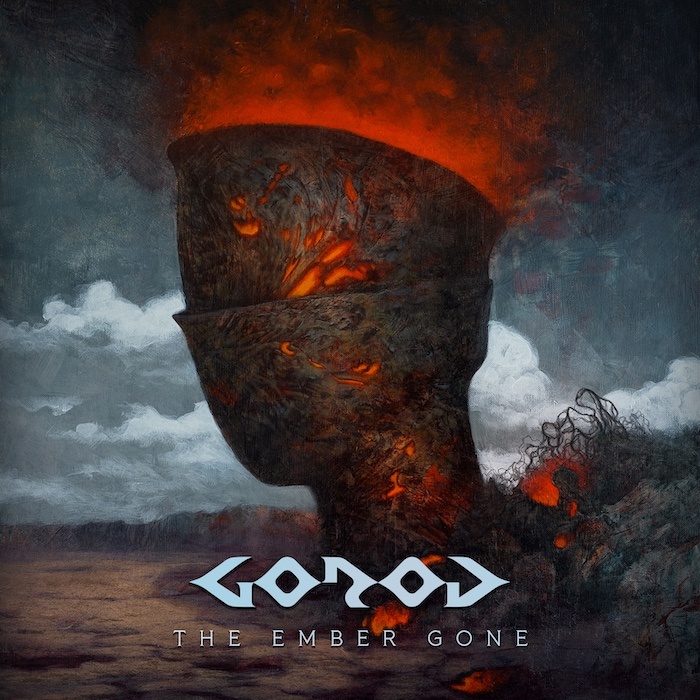
(We present a review by Professor D. Grover the XIIIth of a new album the French metal band Gorod which was released last Friday.)
Greetings and salutations, friends. As you may have picked up on in recent years, I’m a big fan of modern technical death metal (not that I mind the classic old-school stylings of Death, Cynic, Pestilence, and Atheist). In recent times over on Bluesky I ranked my top twenty modern tech-death albums (read: post-Necrophagist), one album per artist, and my number one with a number belonged to Gorod’s Process Of A New Decline. It was probably the album that truly made me love tech-death and it’s an incredibly influential album for me even to this day. I’ve loved everything Gorod have released, both before and since, but there’s been a definite evolution in their style over the years, a creeping prog influence that has culminated in The Ember Gone.
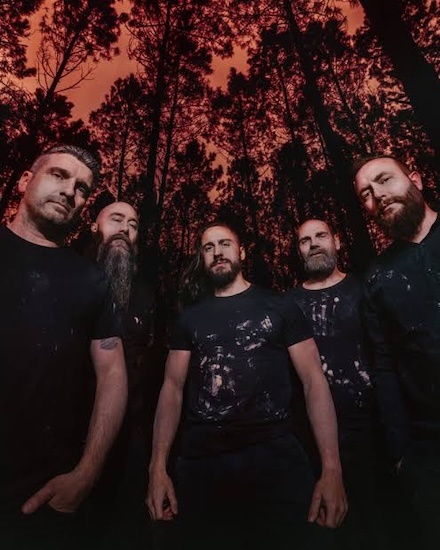
There are a pair of very specific touchpoints in the Gorod discography that led to The Ember Gone. The first is the title track from the Transcendence EP. That track in particular represented the first look at the new incarnation of Gorod, featuring the recorded debuts of guitarist Nicolas Alberny and vocalist Julian Deyres, and it was a massive, 15-minute epic of prog-meets-tech-death, featuring some clean vocals and a significant amount of variety in tempo and structure. While it has certainly influenced the band’s work that would follow, it’s not something that the band has truly explored in depth until now.
The second is the title track from 2023’s The Orb, which features some synthesizers (a relative rarity for the band) and a more measured pace with some clean vocals. Of all the tracks in the Gorod catalog, ‘The Orb‘ is stylistically the track that would best fit in with The Ember Gone. (There’s also a case to be made for The Orb’s bonus track, a cover of The Doors’ ‘Strange Days’, although I’m not a huge fan of the track because of the vocal effects being used.)
The Ember Gone is by far the most stylistically varied, emotionally deep Gorod album thus far. It’s also the most accessible, simply by virtue of the fact that much of the album is more mid-paced and measured. Gorod have always been a band where there is order to what might initially sound like chaos, but The Ember Gone removes a lot of the chaos from the mix entirely. One of the band’s calling cards has been moments of groove and swing that pop up in the middle of tracks that might otherwise be an all-out assault on the senses, and while some of their contemporaries also do this (First Fragment is among the most notable and effective), Gorod have always been the best at it. This album feels like it’s largely comprised of these moments, to an extent, and the result is some of the band’s catchiest, most accessible material to date.
Tracks like ‘Devise’ and ‘Ignite’ are prime examples, with some of the band’s simplest, most memorable riffs ever written. It’s worth noting here that Gorod rarely use riffs in the traditional sense, the sort of driving power chords that are arguably the backbone of metal music as a whole. Instead, most of their songs are constructed around dual leads from Alberny and founding guitarist Mathieu Pascal, interwoven arpeggios and tapped harmonies and counter-melodies, a riotous sonic flurry that gives the band their signature sound. The Ember Gone is no different, and while there are occasional traditional power chords, they’re actually fairly infrequent.
The Ember Gone also features Gorod’s most experimental moments. Album opener ‘Signs’ kicks off with a synth melody, and synths do pop up in other spots, most notably in the final third of ‘Forgiveness’. ‘Regret’ features both a staccato riff reminiscent of Leprous’ signature sound and a freewheeling section that sounds a lot like something you’d hear on a Between The Buried And Me track. ‘Crimson’, one of the album’s two instrumental tracks, features what definitely sounds like an e-bow along with some decidedly bluesy leads in the back half. ‘Ignite’ features a solo that sounds like it’s played with a slide. ‘Ember’ features bassist Benoit Claus, Gorod’s other remaining founding member, playing a fretless, something he has done before, but very infrequently. ‘Remains’ even closes out the album with a theremin.
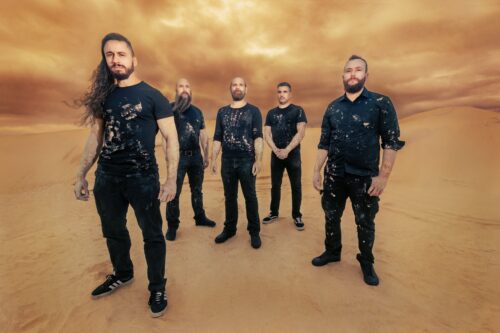
But while the album is easily the band’s most accessible, don’t take that to mean that it’s simple. The Ember Gone is still very much a Gorod album, and it still features Pascal and Alberny’s signature guest pyrotechnics, intertwined with Claus’ steady and occasionally spectacular bass. Compared to some tech-death bands, Claus doesn’t have as high a profile and his bass sometimes gets lost in the mix, but if you can focus it becomes clear that he’s just as much a master of his own instrument. Drummer Karol Diers, the most recent addition (first appearing on 2015’s brilliant A Maze Of Recycled Creeds) has proven his death mettle on previous releases, but here takes a much more jazz-influenced approach a la the late, great Sean Reinert. There’s a noteworthy dearth of double-bass sections that you might find in death metal, reinforcing that this is more of a technical prog-death album than a progressive tech-death album, but it really lets Diers showcase his versatility on a whole new level.
And then there’s Deyres. His addition to the band brought a new dimension, as evinced by his performance on ‘Transcendence’, and he’s been building on that ever since. The Ember Gone serves as his finest, most diverse work yet. His clean vocals have taken a step forward, especially with the haunting harmonies on ‘Forgiveness’, but he also effortlessly switches between his forceful death growls and the sort of melodic harsh shouts that have become the trademark of fellow countryman Joe Duplantier of Gojira. They inject a surprising amount of raw emotion into ‘Forgiveness’ and especially ‘Regret’.
The end result is an album that is, with the aforementioned exceptions, mostly unlike anything Gorod has done. It’s not entirely new territory for the band, but it’s one thing to explore such a big shift in a single song and another thing entirely to commit to it for an entire album. It’s a risk, but one that pays off with an album that carries a significant amount of emotional weight (see the harrowing video for ‘Forgiveness’) without losing any of the technicality Gorod are known for. I don’t think it’s going to replace Process Of A New Decline atop my tech-death pantheon, and while I’ve listened to this album 9 times in the last 3 days to prepare for this review, I’m going to need more time to digest this album properly to see where it fits into the band’s discography. But I do think that is reasonable to say that The Ember Gone is a strong contender for my album of the year.
https://cutt.ly/UythXco9
https://bfan.link/the-ember-gone
https://www.facebook.com/GorodOfficial/
Their best album since A Maze… One of my favorite this year for sure!