
(written by Islander)
In last Sunday’s edition of this column I only wrote about one album (by Glorior Belli). It deserved the exclusive attention, but I had planned to write about more releases until some life events got in the way. With today’s album premiere being handled by Daniel Barkasi, I decided to use my time to cover a couple more of the releases I’d intended to include in the Sunday column — two exceptionally good EPs released earlier this month.
PAN-AMERIKAN NATIVE FRONT (U.S.)
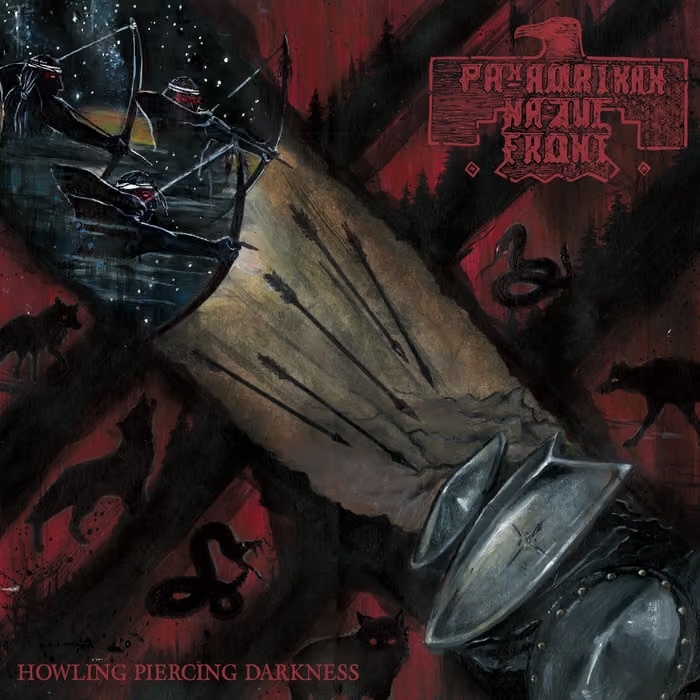
On October 12 (Indigenous People’s Day) Pan-Amerikan Native Front caught me, and I guess a lot of other people, by surprise, dropping a new EP named Howling Piercing Darkness, their first release since the Little Turtle’s War album in 2021 and a split with Kommodus that same year. In fact, I only found out that the EP had been released when I saw it in the latest “Songs I Liked In List Form” at Machine Music. Here’s what that site’s proprietor wrote about it:
There’s this thing I like, I actually like, where a band/project that really doesn’t release that much takes its fucking time and talent to make sure that whenever it is that they do release then it’s amazing music. Pan-Amerikan Native Front is one such band, and they just randomly released a whole album of brilliant, tasteful (yes) primal black metal. Again, it’s the simple things, as always, that are the hardest to get right. This is getting it right. One of the best black metal releases of the year, easily.
The EP is a four-song affair. The band’s lone wolf Kurator of War described its themes at Bandcamp:
After 20 years since the Fall, the Nations of the western North take arms in a clash that became the Mixton War of 1540!
Here, we hear the rising indignation of the Caxcan people. Rage and fury lead to an outbreak of war in the foothills of a new frontier. Four new arrows pierce through the night sky!
We remember the arrow militia! Tenacious spirited resistance!
Long live Francisco Tenamaxtli!
That led me to do some exploring, and I found from this article that the Mixton War was an uprising by the indigenous Caxcan people led by Francisco Tenamaxtli aimed at pushing Spanish conquistadors out of northwestern Mexico; the war was named after Mixtón, a hill in Zacatecas which served as an indigenous stronghold. The uprising was initially successful but ultimately was repressed by an army of conquistadors and their indigenous allies, with disastrous results for the Caxcanes.

photo from Northwest Terror Fest by J. Donovan Malley
Music as warfare — that’s the through-line of Pan-Amerikan Native Front’s releases. And it holds true for these four new arrows. Even the relatively brief opener “Salon de las Columnas” invokes warfare, combining military drum-beats and a wailing, full-throated take on a very old marching song (which I’m having trouble digging out of my head). The song appears to be named for magnificent ancient Mesoamerican buildings located at La Quemada (take a look here).
From there the EP launches into the long “Outbreak at the Summit of Mixton“, an infliction of thundering bass, militarized beats, and vicious riffing as dense as a sandstorm. The grooves repeatedly change, the riffing generates both a slashing throb and roiling bloodiness, and the vocals spit fury and explode in wild cries.
It’s a viscerally violent experience, but as the song progresses the pace slows and the mood of the music becomes darker and more bleak, like a dismal march. Although the vocals remain explosively passionate, the music is emotionally crushing, like the confrontation of death in the face of hopeless odds, or a remembrance of the fallen.
As intensity builds again, it also begins to sound desperate, and then the riffing resiliently writhes, the drums hammer faster, and the fight goes on, as PANF reprises riffs and rhythms from the song’s opening phases.
The ensuing “Echoes of Acrimonious Vengeance” includes indigenous instrumentation performed by Sewataka, as well as vibrantly strummed acoustic guitars, blaring chords of ravaging tone, and another riff that throbs like a hard-driven heart. It also proceeds at the pace of a march, and it generates a beleaguered mood, though the vocals are still defiantly incendiary.
Where that leads is a resurgence of furious tremolo’d riffing, piston-pumping drums, and then a storm of blast-beats accompanying dense swarms of chaos-generating riffage. Lyrically, this song seems to focus on the horrific vengeance meted out by the Spaniards after their repression of the uprising.
The final song, “El Nuevo Orden del Macehualtin“, has no words. It immerses listeners in big booming and clanging bass notes, broad swaths of gritty tremolo’d chords, and pulse-pounding beats. It also segues into bouts of fiercely throbbing fretwork which lead toward a whirling, high-flying guitar solo that sounds simultaneously stricken and defiant.
All in all, this is a gripping new offering from an unusually talented performer, one loaded with visceral emotional power, one that proves to be both daunting and inspiring, and one that also has so many hooks in it that it won’t easily let go.
The EP is available digitally from the band, and Profound Lore is offering a 10″ vinyl edition.
https://pan-amerikannativefront.bandcamp.com/album/howling-piercing-darkness
https://profoundlorerecords.merchtable.com/music/pan-amerikan-native-front-howling-piercing-darkness-10-vinyl-ep/
https://www.facebook.com/PanAmerikanNativeFront/
https://www.instagram.com/pan.amerikan.native.front/
GALVÄO (Portugal)
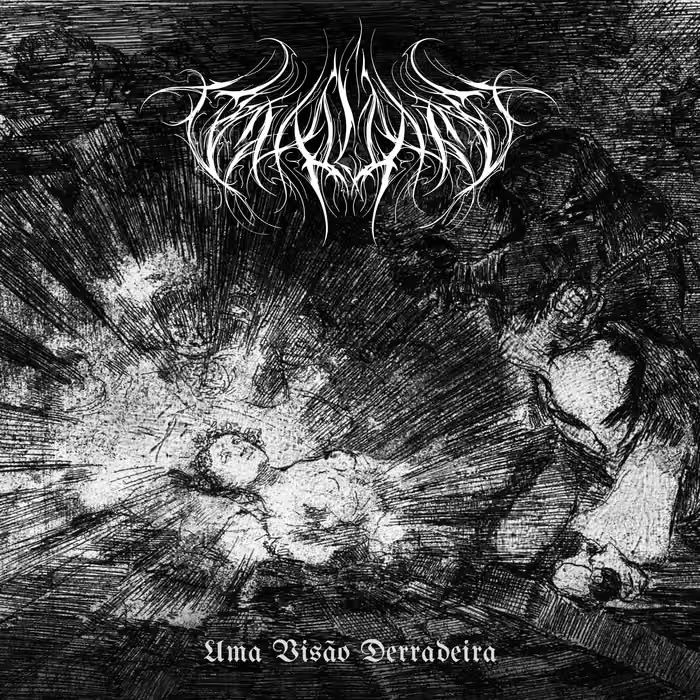
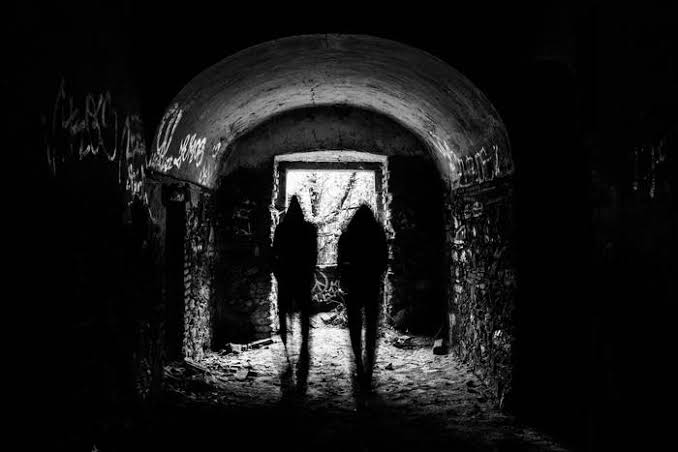
Metal-Archives tells me that from 2021 through 2025 the Portuguese post-black metal band Galväo (the principal work of instrumentalist Pedro Pires, with vocalist Sérgio Ramos joining him last year) produced seven releases, including a 2025 debut album (Purga), but I don’t recall discovering any of them. However, they released a new EP last Friday named Uma Visão Derradeira and contacted us directly about it. So at least this one hit my radar, and I’m very glad it did.
The EP includes three substantial songs, with lyrics that (to quote the band) “move from inner erosion to collective decay, through images of stone, ash, devotion and a world without redemption.
“Ruína e Perdição” grabs attention without delay, as Galväo eject dissonant, eerily ringing notes over immense low-frequency groans and skipping percussion. That melody is unsettling, like the forlorn agony of someone alone, and Sérgio Ramos’ vocals make an equally striking and unsettling impression as they roar and cry out with shattering intensity.
As “Ruína e Perdição” proceeds, it includes very interesting bass-and-drum interplay, as well as ensuing variations on that distressing opening melody, variations that include piercing tremolo’d chords, flashing arpeggios, and sweeping tides of melody that rise in grief and fall in dismay. And while there are progressive (and maybe even post-punk) influences in the rhythm section’s ever-changing work, they know how to rock out too (I say “they”, but I know it’s only one person).
There’s no escaping the song’s melodic moods of loneliness, confusion, and misery, and it seems like the vocals are always on the verge of shattering into shards through the intensity of their feeling. The song builds toward a crescendo of distress, with drums blasting, guitars flickering and contorting, and that huge gravel-toned bass punching hard, but ends with what sounds like the uncomfortable pulse of ruined nerves and veins.
Pedro Pires’ knack for writing stressfully sorrowful melody is again on display in the second song, “Oferendas Fatais“. As in the first song it immediately deploys a dissonant overture in piercing tones, but the dual-guitar rendition this time is even more feverish and disturbing, like the throb of a warped warning siren. It puts nerves on end to hear it.
The drums are fairly steady at first but then take off in a hammering gallop as the riffing expands into a whirlpool of flint and those harsh vocals erupt once more as Sérgio Ramos seems to tear his throat apart. The notes also ring like dismal chimes, frantically (and brightly) flicker in expressions of desperate derangement, miserably quiver, and flow in broad swarms with a pleading mood.
Near the end, the riffing also starts furiously jabbing and jolting while the lead guitar shivers and screams. Even in that muscle-moving finale, there’s no escaping the song’s melodic aura of torment.
The final song, “Rumo ao Abismo“, goes into blast-beat mode immediately, and the furiously vibrating riffage immediately sounds tumultuous. As you’ll be expecting by now, however, the song brings in shifting gears and shifting riffs, causing the music to sound feral as well as inconsolable. It also includes attention-seizing drum-and-bass patterns that are beautifully executed, and of course the vocals have kicked the hinges off the doors.
It’s a completely absorbing EP. The songs are elaborately contrived but cohesive, often electrifying, often nerve-racking, often emotionally fraught, but really transfixing. And the production is just right for what’s going on here — it features distinct separation and clarity, appreciable bottom-end heaviness but piercing sheen in many of the guitar tones, and helpings of sand-blasting grit when needed.