
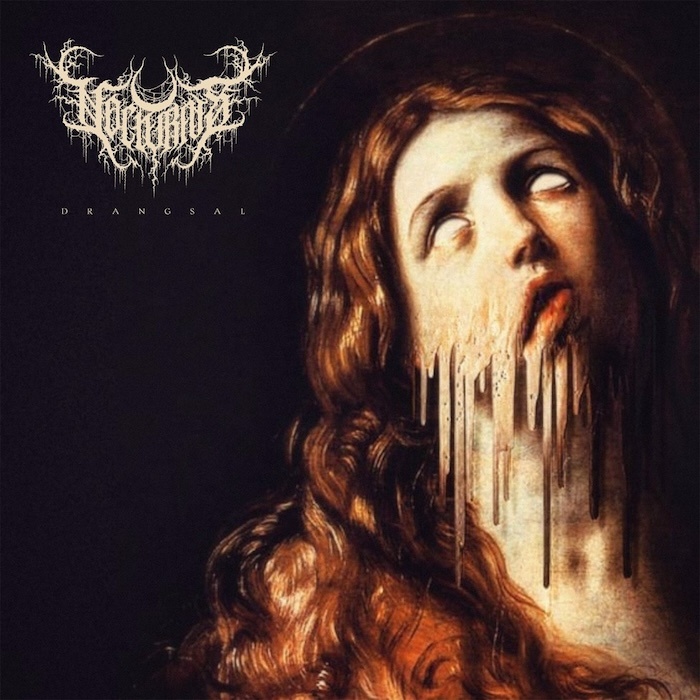
(written by Islander)
Since the earliest days of metal’s dawning bands have expressed rebellious themes by embracing the symbology of Lucifer and his fallen angels, some have delved into the occult in more than symbolic fashion, and others have drenched themselves and their listeners in gore. And so it is refreshing to continue finding bands who put their thematic focus on historical events and social commentary.
The black metal band Nocturnis, who dwell in the Black Forest region of southern Germany, are one such band. Their powerful 2022 debut album Unsegen told the story of a young soldier in World War I, who was driven by his conscience into a no less harrowing inner struggle due to the atrocities he experienced, a struggle he ultimately loses.
And now we have a second Nocturnis full-length that explores a different series of historical events. Titled Drangsal, it is a concept album about the European witch hunts. It’s set for release on November 6th (tomorrow!) by Fetzner Death Records, but we’re sharing a full stream of it now.
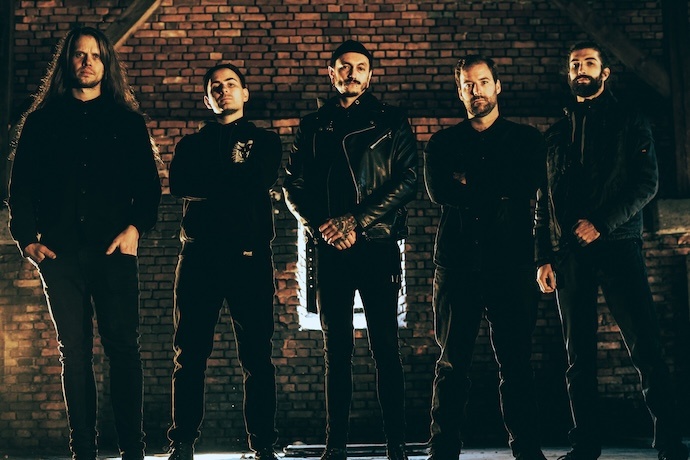
photo by Maren Rosenberger
Nocturnis explore these horrifying and tragic events over the course of eight songs, with lyrics in German. It is worth noting that the album’s name is a German word that can be translated as affliction, distress, anguish, or tribulation.
Nocturnis set the stage with a piano overture named “Liturgie“. Its slow, reverberating tones create a mood of haunting sorrow, but as it segues into “Tituba” the music’s intensity magnifies dramatically. The music wails in anguish as the drummer Jonas Feger explodes into a blasting assault and Matthias Störck ejects the lyrics in a mix of grim growls and near-strangled screams.
That wailing melody becomes more feverish and searing; the lead guitar madly quivers; the bass lines both punch hard and also seem to rumble the earth. As the drums become more steady, the guitars raise up grand fanfares and choral voices render a solemn chant. The song also erupts again, but dramatic singing also ensues near the song’s tremendous finale.
That one song itself calls to mind the meaning of the album’s title, expressing affliction, distress, anguish, and tribulation in viscerally powerful terms, while also seeming to capture the nature of the ecclesiastical authorities who condemned women to terrible fates.
(We don’t have information about the historical themes of each individual song, but our searching reveals that Tituba was the name of an indigenous women accused by the Puritans in charge of the Salem witch trials. She was severely beaten by her enslaver, Samuel Parris, until she confessed – which saved her life.)
From “Tituba” Nocturnis keep the intensity level in the red zone with “Thaumaturg“, a hammering onslaught accented by frantically twitchy riffing, swift jolts, soaring melodies that burn, maniacal harsh vocals, sorcerous guitar soloing, and slowly slithering arpeggios with a gleaming tone.
“Thaumaturg” is a thoroughly diabolical and mostly turbocharged experience, but it also shifts into a very strange and very frightening interlude in which a strangely moaning guitar seems to ooze agony in the company of terrifyingly unhinged vocals. That anguished melody continues to ring and melt into a listener’s head even after Nocturnis turn up the intensity again, and then they hand off the melody to a solo piano at the end, which renders it in terms both elegant and heartbreaking.
In the songs that follow Nocturnis continue demonstrating meticulous attention to detail, an effective tonal mix of clarity and corrosion (and other varying instrumental textures), continuing propulsive dynamism, harrowing vocal intensity, and a talent (which we already knew they had) for creating mood-moving melodies.

“Düsternis” (Gloom) lines up well with the experiences of “Thaumaturg“, generating heart-pounding sensations of mayhem and madness but also unfurling eerily wailing and wretchedly chiming melodies that seem to channel pain and despair.
After that extremely unnerving episode, Nocturnis wisely take a step back with “Der Letzte Hort” (The Last Refuge), whose opening acoustic notes sublimely ring, creating a space for soft contemplation before the music erupts (and it definitely does erupt in ravishing fashion, though a piercing electric guitar maintains and adapts that opening melody).
“Der Letzte Hort” is one of the album’s two longest songs, and it’s remarkably multi-faceted, intricately layered, and dramatically dynamic. When the soft opening melody returns again, it’s accompanied by what sound like an orchestral bass, and eventually the song expands and even seems pastoral as it provides the sweeping setting for a mesmerizing extended guitar solo.
The band’s taste for dynamics leads them to follow that hypnotic outro by getting a listener’s blood rushing fast with the high-energy and fast-shivering riffage, electrifying drumwork, and bestially gnashing vocals of “Das Licht Der Nächsten Sonne” (The Light of the Next Sun) — yet that song is also home to another fantastic guitar solo that sounds both jazzy and proggy in its inspirations, as well as a sublimely beautiful (and wistful sounding) finale.
The final two songs, “Dämmernis” (Twilight) and “Drangsal“, like all the ones that precede them, will keep listeners perched on the edge of their seats as Nocturnis twist and turn, as they move from elaborate and refined musical tapestries to much simpler motifs, as they push and pull the tempo, as they move the mood and atmosphere, as they make use of melodies and instruments that seem connected to the long-ago centuries where their album is set while also inflicting modern black metal rampages of harrowing savagery.
In that closing title song they create an epic conclusion to the album, with sweeping, classically influenced melodies of breathtaking grandeur that nevertheless remind us of the sorrowful nature of the subject matter, and the bass really gets a chance to prominently shine. But it also includes an interlude of enthralling acoustic picking and angelic choral voices.
And with that great volume of words now behind us, we’ll now turn you over to a really remarkable album in its entirety:
NOCTURNIS are:
Matthias Störck – Vocals
Lukas Wenzel – Rhythm Guitar
Vincent Padrutt – Lead Guitar
Dirk Schoening – Bass
Jonas Feger – Drums
Drangsal was recorded and produced by Vincent Padrutt, with drum recording, mixing, and mastering by Nikita Kamprad (Der Weg Einer Freiheit). The album features cover art by Daniel Andersson and logo design by Viewfromthecoffin.
Fetzner Death Records will release Drangsal in multiple formats, and you can place orders at the locations linked below.
PRE-ORDER:
Jewel Case CD: https://fetznerdeathrecords.de/Nocturnis-Drangsal
Cassette: https://fetznerdeathrecords.de/Nocturnis-Drangsal-MC
Bandcamp: https://fetznerdeathrecords.bandcamp.com/album/nocturnis-drangsal
NOCTURNIS:
https://www.nocturnis-kvlt.com/
https://www.instagram.com/nocturniskvlt/
https://www.facebook.com/Nocturniskvlt