
(written by Islander)
I have been thanking various people in various forums for all the incredibly warm congratulations and kind words I’ve received on the occasion of our site’s 17th birthday yesterday, and I do that again here and now. It’s always a little overwhelming to me, to realize how many people value what we do here and how many friends I’ve made because of NCS.
I celebrated with my wife last night over one too many martinis, and I thought about taking today off. I didn’t entertain that thought for very long, however, because today begins the 18th year of No Clean Singing, and doing nothing is no way to begin!
As I listened and thought about what to include in this column, it kind of put itself together. As I listened I began to feel as if I were being led along a path by some invisible specter that knew where I would go even if I didn’t. I’ll try to explain as we move through the following songs and videos.
NORDJEVEL (Norway)
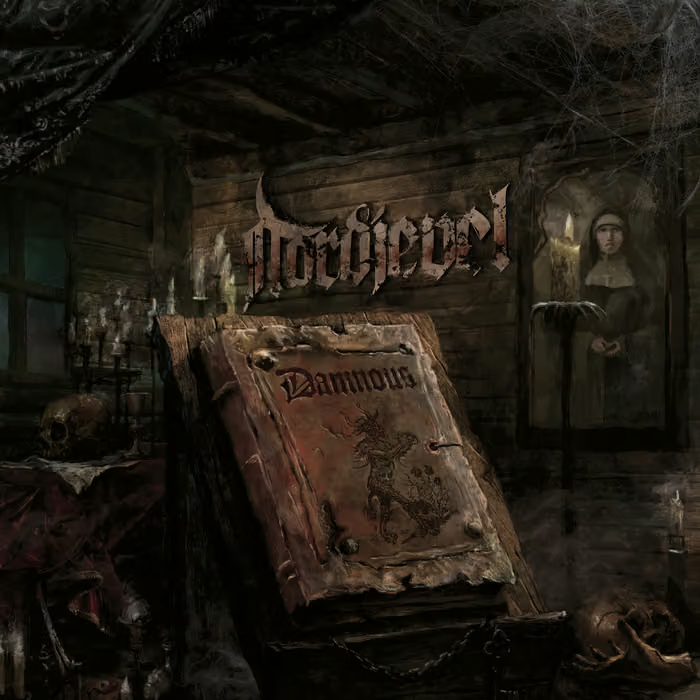
I suppose Nordjevel has become a household name, at least in black metal neighborhoods. Any band whose lineup includes current and former members of Morbid Angel, 1349, Hate Eternal, Origin, and Doedsvangr will become known, but even more so because some very good albums have been released under that name. And now one more is on the horizon, a record named Damnous that’s set for release on December 11th via Season of Mist Underground Activists.
Last week brought us a chilling music video for the album’s title track, and I thought that would be a good way to open today’s proceedings. This particular song includes guest vocals by Sanrabb (Gehenna, Doesdvangr) and keys by Morfeus (ex-Limbonic Art).
I think the best single word for “Damnous” is vicious. The feverishly vibrating riffage sounds like a dense swarm of enormous bees that are after blood instead of pollen. The vocals, which mix monstrous roars, unhinged screams, and wild yells, are frighteningly malicious. The bass rumbles at bowel-loosening levels. Only the slow and steady drumbeats sound like the product of a sane mind.
The riffing eventually changes into a more jittery and less swarming aspect, and weirdly whirling tones shine forth (like fireflies in the midst of the swarm), but it’s all still… vicious.
Nordjevel’s current lineup is: Doedsadmiral (Vocals), Destructhor (Guitars, Bass), Sagstad (Guitars), and John Longstreth (Drums).
https://orcd.co/nordjeveoldamnous
https://nordjevel.bandcamp.com/album/damnous
https://www.nordjevel.com/
https://www.facebook.com/nordjevelofficial
https://www.instagram.com/nordjevel
TYHJÄ (Finland)
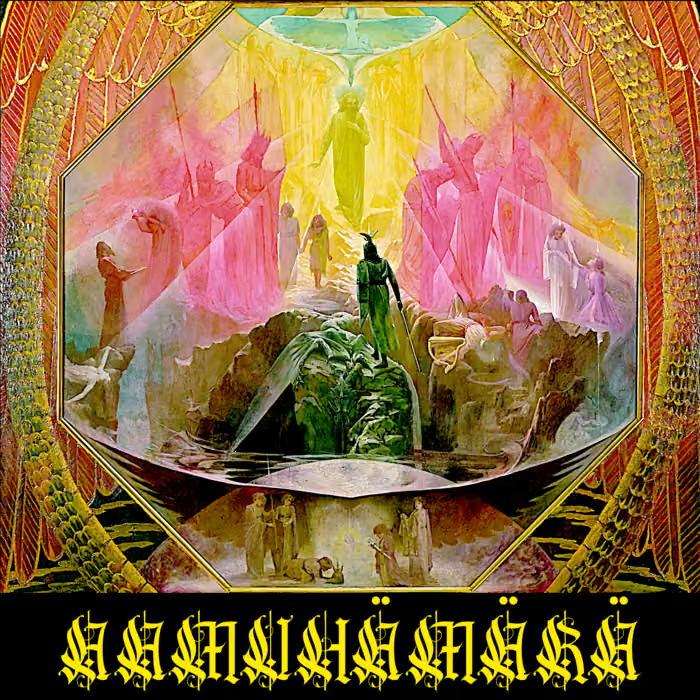
The Finnish black metal band Tyhjä released their third album last year, and I didn’t expect they would be following that fairly closely with a new release, but lo and behold they are. They have promised a new EP before this year ends, and yesterday they released a song named “Aamuhämärä” that will appear as its second track.
Tyhjä have described the EP as one that is lyrically inspired “by the alchemic journey each of us travels trough our lives, sometimes more than once”. And here is the text that accompanies the new song on Bandcamp:
In the state of ‘whiteness’ one does not live in the true sense of the word. It is a sort of abstract, ideal state. Some interpret the albedo as the end of the lesser work, corresponding to a spiritualization of the body. The goal of this portion of the process is to regain the original purity and receptivity of the soul.
First impressions of “Aamuhämärä” are that it’s a rumbling and jagged juggernaut with a savagely surging pulse, yet the music also throws off sizzling sparks.
Scorching shrieks, big bass throbs, extravagantly blaring arpeggios, and neck-cracking beats add to the song’s electrifying effects, but the song also includes the shine of sweeping sonic panoramas, high-flying sung words, and a lead guitar that vibrantly flickers and swirls. Near the end the music becomes both more convulsive and darker in its moods, more violent and even desperate, though its final moments sound like sorrow.
(Thanks go to Rennie of starkweather for alerting me to this new song.)
https://tyhj.bandcamp.com/track/aamuh-m-r
https://www.facebook.com/tyhjband/
AKVAN (Iran)
Last week Akvan released a song that’s the third installment in an ongoing series of singles inspired by the works of Iranian writer and poet Sadegh Hedayat (1903-1951), following “Mirror of Decay (The Blind Owl)” and “Beneath the Pine Tree (Three Drops of Blood)“. This single’s Bandcamp page includes quite a lot of information about both the tale it’s based on and the Iranian modal traditions used in the music, but I’ll just excerpt this part:
Drawn from Sadegh Hedayat’s short story, سگ ولگرد (The Stray Dog), this piece takes the perspective of Pat, a Scottish dog abandoned to a world of cruelty and indifference. Through his hazel eyes, humanity is exposed in all its contradictions: offering bread with one hand while striking with the other, invoking “God” while inflicting suffering, and destroying the very world it calls home.
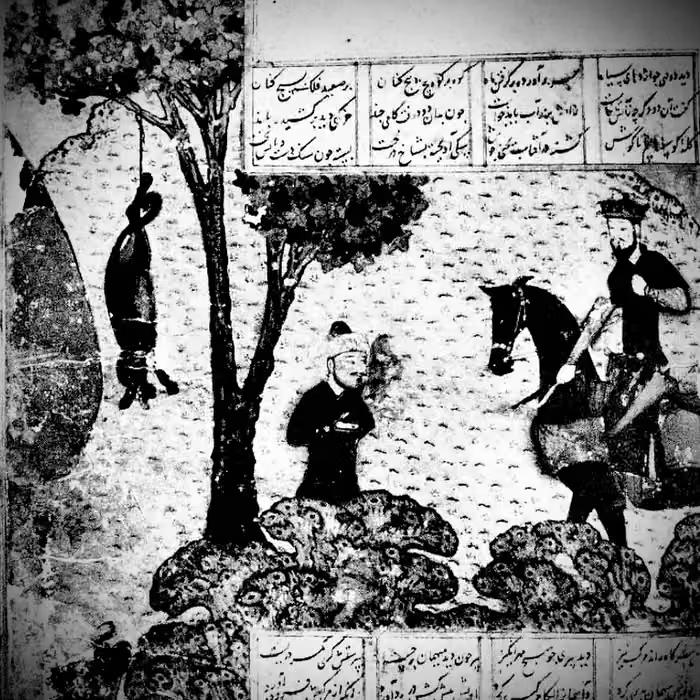
The accompanying artwork is a black-and-white rendition of a Persian miniature depicting Bahram Gur and the shepherd who hanged his dog, from Nizami Ganjavi’s Haft Paykar. This historical depiction of canine suffering and human judgment provides another layer to the exploration of loyalty, cruelty, and the relationship between humanity and animals.
This is a theme after my own heart, which yearns for humans to treat animals as we would like to be treated (an extension of the Golden Rule to the most innocent among us). As for the music, Vizaresa once again provides his talent for melding together Persian musical traditions and black metal, and does so here in a way that generates musical moods of grief, pleading, and despair (though the rasp-edged vocals are frightening in the intensity of their torment). The rippling tones of the tar are the song’s centerpiece, and they have staying power.
https://akvan.bandcamp.com/track/hazel-eyes-2
https://www.facebook.com/akvanblackmetal
https://www.instagram.com/akvanblackmetal
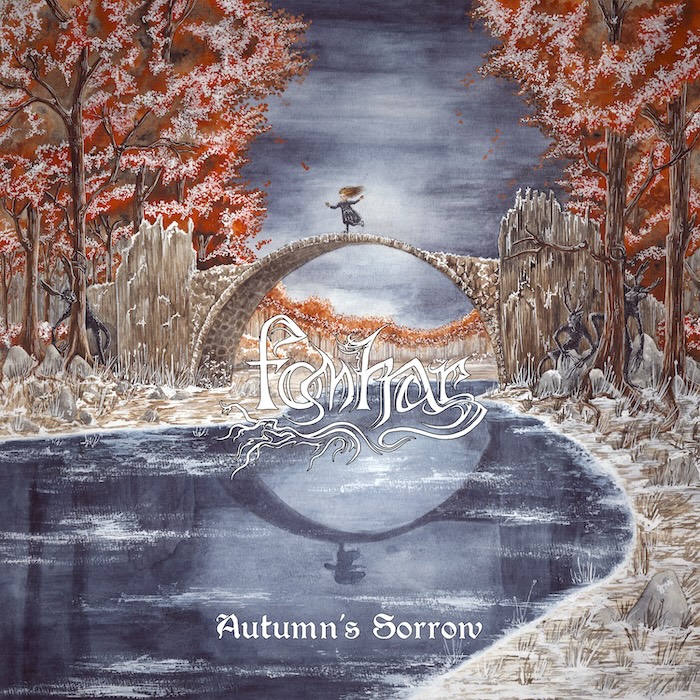
FOMHAR (Scotland)
Having just selected an Akvan song that includes melodies performed on the tar, I was drawn to follow it with a song that begins with a fiddle melody. One good folk instrument deserves another.
This song, “The Periphery of Belonging“, is one of four extensive tracks that make up Autumn’s Sorrow, which is the debut album by Fomhar (an Irish Gaelic word that itself means Autumn). Fomhar is the solo work of Martin Rennie, a Scot who’s the live guitarist of Saor and Fuath.
That opening fiddle melody is performed by Fomhar’s guest Caroline Salmona, who also performs on the piano during the overture. It’s an entrancing and wistful-sounding folk melody, which Fomhar adapts and carries forward with a rapidly trilling and gloriously soaring lead guitar after the sudden arrival of furious drums and a broadly striding bass.
Fomhar also injects martial beats and viciously vibrating riffing, but also brings forward singing that flows slowly and arcs high, an inspiring vocal performance that then trades places with scorching black metal screams. The song further includes a wonderful guitar solo that I think would inspire visions of Highland vistas and a lone piper at the heights even if we didn’t know of the country where Fomhar is located.
The song isn’t what I expected given the title of the album or even the meaning of Fomhar’s name. It’s so bright and brilliant, so splendid and soaring, and so heavily throbbing, that you might think your heart will beat itself right out of your chest.
On the other hand, the clean vocal harmony that magnificently rises up in the song’s back half does create a grieving mood, a mood reinforced by a low-slung whirring riff. And when that guitar soars, it sounds like intense yearning.
Thankfully, Fomhar brings back Caroline Salmona at the end to reprise the wonderful opening duet, and let our hearts settle down.
https://fomhar.bandcamp.com/track/the-periphery-of-belonging-3
https://linktr.ee/fomharmusic
https://www.facebook.com/profile.php?id=100093556464382

FORTIDEN (U.S.)
The path continued to unfold for me: one good violin deserves another.
I’ve written previously about the music of Ferndom, the solo black metal project of the cleverly named Vileinist from Austin, Texas, who uses violins instead of guitars. But Ferndom is not Vileinist’s only musical vehicle. He has another one that he named Fortiden, which he says is Norwegian for “the past”, with the closest English translation meaning “yesteryears”.
He further explains that, in contrast with Ferndom, Fortiden’s focus is urban life rather than nature and its music more oriented toward blackgaze rather than atmospheric black metal. This is reflected on Fortiden’s debut EP Restless Hearts. I’ll also share these further words about the nature of the EP:
It strives to create sounds that aurally depict feelings like yearning, deja vu, alienation, and that feeling when you desire something but can’t quite pinpoint what it is. The latter to me is best summed up as a state of restlessness, which led me to develop the title Restless Hearts. It’s a commentary on our insatiable human desire to continuously ‘want’.
With that outlook as the foundation, lyrical and visual themes opened up new ideas to explore. For lyrics, I dove into early 20th century poetry and lightly reworked some poems. For visuals, I scoured troves of archival footage and assembled a series of early 20th century clips into my first music video. Altogether, it’s a release that I’m quite proud of and serves as somewhat of a window into who I am as an individual.
In advance of the EP’s November 13 release Fortiden premiered that remarkable video mentioned above for a song called “Gray Gaunt Gallery“. Visually, lyrically, and musically, everything ties together.
The lyrics are based on a 1917 poem named “In a Whispering Gallery” by Thomas Hardy, which relates the kindling of a vision in the mind of its narrator, a vision of this “gray gaunt gallery” of struggling people transformed into “A tabernacle of worth”:
A spot for the splendid birth
Of everlasting lives
Whereto no night arrives.
You’ll see how well the old archival footage in the video integrates with the lyrical themes. The song itself employs an array of violin techniques and tones to generate motifs that strangely shimmer, quiver, and wail. They prove to be entrancing but also a little unsettling. Fortiden also brings in scarring screams, brightly pinging and spritely dancing notes, and rocking beats with a bit of post-punk bounce that transform into gallops.
The violin riffing subtly changes in ways that create a sense of despair, and when the drums vanish the swaths of music grow dimmer and gloomier. Even the dancing notes, when they return, sound disturbed, even grieving. When the drums return they sound like primitive conga beats. But Fortiden then reprises its earlier blackgaze and darting-string motifs, which you may now realize got stuck in your head after their initial passes.
I also found the EP’s other four songs to be captivating, and would be tempted to spill a lot more words about each of them if I had the time. It’s probably enough to say that if you liked “Gray Gaunt Gallery“, you’ll also like the others. I’ll note only that “Your Faraway Heart” is an instrumental heart-acher, and that “The Crystal Gazer” includes both vast mystical swaths of sound and a fiddle solo that creates a very earthly contrast (I use “fiddle” instead of “violin” there for a reason).
As mentioned, Restless Hearts is out now, digitally from Fortiden and on tape from Fiadh Productions.
https://vileinist.bandcamp.com/album/restless-hearts
https://fiadh.bandcamp.com/album/restless-hearts
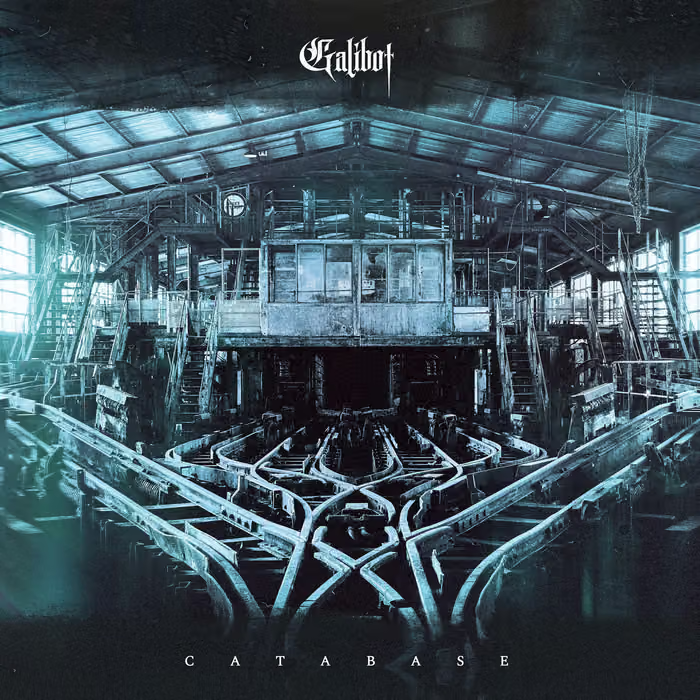
GALIBOT (France)
The last step on the musical path that infolded in my head this morning is a song that’s musically quite different from Fortiden, but is connected thematically (at least as I perceive it) to “Gray Gaunt Gallery”, and the new video for the song that premiered last week is connected as well.
Galibot’s music has been focused on the mining history of northern France, but I gather it has been a more modern setting than the tales of the German miners Dauþuz. (I should add that this next song was my first exposure to their capabilities.) They say this about the song:
“With ‘Voreux‘, we wanted to keep exploring the mine and its depths, but this time using vocabulary closer to that of medicine, and so on. We portray the mine and the pit as a monster that swallows people. Once again, the aim was to avoid going round in circles and telling the same stories, to depict things differently, draw somewhat supernatural and mystical parallels, and delve even deeper into the realm of imagination.”
The tremolo’d riffing in “Voreux” generates dismal and distraught moods, and the torn-throat acid-bathed vocals add to the song’s feeling of pain and wretchedness. Galibot add dynamism through variable drum rhythms, a subtly rumbling bass, and extravagant choral cries.
They also accelerate the guitars into surging and whirling swarms, as if to bring forward all the agonies, and they cap the song with a clear-toned guitar solo that might be the song’s most anguished aspect of all.
The video is also quite well done, capturing both the grimness of the toilers at their labor and the horrors that will come to many of them.
The song is from a Galibot album named Catabase that was released last May by Les Acteurs de L’Ombre Productions. I haven’t yet made my way through the rest of it.
https://www.lesacteursdelombre.net/product-category/bands/galibot/
https://ladlo.bandcamp.com/album/catabase
https://www.facebook.com/GalibotBand/