
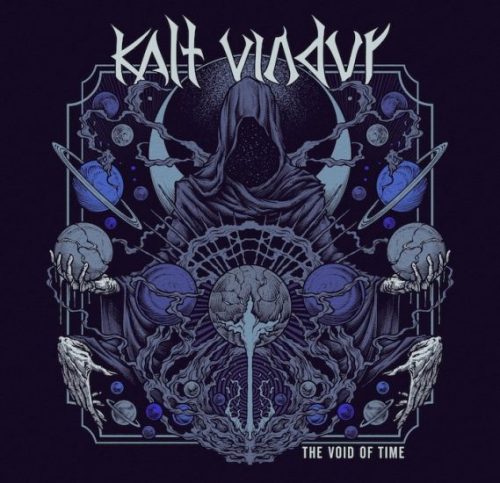
(Andy Synn has one last review to share with us this week, for another album that should end up on a lot of “Best of 2026” lists)
I’m pretty busy (and close to burned out) right now… but I couldn’t let the week pass by without delivering a quick review of the big new release from the Polish Black Metal scene.
No, not that one, obviously (it’s definitely better than their last one, though it hasn’t really grabbed me all that much I’m afraid), but the fourth album from dark, prog-tinged “Subcarpathian” sorcerors Kalt Vindur, whose last record (Magna Mater) was one of the best Black Metal releases of 2024.
Which, of course, sets a pretty high bar for The Void of Time to live up to. So let’s see if they’ve managed it.

Whereas the band’s previous work(s) drew laudable comparisons to the likes of Beltez, Panzerfaust, and Gaerea (before the latter took a turn, at least) due to the group’s spellbinding combination of riveting, richly-layered guitar work and captivating percussive patterns, The Void of Time finds Kalt Vindur continuing to embrace some of the more subtly proggy proclivities evinced by its prodigious predecessor (which you can, and should, read more about here) in a manner not a million miles removed from Below the Lights era Enslaved (albeit with more of a focus on the aggressive, rather than progressive, side of things).
That’s not to say the aforementioned comparisons aren’t accurate any more (especially the first two, as reflected by the seething intensity and tightly-focussed ferocity of opener “Suspended in Emptiness”), but the band’s decision to build on the more nuanced aspects of their previous work(s) – particularly the brooding acoustic embellishments which enrich the likes of “The Void of Time” and “Lost in Infinity”, as well as the unexpectedly spacey synth work present in both the latter and in expansive closer “Jesien” – clearly reflects a conscious effort to continue to grow and develop as artists.
Thankfully this hasn’t come at the cost of the razor-sharp hookines of the group’s songwriting – both the galloping riffs and soaring melodic climax of the title-track, for example, and the absolutely mesmerising drum work of “Lost in Infinity”, possess an infectious intensity that would put the best works of Bjørnson, Kjellson et al to the test – or the sheer power of their performance (both “In Silence”, which we had the pleasure of premiering, and “The Path of Sin” are propelled by some absolutely scintillating blastbeats courtesy of the ultra-talented Rafał Chruścicki) thus ensuring that the album’s staying power is never in question.
Sure, there’s perhaps a sense, particularly after multiple listens, that The Void of Time represents the sound of a band “in transition”, an interim point between what was (Magna Mater) and what comes next… but it’s still a powerful, and undeniable, statement of identity and intent from a band who truly deserve to be more widely known and much more highly acclaimed.