

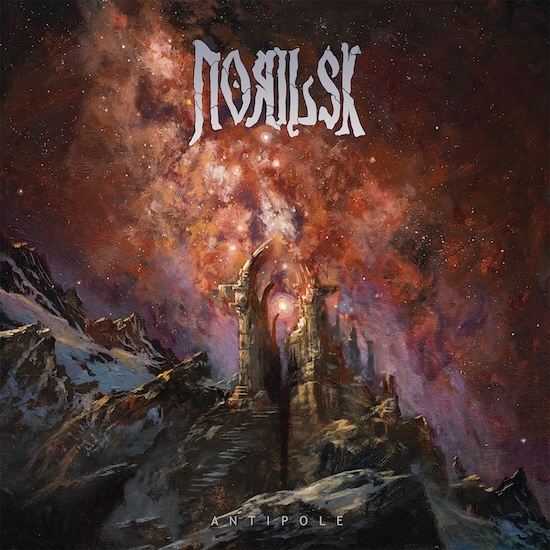
(We present Comrade Aleks‘ interview of Nicolas Miquelon from the Canadian band Norilsk, whose new album Antipole is out now on Hypnotic Dirge Records, accompanied by photos credited to Nick Richer.)
Canadian Norilsk was deliberately named by the band’s ideologist Nicolas Miquelon in honor of the most densely populated city beyond the Arctic Circle. Nicolas, who is familiar with Russian culture firsthand, wanted the name to reflect the harshness of the North. Norilsk initially embodied this idea in death-doom, but over time they enriched the musical landscape with elements of sludge and post-metal.
Let’s take the title track of their new album Antipole: it seems to obtain the spirit of ’90s death-doom, but Norilsk go beyond it, avoiding to step too far into well-known post-metal territory at the same time. “Antipole” is atmospheric doom metal, but there is something strange, atypical, and at the same time naturally revealing the essence of the genre. In “D’ombre et de glace (l’asphyxie)” Norilsk progress further: there is a lot of growling, a lot of thematic transitions.
But “Locus Sanctus” shows that this is not the limit: the rolling riffs are preceded by a dark acoustic intro with clean declamation, and Nicolas continues the story further, replacing the whisper with a growl. Solemn, upset riff cycles alternate with solo guitar interludes and acoustic themes, until a melody of a cosmic scale bursts into the narrative. The aggressive contrast of “Nunataks” seems unusual for Norilsk, but the name comes to the rescue here. “Nunatak” is a rocky peak surrounded by ice in the language of the Inuit, and the stubborn, rebellious melody justifies the name. It helps to get through the death-doom hummocks and the pumping mid-tempo post-doom hit “La fonte”; Norilsk know how to surprise.
Everything ends, however, with the dirge “Un chant pour les morts”, nothing can be done about it – “a song for the dead”. Not everything is clear about the album, and as a good tradition – I offer you this interview with Nicolas Miquelon, another good chat about good music.
Hi Nicolas! How are you? Did everything settle down after the release of Antipole?
Hi Aleks, I am doing well, thank you. The first half of 2025 was indeed busy, with the promotion and shows for the new album. We managed to re-schedule the release show, coincidentally because of an historical blizzard, but then we also got to play a few more shows, and we released two music videos. Summer is usually quiet for us (maybe because we’re a winter doom band?), so we are now enjoying a bit of down time before things pick up again in the fall.
Well, what have you been doing since the Beyond the Mountains release? How did the band spend this three-year break?
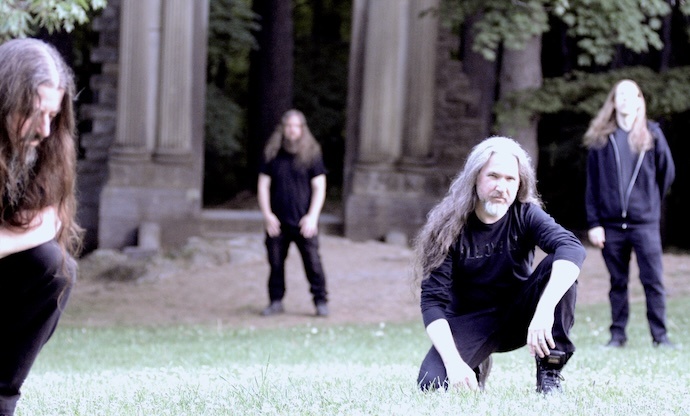
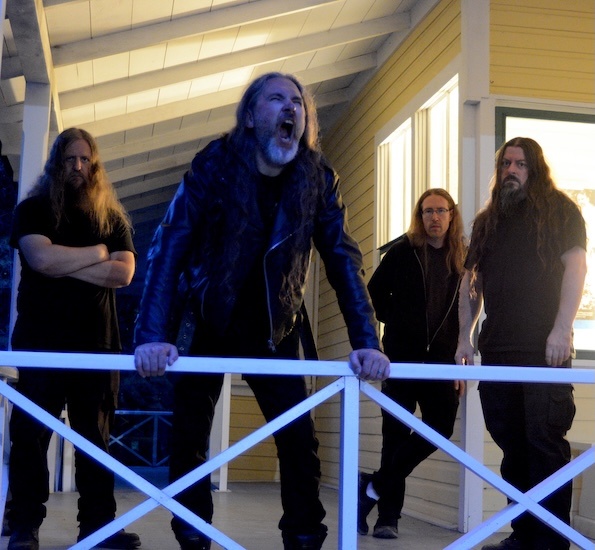
On the surface, we only played twice between these two releases (Beyond the Mountains and Antipole): one time with Fires in the Distance and the other time with Esoteric. Behind the scenes, however, this period was the most intense rehearsal period since the band inception. We worked on the arrangements for the new album as a four-piece, we did a few pre-productions and recorded the album as a band, as opposed to previous albums when preparation was always minimal prior to entering the studio and we used to record as a two-piece only. During this period we also recorded a “live rehearsal” album of older material, which we plan on releasing later. This means we had two relatively long sets to nail down about the same time.
Does the “live rehearsal” album consist only of your own material? Did you include there any extras like Mylene Farmer’s cover or something?
We focused on our own material, mostly because we wanted to do something special to mark our first decade as a band – and some of our songs are long enough already, we had to make choices.
As you said, Norilsk don’t play live a lot — why did you decide to capture this live set? By the way, did you record it at the same place where you worked on Antipole?
We enjoy live albums in general, as they provide a different perspective on an artist. Some of our songs evolved over the years, and so did we. There is a certain level of maturity we acquired as a performing band, which we wanted to capture and share on an album. We also thought it would be interesting to record a version of old songs with different arrangements and, most importantly, to showcase the current lineup. We recorded this set in our rehearsal space, with the help of different people which we will properly credit and talk about once we are ready to present the album.
That previous release, the EP Beyond the Mountains, saw the light of day three years ago, and the question is… Well, how do you manage to keep the same or similar vibe in Norilsk? Is it about keeping the same image from album to album or is it about progressing onwards slightly changing your perception?
You are correct about continuity and slow progression. When composing Antipole, the intent was to write an album with a different atmosphere, but with characteristics that made Norilsk what it is today. This album was written ten years after we started the band, so it felt natural to use our own distinct approach and come full circle with the past, while also producing an album much different for us.
How much time did you spend on production? How did you find when to stop and avoid polishing the sound to intolerable condition?
If I remember correctly it was a few weeks of back and forth, as the producer was working part time on the mix to let us provide comments in between. The truth is that working with studios is expensive, and the record label also had a release schedule, so we couldn’t spend an eternity working on the production. We had to find studios that would be available and that we felt would understand our sound. We also tried to be as efficient as possible in our communications when it came to mixing and mastering, because it was all done remotely.
Subjectively, Antipole sounds more traditional in comparison with your previous full-length Weepers of the Land; there are some post- and sludge-things in the sound, but I think that they don’t dominate anymore. Was it an intentional step back to death-doom ground or just the natural way that things go?
Antipole is the natural progression after Beyond the Mountains, where we revisited old school death-doom influences. It’s also an opportunity to showcase the string arrangements of Tom and Matt, who have more traditional metal influences than post-metal.
As we composed this album, which is darker and sometimes more barren than its predecessors, we did strip down some of the genres crossover, which probably contributed to making the death-doom elements come out more clearly to your ears as the backbone to our music.
Yes, Tom helped you with Beyond the Mountains as a session guitarist, and what about Matt?
Tom joined us in 2016 in preparation for our “Doom Over the Great White North” tour, and Matt was added to the fold in 2017. Originally they were live musicians because Nick Richer (drums, backing vocals) and I were already making plans to record the follow-up albums (Le passage des glaciers and Weepers of the Land, both recorded at the same time). They have since become full members of Norilsk, and it’s fair to have their rightful contribution on Antipole. Both Matt and Tom are amazing musicians and have lots of experience, namely from playing in Signs of Chaos and Fumigation.
The album has a very good dynamic, it’s heavy, somewhere it’s crude, and it’s well-produced in the end. How did you reach this result at the studio?
All the credits go to the people and studios we worked with. Drums were recorded and mixed by Mike Bond at Wolf Lake Studios, where we recorded previous Norilsk albums. Our guitar player Tom recorded all guitars and bass, and through his guidance we doubled a lot of guitars and added various string layers. Vocals were recorded at Apartment 2, by Topon Das who provided great ideas and contributed to the vocal mix. Finally, we wanted a new approach to our sound, and we worked with producer James Plotkin for the mixing and mastering. While it was sometimes complicated working with so many studios, overall we are happy with the result and the experience of working with different people.
Being a “winter doom” band, did you follow the same concept in the Antipole lyrics as it was on previous albums?
The general themes and approach remain fairly similar: I tend to build two to three layers in songs, to provide some visual elements to the listener while creating a deeper meaning or analogy. I am still inspired by literature, history, geography, and culture in general; and I still like to use it to talk about the human condition. When compared to some of our previous albums, on Antipole the tone is less personal and I want to develop a stronger narrative. For this reason, I would describe this album as a collection of short drama stories from the North.
Antipole was released by Hypnotic Dirge Records, and I was sure that Nic was going to distance himself from the label. Does this collaboration fit you still? Did you get better offers from other labels?
Nic and Hypnotic Dirge have shown interest and believed in Norilsk since the beginning, and for this reason it made sense for us to continue working with HDR. Over the years, through this label we have developed good connections and traded services with a small network of collaborators, including with Erik Labossiere (dsmsblk) who directed a number of our music videos. I admire Nic and HDR for having released over a hundred albums since 2008, many of those being eclectic and audacious, but I also understand that label activities can change. We’ll see what the future may hold for us.
Do you feel if the position of Norilsk changed in Canada or in the world’s doom underground? I’m not sure about recognition in a global sense, but at least you have a recognizable sound and image.
We take originality as a compliment, so it’s appreciated especially coming from you. According to Bandcamp and other streaming platforms, we can see that there are people from all over the world listening to our music, including a lot in Europe. Having said this, I think we are lost in a sea of doom bands, and the fact that we have a different sound also means that our music is divisive: some people like it, others don’t.
By the way, Norilsk was founded thirteen years ago, Antipole is your fourth album, and quite a lot has happened since the founding. Do you feel that with Norilsk you established local doom-metal scene? Do you see Norilsk as a face of Canadian doom?
Despite some of our themes, I don’t see Norilsk as the face of Canadian doom. We are definitely part of our local metal scene, both as musicians and concert-goers; we also carry this way of blending genres, which is not uncommon in provinces like Ontario and Quebec where we live. However, death-doom remains more of a niche genre in Canada than in Europe or the US, for example, and although I feel we have something to contribute to it, it’s still an underground scene.
How did the local underground change around you?
Like elsewhere, there were many changes after 2020, including a lot of bands splitting up, venues closing, and artists and promoters being impacted by the new costs and visa requirements. It often means smaller or more expensive shows, and more difficulty to tour.
On a positive note, we also saw many new bands being created and having opportunities to play live. Around us, I can appreciate a resurgence of old school death metal and stoner doom.
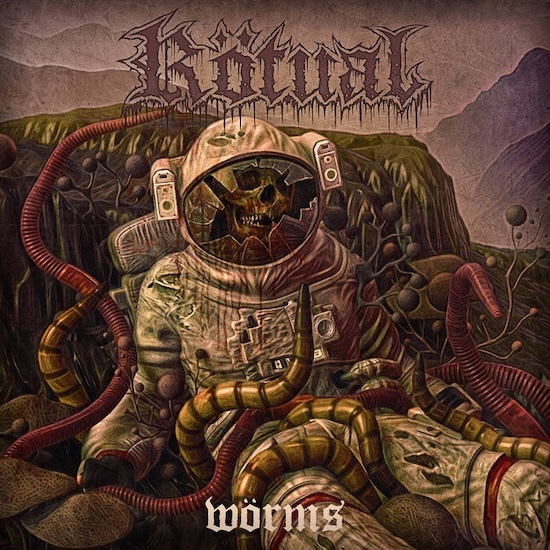
What about the new project you’re involved in? Rötual? You released the EP Wörms a year ago or so, and what’s next? Are you serious regarding this?
Rötual was created out of a desire to play live more regularly, paying homage to some of our influences while adopting an approach that is more straightforward than with our other bands. Tom from Norilsk also plays guitar in this band, while for me it’s an opportunity to focus on vocals and stage presence. Rötual’s songs can be described as slow death metal, or doom metal with death metal vocals, something akin to mid-’90s melodic death-doom. As you mentioned, we released our first EP in 2024 and we are currently putting the final touch on a full-length album.
Okay, Nicolas, then I suggest that the next time we’ll talk with you about Rötual! Meanwhile, thanks for the interview, and don’t you want to add a few more words for our readers?
Thank you Aleks for your ongoing interest and support. For people that have been following us, we hope you will enjoy Antipole. For those that are new to Norilsk, a good place to start would be with our two latest music videos, for “D’ombre et de glace” (Of Shadow and Ice) and “La fonte” (The Thaw), both directed by Erik Labossiere and Kristin Wagner.
BUY/STREAM ANTIPOLE:
https://hypnoticdirge-eustore.com/2025-Releases-c175522636
https://www.hypnoticdirgerecords.com/hypnotic-dirge-webstore.php
https://hypnoticdirgerecords.bandcamp.com/album/antipole
FOLLOW NORILSK:
https://norilskdoom.com/
https://www.facebook.com/NorilskDoom
https://www.instagram.com/norilskdoom