Aug 072026
 

(Here we have Comrade Aleks’ interview of Antonio Ortiz from the Bolivian doom metal band Lachrima Corphus Dissolvens, whose latest album was released this past April.)

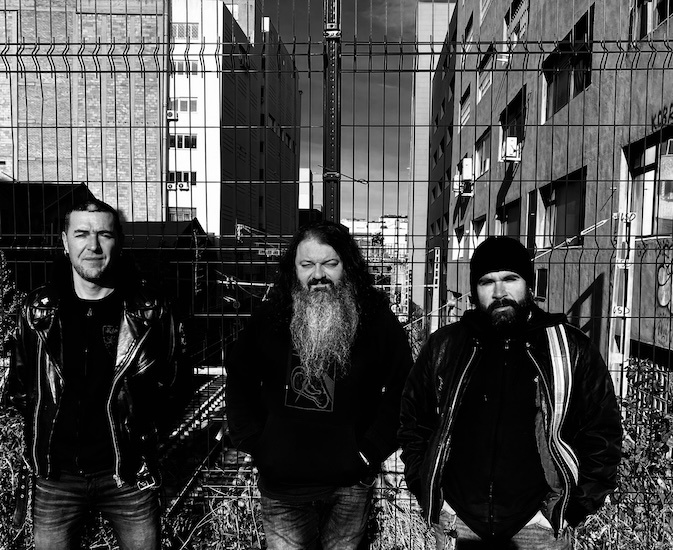
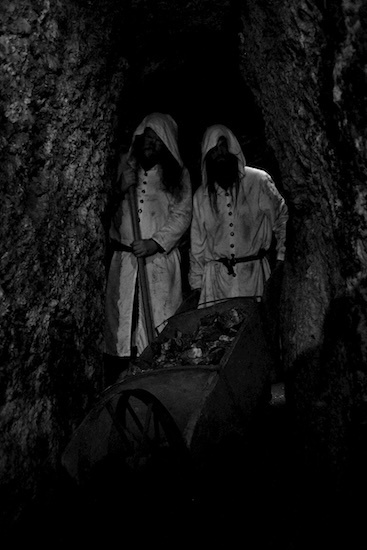
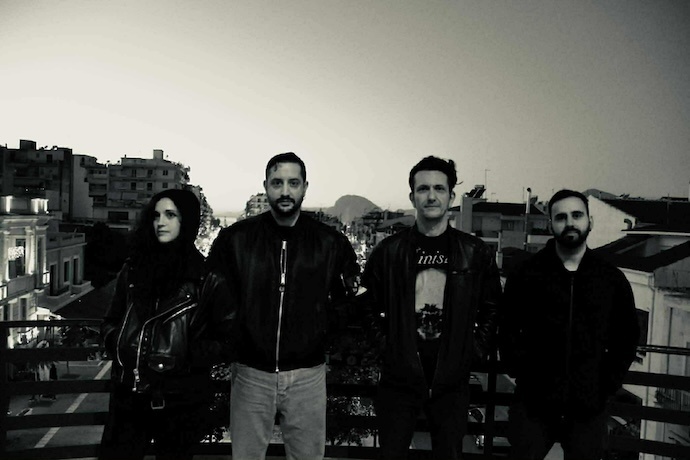
Lachrima Corphus Dissolvens is the rare (or only?!) representative of death-doom metal in Bolivia. Being founded in La Paz in 2003 by Antonio Ortiz (vocals) and Beyson Gibson (guitars) with a bunch of friends who soon left the band, it remains still active, although there are only two full-length albums in its discography.

Yes, the new piece Where Shadows Speak and Time Weeps is only the second big work of Lachrima Corphus Dissolvens, but a dozen of singles, EPs, splits, and compilations show that the men didn’t waste their time carrying the torch of Ruinous Powers. I interviewed Antonio earlier in July, so you can make an impression of what Lachrima Corphus Dissolvens is from this interview. Continue reading »

Jul 242026
 

(In June of this year the Peruvian band Psicorragia released their third album. We had the pleasure of premiering a video for one of its great songs, and today we take pleasure in presenting Comrade Aleks’ excellent discussion with Psicorragia’s Mario Romanet.)

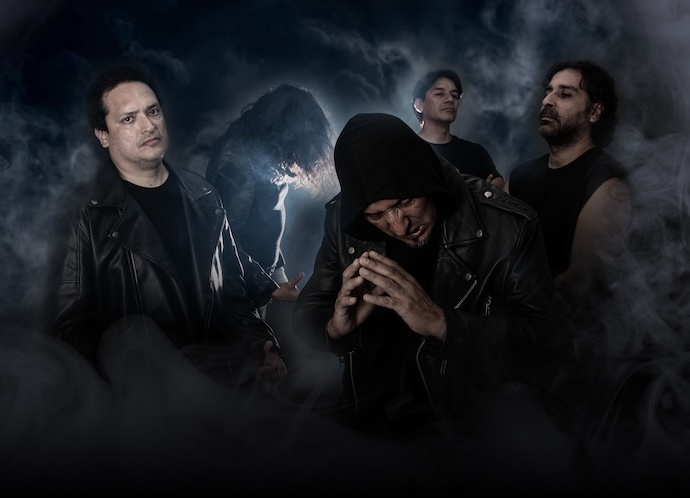
Peruvian death-doom band Psicorragia, led by bassist and vocalist Mario Romanet, has been together since 1994. Their first full-length album, La pasion de lo mortal, was released in 2001, and this year saw the release of their third major effort, Nekromanthra. Although nine years ago, the band had eight tracks in the works for their third full-length, the final release included only six songs, totaling 45 minutes. Yet there’s no need to worry; it’s absolutely a full-length recording and Psicorragia delivered professional and powerful material, effectively serving as the best work of their career.

The very first track, “Y sus plagas invocaron,” showcases their wide range of influences, from death metal to eldritch death-doom. The composition repeatedly shifts its mood from hostilely aggressive to detached melancholy and back again, the ascetic guitar sound offset by keyboard arrangements that take on the form of sublime orchestrations and mournful violin dirges.

Psicorragia tend to blend these two styles and, relying on their instincts, combine both approaches, but, for example, “Lo inexorable” embodies that very classic “death-doom with violin” from the ’90s that has become a brand in itself. The final track, “Nekromanthra,” concludes the album with grueling, drawn-out funereal doom, presented in an ominous, tormented, and almost ceremonial manner.

Mario Romanet answered a few questions recently, so I invite you to read this interview and join the macabre world of Psicorragia. Continue reading »

Jul 222026
 

(In this new interview our Comrade Aleks conversed with the two members of the Mining Black Metal band Dauþuz, whose new album Todeswerk: Uranium II was released in late May by Amor Fati Productions.)

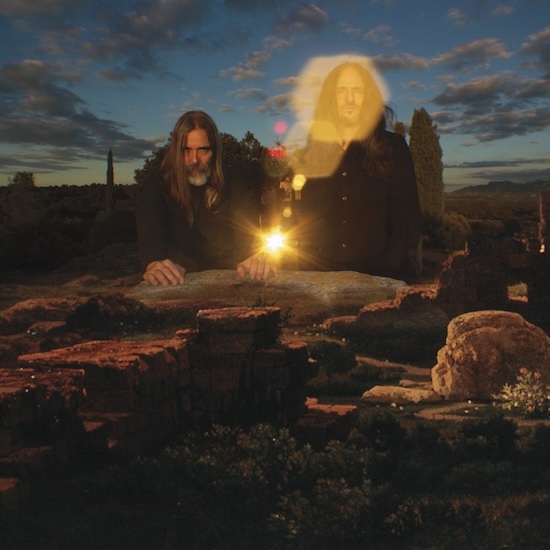
Having some knowledge of radionuclide technologies and the history of their application, I could not ignore the new album of the German black metal band Dauþuz entitled Todeswerk: Uranium II. The official press-release stated that the album’s concept was built around uranium mining in the Bohemian Joachimsthal after World War II and the inhuman conditions of workers who were forced to labour in the name of the Soviet Nuclear Program.

But the story is more complicated as always, and it’s easy to find that for long years the town was almost the only source of uranium since WW I. Uranium mining was temporarily suspended due to increasing cancer deaths in 1929, yet despite attempts to improve workers’ conditions, the mortality rate continued to rise. It’s not a secret that things went really bad when Jáchymov was occupied by German troops during WW II, and fascists utilized Soviet prisoners in the name of the German Nuclear Program there. Needless to say, the situation changed vice-versa when the War was over, and everything was in ruins.

As I reflected on this topic, I found some glimpses of the story of uranium mining in Africa… Did you know where the uranium used to make the bombs that destroyed Hiroshima and Nagasaki came from? Go and check, there was no fun there either. So, okay, uranium mining in Africa, Canada, and the USA – back then no one gave a damn about the environment or miners’ lives either of course. There was no any trace of humanism in this field for decades, and I bet there is nothing like this in some Third World countries nowadays as well.

Todeswerk: Uranium II tells the story of suffering, forced labour, and death in the name of progress and power in a most artistic way – both straightforward and epic. The interview with Dauþuz’ members Aragonyth and Syderyth was tough sometimes due to the difficult topics we discussed, but we managed to keep it diplomatic to some degree. Continue reading »

Jul 082026
 

(We venture off our usual beaten paths today with the following very engaging interview conducted by Comrade Aleks with a member of the Puerto Rican band Moths, whose progressive metal goes off in very interesting and often unexpected directions.)

Things happen and it’s difficult to support each new release in time, but I believe that it’s better late than never, and today I’m belatedly announcing that Puerto Rican experimental outfit Moths have a second full-length album Septem, with each track of that dedicated to one of the seven sins. The idea isn’t new, but its execution sounds unique. I can’t say the same about the lyrics, however, as they pose the issue directly, without any frills, and yet the Moths’ essence is quite unusual.

The casual and flirtatious folk prelude “Sloth” could be anything but a prelude to a metal album. However, with “Envy,” electric guitar takes over, and the listener is treated to avant-garde and progressive witchy heavy rock. Moths’ new vocalist, Mariel Viruet, previously fronted a local tribute band and performed in a jazz band. Here, she showcases both trained jazz and extreme vocals, effortlessly channeling the track’s hard rock intensity.

“Greed” bursts in unexpectedly hard, predatory, and fast: Mariel growls out the lyrics and switches to her usual delivery. “Pride” follows the pattern of “Greed,” but this extreme, doomy metal piece is imbued with the prowess of progressive rock, with a loud, jazzy vocal and a wealth of instrumental nuances. The difference lies in the details, and Moths sounds disorienting in any case, and the extremity of “Wrath” is unique. Liquid prog parts mutate into fat riffs, growls alternate with jazzy and pop vocals, and all together it sounds bold, unusual, even provocative.

So, today, almost one year after Septem’s release, we managed to organize an interview with the band’s spokesman and bass-player Weslie Negrón. Continue reading »

Jun 302026
 

(Today we present Comrade Aleks’ interview of Spyros, aka Declwa, guitarist/bassist for the UK band Unmother, whose second album was released in February of this year and was reviewed by us here.)

The second album of London-based project Unmother, State Dependent Memory, depicts a disturbing urban atmosphere of isolation and unsafety in post-black metal tones. The black metal elements used as the album’s framework are almost devoid of the genre’s extreme spirit, but the speed of delivery and screaming vocals work to Unmother’s advantage. The album’s main mood, or atmosphere, so to speak, is supported by “experimental” and melancholy deviations from the theme, embedded in the guitars’ transitions into the appropriate register and the non-trivial, noire keyboard melodies.

Unmother truly has crafted material with its own character, and the black metal component isn’t as prominent as one might expect, but that’s not particularly important. State Dependent Memory provides questions and barely answers, and an interview with the band was a question of time. Continue reading »

Jun 262026
 

(On June 10th the Antiq label released Assiégé pour l’Eternité, a special recasting of the influential debut album by the French medieval black metal band Véhémence. In the following very interesting interview Comrade Aleks makes a deep dive into the changes wrought through this recasting with Véhémence founder Tulzcha and vocalist Hyver.)

The French band Véhémence was started as a solo project by Tulzcha, who decided to try his talent at this endeavor on his own. His first album, Assiege (2014), was noticed, and over time, Tulzcha formed a team, which today includes Antiq Records owner Leon Ghiselin (aka Hyver), drummer Thomas Leiner, and bassist Konstantin Korolev, whom you might recognize from Passéisme.

Over three albums, the project grew so much that it was decided to completely re-record the first album, revamping the arrangements, adding lead guitar parts, live drums, violin, flute, and more. Additionally, the lyrics were updated, now even more in keeping with Véhémence’s medieval fantasy, and, of course, the cover art was also updated. The songs remain recognizable, but at the same time, it’s impossible to ignore how they’ve changed for the better.

Tonight I invite you to the realms of medieval black metal with Tulzcha and Hyver as our guides. Continue reading »

Jun 192026
 

(In late February the Greek doom metal band Distorted Reflection released their second full-length through Iron Shield Records, and that led our Comrade Aleks to contact the band’s founder and guitarist/vocalist Kostas Salomidis for an interview, which we are happy to share with you today.)

Distorted Reflection was created by Kostas Salomidis, guitarist and co-founder of one of the first Greek doom metal bands, Sorrows Path. Kostas left his first band in 2022 due to creative differences, and the newly formed traditional doom outift, Distorted Reflection, released their debut, Doom Rules Eternally, two years later. The second full-length, Doom Zone, was recorded by Kostas, again with Vangelis Yal (bassist for prog metal band Fragile Vastness) and new drummer Thomas Zen.

Kostas performs not only as a guitarist but also as a vocalist now, and by the second album, he has made progress in his new role. For better or worse, Doom Zone’s eleven tracks fit into 38 minutes, and within this framework, Distorted Reflection offer a slightly revised formula of the first album. This collection of tracks, built on the foundations of doom and heavy metal, is energetic in spirit and filled with melodic themes that, despite their richness, are remarkably compact.

Let’s try to catch a glimpse in Distorted Reflection with Kostas himself. Continue reading »

Jun 162026


(all photos by Fukcrec Hbk)

(On June 12th Season of Mist released a new album by the long-persevering Japanese death metal band Defiled, and in advance of that our Comrade Aleks conducted an exceptionally good interview with Defiled founder/guitarist Yusuke Sumita, which we at last present today.)

Having started out in 1992, Japanese tech-deathsters Defiled have changed their lineup, sound, and, to some extent, style several times over the years. The last decade of the band’s career has been marked by a fairly regular stream of new releases, and their ninth full-length, Altered State, arrived right on schedule.

Although guitarist Yusuke Sumita is the only founding member of Defiled still in the fold, his three bandmates are also seasoned veterans, having spent between seven and thirteen years in the band. But even yet another lineup change is unlikely to derail Yusuke’s locomotive, which he, with gritted jaw, drives at full speed, demolishing barriers with concentrated, intense, and thoroughly technical death metal.

It’s barely a surprise, but despite its reputation and ambiguous cover art, the core motifs of Altered State are Orwellian visions of a present/future, but in the form of an open-to-interpretation idea of ​​the general psychological pressure and discomfort that society and the world inflict on us. At times this material sounds like an intense CrossFit workout, and while it’s sometimes hard to enjoy with such a tough workout, it’s achievable with the right amount of practice.

I’m glad that we had an opportunity to interview Yusuke, and I’d like to thank him once more for in-depth answers, which made this interview a pretty rewarding experience. Continue reading »

Jun 122026
 

(Anyone who has listened to Defect Designer, and perhaps especially their current album Depressants [released last month by Transcending Obscurity] will expect any discussion with them to be unusually interesting, especially if it includes insights into their creative process — and expectations are fulfilled in the following interview of Dmitry Sukhinin and Martin Storm-Olsen by our Comrade Aleks.)

I bet that you already had a glimpse here on the new metal of Defect Designer, so I’d prefer to avoid revisiting the band’s background. What we have now is Defect Designer’s fourth full-length Depressants, which continues a series of experiments in prog, death metal, and avant-garde music.

Dmitry Sukhinin is responsible for guitar, bass, and main vocals, as well as some of the music and lyrics; Martin Storm-Olsen has added banjo, mandolin, and twelve-string acoustic guitar to his arsenal this time around. Besides relatively new and extraordinary drummer Eugene Ryabchenko, this album also features female vocals (“Body Count of My Cow Tail”), and one of the three guest vocalists is Björn Strid from Soilwork (“Expiration Deferral Request Denied”).

Depressants sounds like an anthem of unbridled chaos, but in reality, it’s a meticulously crafted piece that has undergone a series of modifications at various stages. In fact, the band’s previous album, Chitin, was recorded literally in the middle of working on Depressants! So the songs were written unhurriedly, with all the necessary elements given due attention. Thus, the screaming death metal cacophony of “Butterfly Juice Straw” easily transforms into epic, melodic metal, while the magical, orchestral keyboard lines of “As the Terracotta Dust Settles”, on the contrary, are instantly dispersed by a rabid death metal overtone.

Asynchrony and extreme dissonance go hand in hand with harmony and classical music. Depressants is the carnage of “Daily Dose of Gloom,” the mandolin finale of “Repeated Aversive…,” the hard rock of “Expiration Defreral…,” and the sleepy prog haze of “Body Count…” A lot of everything to listen to, a lot of everything to dig, a lot of everything to discuss with the band’s main authors. Continue reading »

Jun 032026
 

(In April of this year Antiq Records released a new album by the French black metal band Tarask. Comrade Aleks was drawn to it, and followed up his listening with this interview of the project’s creator.)

I fell for this bait again and initiated an interview with the band, whose new album description included the adjective “Lovecraftian.” But the Toulon-based black metal duo Tarask has slightly altered its concept for their second album, Sitra Ahra, and now relies on occult metaphors as a means of expression towards consumerism and modern society.

Being doom-guy for most of my time, nowadays I lean towards black metal as a more focused and straightforward way of channeling this discomfort… and I had a lot of this today after reading just the headlines of up-to-date news. So I have to admit, that classic and atmospheric black metal of Sitra Ahra is a good soundtrack to this evening when I’m ready to share with you this interview we’ve done with H. P. K. (vocals, guitars, bass). Continue reading »