

(We’re living in an era of resurgent demand for vinyl records, but one now marked by pressing-plant delays and challenging costs. Friend of the site Jon Rosenthal provides a vivid glimpse inside the business and technology of pressing vinyl through the following interview of two people involved in starting up and operating the LA-based vinyl plant ONYX.)
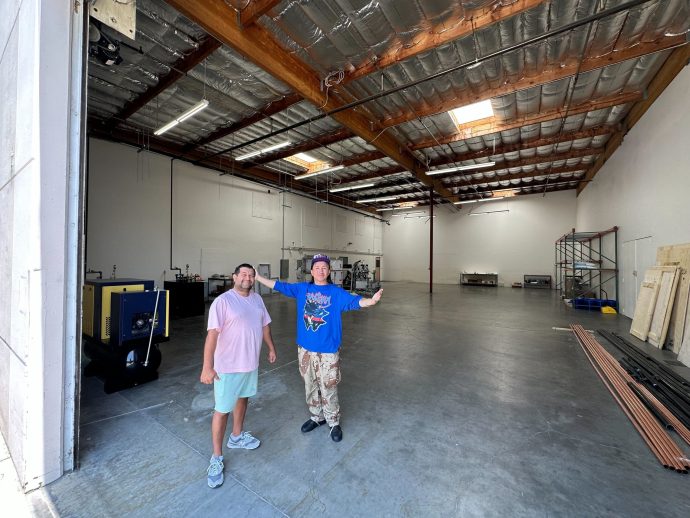
Opening a record pressing plant takes loads of effort. The record pressing process itself is an intense mix of humanpower, expertise, and correct, necessary machinery – now, make a facility dedicated to that craft, staff it, and get all that machinery. Losing your patience yet? Luckily, the newer LA-based pressing plant ONYX has taken on this process as part of an emerging wave of new US pressing plants. In a new interview, two of ONYX’s proprietors – musicians Moe Espinosa and Surachai – answer questions about the record pressing process, as well as what drove them to open a plant of their own. You can learn more about ONYX at their website.
Why did you want to start a record pressing plant of your own?
The four of us have different reasons for wanting to open a pressing plant as we all have a different relationship to music. My reason is because I wanted all artists to have access to a quicker turn around with a high quality product. I wanted artists to get on the road with a product that rivals the best records out there. Before we opened the plant, at a certain point, the turn-around time was 14 months and that is unacceptable. Only after a few months, you are a different artist. By the time an album is done and ready to be toured, you might be onto the next thing, but 14 months later? I can only imagine your relationship with your music is entirely different at that point.
We quote 8 weeks, but depending, can get it done quicker so you can get on with your business.
What does the record pressing process entail, and how are records made?
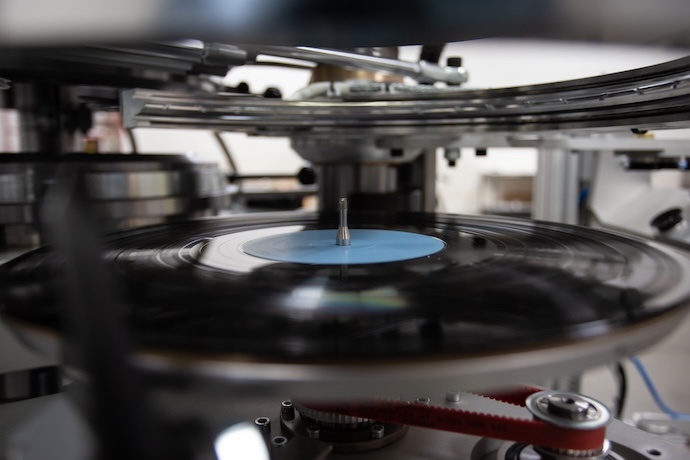
There is probably a youtube video that explains this better than I could ever. To put it succinctly: we take an audio source (wav, tape, dat) and use a lathe to cut the sound into a lacquer. A lacquer resembles the consistency of nail polish finish. The lacquer gets metal plated. The metal plates are called stampers. These stampers then squeeze a vinyl puck creating a record. At the end of the day, it is manufacturing – which involves pressure, heat, cold, water, material. It’s a dangerous environment and requires a skilled engineer to maintain and run these machines and these processes. Luckily, we have one – Gil Tamayzan, who has over 25 years experience doing exactly this.
What type of machinery does ONYX use in the pressing process?
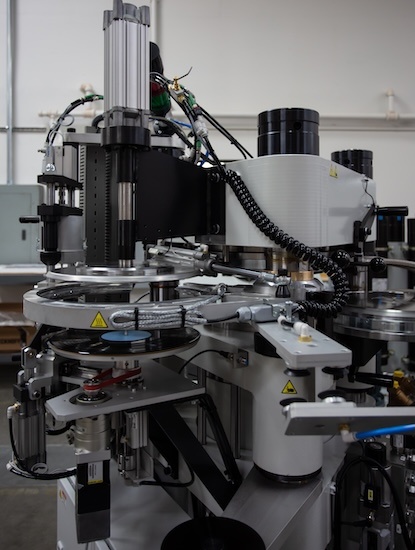
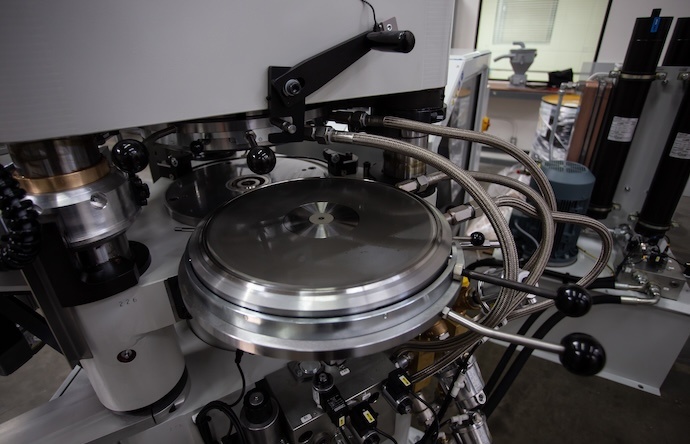
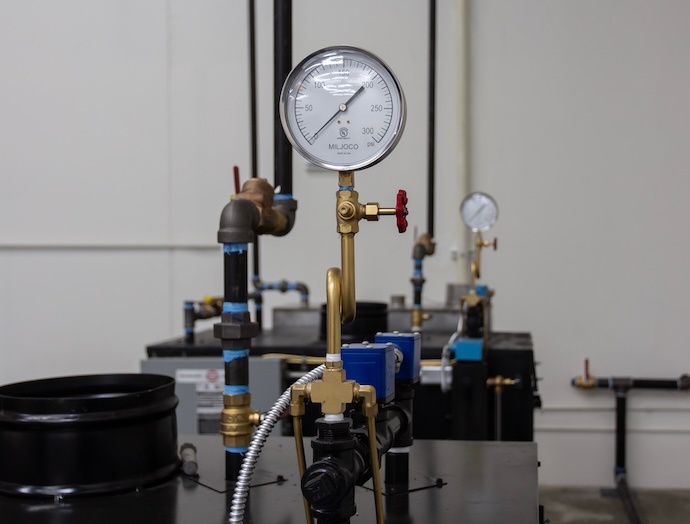
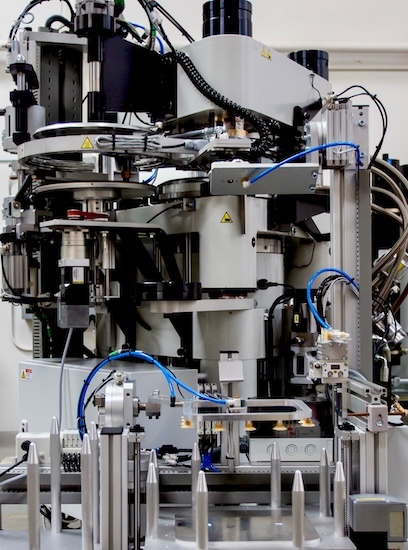
We use a lot. Boilers, chillers, fork lifts, the pressing machine itself, shrink wrap machines, etc. Imagine an old school factory and you would be very close to a pressing plant.
There is a whole slew of machinery that is required for pressing records, a boiler to create the steam used to apply heat and pressure to press the record, a chilling tower to create the cold water that is required to solidify and harden the records, water treatment systems to make sure clean water is used free of any hard materials coming from city water supplies. Air compression tanks to contract mechanical pneumatics as well as hydraulic fluids and pumps. For the packing process there are sleeving systems, shrink wrapping machines, ovens for baking any humid in the ink of printed materials and much more.
How long can this process take?
This is a seemingly simple question but the question begs another question: How complicated is your order? For instance, if you have a standard dance record – a 12” black record with a white center label and just a sleeve, this would be incredibly fast. Now, if you have a multi-record, multi-color, etched, silver foiled jacket and posters – this would take longer. Again, this is all manufacturing. There are no shortcuts to any of this. It’s all manual from start to finish. The machines are there to help us but we are manning them at all times.
The longest part of the process is usually the portion of getting stampers and lacquer discs cut and plated as well as any printing of jackets and artwork. Then a set of test pressings are created for the customer, mailed to them for approval, and if the test pressings are approved then the final manufacturing process starts coming together rather quickly.
Do you find there is a difference between traditional, hand-pressed records and those made in a more automated machine like the Pheenix Alpha?
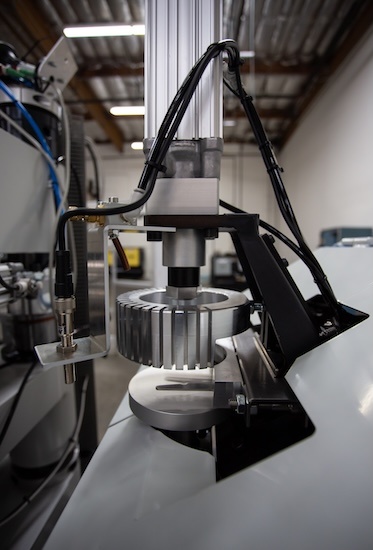
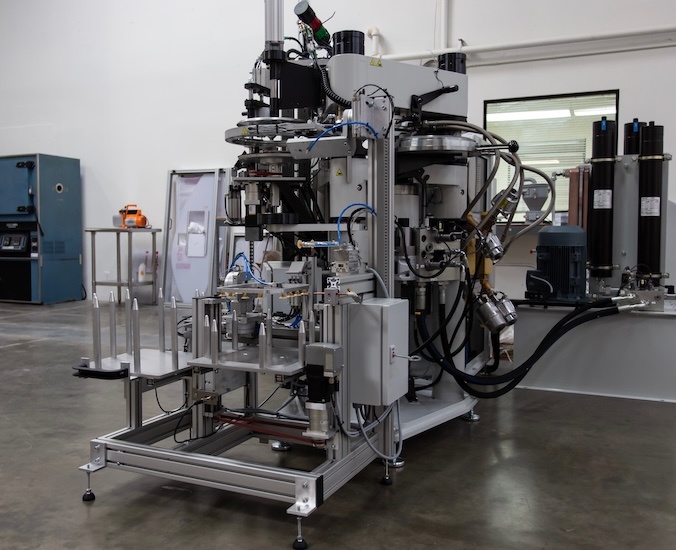
Our primary machine, the Pheenix Alpha is an automatic system and pulls the record right off the stampers with a trimming arm onto the trimming plate, then stacks directly on spindles with aluminum cooling plates to ensure flatness.
We utilize a hand press machine when the situation calls for it. For instance, a specific pattern or color layout is easier to achieve using such a machine but hand-pressed records have a tendency to be slightly warped or dished. Obviously, not all but we have seen this happen quite a bit due to handling records right off the press while they are still soft and mailable.
What might a regular consumer not understand nor previously know about the pressing process?
I dont want to assume what people know or don’t know but we have a team ready to answer any question and we’ve gotten them all. It’s a topic that’s shrouded in mystery and trade secrets and we try our best to inform people on what to expect. This is a technology with limitations and I think it’s important to understand that you are working within limitations, such as time, volume, and frequency limitations.
I think one of the main issues customers tend to not understand are all the technical steps that are required to actually press a record. We receive requests from people who want to print 1-5 records. This is financially unwise as the set-up cost alone to cut a lacquer disc and create stampers is already a very expensive process. To create all the materials in order to make copies and then to make only 5 records is not cost effective for anyone , neither us as manufactures nor a customer.
Though tariffs are not expected to affect manufactured records themselves right now, what unexpected costs are there hidden in the record manufacturing process?
Manufacturing is labor, energy (electricity, gas, pressure), time, and material intensive. The very act of keeping things operational, running, and maintained day to day is expensive.
When the price of oil goes up the price of vinyl goes up, this is just an unavoidable reality; also many manufactures of raw PVC that is formulated specifically for vinyl is not manufactured in the U.S. Although we haven’t seen tariffs increase the cost of vinyl yet since much of the supply is already on US soil, it’s very possible in the coming years that we will see a continued increase in the cost of raw vinyl material.
What is something I might not expect about owning a record pressing plant?
It is better to do it right than do it cheap. People need to remember you always get what you pay for when it comes to quality.
As musicians yourselves, what qualities do you strive to uphold and manufacture in the record-pressing process?
All four of us are musicians and engineers and we have very high standards for audio quality. I know this is an afterthought to a lot of artists that just want a product, and yes we will do colors, patterns, and creative visual features for your vinyl – but we take pride in getting the highest possible audio quality onto a record, however far you want to get away from black vinyl.
What is your favorite record that ONYX has pressed to date?
Surachai: I personally don’t have a favorite but I do love going to shows or into record stores and seeing records we pressed in the wild. I love seeing ONYX contributing to the music ecosystem and ultimately having our records in your home.
Moe: Would have to be Photek’s new EP from a fan-boy stand point, Puscifer’s Sessanta quad pack live recordings from Maynard’s 60th birthday, as well as jazz records from one of Tarot’s most replanted bass/jazz players Sam Wilkes. From a creative standpoint, doing liquid-filled vinyl with real Miller beer was a fun project.
Thanks for an informative interview guys