
(written by Islander)
The Polish musician (or musicians?) Ø Grémium has (have?) many guises, creating music under the names of such bands and projects as Ùna, Toska, Nocte, and Etěr (whose debut album of avant-garde death metal we recently reviewed here). And now another name will be added to that list: CAŁ●.
On November 3rd, the debut album of CAŁ● — Ludzie błądzący w nocy (“People wandering in the night”) — will be released by Devoted Art Propaganda in the EU and by Fiadh Productions in the U.S. As for what inspired it, we’ve seen this cryptic question: “Can the band’s ethos be captured with the words: ‘In rapture, against unity, before the guards, it drips inwards, CAŁ●?” And we’ve seen this statement by CAŁ● (translated from the Polish):
Standing on the shoulders of giants: Jan Kasprowicz, Jerzy Żuławski, Józef Jedlicz, Kazimierz Przerwa-Tetmajer, Jorge Luis Borges, Teofil Kwiatkowski, Władysław Wankie, Andrzej Wajda, Jerzy Kawalerowicz
As for the music, we’re premiering a full stream of the album today, preceded by more than a few thoughts about its dark and unsettling and equally invigorating sounds.
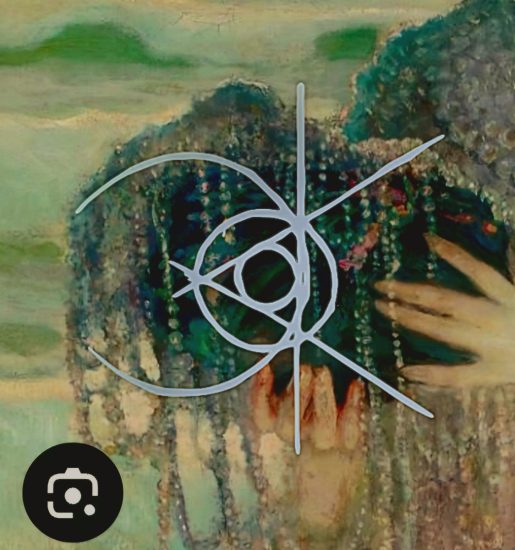
Much like the records released by the other bands/projects identified above that share a member (or members?) with CAŁ●, there are many mysteries encompassed by this one, from the painting chosen for the cover art (more about that later) to the names of the band and the album, and the song titles. The inspiration (those giants on whose shoulders CAŁ● stands) is less mysterious, but the connections between their art and this art isn’t obvious, especially to anyone who isn’t familiar with the works of those progenitors.
These curiosities abound, and maybe we’ll see if Ø Grémium is willing to answer questions some day, but those mysteries wouldn’t be intriguing if the music weren’t so captivating. (There is much we don’t understand about the world, but have no desire to figure out when the subject matter is mundane or doesn’t seem to affect us.)
The captivation begins with “Zanim Się stało” (“Before It Happened,” according to an online translation tool). As a brief introduction to the album, this song doesn’t ease listeners in, but it definitely creates intrigue. It flowers into a bouquet of slow thumps, sizzling abrasion, ominous clangs and twangs, piercing tones that writhe and warp, and macabre voices (with a few spoken words at the end).
Eerily wailing and dismally moaning notes also unsettle the first (full) song that follows, “Poza granice” (“Beyond the Boundaries”), made even more unsettling by riotous screams and furiously howling pronouncements. The music both heaves and sparkles, looms and seems vast, creates moods of desolation and derangement, generates nerve-wracking tension, and phases into a spellbinding ambient drift that’s vividly lit by pinging fretwork jubilation.
Across the following seven songs, CAŁ● continues creating sonic kaleidoscopes of many shifting musical shapes and colors, some of them deep and daunting, others dazzling, some of them curiously warbling, others squalling, some of them rough enough to sand just-felled timbers smooth, others as clear and piercing as shards of glass, some like seizures, others like the magnificence of nebulae.
At times, you might feel as if you’d been launched out into the space lanes on a satellite, but in the next moment teleported into an asylum for the under-medicated criminally insane. The songs include moments of solemn but sorrowful reverence, as well as moments of high theater or narcotic hallucination.
Otherworldly orchestras have the floor with weirdly warping contortions. Chimes seem to clatter in a strong wind. Electronic insects frantically skitter. A blacksmith might be pounding horseshoes on an anvil, with belching bellows nearby. Tremolo’d riffing ignites wildfires and madly squirms. The brightly lit soloing is usually berserk, but always transfixing. The reverberating guitars and keys ring and ripple in their refinement, and might seem jazzy, and might seem soul-stricken with bereavement.
In “Za Nim” (“Beyond It”) a slowly moving piano sounds like the pianist is caught in the drench of melancholy while thunder cracks and drizzle falls outside their window, and a man and woman sadly converse. It’s the most conventional (and moodiest) piece on the album, and a timely interlude before the kaleidoscope starts spinning again. (I’ve learned that the spoken piece at the end of this piano track is taken from the 1958 classic Polish film Popiół i diament“, and that Martin Scorsese lists it as one of his all-time favorite films.)
Everything else about the music is also in near-constant flux, including the vocals, which range from harsh and sometimes cacophonous expressions of fanatical savagery to celestial choirs that rise up in the midst of synth-driven stratospheres (and much else in between), and the drumming, which unpredictably comes and goes in equally unpredictable rhythmic (or arhythmic) manifestations. The bass might seem to grumble or might resemble the cold throb of an industrial plant.
The music has extravagantly experimental aspects and an overarching atmosphere of the surreal. Almost everything reverberates, underscoring the uncanny nature of the experiences. The musical traditions and stylistic ingredients on display are also extravagantly wide-ranging, which makes it even more difficult to concoct a Metal-Archives genre label, and so “avant-garde black metal” is probably the easiest alternative, because it’s such an amorphous appellation.
If you’re looking for catchy riffs or headbangable grooves, look elsewhere. If you’re looking for something off the usual beaten paths, something that will spin your mind all the way around and let you lose yourself in wonderment and escape the mundane world for 35 minutes, you’re at the right place.
And lest you get the wrong idea from my attempts to describe the album, this isn’t the sound of someone randomly throwing everything into the kitchen sink and then the brimming sink into the street. There is a method to the madness, clever minds and bursting imaginations behind the experiments, all of which will become more apparent as you listen more than once. It’s the kind of album that’s thrilling to hear, precisely because it’s often so free-wheeling and bizarre, and one that provides new discoveries with each listen.
And now here’s your chance for a first listen:
Devoted Art Propaganda (EU) and Fiadh Productions (US) will release Ludzie błądzący w nocy on cassette tape. We’re told that both versions come professionally printed with 6 panel j-cards and each with completely different artwork. A European version is also additionally housed in a slipcase. For more info, check the links below.
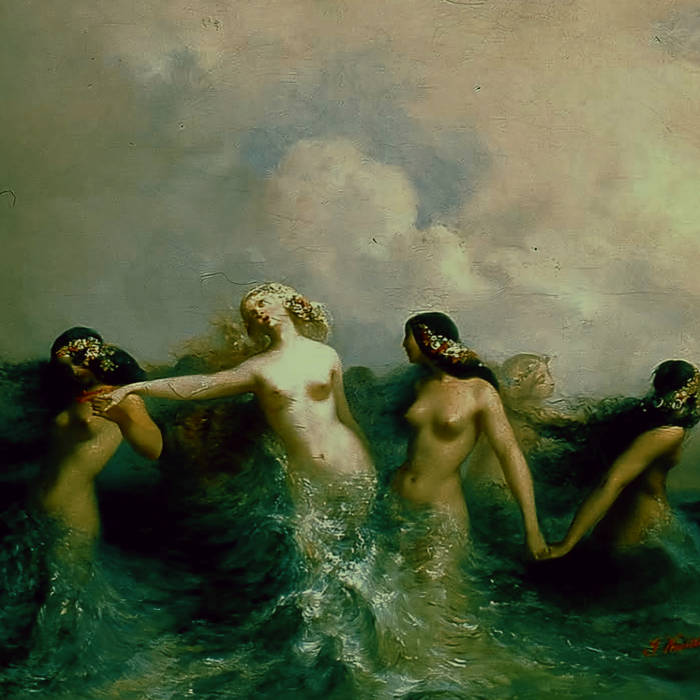
P.S. The painting on the cover of Ludzie błądzący w nocy is titled “Sirens,” created by the Polish artist Teofil Kwiatkowski in 1845. Online research reveals that Kwiatkowski (1809–1891) was a Polish painter who participated in the November 1830 Uprising against czarist Russia and later emigrated to France, where he became a close friend of the composer Frédéric Chopin and the poet Adam Mickiewicz.
CAŁ●
https://callo.bandcamp.com/
https://www.instagram.com/o_gremium
DEVOTED ART PROPAGANDA
https://d-a-p.org/
FIADH PRODUCTIONS
https://fiadh.bandcamp.com/music
Wild music.