
(written by Islander)
I’m part of a chat group with some long-distance friends who also write about metal (outside the cohort here at NCS). Some of them had listened to Sacramento-based Oromet’s new album The Sinking Isle before I had. One of them acclaimed it as the best funeral doom album of the year, and others agreed.
I thought that was a bold claim, given that this fall had already brought forth a new album by the old gods Evoken and will soon see a tremendous half of a split by Convocation. But while I couldn’t completely avoid some skepticism (not the band) about the assertion, I was certainly left eager to find out for myself what kindled such enthusiasm.
Not that I wasn’t already pretty taken with Oromet, based on their self-titled debut album from 2023 and their phenomenal cover of Alice Deejay’s “Better Off Alone” released just this past July (which I had some things to say about here). But still, standing toe-to-toe with those other bands mentioned above (and other fine groups not mentioned) would be no mean feat.
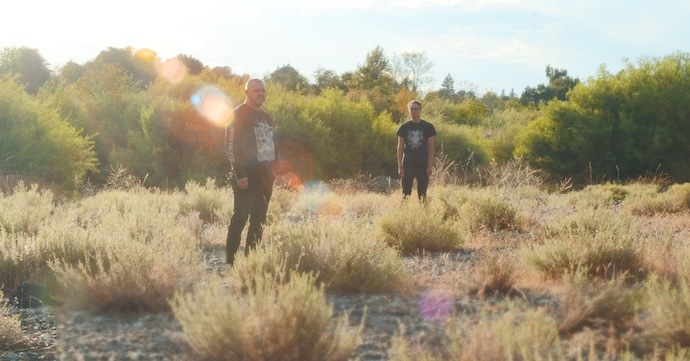
Photos by Danny Ensele
After finally listening to The Sinking Isle, however, I realized (as I should have already known) that “standing toe-to-toe” isn’t what’s going on here, because while Oromet undeniably devote themselves to funeral doom, their music is a different kind of beast from those other names that first popped into my head, and a pointed reminder that while “funeral doom” as a genre has a relatively small number of participants, what they have in common is sometimes less consequential than where they diverge.
It would even be somewhat misleading to ask whether Oromet has successfully stood “toe to toe” with their very good first album, because they’re not the exact same band they were then. To be sure, the participants are the same — guitarist/vocalist Dan Aguilar and multi-instrumentalist Patrick Hills — but on the new album they have taken their music to different places, albeit without letting go of the musical identity they began establishing in their debut. Here is how Oromet describe what they’ve done:
“The Sinking Isle represents a natural progression from our debut. The foundational elements remain, but a lot of new territory is explored that was only briefly glimpsed before. The instrumentation is denser and more intricate, while the climactic moments resonate with greater power and grandeur. Thematically, the album focuses on the inevitability of collapse and the cycles of ruin and rebirth. These patterns exist on both macro/global and micro/personal levels, with each song examining them in different ways.”
The album consists of three monumental songs, monumental not just in their duration but in the sense they leave of daunting edifices being constructed that will stand the test of time.
The longest of all is the near-21-minute song “Hollow Dominion,” and that’s the one Oromet chose as the album’s opening track. It’s a bit like throwing a gauntlet down before listeners and daring them to pick it up: If you’re not ready to settle in, ready to be engulfed and absorbed by what Oromet are doing, then you’d best go on your merry (or miserable) way.
Songs of such length, or even half of that length, are sometimes described in cliched terms as “journeys”, at least when the music makes turns as it goes, revealing different experiences and moods. “Hollow Dominion” definitely does that, and in doing so it displays some of the key hallmarks of Oromet’s creativity.
It first reveals gentle, lonely, contemplative melodies, melodies that are ethereal and mysterious, melancholy but also wondering. It also reveals music of groaning and grating heaviness, with gritty reverberating tones that seem to moan in agony and wail in pain, matched with slow, stupendous drums and both harrowing howls and gargantuan roars that seem to rise up from caverns deep.
Vibrating fretwork fevers infiltrate those massive cataclysms in shrill, piercing tones; flutelike notes add their own haunting wails; and the riffing also snakes and slithers, trailing anguish behind. The drums deliver enormous detonations that, while destructive, add to the song’s overarching air of immensity and downfall.
As the journey continues, the music gentles again, shimmering and slowly ringing, creating an atmosphere that’s unearthly and spellbinding (and maybe a bit futuristic). It’s a relatively brief break before the song shakes the earth and towers again, before it burns like radiation and cries out as if beseeching some other power for relief. The vocals sound even more terrifying, even more ruined by pain and loss.
If you’re like me, you’ll lose track of all those minutes passing, not caring that the journey is an epic one, because the music is both all-consuming and spellbinding, wholly engulfing and pulverizing but also emotionally gripping in its renderings of heartbreak and hopelessness.
The other two songs, “Marathon” and “Forsaken Tarn“, are only about half as long as the opener, but still far longer than the average album track. Both of them, like “Hollow Dominion“, include passages of granite-shattering heaviness and star-obscuring darkness, as well as shivering lead-guitar melodies that seem to burn their grief with acetylene heat.
“Marathon” also includes grim and gloom-cloaked choral chants, frightening to behold even if not as unhinged as the harsh vocals, as well as gently musing and eerily warbling bass-lines and a suddenly softer, tear-stained acoustic interlude that recalls the opening of “Hollow Dominion” but also becomes brighter and more emotionally buoyant, thanks to mandolin-like strumming and picking that somehow survives a renewal of the drums’ calamitous blows.
“Forsaken Tarn” again brings forward those dour, solemn choral vocals but also combines wondrous ethereal melodies with the slow-motion meteor strikes, creating stratospheric visions of wondrous beauty while everything below it is being shaken apart as if by the strides of Titans and massive boulders hurled from on high. Also noteworthy: a slowly moaning melody (almost oboe-like or didgeridoo-like) that’s paired with perhaps the most violently cataclysmic drum performance on the album, and a high, trilling melody that brings to mind skirling pipes which sound resilient in their mood.
To return to where we started: Is The Sinking Isle the best funeral doom album of the year? Again, that’s probably the wrong question, or at least a question that’s difficult to answer because it leads to comparing apples and oranges. Maybe better to say it’s one of the most powerful and powerfully captivating albums of the year, regardless of genre. Like towering monuments of old (and the music does often sound ancient), we venture to say it won’t be soon forgotten.
And here it is:
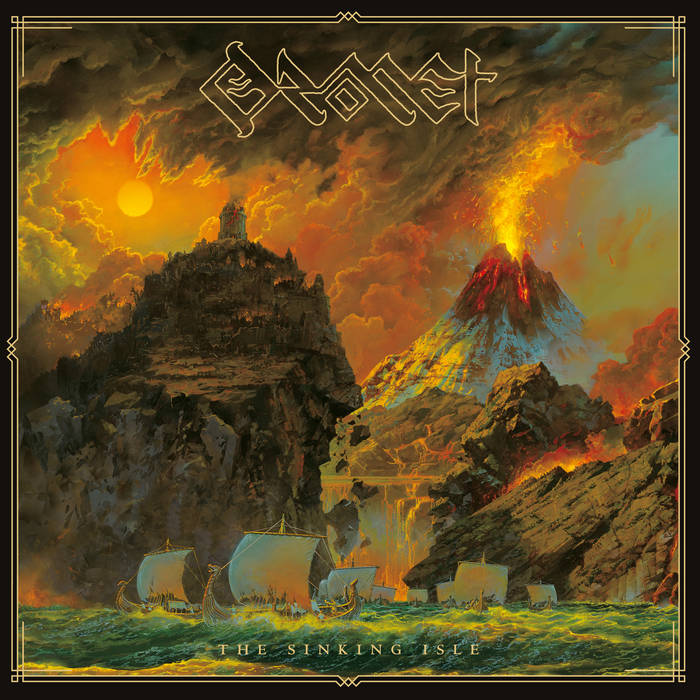
The Sinking Isle was recorded, mixed, and mastered by Patrick Hills at Earthtone Recording Company and, like Oromet’s first album, it features eye-catching cover art by Ted Nasmith.
The record will be co-released on November 7th by Hypaethral Records and Transylvanian Recordings on CD, vinyl LP (in two variant colors), and digital formats. See the links below for all those options. The album comes recommended for fans of Mournful Congregation, Bell Witch, and Esoteric.
PRE-ORDER:
https://hypaethralrecords.com/collections/oromet
https://hypaethralrecords.bandcamp.com/album/the-sinking-isle
http://transylvanianrecordings.com/album/oromet-the-sinking-isle
OROMET:
https://oromet.bandcamp.com/
https://www.instagram.com/oromet_doom