
(In September Cult Never Dies released the debut album by the mysterious black metal band Achathras. It impressed our Comrade Aleks (as it did others around here) and he sought an interview, which was granted. As you’ll discover below, it resulted in a very interesting and very articulate discussion.)
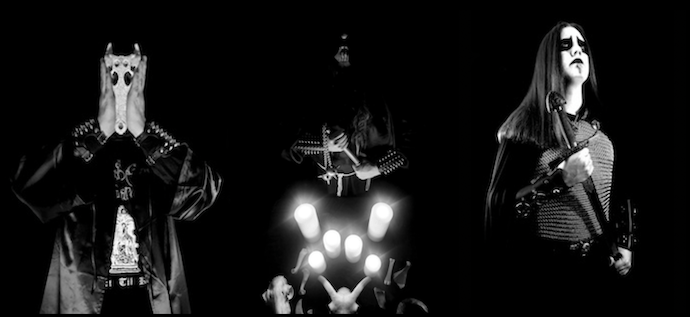
Although Cult Never Dies has earned a reputation in the book publishing industry, they couldn’t resist the temptation to support the scene as comprehensively as possible, occasionally releasing and reissuing interesting thematic releases. The debut album of anonymous project Achathras is surprisingly competent and exciting as it sticks to the canons of such iconic ’90s black metal bands as Abigor, Emperor, and Old Man’s Child. The trio consists of Eidolon Drakh, Malefic Orator, and Vorthol, whose identities are hidden.
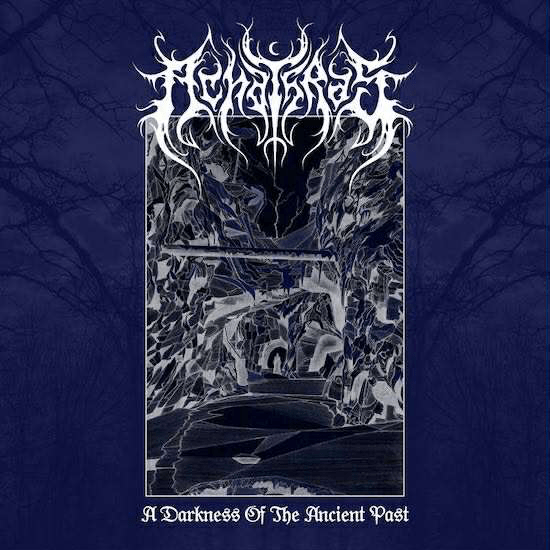
Their debut A Darkness of the Ancient Past radiates uncompromising determination, controlled aggression, and it’s full of cold melodicism covered with mystic atmosphere. The high quality of this material is explained by the fact that its members are experienced musicians, and no, I didn’t aim to uncover their names, so this interview with Eidolon (probably) is focused mostly on Achathras’ music and spirit in wider sense.
Hail Achathras! How are you? How does the promotion of A Darkness of the Ancient Past go?
It’s going well so far. The album has been in the making for a very long time (for uninteresting logistical reasons) so it is a profound relief to see it released and tremendously gratifying to have received as positive a reception as it has. You can’t please everyone, of course.
What do “unpleased ones” see wrong in A Darkness of the Ancient Past?
Either that it is too generic, the songs are too similar, or both. I don’t agree, but then I wouldn’t, would I?
The band’s name is quite fresh, yet it’s said that you’re experienced musicians (and it’s clear when you hear the album), and you prefer to stay anonymous. Which facts of your background make sense for listeners in this case?
The members of Achathras have experience from multiple bands over the last twenty years or so playing in and around the black metal scene. As such our real names come with a certain amount of baggage, expectations, and preconceptions which would unduly colour how Achathras is interpreted. I wanted people to hear it fresh, without any unhelpful qualifications or distractions. It’s more than that – I don’t want our identities to factor into the experience at all.
I also have a visceral dislike of bands being promoted on the basis of “featuring members of X, Y and Z”, as if the music was incapable of standing up on its own merits. That always makes me think of that awful Desekrator album with members of Enslaved and Gorgoroth – that project was a cautionary tale about how to cultivate extreme disappointment!
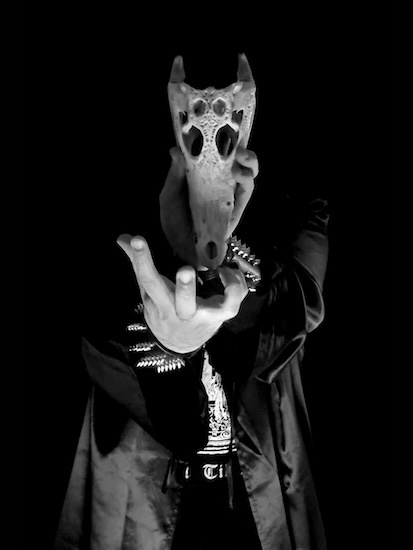
Eidolon Drakh
I see your point, and it’s reasonable enough! What was your main motivation to create a new band and start a “career” from scratch?
You can never really control which of your artistic endeavours resonate with people and take off, and which fall by the wayside for one reason or another. I had wanted to make black metal like this for many years – it’s a form of wish fulfilment for my teenage self in essence – but the music I was making at the time had to take precedence, and furthermore, it took a long time to feel creatively or practically equipped to make it work. I naturally arrived at a quiet period with the other bands I was involved with at the time, and decided to take the opportunity for Achathras. The band honours my musical roots and allows me to engage with aspects of my spiritual life in ways that my other work doesn’t.
Do you mean that you weren’t prepared to start Achathras for some reasons? What made the stars align?
I had tried to create a band like this at other times and things simply didn’t work out. But rather than give up on the idea I just took those as learning experiences. Not to say it’s been a quick and easy ride to get the album finished – far from it – but perseverance eventually won out.
Your very first album was released by Cult Never Dies, and it seems to be a good piece of luck even for experienced artists. However, how long did you search for a label before you were signed by Dayal?
Not long at all. As a musician I’ve been burnt enough times that I’m only really interested in working with people that I know personally and feel confident I can trust. I’ve known Dayal since his days writing for UK Metal Hammer in the ‘00s and had a good feeling that he would appreciate what Achathras does. The pedigree of Cult Never Dies speaks for itself.
The press release states that the band is “resurrecting the values of the early to late 1990s”. How would you sum up these values? Is the burning of churches included in the list?
“Values” is a slightly vexed word here, given that it can applied to a range of things from aesthetics to politics. Achathras strives to engage with a sense of otherworldliness in atmosphere and content that typified black metal in the mid-nineties. It is a unique cross-pollination between Satanic and more broadly occult themes with the aesthetics of fantasy fiction and tabletop RPGs (think of Mortiis-era Emperor lyrics or the wholesale appropriation of D&D book covers for the early B*rz*m albums).
If that sounds like I am denigrating it, I am absolutely not – the approach that emerged from that unique mixture of Satanic themes, esotericism, and popular culture is something that I consider to be very special and very close to my heart. It’s in the mid-nineties, after the initial dust has settled from the furore of the Euronymous years, that you really see this come to fruition with albums like Abigor’s Nachthymnen and Opus IV, or Obtained Enslavement’s Witchcraft. Ambitious and unashamedly melodic black metal with imaginative, deeply evocative lyrics built around a kernel of stringently Satanic content. That’s the period that drives Achathras.
It’s framed as a resurrection here, as in terms of the wider scene, this particular approach was effectively marginalized from around the turn of the millennium, by a variety of different counter-movements, such as the futurism of late Moonfog, the recursion to ugliness represented by bands like Craft and Watain, hybridization with death metal like Behemoth, the emergence of orthodox BM with Deathspell Omega and Funeral Mist, etc. Not that any of those movements are definitive; the diversity of black metal is too diasporic and granular for that, but there was definitely a shift where that style fell out of favour in a big way.
The only thing that the church burnings actually achieved was depriving various musicians of their royalties for a few years and enriching the Norwegian tourist trade by ensuring that Fantoft and Holmenkollen have a steady stream of “blackpackers” queuing up to take selfies.
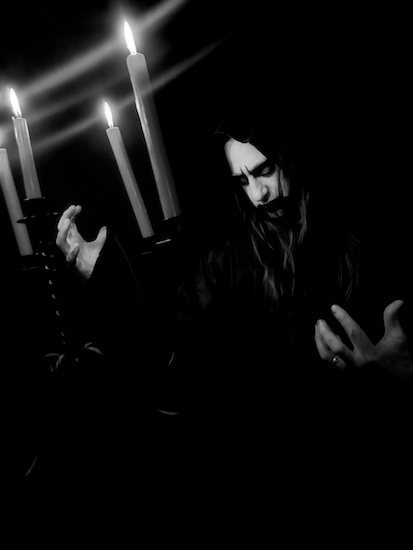
Malefic Orator
Speaking about the ideological aspect of black metal, which ideas lie in the core of A Darkness of the Ancient Past? There are a lot of quite “vegetarian” black metal bands nowadays, and the name of the genre itself started to lose its weight long ago. How is it crucial for you?
First of all, let’s dispense with the notion that black metal has been ideologically coherent at any point, particularly in its early days. So much of what was said in the early nineties was driven by a desire to be as provocative and inflammatory as possible. Inasmuch as you can say there was genuine ideology at work that evidently radicalized many young and impressionable people, it was a febrile one, and fundamentally inextricable from that time and place. Trying to pick apart what was real (for a given value of real) and what was trolling is like looking for a needle in a haystack at this remove.
When I was a teenager, back in the late Nineties, that sense of danger and extremity was exciting; as an adult, I need something more substantial than blasphemy and kneejerk acts of vandalism. I’m in my mid-forties now and I’ve got no appetite or patience left for all the bluster, braggadocio, self-mythologising, and other self-serving rubbish you tend to get in the discourse around the scene. Thirty years of reading reams of ‘zines will do that to you.
We all have to reconcile the different aspects of our lives in a way that is both meaningful and sustainable. My self-expression through Achathras is a key means for me to do that. The alternative is to be someone like Jon Nodveidt; simply unwilling, or unable, to live in this world. We all know how that ends.
This is also an example of the privileging of the second-wave Scandinavian model of black metal at the expense of pre-existing and contemporaneous strands of the genre. The likes of Rotting Christ made classic and influential black metal without indulging in those excesses, and people can question their credentials at their peril. If black metal is about engaging with Satanism – and it is – there’s many ways of incorporating that into a functional life without compromising your ideals or committing to a completely untenable lifestyle. If that’s soft, call me soft. (Or “vegetarian”? I don’t know what you meant by that.)
When I talk about “vegetarian” black metal, I’m referring to a certain extent to its modern, okay, “softer” forms. This partly concerns shoegazing or post-black metal, and partly concerns situations where bands are forced to apologize for things said on social media (despite what they put into it). That said, I like some post-black metal bands, and I’m not a fan of extreme forms of black metal. It’s just that these contradictions, sometimes excessive diplomacy, seem like an imposed product of the epoch. Let’s say, you’re allowed to humiliate Christianity as always, but you shouldn’t get involved with certain other religions or, worse, issues of equality. Why not make music that won’t offend anyone, you know? How much do you limit yourself in Achathras or your other bands and projects?
I don’t necessarily think that black metal has grown softer. It has grown more diverse but I don’t personally see that as a dilution, just a natural consequence of proliferation. I am of the view that black metal is defined by its Satanic content rather than a certain sound. There’s also a lot more music out there that takes influence from black metal without aligning thematically. None of which irks me.
Bands bending the knee to social norms can be a vexatious issue, but personally I have scant sympathy for people who complain about black metal going “woke”. It usually just means that someone has tried and failed to use black metal as a Trojan horse for some form or bigotry or other. In particular, while religious opposition is fundamental to black metal, and must remain so, I DESPISE racism. It’s herd mentality of the lowest order, which should be antithetical to the genre.
What HAS changed in the last thirty odd years is that bands today are subject to whole orders of magnitude greater scrutiny than the bands of the early nineties and as a result are much more likely to be challenged on their views. It seems to me more often than not that people simply resent being held to account for whatever obnoxious nonsense they happen to feel like saying, which is a puerile position to take. Free speech has never meant freedom from consequences. In a nutshell, that means don’t talk shit if you can’t take shit.
The issue then, is not that bands are prohibited from making antagonistic and/or inflammatory statements, but that they make antagonistic statements AND THEN roll over at the first sign of reprisal.
When that happens, there only really seem to be two options. One, that the statement was disingenuous, and therefore an idiotic thing to say. Or two, that the apology is disingenuous, which is contemptible. For that matter, the whole thing could be a publicity stunt – it’s not like it’s new for black metal bands to say outrageous things in order to generate notoriety for its own sake. In all cases the band in question is basically hoist by their own petard and it becomes clear that they are not to be trusted. I have more (grudging) respect for someone whose views I find abhorrent but at least has the entry-level integrity to have courage in their convictions.
To be honest, I think this discourse is becoming increasingly out of date anyway. Bands’ “careers” don’t suffer from “cancel culture” in the same way as a few years ago, they just get invited to Steelfest or Metal Threat or whatever. Personally I’m aghast to see “black metal” bands sharing ideological common ground with MAGA Republicans, but there seems to be a whole constituency of the scene that is blind to the irony of that.
I don’t think Achathras is in any way limited by all of this. I’m not interested in provocation for its own sake and there’s hardly a shortage of bands trading in vulgar kinds of blasphemy. For me they’re the least meaningful qualities of black metal, at least in terms of my own relationship with it.
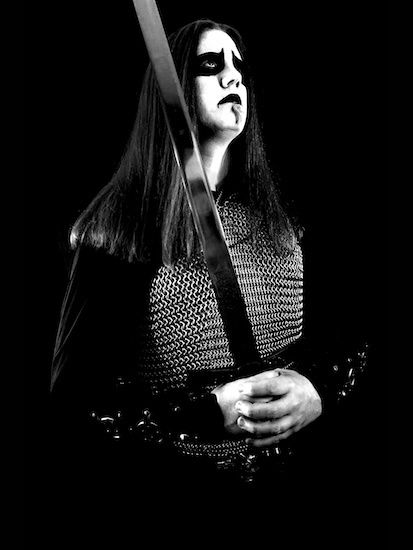
Vorthol
Okay, thanks for detailed answer! How long did you work on A Darkness of the Ancient Past? How much did it change in comparison with the scratches you had in the beginning?
My answer for this is a bit contradictory; over years of making music I’ve developed a set home recording workflow for demos and a habit of workshopping, recording, and archiving any ideas I have whether they’re relevant to my current project or not. As a result, a lot of the riffs and indeed whole sections used on A Darkness of the Ancient Past accumulated over a long period of time without me specifically planning an album. Once the impetus to start the band arose, I realized I already had a wealth of material already, so the actual songwriting only took a couple of months to iron out.
Do you consider Achathras as your solo project?
No, even when I’ve done one-man albums in the past I haven’t considered those to be solo projects. That’s just not the mindset I have. Besides, the other members bring their own personal touches to the arrangements and performances that elevate the music, so their contribution should not be undervalued – it’s a much better album for their involvement than it would have been left just to me.
What kind of goal did you set before yourself when you entered a studio in order to record the album? What was your initial plan?
Initially I thought it might be a one-off album so I just wanted to capture my vision for Achathras as clearly and completely as possible on the basis that there might never be more. I live in eternal fear of the well of inspiration running dry and so I never take it for granted that more ideas will come. It’s not that I don’t have faith in my abilities, but it’s simply not a rational fear that responds to rational arguments. It keeps me on my toes.
How many gigs have you planned for 2025? And how many have you already played?
There are currently no plans for Achathras to play live, though we haven’t ruled it out. The circumstances would have to be special.
What are your ambitions regarding the future of Achathras? Do you want to return to it once more?
I intend to make more as long as the inspiration is there and I feel I am not repeating myself. There is plenty more that I would like to do, assuming I am capable of doing those ideas justice. I have new songs demoed, so hopefully we will be a position to record another album during 2026.
Oh, I almost forgot to ask you… What does Achathras mean?
Achathras is the name in Sindarin etymology for the highest peak in the Ephel Duath, overlooking Minas Morgul. Though in full transparency, this is not Tolkien canon; it’s taken from “The Lord Of The Rings Online” MMORPG. I’m not a snob about its provenance – I’ve been playing that game for the best part of fifteen years – and the name simply stuck in my head.
Thanks for clarification and thanks for the interview then, I appreciate your patience. Would you like to add some words for our readers?
Thank you for your support.
https://achathras.bandcamp.com/album/a-darkness-of-the-ancient-past
https://www.facebook.com/profile.php?id=61576909640662
https://www.cultneverdies.com/music/achathras
Heads up to this guy for not falling into the anti-woke claptrap the interviewer was trying to set.
Really interesting interview. This guy gets it. Also, the music reminds me of Alghazanth, a band that is sorely missed. Good stuff.