
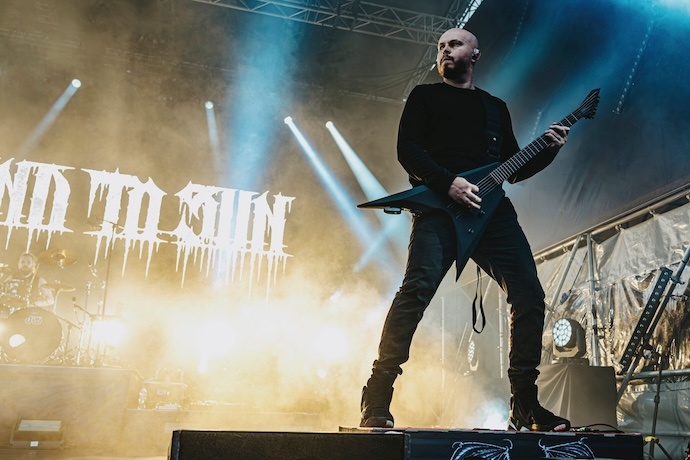
(Today we present Comrade Aleks’ wide-ranging interview of the very busy Russian musician and producer Vladimir Lehtinen, and we’ll let Aleks introduce it.)
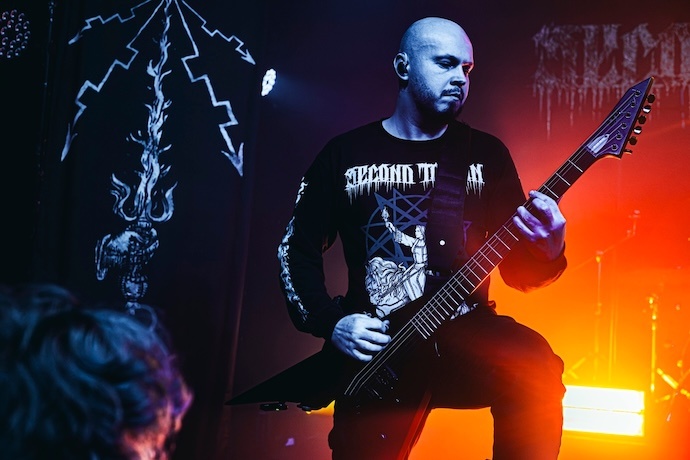
Vladimir Lehtinen is a one-man army, as he has managed not only to rule one of the most prolific and exemplary Russian black metal bands, Second to Sun, but also stay as one of the organizers of an annual festival of extreme music known as T’ma Fest (Darkness Fest) and to keep on working as a sound engineer who has mixed and mastered dozens of metal albums.
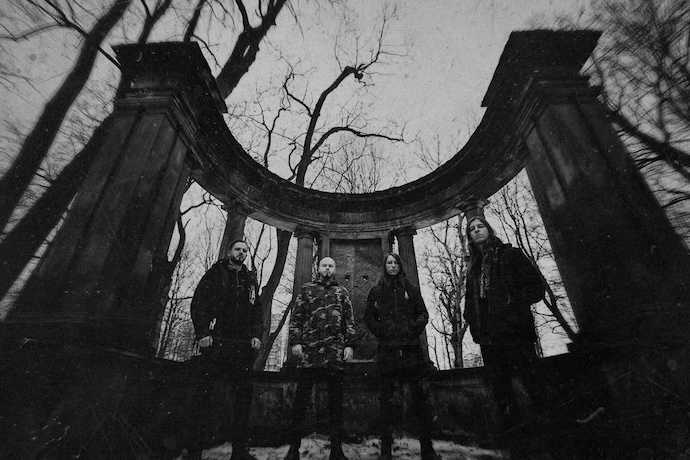
Second to Sun remains Vladimir’s main outfit, and together with Theodor Borovski (drums) and the Sysoev brothers from cult bands Grima and Ultar, he manages to keep the balance between quality and the quantity of music he produces. The band’s most up-to-date release is the EP Thunderbolt, which you may have heard as it was out in February 2025; yet you need no special reason to make an interview with such a man, as Vladimir, being deeply involved in the underground, has a lot to tell.
Hi Vladimir! How are you? What’s new at Second to Sun’s side?
Greetings. Working very hard. Second To Sun had a good number of shows this year, and a new EP was released. Not bad.
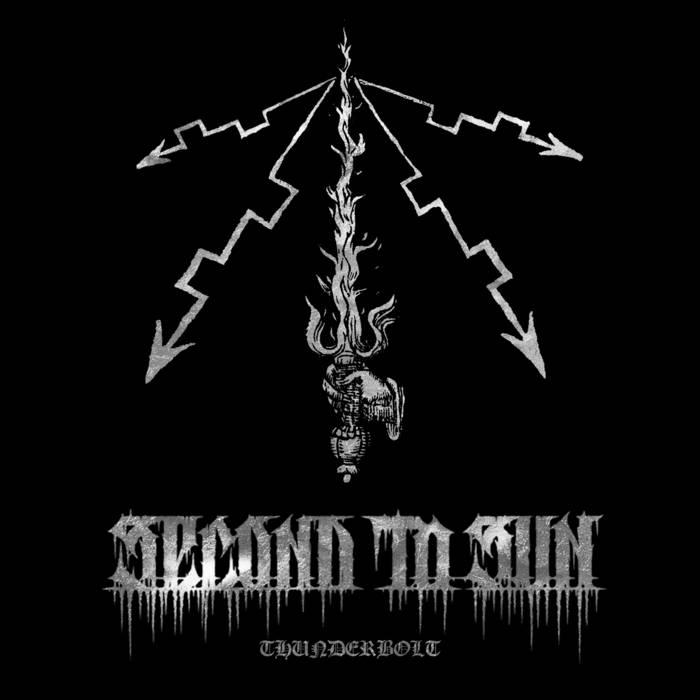
Second to Sun’s up-to-date EP Thunderbolt was released in February 2025. Are you still into this material or do you already head to the next album?
Yes, I think everything is going smoothly. The EP has a great raw sound, I’ve wanted to have a release similar to Ordo Ad Chao by Mayhem for a while. Theodor recorded the drums parts right at our rehearsal space, and it was a great decision. There are about 90 new songs, but I’m not in a hurry to release them. The time of regular releases for Second to Sun ended in the last decade. An album every year or even every other year – it’s a lot of information for a modern listener exposed to a huge flow of releases. As for how new the songs are – I’m writing them constantly, some of them are decades old. So, it’s possible they only seem new to you. For me, each one of them is a separate creation that will see the light one day. Or darkness.
You mentioned 90 new songs, do you mean that you have complete instrumental parts or something more? Concepts, ideas?
Part of them, maybe 30, are fully finished songs with concepts and even lyrics. I think that’s about three finished albums, which I’m not ready to show even to my fans, but sometimes they get to hear demos of songs with my vocals. Most of them are partial instrumentals, there is a huge number of them. These are basically unfinished songs. And the fewest, just a few, are ideas based on artwork or my thoughts.
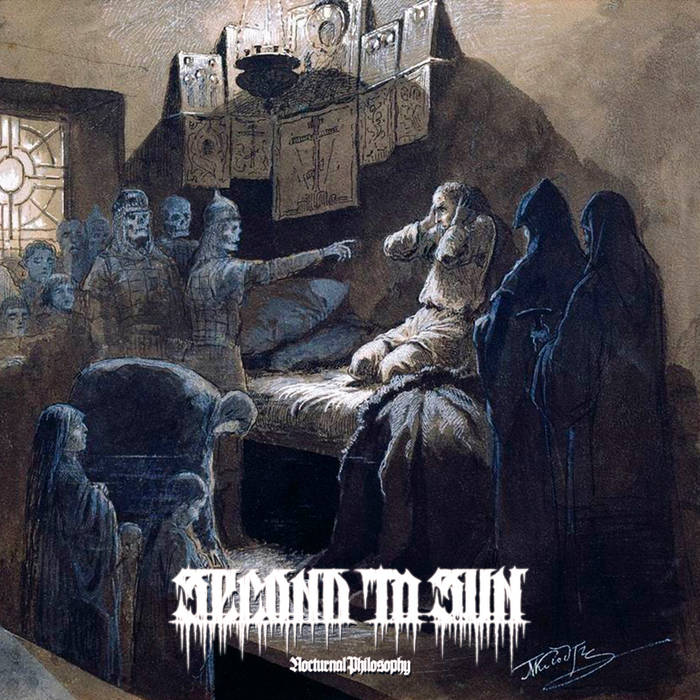
The EP Thunderbolt is built on tight, compact tracks, while your previous album Nocturnal Philosophy contains bigger, more complex pieces. Are you satisfied with the duration of these shorter tracks? Does it allow you to express everything you want?
In the case of Nocturnal Philosophy, I released a very long, concept album because the content perfectly suited the cinematic nature of the material. It’s a musical cinema, literally. It’s enough just to take a look at the album artwork to understand that it was a very dramatic format. And the title itself hints at thoughts during long, long winter evenings, as Count von Krolock said. The graceful, long soundtrack-like openings, the metallic vocals, and the recordings of a real storm in “Veter” were placed perfectly; it takes time to fully appreciate them. Even the cemetery in “Call to the Grave” needs to be listened to carefully, it’s not just an ambient, it’s a message. A good horror movie or drama is rarely short. Think of Von Trier or Russian directors like Balabanov, Zvyagintsev, or Bykov.
The new songs are more action-packed. Also, I don’t want the new material to emphasize the fact that the opening track on every album is long. A long opening track on two albums in a row – it’s just too much, really. Okay, “Eerie,” the opener to Leviathan, isn’t that long. But sometimes it takes years to create a good riff, I repeat, and material is always in the process of writing. And in the span of these five years, I’ve accumulated a decent number of sketches of short, powerful riffs. So, I decided to make a sudden shift towards shorter songs. The new material includes several songs longer than 10 minutes, but I think the expressiveness of the material and the boldness of its delivery suggest they should be shorter.
This may sound cynical, but is it even financially feasible to record albums regularly?
No worries. Earlier, when the whole world was supporting me, it was easier. A decent fanbase happily listened to my music and supported me. It was the size of a small label, people were looking forward to my shows and new releases. Today, when I mostly rely on my Russian audience, which is incredibly small compared to the rest of the world, it’s really expensive.
Second to Sun has existed for almost 15 years, you released nine full-lengths and a handful of smaller releases, and you produced a damn lot of albums by other bands. How did this experience influence your sessions for Thunderbolt? Did you record all of your parts during one lunch break or did it take two?
As always, the important things to me in my band are the sacredness of the material and its authenticity. I don’t rush into recording the material until it’s ready. For me, recording and writing is a deep creative process. Take the song “Call to The Grave,” for example, where I recorded my father’s grave on a dictophone. That was 10 years ago, and it came in handy only when I was releasing Nocturnal Philosophy. This approach provides a necessary, dark message to my work, and it takes time, even though it seems like something new. The same applies to the songs. The entire album, Nocturnal Philosophy, was written and recorded at night, and its title perfectly matches its content. The idea was always there.
As for working with other bands, my work depends entirely on their requirements. Genre doesn’t matter at all, nor do my preferences, I try to understand the artist. As for my band, I haven’t seen any bands among my clients who bring the same level of sacredness into their work. They mostly want to transfer something from the stage to the studio, and nothing more. These are artists, they want to perform on stage, some of them have a dream of playing a stadium, while others do it for themselves.
Most of the bands these days talk that they’re doing something special a lot more than they actually do. More often than not, such talk is a commercial ploy or just the accepted norms of the particular genre. For example, I’m often asked to create a distinctive, comfortable sound. Of course, there are some risky artists, but they’re little known.
You said that songs from Thunderbolt will get into the next full-length album. Do you plan to re-record all of them, or will you include these tracks as they are?
I’d like to re-record all the tracks and release them in a very clean sound, maybe even modern. So the album would be, in a way, the opposite of an EP.
You had a tour – 20 dates or so — this year, how was it? What are its highlights? What kind of obstacles did you meet in process?
The tour was technically excellent. The booking agency worked very well, but I had a feeling that fans were demanding a full-length release. Well, they’ll have to wait for that.
How comfortable is it for you to make tours like this? Do you manage to have some fun in the process?
These are just work-related moments, and of course we drink, just a little bit.
Second to Sun got invitations to go on tour with bands like Batushka, Belphegor, Finntroll, etc., but as I understood you couldn’t join because of your daily job as a sound producer. Did you receive offers of that kind this year? Do you see a chance to play live abroad in near future?
Actually, I get these invitations all the time. This year I got a message from Swedish Black Metal Festival, and the year before, we were also invited to the NORDIC MELANCHOLY TOUR with Psychonaut 4. There are plenty of other offers. The bottom line? I’m incredibly busy, sometimes I barely have enough time to work with my band. In addition to sound production, I’ve also started working with the annual T’ma Festival. It’s psychologically difficult for me to respond to the organizers because I see they’re watching the band’s live performances with great interest, but I can’t yet offer them my band, given my busy schedule and limited possibilities. I’m more interested in releasing label at the moment, to be honest.
You care a lot about lyrics and the albums’ concepts in general. What is Thunderbolt about?
Oh, it was a long lyrical journey, starting with the song “Eerie.” The lyrics focus on fictional events that supposedly took place in Russia at the beginning of the last century. Everything takes place in the very heart of winter, in the Russian North. To this I add a few personal impressions, as well as a characteristic cultural influences. It’s a good concept; you can’t just always sing about mythology or legends – you want to create something of your own.
Taking in account this approach and those 90 songs, do you start an album with a concept? Does it play an equal role as the music itself?
The overall mood is much more important. If I see multiple songs having a common idea, that can be used as a general concept.
How comfortable is it to play black metal in Russia nowadays? Satanic symbols are forbidden, you can’t criticize the church, so what else is left? To sing about mother-nature and ancestors’ creeds? Although I’m not sure if paganism will be free from restrictions for long.
Russia has a cultural wealth, but it’s poorly explored. It’s a hidden volume. So, metal bands have a lot to work with, and despite what you mentioned, it’s incredibly difficult— a lot more than in Europe or Asia, due to the freedom of interpretation. However, metaphysical questions, cultural memory, cultural influences (this is really important; we never had a Slayer type of band in Russia that would write its own Unit 731, you know?), national symbolism, archetypes, and the desire for solitude from the noise of the city, which I absolutely dislike, bring bands to creativity.
I see a huge number of interpretations and variations of black metal in Russia, from fantasy and horror film support to “village black metal” and urban Russian deep melancholy and big-city depression—it really does exist. Will it come to the masses? I don’t know. Sometimes it feels like the whole world expects us to be barbarians or gopniks, always wearing fur coats and waving a club. But Russia isn’t necessarily like that.
I think Russia needs to be accultured. I understand your question, and my personal view is that it’s due to ignorance and the overly technical education, coming from the USSR times. People in Russia don’t know their own culture, hence all this love for Mother Nature, ancestors, and other things. For example, we have our own “Dracula” – “The Ghoul” by Alexei Konstantinovich Tolstoy, but there are no fucking great films based on it, like Coppola, for example. “Dracula” was written in 1897, and Tolstoy published his work in 1841.
Remember Black Sabbath? They named themselves after Mario Bava’s film “The Three Faces of Fear.” This film almanac features two parts by Russian writers: the first based on a short story by A.P. Chekhov, the second on Tolstoy’s “The Family of the Vurdalak.” I’m not surprised if you don’t know about this, it’s not well-known in even Russia itself. So, there’s plenty to be creative with, and plenty of it. That’s why I’m not interested in themes like Mother Nature and great ancestors; I’m interested in art and metal, but not paganism.
Yes, once I wrote a text about Black Sabbath and I explored the case with “The Three Faces of Fear” and Tolstoy’s part in it. However… I can’t tell about “Unit 731” examples in Russian bands, as I’m not into thrash or death metal. You highlighted these tendencies well enough. And I think about this time to time… how do you think – what kind of special domestic scene does Russia have? I can’t figure out anything besides pagan metal, and I can live with that.
I understand what you mean, I’ve worked with bands like Alkonost. And I would gladly do it again. It’s definitely a major cultural export from Russia, but it’s completely out of my tastes as a metalhead and it simply cultivates what the world wants to see from us.
Look at black metal, death metal, or even prog—there is a lot of interesting stuff there, but it’s completely hidden. Think of Aspid, old-school guys are still listening to them. I grew up listening to that band from my mother’s times. Their records have an impressive pricing on Discogs. They are technical thrash metal from Russia. And that band only has one album, but what an incredible one. I think there’s a potential creative drive there. Fenriz still wears the Aria patch, doesn’t he? Even if we’re discussing old bands, there is a enough to talk about. But there are practically no new professional bands ready to play on stage like us. That’s true.
Did black metal become a trend today? Which Russian bands took it to its current level? Besides Second to Sun, Grima, and Ultar.
I think so. And it’s completely different from what started the genre in our country. I’ve always considered Second to Sun primarily a metal band, although the metal community considers them to be specifically metal. I think the road began back in the 1980s with mainstream bands like the early Cherniy Obelisk and the underground Chernaya Vdova and Preispodniaya, and we’re still going this way today.
The Russian Road, swept by blizzards, like in Gogol’s Dead Souls, leads different bands in completely different directions. I think sometimes the listener doesn’t even understand how all of this can fit into one country. For example, I think most of my listeners don’t even know the names I mentioned earlier, they aren’t aware of their existence, but this is our shared cultural problem, which I described above, and the problem of the Russian road. These bands were simply swept away by a blizzard.
These days, the bands I work with, I’m very impressed with Morokh, and when organizing the T’ma Festival, I try to give the attention to the full breadth of the genre for bands like a Crust, Iskra, or Edoma.
Does the genre’s popularity decrease its true value? And if it benefits then what’s the clue? To spread a message? To “keep the black flame burning”?
In my opinion, it’s detracting. For me, as a listener—not as an artist—some Russian black metal is atmospheric rock, trying to hide the guitars and extreme elements behind the tons of keyboards, reverb, and ambient, telling stories of personal experiences, trying to escape from the city into the forest. I can clearly see that my band can’t be called that; we truly are an extreme phenomenon and metal, not just some kind of atmosphere. These days it’s rare to see musicians take the risk of playing guitar alone, without a stage image, delivering genuine fucking bangers and chilling performances. This is an honest message for the whole metal community.
Any examples of that kind of band?
If you go to local social media and visit communities like Russian Black Metal, you’ll see countless DIY bands releasing their own releases on completely different topics. It’s all hidden and done simply for the sake of releasing albums; many bands don’t even dare to go on stage. Nevertheless, their ideas can be interesting.
Vladimir, as we’ve said, you’re one of the T’ma Fest organizers. As I know, you’re well prepared, and you have a professional crew. How was the festival this year? Was everything according the plan? Did you meet new challenges?
It was really good, despite all the difficulties. T’ma showcases the full breadth of Russian metal. It featured bands like Blackdeath, cult classics of the orthodox black metal scene, as well as Trna and Grobovaya Doska. We’ve invited a lot of bands, and the list over the past five years is enormous. I’m all in for breadth in the genre, and that’s possible for now. We’re doing everything we can to arrange the festival next year.
And I hope that you’ll succeed! However, that’s all for today. Thanks for in-depth answers, I appreciate it. Did we miss something crucial in a process? Do you want to add something?
I don’t think so, cause most metalheads will get fucking tired of reading all of this on the very first page. For those who made it to the end – my deep bow and thanks for your attention. Also thanks to you and the magazine for this interview, it was a pleasure.
https://www.facebook.com/profile.php?id=61551270388821
https://secondtosun.bandcamp.com/