
(written by Islander)
I fear that I’ve bitten off more than I can chew, and am putting before you more than you might be able to chew as well: four complete albums that have recently been released.
It’s rare for me to do this. It’s much more within my capacity in these columns to write about individual songs, with maybe one complete release in the mix. But I know myself. I spend most of my time at NCS scurrying on a daily basis to fulfill premiere commitments while trying to coordinate what other writers are doing and constantly attempting to keep up with new things that burst open elsewhere.
It’s my own choice, of course, but it means I rarely have time to patiently sit with a complete album, much less to write something approaching a thoughtful review unless the album is one we’re premiering. And to be honest, I don’t feel I’ve fully digested any of the four records I’m recommending today. Yet all four of them made such striking impacts on me that I felt the urgent need to say something about them before the coming week’s whirlwind starts spinning me around again.
In listening to these albums an old metaphor came to mind, the one about musical genres extending new branches that move further away from the roots, the trunk, and other branches. To be sure, these albums all have connections to black metal but they are all different from each other, and they extend the appeal of the genre far beyond its beginnings, in part by intertwining with branches from other genre-trees.
FYRNASK (Germany)
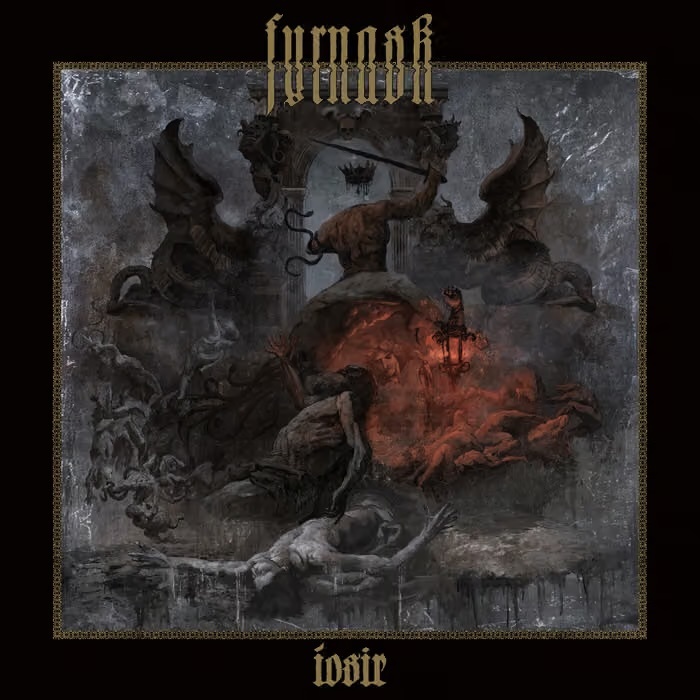
Fyrnask’s fifth album Íosir isn’t due for release by Ván Records until June 12th, but yesterday it became available for everyone to hear through a Bandcamp listening session. I was fortunate to hear it sooner than that, though at this point most people will again have to content themselves before the 12th with the album’s three singles, “Loginn Ómyndaði“, “Í Munnlausri Dýrð“, and “Krýndur af tóminu“.
Íosir’s musical narrative is described in these words: “The album follows a single consciousness through the realm of the dead — across burning gates, wrathful and luminous forces, and a final dissolution.”
That’s an unsettling description, an imagining of death that leads spirits into realms of torment and perhaps wonder but ends in nothingness. The progression of Íosir’s is also relentlessly unsettling as Fyrnask use their music to portray these experiences in powerfully frightening terms. Indeed, you’ll have a hard time finding a more frightening album anywhere this year.
As the description also foretells, the music is profoundly otherworldly. Fyrnask use immense booming and throbbing undercurrents and violently boiling and crashing chords to envision a dimension of death on a vast scale, and the shimmering emanations of high-flying guitars and keys don’t sound earthly either.
Through furiously hurtling drums, blast-furnace riffing, and tormented howls, they create sensations of fury and paralyzing fear.
At times, the music sounds monstrous — towering and bombastically cataclysmic. At times it sounds like the madness of lost souls, as the riffing frantically writhes, quivers, and seems to scream, or to create vast whirlpools of torment and destruction.
The vocals are also relentlessly spine-tingling, ranging from imperious roars to unhinged echoing cries, though Fyrnask also include ecclesiastical choral vocals (both solemn and fanatically soaring), perhaps as a sign of clerical promises made that will prove hollow, or of dreadful fallen angels reigning from on high, as well as deeply dismal singing, diabolical chants, and near-throat-singing.
Though still unearthly, gently ringing and reverberating melodies also channel misery and hopelessness — providing a break (a still-unsettling break) in the music’s often immense and earthshaking heaviness and its episodes of sweeping and incendiary intensity.
Soaring symphonic accents and industrial-strength grooves help create visions of awesome and terribly glory. Furiously hammering drums snap necks and drive blood. Piercing arpeggios seize attention like serpents in the path or broken minds, and shimmering electronics create strange and haunting aural hallucinations.
There’s a lot to taken in over the course of these 52 minutes, even more than I’ve attempted to describe above. Although the music is elaborately constructed and reveals a host of changing facets, the impact of all those minutes is near-overpowering, in both its tremendous sonic power and the depths of the fear and agony that it plumbs.
https://fyrnask.bandcamp.com/album/osir-2
https://www.facebook.com/Fyrnask/
HOLLOWS (U.S.)
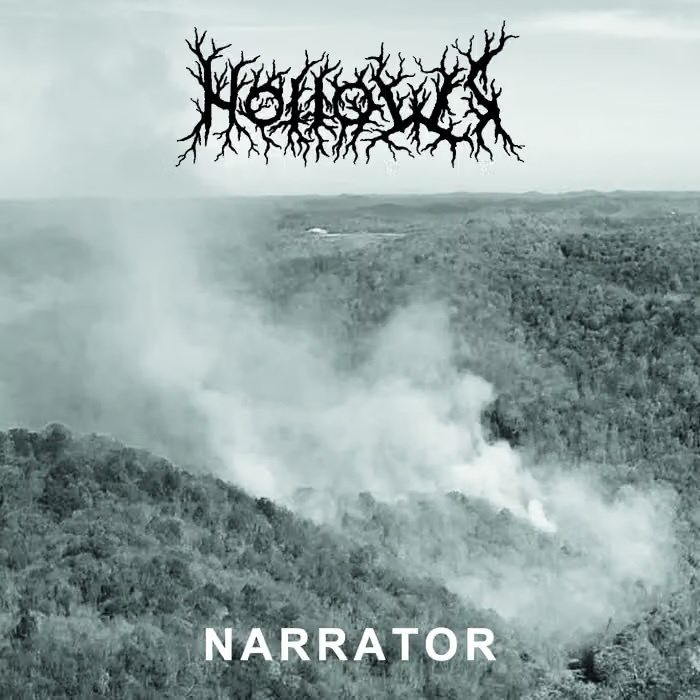
Snow Wolf Records released the second album (Narrator) by the Kentucky black metal band Hollows just yesterday. Because I’m an ardent follower of that label’s releases I pounced on the album. The opening song “Thy Blackened Lungs” then savagely pounced on me, and pulled me all the way in.
I did preview that no two of the albums in today’s collection sound alike, and this one marks a striking departure from the one above by Fyrnask. As you’ll quickly discover through that opening song, Hollows’ music is much less elaborate, much more riff-based, not at all fancy in its production (they have a classic “garage band” sound), but at times even more furious.
The riffing in “Thy Blackened Lungs” is gnarly and corrosive, rough and raw, feral and fierce, but gets its hooks in damned fast, and the drumming and bass-work powerfully kicks up the pulse, as do the unhinged paint-stripping screams in the vocal department.
The riffing in that song also includes the vivid punk-ish pulse of a “classic” heavy metal riff as well as fleet-fingered episodes of roiling violence and crawling manifestations of bleakness as well.
Like the opener, the other songs also have a “stripped down” feel, anchored by mostly grit-caked riffs that create visceral connections with our reptile brains and by pulse-pounding rhythms. The moods they create vary, but they’re all dark and primitive, and like the opener they include shrieked vocals that are relentlessly raging, electric drum-fills, and a propensity to shift among different addictive riffs as the song moves along.
Hollows also remind us they’re from Appalachian Kentucky, with “1976” sounding like a backwoods devil-tale, kind of bluesy but also fiendishly scary and, ultimately, riotously turbulent, and “Kain Tuc Kee” standing out for the beautiful, pastoral, folkish tones of its overture and the wailing, fiddle-like melody that sorrowfully surfaces and re-surfaces as the song winds its way forward to a distressing finale.
Hollows come back to their roots elsewhere in the album as well, and that’s part of what gives Narrator its distinct personality — a hybrid personality that also includes scathing black metal outbursts and the stripped-down authenticity of punk and garage rock (“The Crooked Man” being a prime example of those latter aspects, but not the only one).
This is definitely The Devil’s Music (and the music of downtrodden but defiant people), and if you’re not careful it will sink its big claws in your head and make ’em very difficult to get out. It sure did that to me. And while the ragged claws go in very easy all by themselves, pouring yourself some corn liquor from a mason jar would probably make them go in even easier.
https://snowwolfrecords.bandcamp.com/album/narrator
https://hollows4.bandcamp.com
https://www.facebook.com/hollows.kybm/
MARTRE (Denmark)
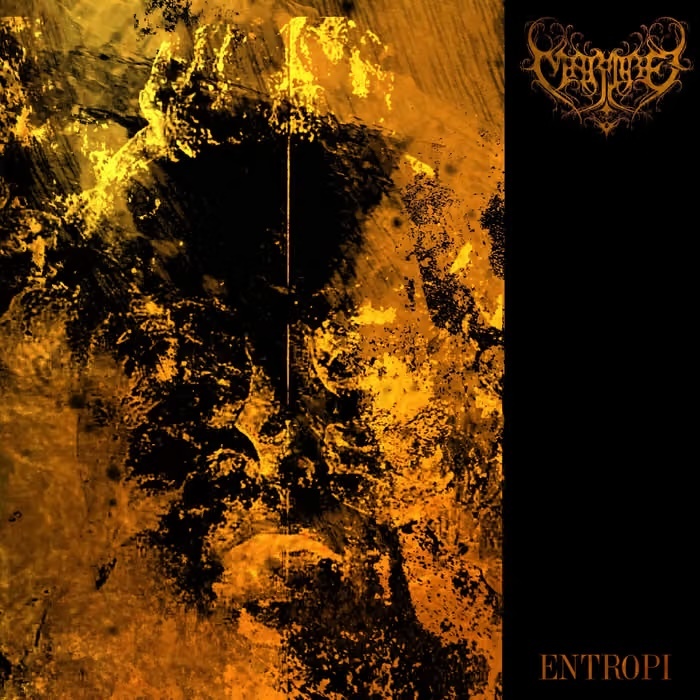
My next recommendations is Entropi, the new third album from Denmark’s Martre, which is the solo effort of Michael Andersen. “Style-wise,” he says, “we’re still on experimental ground, where raw and fierce black metal mixes just as naturally with atmospheric doom, as it does with grindcore and dissonant noise.”
I suppose you can guess from that description that the whiplash-inducing effects of today’s collection are about to continue as we move from the roots-driven simplicity of Hollows to Martre, but if you have a wariness about metal labeled as “experimental”, please don’t let that deter you, at least not before you listen to a song or two.
Surely you’ll find yourselves intrigued by the gentle, pastoral, and increasingly sinister beauty of the music that begins the opener “I Am The Fire And The Water“, and surely you’ll be startled when Martre rips apart that spell with scorching screams, riotous high-octane drumming, and a collage of mainly venomous sounds that scathe, eerily shimmer, and miserably writhe.
“Waltzing Into Limbo” follows that with big throbbing beats, ethereally swirling ambient tones, and a beastly, groaning riff that’s scary enough to send chills down spines, a riff that begins to warp in even more frightening ways. The vocals sound bestial too, while shrill meanderings in the sonic stratosphere conjure apparitional visions. Eventually, the song accelerates into a maelstrom of mauling and screaming madness.
The following songs are similarly brewed in cauldrons of contrast. They include sounds of ruinous abrasion, tunnel-boring heaviness, queasily squirming misery, and vaporous strangeness, along with head-rattling beats, vivid bone-thumping grooves, and of course acid-strength, mind-blown shrieks that seem capable of melting lead.
One particularly striking example of contrast is the song “Dissolve“, which melds together really tremendous and highly dextrous drumming with other instrumentation that’s sluggish, slow-moving, and soul-sinking. To be clear, the drumming is great throughout, providing attention-grabbing and physically compulsive anchor-points for all the other bizarre happenings that surround them.
Martre saves the biggest and most haunting act for last, closing the album with the near-15-minute “Mindwanderer“. Like the album opener, it begins ethereally, with tones that mysteriously glint, glimmer, warble, and chill. It begins to sound like violin strings and an upright bass in mourning.
The song eventually expands, intensifies, and veers in a multitude of different mind-wrecking directions, including eruptions of monstrous vocal cacophony — but those gloomy and slow-flowing opening instruments don’t leave; their doomed grief is too strong to be pushed aside by propulsive grooves or even more turbulent outbursts. The music becomes very ghostly as well — and ultimately cataclysmic.
I have no doubt that some listeners will be put off by the unpredictable ways in which Martre spins its musical tops, but I expect others will be fascinated by it, as I am.
https://martre.bandcamp.com/album/entropi
https://www.facebook.com/martre666martre
CALLOUS FAULTER (Australia)
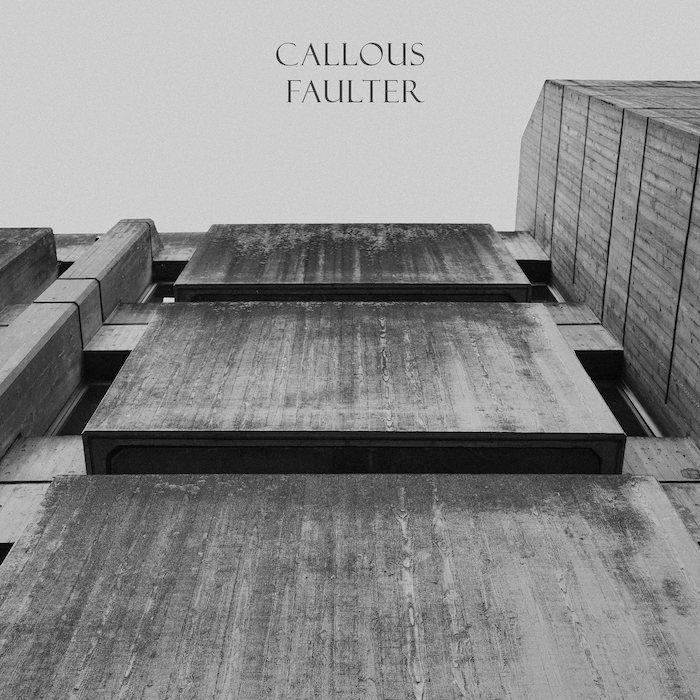
“Modern life is hell and Callous Faulter provide the soundtrack.” That’s the brief statement by this Melbourne band that appears at the Bandcamp page for their self-titled debut album, and you’d have a hard time arguing the point after listening to their music.
In line with that quoted idea, they made the confrontational choice to announce their presence with just two songs on the album, one of them nearly reaching the 18-minute mark and the other topping 16. Providing a tantalizing hint about where the music goes, their label Gutter Prince Cabal recommends it for fans of Altar of Plagues, White Ward, and Grima.
Maybe it’s best to address the elephant in the room right away: Despite their monumental durations, these songs aren’t dull, not even close. While repetition and perhaps even episodes of monotony might be feared, what you’ll experience instead are labyrinthine nightmares, with consciousness-altering musical fiends manifesting in different guises around many corners — and moments of glorious jubilation and crushing grief lying in wait as well.
Of course, Callous Faulter do use a degree of repetition to establish their unsettling, and often dissonant musical motifs, and they come back to those motifs often enough that they prick up the ears with their familiarity. Ears will also be shredded by the scorch-the-earth hostility of the vocals — they are really shattering in their blown-out, larynx-rupturing intensity.
The music also employs dramatic tonal contrasts — combining brute-force, earth-shaking heaviness with sounds of fragile, ephemeral lightness and searing brilliance — and leavens the experiences with ingredients like melancholy acoustic picking, strangely shivering and feverishly wailing guitars, episodes of boiling fretwork dementia and hard-thrusting groove, a fascinating saxophone solo by Tim Stocker in the opening song, some absolutely heart-in-your-throat extended guitar soloing in the crescendos of both songs, and a great deal more.
Another reason why monotony never gets close is that Robin Stone is the drummer, and both his tremendous athleticism and feel for well-timed nuance and pattern variation are on full display here.
But the main credit for this spectacular, and powerfully mood-moving, album goes to J. Angus — the songwriter, guitarist, bassist, and vocalist. And yes, it really is spectacular. Of course, you can’t just dabble, you have to set aside some serious time, but I think you’ll find it time well-spent.
https://callousfaulter.bandcamp.com/album/callous-faulter
https://www.facebook.com/people/Callous-Faulter/61590484113038/
On callous faulter… if your ears need a post-black half hour to burn through a piece of work, this is the drug.