
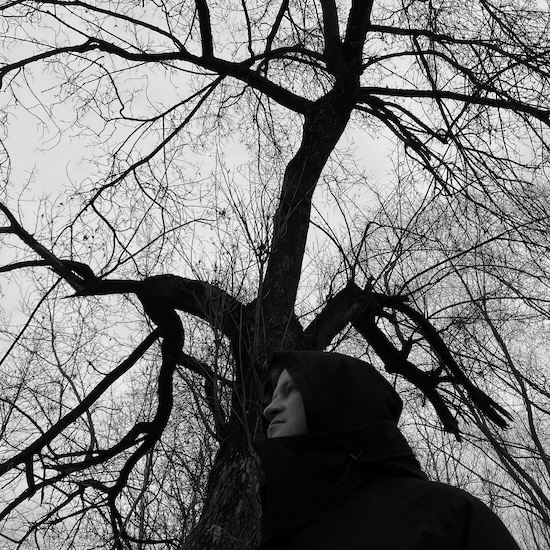
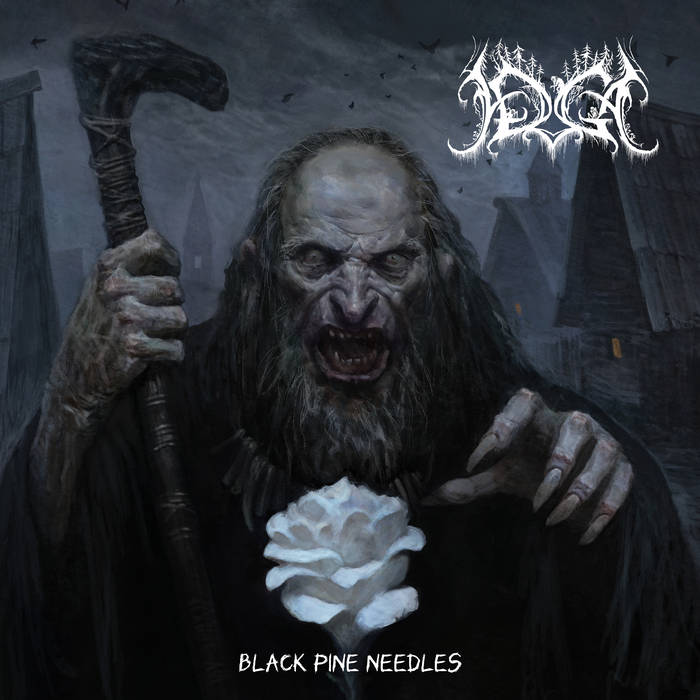
(In this new interview, a very interesting one, Comrade Aleks conversed with Piotr Podkolzin, the person behind the Moscow-based progressive/melodic black metal band Irga, whose newest album Black Pine Needles was released this past June in cooperation with Svanrenne Music.)
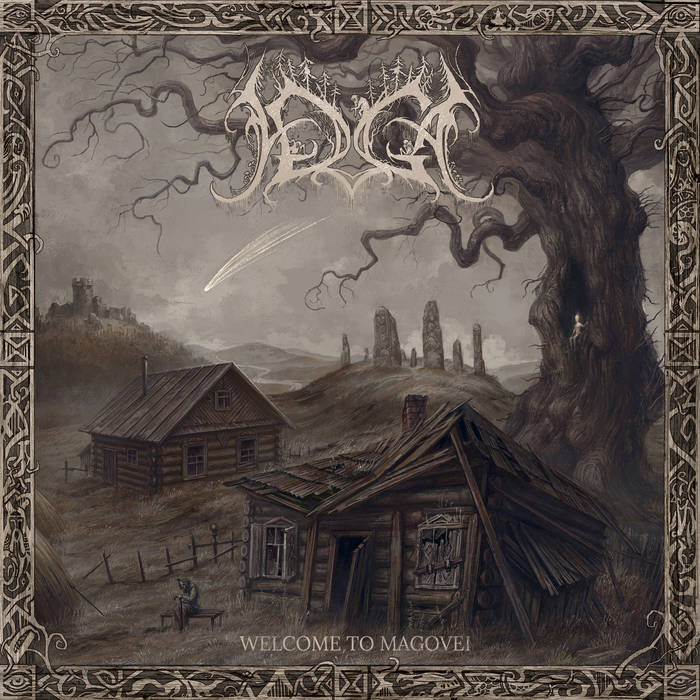
Irga from Moscow was started as an instrumental black metal project with a concept based on the story of a fictional haunted village where wrong things happen on a daily basis. Piotr Podkolzin was the sole member of Irga, but the release of the first album Welcome to Magovei inspired him to continue with guest musicians.
Logically, the project’s sophomore album – recorded now with live drums and vocals – turned out to be a product of another level. Black Pine Needles is an excellent example of modern (in a good sense of the word) and quite progressive black metal with an individual approach. Here we go deep into the dense grimness of Irga’s chthonic spirit alongside Piotr himself.
Hi Piotr! How are you? What’s going on with Irga now?
Hi. I am very glad to talk to you and immediately want to apologize for my not very good English. I hope everything will be clear.
I’m already gradually preparing the material for the next album, recording the first rough demos, thinking about the concept and the overall sound. The album Black Pine Needles was recently released, so for now we can afford to look for a little inspiration.
Is it too early to ask about the new material’s shape? Do you have an idea where to turn now?
It’s hard to say for sure right now, but most likely there will be a little more emphasis on melodism, and in some songs, perhaps, there will be a slight influence of gothic metal like Sentenced or Moonspell. The lyrics of the songs will further develop Irga’s own lore and further expand the universe of Magovei, and perhaps from some unexpected side. That’s probably all I can tell you for now.
What was there in the very beginning? Did you start Irga with that idea to build a story around an imaginary village?
The Irga was conceived during the pandemic. At that time, I left my previous band, where I played a fairly light form of rock. I’ve been listening to a lot of different types of metal all my life, and then I decided to myself, “What the hell? I’m going to do exactly what I love. Even if he’s alone.” Then I started thinking first of all about what the music would be like. The concept appeared later, when several tracks were written, and it somehow appeared by itself. I’ve been very interested in folklore for a long time, so this kind of ideological content turned out to be very natural for Irga.
By the way, it probably wouldn’t have been so thoughtful if I hadn’t planned the first album to be instrumental from the very beginning. I wanted to fill the material with something, and when there are no vocals and lyrics, the concept should be worked out especially carefully. Anyway, that’s exactly what I thought at the time.
Can you tell more about the Magovei concept? How did you compose it?
Magovei is a village that may be located somewhere in a parallel reality, perhaps on another planet, or perhaps on earth, simply hidden from human eyes with the help of someone’s sorcery.…
On the first album, Magovei strongly resembles a Russian village of the late 19th and early 20th centuries; on the second album, technological development is rather closer to the early Middle Ages. All the stories related to Magovei strongly echo various plots from East Slavic mythology, and sometimes they resemble peasant stories about supposedly real encounters with otherworldly forces.
This is a special genre of oral folk story, which in Russia is called the word “Bylichka” (“Быличка”). I get my sources mostly from books. In the 19th century, there was an ethnographer in Russia, Sergei Maksimov. And he recorded a lot of such stories about encounters with fiery serpents, leshys, sorcerers and other mystical entities. I also took a lot from collections of Russian folk tales. For example, one of the sources of inspiration for the story told on the album “Black Pine Needles” was the fairy tale “The Fiend” from the collection of another ethnographer, Alexander Afanasyev. It’s just a delightful scary legend, and there even seems to be an English translation of it.
By the way, on Black Pine Needles I was also inspired by Robert Howard’s Conan the Barbarian, which is completely different from the concept of Welcome to Magovei.
And when I came up with this universe, I started from the images that were born in my head when composing music. So music is the primary thing for me anyway, it sets the mood.
What encouraged you to include vocals on the Black Pine Needles album?
From the very beginning, I wanted to make a second album with vocals.
If I wanted to take a different path and develop an idea with instrumental music, I would have done it without hesitation. Irga is a project that doesn’t make sense to do something I don’t want to do.
I still really love the album Welcome to Magovei and I think it turned out to be very unique, besides it is a great foundation for Irga. But I’m convinced that at this point in the instrumental metal genre, I’ve said everything I could. So far, it’s more interesting for me to work with a vocalist. This does not exclude a return to instrumental music in the future, but only if new ideas appear.
You’re from Moscow, how did you manage to feed and grow the inspiration for your first songs? Was it natural for you to evoke that feeling of a remote, haunted village with this “Russian chthonic” («Русская хтонь») touch?
I’m from Moscow, but I spent quite a lot of my childhood in a village near Noginsk. Irga’s work is largely the longing of an urban person for the countryside, sometimes mixed with nightmares. And if you look at it that way, everything turns out to be just more than natural.
This element, “Russian chthonic”, nowadays seem to be… maybe it’s not a trend, but it was popularized with some bands and it seems to be popular. How do you see its roots from your position?
In my case, it’s just a series of coincidences. As I have already said, I have been interested in folklore and ethnography for a very long time, and long before this fashion, in the late noughties, I went on folklore and ethnographic expeditions several times. I was interested in folk music and legends, including scary ones… Well, I also love various horror films, including folk horror. And so it turned out. It just so happened that Irga appeared quite recently, when this topic was already strongly developed by other bands, many of which, by the way, I really like. But never mind, the topic is actually very rich, and you can figure it out for a very long time.
Can you talk more about those expeditions? How were they organized?
At that time, I was a member of a folklore and ethnographic center from Moscow, which studies the traditional culture of the Upper Oka River, and my paternal ancestors also come from this region. This center organized the expeditions. We were collecting folk songs then. There were still singing grandmothers in the village we went to, and not only late folklore samples, but also quite ancient ritual songs remained in their memory.
What was people’s feedback for Irga’s first album Welcome to Magovei?
Let’s just say the feedback was more than I expected. Irga has its first fans ready to support the project. However, of course, Welcome to Magovei is a difficult album to understand, as it is instrumental metal that does not fit into the concept of “post–metal” or virtuoso “shredding”. It’s quite an avant-garde style that has very few analogues. Therefore, it takes time for many to understand this album. The few reviews I read were all pretty good, however, I decided to add vocals anyway.
Your new album serves as a direct continuation of Welcome to Magovei music-wise. Was there such a short pause indeed? It looks like you started writing Black Pine Needles pretty soon after the debut’s release.
That’s exactly what happened, I started composing music almost immediately. To be honest, I think it would have been possible to release the album even earlier, but sometimes life gets in the way. But in general, I try to write music permanently.
How detailed was this concept embodied in your new album Black Pine Needles? Did you aim to build this coherent concept through Irga’s sound and lyrics?
Black Pine Needles is actually a spin-off of Welcome to Magovei. Only if Welcome to Magovei is a collection of stories, a horror anthology, then Black Pine Needles is a single story, a mini–rock opera, just almost all the lyrics are sung on behalf of one character. And the action takes place in the same universe. So yes, Magovei is now Irga’s lore, and if not forever, then for a long time.
This time you recorded the album with session members. Did it help you to evolve the band’s sound and pay more attention to some details?
Oh, yes! It was a very interesting experience, and I am very glad that everything turned out well. I came up with both the vocal parts and the drum parts myself. And then I gave the guys a demo. And with this method of work, it is very important that there is mutual understanding and mutual trust. It seems to me that everything worked out very well with both drummer Vladimir and vocalist Nikita.
How long did you know them? Was it easy to persuade them to take part in the project?
In Nikita‘s case, it was a lucky combination of circumstances. He was looking for musicians for the concert line-up of his Malist project. I’ve been listening to Malist for a long time, and he found me in his subscribers and invited me to play guitar in his band. Unfortunately, it soon became clear that it would be difficult for me to combine Irga and Malist, so I eventually did not become a member of the band. But our acquaintance marked the beginning of a studio collaboration.
He recorded vocals for Irga, and I participated in the recording of the album of another of his projects, Crimson Crown. I made an orchestral arrangement for one of the tracks. I believe many people reading this interview may be familiar with both Malist and Crimson Crown. This is very cool melodic black metal from Moscow. Nikita is a wonderful songwriter. By the way, he eventually assembled a live cast of Malist and they are already starting to give concerts.
The situation was simpler with Vladimir. He is a very famous drummer among musicians in Russia. He plays techno death metal in his band Антитезис (Antithesis), and he also does a lot of session work, and his specialty is extreme metal. He’s one of the best at this. So I just wrote to him and offered him to record drums for Irga, which he agreed to.
And if we’re talking about the people who helped me record the album Black Pine Needles, it’s definitely worth mentioning Kirill Golovin. In Russia, he is known as a reader of various audiobooks, including the works of Andrzej Sapkowski. His voice acting is loved by many Witcher fans, and I am very glad that he read the spoken word in the last track of the album. That’s a damn important finishing touch. I wrote to him, not really hoping for anything, because of his fame. And imagine my surprise when I received the answer the next day: “Yes, of course! I love black metal and I’d love to read this excerpt!”
The very first song “Smoke of Fires” is interesting, with a few atypical guitars breaks which we can consider as avant-garde ones. And I read that you’re fan of Gojira. What attracts you more – the progressive or atmospheric side of black metal?
The progressive side is probably closer…
However, there are many bands that can hardly be attributed to atmospheric black metal, if we talk specifically about the subgenre, but their music always creates some kind of atmosphere. After all, for example, Emperor or Enslaved have been influenced by progressive since their first albums, and there’s no way to say that they don’t put you in a special mood. If we talk about atmospheric black, then I like the bands that stood at the origins of the subgenre. First of all, Drudkh and Ulver.
In general, in my case, the periodic broken riffs are more like the influence of old progressive rock like King Crimson or Yes. It’s just that these riffs are played more aggressively and faster. And yes, I really like Gojira too.
How much are you inspired by black metal in its most straightforward basic forms?
This is one of the sources of inspiration, I like many traditional black metal bands. Darkthrone, Mayhem, Marduk, Funeral Mist… I can also mention the Russian band (or one-man project, to be honest, I don’t know) Леший (Leshy) and many Polish bands that can be attributed to traditional black metal, for example, Arkona and Wilczyca. However, traditional black metal is for me the same source of inspiration as others, nothing more, nothing less.
How would you sum up your influences in Black Pine Needles regarding music?
Oh, there are a lot of influences. There are bands that I have been listening to for a long time and they are a constant source of inspiration; there are bands that I listened to directly while writing the music for Black Pine Needles.
The former includes, for example, Moonsorrow, Solefald, Bal-Sagoth, Ancient Rites, all the same Enslaved and Emperor. The second includes Deathspell Omega, Malokarpatan, Romanians Marțolea and Negură Bunget. There are also influences not from the metal field. For example, Russian classical composers such as Modest Mussorgsky and Sergei Prokofiev, Hawkwind with their album The Chronicle of the Black Sword, dedicated to the universe of Michael Moorcock (note some synthesizer parts on Black Pine Needles), Claudio Simonetti and his music for Italian horror films, or free jazz guitarist Derek Bailey (speaking of avant-garde riffs)… and that’s not the whole list.
Do you aim to perform the Needles material live now? Did you ever have an urge to play Irga stuff live?
Such an urge arises, and it is growing. However, for now Irga is a studio project. Putting together a band is a very big and energy–consuming task, which requires a lot of patience. There are no specific plans yet. However, I would really like to do this in the future.
Thanks for the interview Piotr; it was good to talk! Any last words to our readers?
Listen to more good metal and support your favorite artists whenever possible. Metalheads should help each other. Thanks a lot for the interview!
https://irga.bandcamp.com/
https://www.instagram.com/irgametal/