
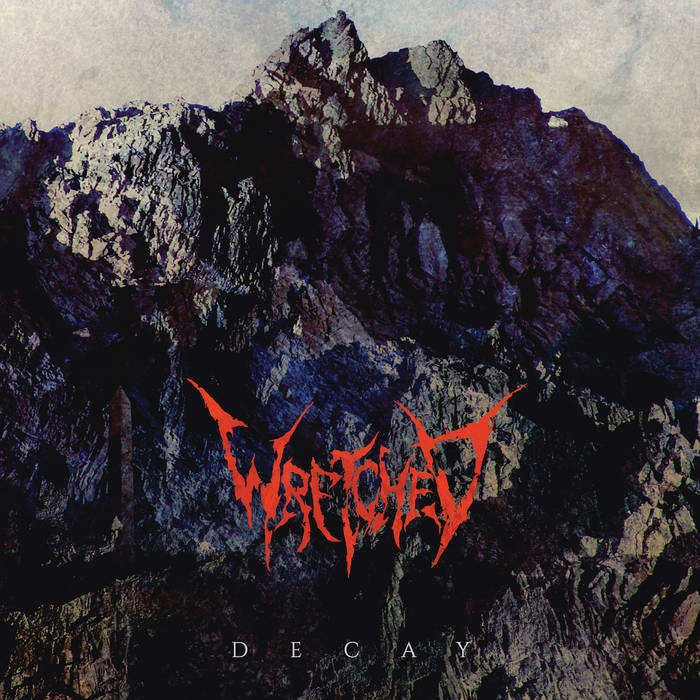
(Below we present DGR’s review of the long-awaited fifth full-length by North Carolina’s Wretched, released on October 17th by Metal Blade Records.)
I’ve thought a lot about legacy and what I admire in a band when they decide to return after an extended period of silence. It may just be that this year has been a prime fruiting ground for such bands to find their way back into the eternal heavy metal fray, but the thought has danced on the edges of the intellectual periphery for a while now.
When the subject of what a band has left behind and what they are returning to comes back again – which has proven to be the worst mental dam in the history of man, as I’ve been waiting for thoughts to congeal into something resembling cogent writing – it is mostly couched in the ideals of expectation and what their fans may want from them. This is where the intellectual breeding ground has run wild.
The one overriding thought I’ve come back to is I admire many of the approaches available to a band returning to music after an extended hiatus, though part of that may just be that I’m a barely evolved chimp who is just happy to have his favorite band logos appearing on tour posters again, and among those are exceedingly difficult choices that lie in either the chase of where the group left off last – picking up a baton long covered in dust and left roadside – or the return, but as something different and unexpected, which is where I have found myself standing with North Carolina’s newly resurrected as a four-piece Wretched and their new album Decay.
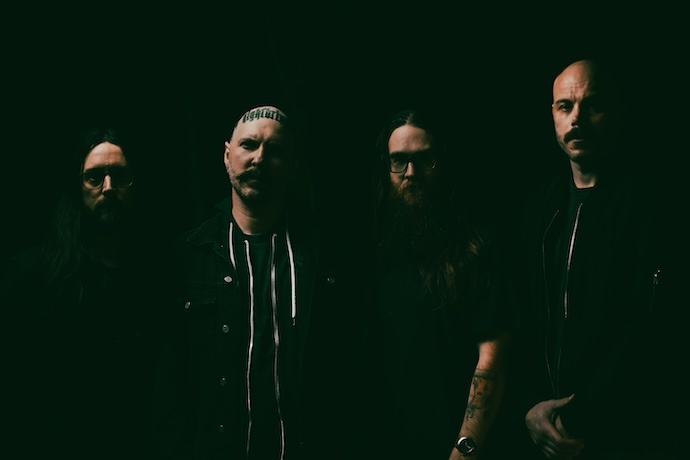
photo by Dania Ramos
Describing Wretched’s music is harder than you might think. You can get the basic generalizing overview down, but delving deeper requires enough sub-genrefication couched in ‘but also this’ that you feel like a plastic surgeon who has botched a nose job bad enough that you’re somehow working on removing the fat from a person’s knee along the way.
Wretched were a metalcore verging on early deathcore band, but with an insane flair for technicality that saw them dancing along multiple lines between punk, scene-as-hell metalcore, tech-death, grind, and at least two other genres bunched and stamped into the dirt along the way. What they had been for most of their career could be best described as kinetic. With Wretched there was a ton of energy involved. Their songs – save for the required-by-law instrumental to prove that all those music lessons didn’t go to waste, mom – were barely contained explosions with the accuracy of a poorly made pipe-bomb. They were equal parts eruptions of shrapnel and ideas, wrapped in heat-wash and neatly tied-off at the four-minute mark most of the time.
Wretched were indulgent as could get but done in such a hyperactive fashion that the brain barely had time to process it. Yet they never did fully shake the prefix-core veneer that came with their music, no matter how unrelentingly heavy they got – because a good idiotic breakdown is just too hard to pass up, even when played at hyperspeed and with enough odd angles to terrify your average civilian.
And this is how Wretched existed for four albums and a series of splits and singles from 2005 up until an eventual quietude would settle over the band in the mid-aughts, post the release of their 2014 album Cannibal. Until the release of the group’s newest album Decay, which is such a different beast than Wretched had ever been before, a mostly mid-tempo slow-grinder of an album bathed in groove and sludge in equal measure, casting off so much of the energy that previously propelled songs forward like out of control rocket tests in favor of a crawling tempo that is heavy, not for subject matter but through the pure, unstoppable, and unrelenting pulse of each song that is determined to march forward into a wall of fire whether they’ve determined it is inescapable or there is some mild hope on the horizon.
Functionally, Decay serves as a prequel album for Wretched. The group’s discography has mostly been comprised of concept albums up to this point; you might never have guessed given the intense nature of their music, but there has been a story behind much of the group’s imagery. The idea of setting an album spiritually before your earlier works is an interesting one; with people returning to the lineup after extended absences and the band itself reactivating after a long silence, something such as this could itself be a new starting point.
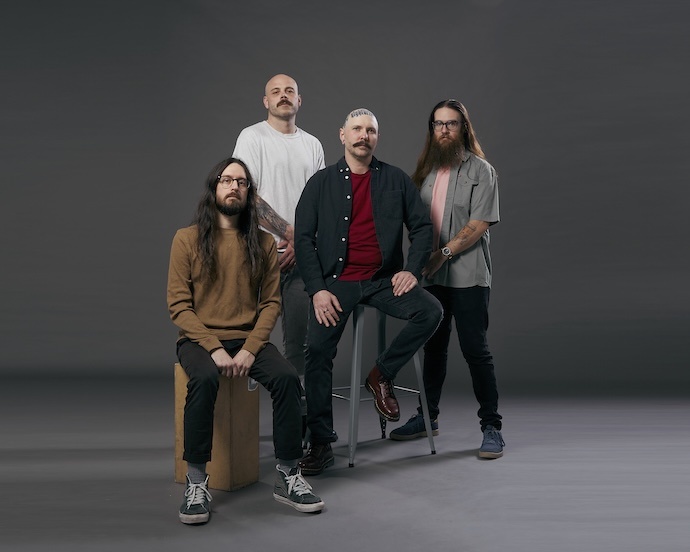
photo by Daniel Cunningham
With this in mind it is understandable how Wretched are much more free to explore their artistic side than they had been on the more flame-spewing earlier works. As a result, Decay has a lot of ideas coursing through its veins but they are all from a much wider array than before – which is why the album likely takes so many by surprise with its – by comparison – glacial tempo at times. Decay is an album whose pacing is more all over the place than you might expect, but the overwhelming sense that Wretched have settled on a mid-tempo groove is the most prevalent, and we suspect part of that impression may be due to the grand journey they go on in the middle part of the record.
In its beginnings, Decay is a little more scattershot with something for just about everyone. It opens on its title track, which is far slower than you might have expected, and its slow crawl hints at sinister tidings for what is to come. “Malus Incarnate” following, however, is a faster song – if not one of the fastest on Decay. If it seemed like Wretched were melding a black and sludge metal influence into their sound on Decay’s opener, “Malus Incarnate” is sheer violence by comparison, and with vocalist Billy Powers spending the song mostly in throat-tearing high-scream mode, the song comes across more acidic than you might expect.
The two varying moods are blended together for Decay’s third song “The Royal Body” – which is a somewhat common maneuver in albums that seem to be residing on two opposite cliffs at times – wherein Wretched show off a newfangled taste for melodic guitar leads that seem designed to hook their way into your head. “The Royal Body” shares similar – *cough* – blood with “The Crimson Sky”, which comes next, and honestly you’d be forgiven for thinking that they were one combined song at that particular point. This happens again in the pairing that follows, both of which are songs whose titles ending in some form of ‘ance’, so it is a little more overt and as a listener you could treat Decay as if it were lurching forward in two-song movements.
It’s a fascinating choice because many of these songs do blend into a greater sort of omnipresent ‘ur-song’ even if it’s not the sort of constant sandblasting that Wretched were known for prior. There always seems to be some little element buried within those songs that you may not notice within your first few passes; that first half of the album is hard to get past at first because breaking the songs out from one another makes them feel as if they are foreign bodies made for new discovery again, even after you’ve already taken them in as part of a greater ‘whole’.
Decay is an hour and five minutes of music and a gargantuan chunk of that comes from the twenty-minute pairing of music that lies in the back half of its album, known as “The Mortal Line” and “Behind The Glass”. There’s a difficulty in describing just how much of this album those two songs take up, both in terms of actual time but also how much they paint the rest of Decay. One of the more unspoken things about Wretched is that the crew were extremely talented instrumentalists, and so at some point on nearly every album there’d be an instrumental track. Sometimes it would be the solid length of a song, other times they’d be quiet, a little more unspoken and added on at the end of a much bigger number – one time fading out into mexican radio – but “Behind The Glass” is one of the most intriguing things about Decay as a whole simply because Wretched have set aside sixteen whole minutes to put together one of their most dynamic instrumentals to date.
Coupled with the keyboard- and synth-heavy intro of “The Mortal Line” and you have about twenty minutes of instrumental exploration slammed right into the middle of the album. If there were a clearer demarcation point between movements of a disc you’d likely be able to see it from space. The two songs combine for an epic, progressive death metal journey that is wholly unexpected going by anything Wretched have done before – which may be why the following song “Lights” goes scorched-Earth in its musical approach. Decay plays as if it is a wild, neverending journey by that point in the album. Were it not already for the sheer variety of planet crawling music that Wretched had on Decay as a whole we’d probably still be stumbling over our own feet trying to describe where the inspiration for something like that might have come from.
People tend to conflate the idea of slower pacing for a band as if it is a sign of maturity. There’s so much more to the idea of ‘maturity’ within a band than that, but you can see where the idea has its genesis because it shows that a group may have discovered the idea of a cinematic or dynamic focus to their songwriting outside of everything being cranked well past the redline. There’s plenty of room for those approaches in the world of heavy metal and Decay is not a mature Wretched album simply because the band is older – while yours truly has remained a youthful and attractive twenty-three this whole time – but because they show no fear in putting so many ideas in play.
It doesn’t work perfectly every time; I am of equal minds whether or not the whole instrumental section is wholly fascinating or wholly way-too-indulgent, but there’s a draw to Decay as the band whip through so many approaches to a technically proficient side of death metal that they were long known for. The constant and frenetic nature that entire albums consisted of previously is missed, but Wretched don’t fully leave that behind; they’ve weaponized it on Decay and now when the band step on the accelerator it is terrifying. The mid-tempo groove allows Wretched plenty of time for guitar soloing and strange rhythmic textures and the vocal approach taken for Decay is equally exploratory.
Decay is an album that is well-practiced and well-written, with the sense that it was made because the guys in Wretched felt free enough to make it. Eleven years between full-lengths broke a few shackles on the group’s previous musical approach and it shows here. Listening to Decay, you get the idea that this is going to be an album that is reapproached and re-evaluated time and time again as people discover more and more within that tanky hour and five-minute run time, but as it stands right now, Decay makes for a hell of a listen as the band traverse a whole realm of blackened, progressive, and sludge-filled waters.
https://wretchednc.bandcamp.com/album/decay
http://www.facebook.com/wretchednc
Decay is one hell of a song. wow