
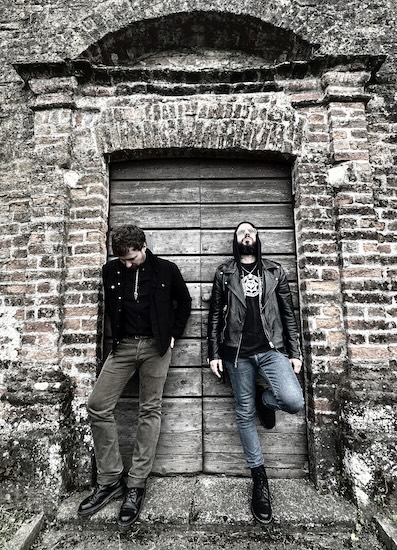
(Comrade Aleks brought us the following excellent interview of the two members of Urluk, an Italian band whose new album will be released next month by Pest Records.)
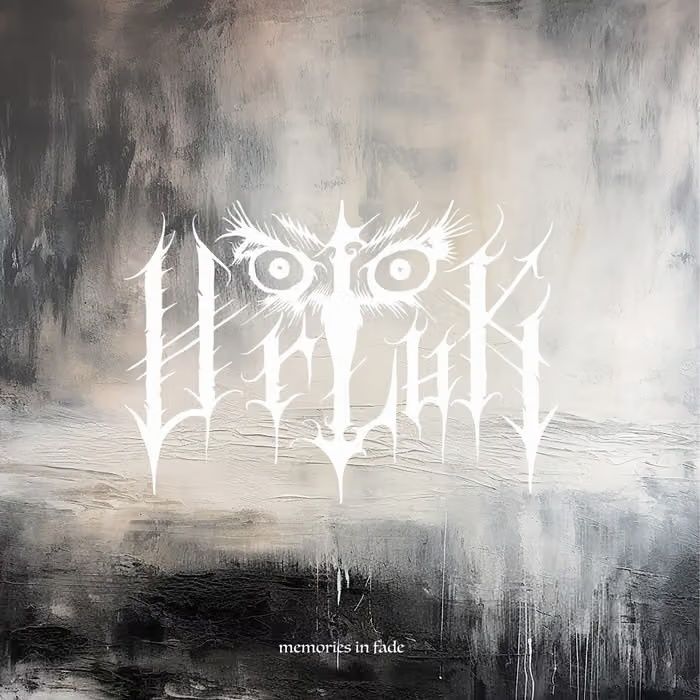
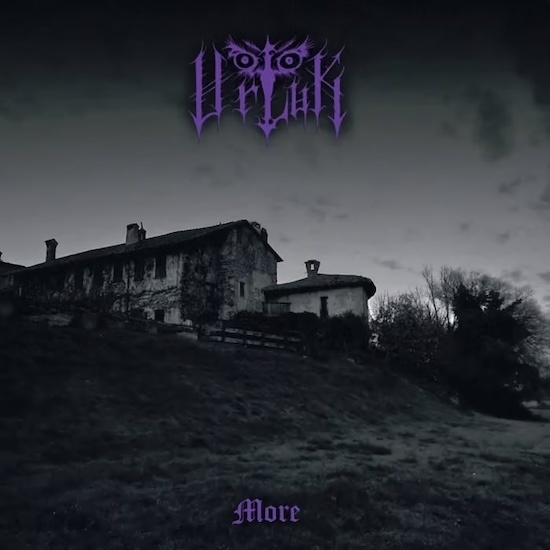
We interviewed Italian Urluk two years ago or so, and back then they performed haunted and doomed black metal with an original authentic concept that was soaked with bleak shadows of abandoned dwellings and grim countryside. At least this description helped to better perceive their full-length More, and I expected something similar from the band’s second album Memories in Fade that is announced to be released on April 10th via Pest Records.
Yet the truth is that Urluk remained true to their lyrical concept but changed musical direction significantly. Memories in Fade combines the elements of alternative rock, black metal, and ambient alongside some specific pieces which are difficult to categorize. But in the end of the day, they are still Urluk, and I’m glad to support the band with another interview.
Ciao gents! How are you? What’s going on in your haunted kingdom?
U: Thanks for reaching out again. The haunted kingdom is still standing, although over the past couple of years it has become a quieter, more introspective place. After the previous cycle, I felt the need to step back a little — to observe rather than constantly produce. A lot has changed internally: musically, emotionally, and even in how I relate to the project itself. The atmosphere surrounding Urluk today is less about aggression and more about reflection, decay, and memory — things slowly dissolving rather than burning violently.
What led to this change in perception of the project?
M: Our music has certainly changed over time, and we’ve changed along with it. I believe that an artist’s music is nothing more than a reflection of their inner world — a way to communicate with the outside. We approached this transformation naturally, nurturing it rather than resisting it.
Today Urluk speaks with more sensitivity and introspection than it did a few years ago. If we take Lavoisier’s famous idea — “nothing is created, nothing is destroyed, everything is transformed” — and move it from a purely scientific context into an artistic one, we can recognize that everything is in constant evolution.
Urluk is no exception: what it expresses today is simply shaped by who we are now, by our spirit and our ongoing transformation.
How would you summarize the last two years? How much time did you spend on Urluk?
M: These have been demanding years. Both U. and I devoted heart and soul to Urluk whenever we had free time, balancing it with personal commitments. Just a few months after the previous album’s release, in December 2023, I was already developing the first ideas that would eventually become the opening track of the new record. By January 2024, we were in the rehearsal room sketching out what had been taking shape in my mind. The rest followed through dedication and hard work, and now here we are, talking about Memories in Fade.
Your second full-length, Memories in Fade, moves in new directions, almost stepping away from your previous black metal influences. How natural was this evolution?
M: Memories in Fade still carries faint black metal influences, but they are far from predominant — quite the opposite. We approached the new material completely free from constraints, letting our emotions guide the process. We wanted to create a follow-up that would preserve the foundations of Urluk while allowing ourselves the freedom to explore new horizons and introduce different elements. We both enjoy challenges and certainly aren’t the type of musicians who like to repeat ourselves.
Listening to Memories in Fade, I noticed glimpses of familiar themes (including perhaps Type O Negative), but some influences are difficult to recognize. Which bands can we hear in your new material?
U: You’re right that some of the influences aren’t immediately obvious, and we’re truly flattered that you mention Type O Negative. Memories in Fade draws from a broad palette: Post Black, Gothic Rock, post-punk atmospheres, touches of Dream Pop, and even hints of 60s folk-blues. Keyboards play a larger role this time, sometimes creating that bittersweet, almost life-affirming melancholy reminiscent of Type O Negative.
During the writing process, I immersed myself in a wide range of music. I explored the hauntology movement — artists like The Caretaker — and revisited 90s alternative rock, including Soundgarden, Slint, Tortoise, Duster, and Alice in Chains. That era of alternative rock was the soundtrack of my adolescence, and its influence naturally shaped the mood and textures of the record. At the same time, the storytelling and raw emotion of 60s folk-blues subtly informed some of the melodies and atmospheres.
I deliberately avoided copying any specific band. The goal was to absorb these moods and filter them through Urluk’s identity, letting the influences inform the music while preserving the band’s distinctive voice. Ultimately, it’s about capturing a feeling rather than recreating a sound.
Do you see that you caught and channeled this feeling properly? Do you feel comfortable after such change?
U: I do believe we managed to capture and channel that feeling in an honest way. It wasn’t something we tried to force — it emerged naturally throughout the writing process.
There’s a certain vulnerability in approaching music this way, but also a sense of clarity. It feels more aligned with who we are today, both as musicians and as individuals.
I feel comfortable with this change because it doesn’t feel like a rupture with the past, but rather a deeper step into what Urluk is meant to express.
Can you tell if this updated image of Urluk is carved in stone now? Are you satisfied with the current metamorphosis?
M: The only thing carved in stone is what has been captured on Memories in Fade for now. Tomorrow it could evolve into something else, or take on new forms shaped by what we experience along the way.
We are both satisfied with this work and with how we managed to translate what we felt into sound.
Personally, I’m proud of every release, because each one carries something unique. I’m also proud of the path that led us here — the challenges we faced and overcame to bring this record to life. This evolution happened as a natural reflection of who we are, and that’s what gives it meaning.
Is the new material connected to your previous album, More? How would you compare them?
U: Conceptually, the albums are connected, but musically they stand quite far apart. More was still deeply rooted in black metal — dense, abrasive, and very direct in its emotional expression. Memories in Fade feels like the aftermath. If More was about the weight of experience, this new record is about the residue it leaves behind: fading memories, nostalgia, and the strange calm that follows turmoil. The sound has become softer in some ways, yet more vulnerable.
In a previous interview, you said you wanted to bind yourselves inextricably to something local. How did you fulfill this concept on Memories in Fade?
U: That idea is still very important to me. Even though the music now travels through different stylistic territories, the emotional landscape remains deeply connected to where I live.
Many of the atmospheres on the record were shaped by the places around me — quiet streets at night, winter fog, abandoned corners of the city, and the sense of history layered into everyday surroundings. It’s not something you necessarily recognize through obvious references, but it’s present in the mood of the album.
How would you sum up a message you put in the album’s lyrics? Is this tenement still haunted?
U: The lyrics don’t aim to tell a single linear message, but rather to evoke fragments of memory, loss, and lingering presence. It’s more about atmosphere than narrative — a reflection on what remains when things fade away.
And yes, in a sense, the tenement is still haunted — but not by spirits in a literal way. It’s haunted by echoes: of time, of emotions, of everything that once filled those spaces and no longer does.
This time you collaborated with Francesco Cucinotta from Sinoath. How did that happen, and what was his contribution?
M: The collaboration with Francesco Cucinotta of Sinoath came about casually through a mutual friend — Schizoid from Malauriu, whom we greet — who put us in contact. Unlike previous works, I didn’t want to leave anything to chance with the arrangements, and Francesco’s contribution proved to be extremely important — in fact, essential — in achieving the final result we envisioned. His arrangements required more than two months of work, but everything turned out wonderfully. Francesco is an extraordinary musician with a remarkable musical background, and from this collaboration, a sincere friendship also grew.
What are your plans for 2026?
M: At the moment, we are fully focused on promoting Memories in Fade. Looking ahead, we’d like to reissue our debut EP, Loss, which is no longer available, possibly including new artwork and a bonus track. We’ll evaluate this calmly in the coming months.
Beyond that, we plan to take a long break — these past six years have been truly demanding.
URLUK
https://urluk.bandcamp.com/
https://www.instagram.com/urluk_official/
https://www.facebook.com/urlukofficial
PEST RECORDS
https://pestrecords.bandcamp.com/album/urluk-memories-in-fade
https://www.facebook.com/pestrecords