
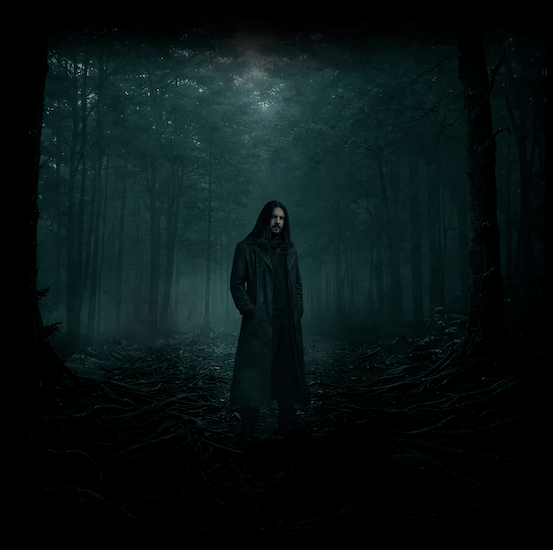
(Here we have Comrade Aleks’ interview of Antonio Ortiz from the Bolivian doom metal band Lachrima Corphus Dissolvens, whose latest album was released this past April.)
Lachrima Corphus Dissolvens is the rare (or only?!) representative of death-doom metal in Bolivia. Being founded in La Paz in 2003 by Antonio Ortiz (vocals) and Beyson Gibson (guitars) with a bunch of friends who soon left the band, it remains still active, although there are only two full-length albums in its discography.
Yes, the new piece Where Shadows Speak and Time Weeps is only the second big work of Lachrima Corphus Dissolvens, but a dozen of singles, EPs, splits, and compilations show that the men didn’t waste their time carrying the torch of Ruinous Powers. I interviewed Antonio earlier in July, so you can make an impression of what Lachrima Corphus Dissolvens is from this interview.
Hi Antonio! How are you? What’s going on in Lachrima Corphus Dissolvens’ den?
Hello! Thank you very much for the invitation. I’m doing very well, and it’s a pleasure to share a little about what’s currently happening with Lachrima Corphus Dissolvens. A lot is happening within the band right now. We’re still promoting our new album, Where Shadows Speak and Time Weeps, which has been very well received in several countries. At the same time, we’re already working on new material. The inspiration never stops, so we’re currently composing and recording new songs that we hope to share with all of our followers very soon.
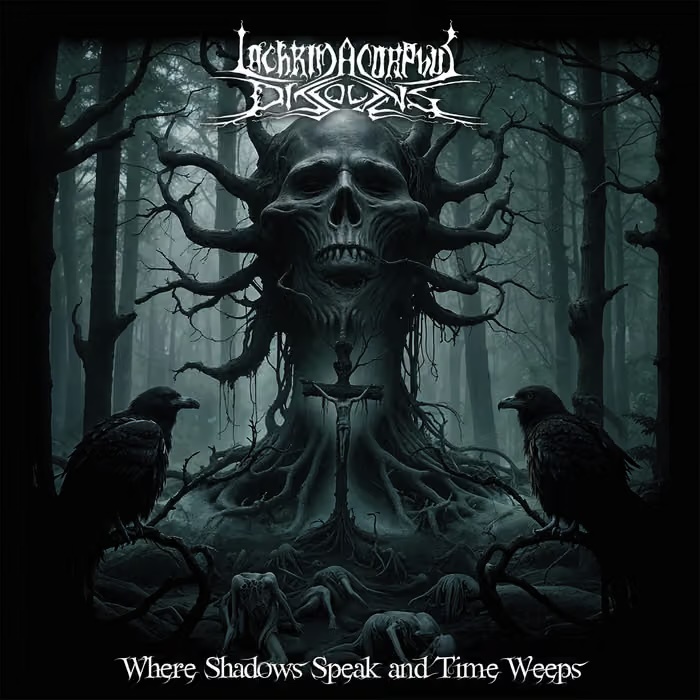
I wonder what kind of inspiration drove you to compose an album like Where Shadows Speak and Time Weeps. How would you summarize it?
The main inspiration behind Where Shadows Speak and Time Weeps came from personal experiences, loss, pain, memories, and the passage of time. I would summarize it as an introspective journey through the darkest parts of the mind and soul, where the shadows represent our memories, wounds, and conscience, while time continues to move forward, leaving emotional scars behind.
The album also reflects my critical stance toward religion and religious institutions. Many times, when a person is weak, vulnerable, or going through difficult moments, religion can take advantage of that vulnerability by imposing fear, guilt, or false hopes. For me, the album also represents the struggle to question those beliefs, confront our own demons, and find strength within ourselves instead of depending on entities or institutions that take advantage of human suffering.
In short, it is an album about pain, loss, inner demons, criticism of religion, and the inevitable passage of time.
You started the band together with Beyson Gibson 23 years ago; what was your original motivation? What kind of music did you aim to play?
Actually, in the early 2000s I was part of a Black Metal band. In Bolivia, that style—along with Heavy Metal—was at its peak, but I felt the need to do something different. Everything changed when I discovered bands like Empyrium, Celestial Season, Bethlehem, Saturnus, and Katatonia. I was fascinated by the versatility of their music, especially the way they combined clean vocals with growls, aggressive melodies with melancholic passages, and acoustic guitars with electric ones. That approach opened up an entirely new creative horizon for me.
With all those influences in mind, I decided to form my own band. That’s when I met Beyson Gibson, and from the very beginning we realized that we shared the same musical vision and the same desire to create something that stood apart from the conventional sound of the Bolivian metal scene.
Like most bands, we started by playing local shows with other musicians and performing a few cover songs. However, after a couple of years we realized that our true goal was to develop our own identity, so we stepped away from live performances for a while to focus exclusively on songwriting. Many of the musicians who played with us during that period eventually went their own way, but Beyson and I remained together for many years, building the foundation of Lachrima Corphus Dissolvens’ sound. It was during that creative period, shaped by all those influences, that the first compositions were born—songs that would ultimately define the band’s identity.
How enthusiastic were people’s support in your country? Did the band manage to gather or create some kind of doom community around it back then?
Support for doom metal in Bolivia has always been very limited. When we formed the band in 2003, the local scene was dominated by black, death, and thrash metal, while doom was virtually unknown to most people. It was extremely difficult to find musicians interested in the genre, promoters willing to include doom bands in their events, or even an audience that truly understood this kind of music.
Even so, over time we managed to build a small but loyal following that appreciated what we were doing. I wouldn’t say we created a real doom community back then, but we certainly helped make the genre more visible in Bolivia. Through our albums, interviews, international collaborations, and coverage in specialized media, more people gradually became interested in death/doom and atmospheric doom metal. Although it remains a niche genre, I believe Lachrima Corphus Dissolvens played an important role in paving the way for doom metal to gain a place within the Bolivian metal scene.
Your first album The Truth Is Out There was released in 2009; did it change the situation around the band?
At first, the album went largely unnoticed in our own country. As we say here, “it didn’t get much attention.” We released it independently on physical format and started by giving copies to friends and people within the local metal scene.
However, whenever I traveled abroad to perform with other bands I was involved with—such as Vigoorian, Amduscias, or as a session musician for Peru’s Black Angel—I always took copies of The Truth Is Out There and our first demo, Laudo/Extinción, with me. I used them for trades with other bands, record labels, and collectors, or simply gave them away to people interested in discovering our music.
As the years went by, I began receiving emails from different countries with very positive feedback about the album. Soon after, several international record labels approached us about reissuing it. The first was GS Productions from Russia, which released it on CD in 2015. Then Depressive Illusions Records from Ukraine released it on cassette in 2018; American Line Productions from Mexico reissued it on CD in 2020; Herrecords from Argentina released another CD edition in 2021; and finally, in 2026, Depressive Illusions Records reissued it once again on CD.
Looking back, I can say that The Truth Is Out There was the album that opened the doors to the international scene for us. Although it didn’t make a significant impact in Bolivia at first, over time it was discovered by Doom Metal fans from many different parts of the world, allowing the music of Lachrima Corphus Dissolvens to reach countries where we never imagined it would be heard.
The gap between The Truth Is Out There and Where Shadows Speak and Time Weeps is filled with a lot of smaller releases; why didn’t you gather all those songs in one more full-length album?
I often ask myself the same question jajajajaja.
The main reason is that about 15 years ago I moved from La Paz to Cochabamba. That change of residence made it much more difficult to work together with Beyson Gibson. The distance greatly reduced the time we could spend rehearsing and composing together, so creating a full-length album became a very challenging process.
Even so, we never stopped making music. Instead of waiting several years to release another full-length album, we decided to keep the band active through smaller releases, such as the Birth from the Obscure and MartyrDoom EPs, as well as participating in several compilations and split releases with bands from different countries. That allowed us to continue composing, stay connected with the international metal scene, and keep spreading the name of Lachrima Corphus Dissolvens while we waited for the right time to work on a new full-length album.
How often did you perform live in the period between the albums? Do you see Lachrima Corphus Dissolvens as a live band?
In fact, we have performed live only a handful of times. Although we’ve received several invitations to play both in Bolivia and abroad, it hasn’t always been possible to make them happen. One of our biggest challenges has been finding committed and available musicians to build a stable live lineup. On top of that, there are other factors such as work and family responsibilities, as well as the financial costs involved in preparing live performances, especially when traveling internationally.
Even so, we’ve never lost our desire to bring our music to the stage. In fact, we recently performed live with session musicians, playing several songs from our new album. It was a very positive experience and confirmed that this material works extremely well in a live setting.
Right now, I’m focused on putting together a solid lineup that will allow us to perform Where Shadows Speak and Time Weeps live and, most importantly, accept the invitations we’ve received to play outside Bolivia. Our goal is to bring the music of Lachrima Corphus Dissolvens to audiences in countries such as Peru, Chile, Brazil, and across Europe, where we know there has been a loyal following for the band for many years.
Four more members joined you in 2019, did it make an impulse strong enough to relaunch the band?
In fact, the songwriting for Lachrima Corphus Dissolvens has always been handled by Beyson Gibson and myself. For our live performances, we relied on the support of musicians from fellow bands in La Paz, but over time the situation became more complicated, especially after I moved to Cochabamba. The distance made rehearsals very difficult and also affected our songwriting process.
After the release of the MartyrDoom EP in 2022, Beyson decided to take a break for personal reasons. That marked the beginning of a new chapter for the band. I started looking for musicians in Cochabamba, and that’s when I met Carlos Catari, an outstanding musician with whom I immediately developed a strong creative connection. Together, we began working on the compositions that would eventually become Where Shadows Speak and Time Weeps.
Meanwhile, Harold Dubravčić on bass, Werner Hoffmann on second guitar, and Osmar Carballo on drums joined us as session musicians for our live performances. Their contribution has been invaluable in bringing the new songs to the stage. However, they are all involved in other musical projects as well, so the future of this lineup will depend on how our plans evolve and on each member’s availability.
I believe this was much more than a simple lineup change. It was a creative renewal that allowed the band to move forward without losing its essence, while opening an entirely new chapter in the history of Lachrima Corphus Dissolvens.
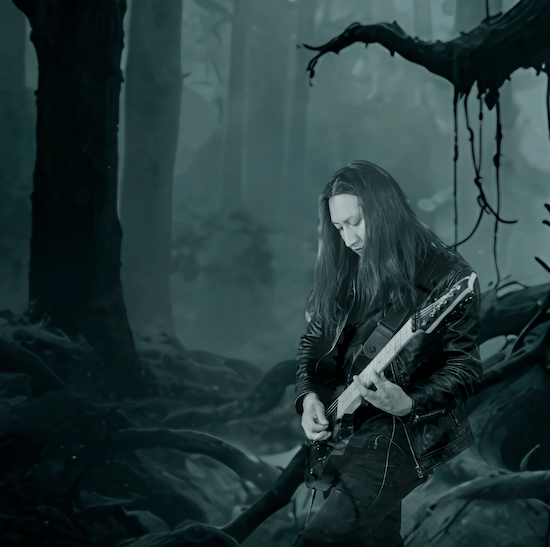
What is the musical background of the new members? Did it reflect somehow on the new material?
The new members come from different branches of extreme metal, which greatly enriched the creative process. Carlos Catari, who played a key role in composing this album, draws inspiration from death metal, black metal, traditional heavy metal, and doom metal. His approach to writing riffs and melodies brought a more dynamic and atmospheric dimension to the songs.
On the other hand, Harold Dubravčić on bass, Werner Hoffmann on second guitar, and Osmar Carballo on drums joined us as live session musicians. All of them have extensive experience performing with other bands, and they contributed solid musicianship, professionalism, and a high level of performance, helping us achieve exactly the sound we were looking for. However, as I mentioned before, they have their own bands and musical commitments, so it’s possible that for future live performances we may work with different session musicians if their schedules conflict with Lachrima Corphus Dissolvens’ shows.
Without a doubt, everyone’s experience and contribution are reflected in the new material. Although Lachrima Corphus Dissolvens has preserved the melancholic and dark essence that has always defined the band, Where Shadows Speak and Time Weeps features a more mature production, more elaborate arrangements, and a greater variety of musical textures. Working with these musicians allowed us to explore new ideas while remaining true to our identity within atmospheric death-doom metal.
You recorded Where Shadows Speak and Time Weeps at Aspid Récords in Cochabamba; what kind of studio is it? How was your session organized?
Aspid Records is Carlos Catari’s recording studio. The recording process began with several demo tracks that I had previously created using virtual instruments and vocal melodies as references. Those demos served as the foundation for Carlos to start working on the guitar parts, while also contributing many ideas throughout the production process. The bass was recorded later, and the drums were programmed, always with the goal of making them blend naturally with the album’s atmosphere.
I recorded all the vocals in my own home studio, since I have the necessary equipment to do so. I prefer working that way because it allows me to take my time with each performance, without the pressure of studio schedules, and to record as many takes as needed until I achieve the expression I’m truly looking for.
In total, the recording, production, and mixing process took approximately two years. It was a project carried out with great patience and dedication, paying close attention to every detail to ensure that the final result reflected exactly the identity we wanted to give the album.
Are you satisfied with the album in the end? Were you able to fulfill in these tracks everything you wanted?
Yes, we’re truly very satisfied with the final result. This album represents exactly the sound I wanted to develop for Lachrima Corphus Dissolvens in this new chapter of the band’s journey. Musically, it’s a very diverse Doom Metal album: some compositions lean toward Funeral Doom, others are strongly influenced by Atmospheric Death/Doom, and we decided to close the album with a completely acoustic piece, revealing a different side of the band without losing our essence.
As for the lyrical content, I believe we successfully captured the concept behind Where Shadows Speak and Time Weeps. Each song explores a different chapter of an emotional universe where memories, loss, melancholy, the passage of time, and the fragility of existence all coexist. Together, these elements make the album work as a coherent conceptual piece, both musically and lyrically, and that was exactly what we set out to achieve.
The album has a kind of concept, as you say, “where the ‘Shadows’ symbolize memories, pain, and consciousness, while the ‘Time that Weeps’ represents the inevitability of the passage of time and emotional decay”. What did lead you to a choice like this?
From the very beginning, I wanted Where Shadows Speak and Time Weeps to be more than just a collection of songs. The idea was born from personal experiences, loss, memories, and a constant reflection on how time changes the way we see life. Over the years, we came to understand that wounds never truly disappear; they simply become a part of who we are. That is where the “Shadows” come to life, symbolizing memories, pain, and the awareness of everything we have lived through.
On the other hand, the “Time That Weeps” represents an inevitable force that cannot be stopped. The passage of time leaves scars, changes people, and confronts us with the fragility of existence. In Doom Metal, these emotions find a natural space for expression because it is a genre that allows us to explore melancholy, introspection, and emotional weight with complete honesty.
That is why we chose to make this idea the conceptual core of the album. Each song represents a different chapter of this inner journey, exploring themes such as loss, solitude, nostalgia, death, and the search for meaning. Rather than telling a linear story, we wanted the album to create an atmosphere and an emotional experience that anyone who has faced difficult moments in life could relate to.
What are your further plans for the rest of 2026?
We have many plans and several surprises for the rest of 2026. We’re currently working on three new songs. Some of them originated from demos I wrote back in 2003, which Carlos Catari and I decided to revisit, rearrange, and develop into entirely new compositions.
The first of these songs is already finished and features a very special guest appearance by Daniel Neagoe of Clouds. For me, it’s a true honor that he agreed to be part of this project. Not only did he record the vocals, but he also wrote the lyrics especially for Lachrima Corphus Dissolvens, making this collaboration even more meaningful. The song is titled “The Fall”, and it will be officially released very soon.
Since we already have three songs in progress, we haven’t yet decided whether to release them as a new EP or save them for our next full-length album, which we hope to release in 2027. In addition, we’re preparing new live performances with the goal of bringing the material from Where Shadows Speak and Time Weeps to stages both inside and outside Bolivia.
I’d like to take this opportunity to thank you for your interest in and support of Lachrima Corphus Dissolvens. Interviews like this are extremely important for independent bands because they help us reach new listeners and keep the Doom Metal scene alive. We also want to express our deepest gratitude to all of our supporters around the world for standing by us throughout all these years. **Stay Doom Metal!**
Thanks for the interview Antonio! And good luck with spreading Lachrima Corphus Dissolvens’ word further!
Thank you so much for the interview and for your support. It was an honor to talk about the band’s journey and our new album. I hope Where Shadows Speak and Time Weeps reaches listeners who connect with its emotions and atmosphere. See you somewhere on the road, and keep the doom alive!
https://www.facebook.com/Lachrima-Corphus-Dissolvens-130091113680848/
https://lachrimacorphusdissolvens.bandcamp.com/album/where-shadows-speak-and-time-weeps-2026