
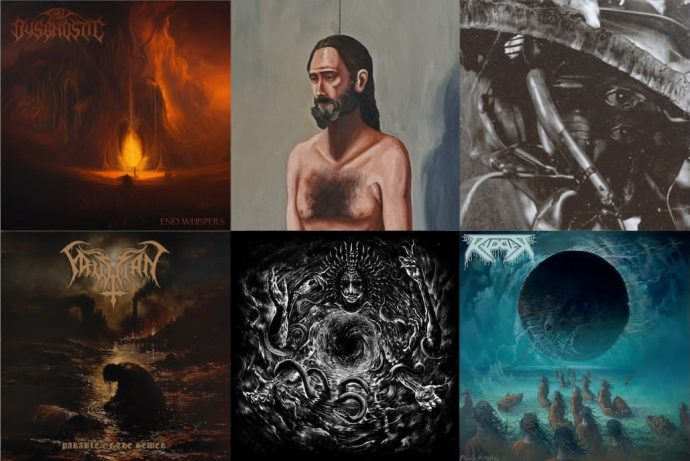
(Below you will find Daniel Barkasi’s latest monthly collection of reviews for NCS. This one includes enthusiastic recommendations for six albums released in July 2026.)
No, we’re not going to make a bunch of Vin Diesel references, and this month won’t be filled with so-called “dirty words” – though George Carlin is by far my favorite comedian of all-time, but a small milestone of this being the 30th edition of this column is a small thing that makes me smile a bit. It’s been fun sharing all kinds of music in these exalted halls, and we won’t be slowing down anytime soon.
The World Cup wrapped up, with good ole FIFA making an absolute ass of themselves – what else is new? It’s wild when the previous FIFA president (who was as corrupt as can be) looks trustworthy in comparison to the current one, and with the recent developments of trying to sell off stakes in the tournament to “investors” who have no interest in the game, the man who already had gone too far has managed to overstep even further.
However, despite the seediness of the organizing body, the football itself for the most part was edge-of-your-seat stuff. I enjoyed the games thoroughly, and congrats to Spain, who were unbreakable throughout the entire tournament and absolutely earned their victory. Cabo Verde’s unbelievable performance was also something that sticks out as special – seeing such a small nation push the eventual champions and runners-up Argentina to the edge was a great story. It would have been cool to have gone to a game, but there wasn’t a chance that we were going to plunk down over $1k per ticket. Hopefully the pricing out of a lot of people gets fixed one of these years, but we’re not counting on it.
Summer is moving quickly, and the usual lull hasn’t been as prevalent as some previous years. Inferno is the main release this guy hasn’t been able to shut up about, and for good reason – it absolutely is one of the best we’ve heard so far in 2026. Moonspell made what for me is their best since Memorial; Fuming Mouth returned with an extremely strong and emotive showing. Mortem spewed much more fire than these ears expected, whereas Sojourner flexed their muscle in the epic black metal realm.
The Aussie representation has been strong (and more to come here, hint hint) with Psycroptic unsurprisingly dropping another pristine example of how to make technical death metal the right way, and Snorlax brought their own styling of smashing black/death. Sallow Moth dazzled with their singular interpretation of forward-thinking death metal, Altarage got weird with it in the best way, newcomers Tomb Slab dragged me gleefully through the dirt with an impressive debut, and Viande provided a monstrous second full-length that’ll flatten all in their vicinity. An impressive variety, and we’ve got more to come.
Before we dive into July’s selections, we want to touch on something serious for a second. A fellow NCS contributor and accomplished musician Neill Jameson recently lost his wife after a long battle with cancer, and he’s struggling to make ends meet for their young family. It’s tough when one of our own is struggling, and if you’re able, there’s a GoFundMe to help out. All the love and condolences from us in this unfathomable time.
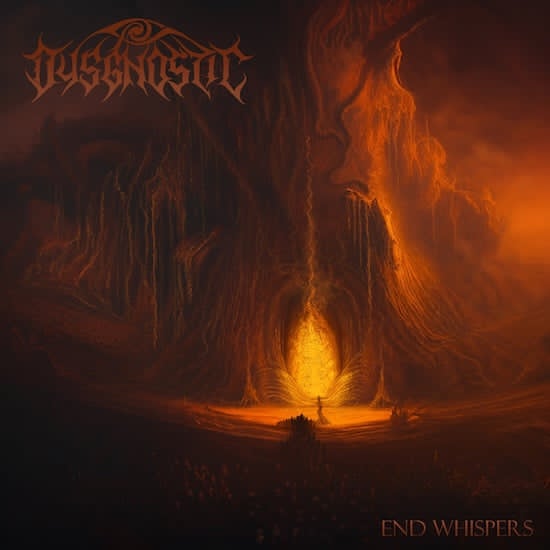
Dysgnostic – End Whispers
Release Date: July 10, 2026
For the dissonance-leaning sector of death metal, Transcending Obscurity have been sneakily putting out quality bands who step to their own beat, with the incredible Devenial Verdict being an especially tasty example. Of a similar vein, another that isn’t to be missed are the savvy Danes Dysgnostic, whose inaugural full-length Scar Echoes showcased a band with plenty of ideas and intriguing ways of expressing them. Four years later, End Whispers arrives, aiming to build upon their already rock-solid foundation to advance their calamitous vision to a further realized form.
Ushering in the ruination is “The Last Refrain” – a contorted ball of discordance, whilst also emitting a dash of refinement, with the following “Into Salvation’s Night” putting the band’s technical chops on full display with some exquisitely combustible solo work, enveloped in a dismal and murky wrapping. The despondent atmosphere at Dysgnostic’s core hasn’t been tamed, but further enhanced by way of expansive, cunning movements and utterly contemptuous sonic affronts – “The Black Sun” is one of the more candid, destructive forces on offer, relying on big rhythms and quick transitions between more mid-paced stomps and quicker, tech-forward segments, all merging together in a progression that’s truly attention-grabbing.
Furious songs like the crushing title track and the mysterious-yet-searing “Orphaned and Abandoned” provide several of the more thumping moments, while equally flush with confident gumption as the many clever turns enthrall the listener. Plenty of viciousness abound as well – “Feast of Emptiness” and its frenetic pacing singes all who come near, and “The Shattered Timekeeper” serves slivers of death/doom within an eerie, mysterious package.
Cuts such as “Ignis Fatuus” and closer “Glimpses of a Lost Horizon” put forth differing sides of Dysgnostic – the former embracing a melancholic, measured build that adds a modicum of air, surely dialing the tension in deeper with clean guitars sprinkled throughout, before erupting in a blast of fury set on top of dreary melodies. The latter is disquieting and punishing all at once, even taking a sizable risk with the inclusion of a smooth sax solo that may be a no-go for some, but for these ears, adds to the divergent sounds that they’re out to cultivate.
Dysgnostic have whipped up death metal that knows when to pummel and when to make a hard turn, maintaining a consistent feel throughout End Whispers that also exhibits their fearless ability to take calculated risks that pay off way more often than not. As endearing as End Whispers is, they haven’t even hit their peak as of yet, and if they keep on this twisting-yet-steady trajectory, their influence on the genre will only grow.

Mourir – Nous, le venin
Release Date: July 10, 2026
Unquestionably an eclectic bunch, Mourir’s brand of suffocating black metal is anything but the status quo. If unfamiliar, their debut Animal bouffe animal presents a morose, unsettling effort – there’s definitely a sludge influence in the album’s overwhelming nature, but equally a primal aggression that the best black metal contains. A notable debut, to be certain, and the follow-up Disgrâce doubled down on the established primeval energy, while traversing down even darker avenues, with the guitar work especially creeping further into increasingly haunting tones. Most recently, an EP titled Insolence tried something different, adding a post-punk sort of anarchy and pointed electronics to the mix, opting for a more low-fi and raw foundation whilst also experimenting plenty (the didgeridoo inclusion on “Punitive” just works), brimming with disdain and disgust. One of my top EPs of last year, with good reason.
Landing on the pertinent subject at hand, Nous, le venin is a predictably mind-bending inclusion in their discography. Unpredictability is a feature one can be certain of when it comes to Mourir’s music, in addition to a foreboding, menacing aura, which this new record possesses in spades. Nous, le venin is without doubt a monster of its own form. That notion is stamped immediately by the chilling “Feu d’un regard” – Mahell’s drum contributions are the spine, owning the meticulous pacing, whereas existential dread bleeds through the swarming guitar work of Alexandre Berenguer and Olivier Lolmède. Lolmède’s vocals are unhinged, effortlessly slithering from blood-curdling moans and shouts to rumbling roars, adding a highly variable and emotive tinge; genuine and stinging.
Settling into a foggy post-back gait with “Ennui Ennemi” keeps the heart pumping, before they abruptly move into a stripped-down guitar segment that makes one wonder what’s around the corner, before catapulting into a tense, violent stretch that connects closely to the droning, desolate “Mon rêve animal.” A captivating selection in its shadowy but altogether fierce movements, stalking one’s psyche while affirming its grip, encapsulating Mourir’s in a persuasively devastating manner.
The decisively post-black “Je est absent” pulsates with a disconsolate feel; stirring in its minimalistic moments, leaning into a description of soul-eating loneliness better than we’ve heard portrayed in quite some time. The way Nous, le venin vividly paints profoundly strong emotions in this manner is a testament to the group’s lavish songwriting, and this example is one that plunges the dagger without prejudice.
From here, we’re entrenched into further visceral territory via “Aux inutiles” and its fervent directness. An astute setup to the astoundingly dense and all-encompassingly dark title track, which to this point is Mourir’s zenith – a complex, harrowing composition that’s imposing and airy in the same fluid strike. A black/doom mixture alongside the heavier, angstier side of post-black, the key to this is how the song – and the record as a whole – drag the listener through a journey through hopeless despair, but every once in a while, a small shiver of optimism peeks through the clouds to keep the listener guessing, especially the organs and choir that are the conclusion.
Prepare for a bit of a taxing listen when you delve deeply into Nous, le venin, as it’s an album that consistently challenges the listener and any preconception may have existed. Mourir write powerful, compelling music, and this may be their most evocative and shrewd work of their still young career.
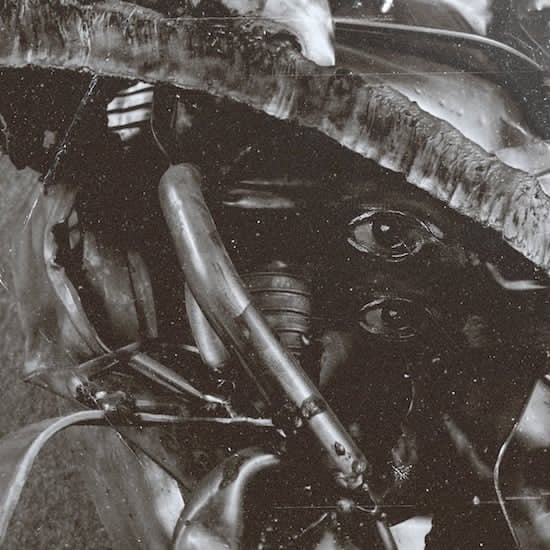
Emptiness – Nowhere Speaks
Release Date: July 17, 2026
Speaking of bands who are nearly impossible to pin down, we move on to Emptiness and their latest Nowhere Speaks. Having taken a hard shift from the celebrated Nothing but the Whole, the band took a post-punk/atmosphere-first approach with the hypnotic Not for Music, and went even further with the dreamlike Vide. A stark contrast from the massive avant-garde black/death approach that came before, so when Nowhere Speaks was announced, we expected more of that experimental side they had shown in recent times. Well, they’re still not acquiescing to any guardrails, but Nowhere Speaks goes back to the sort of music that Nothing but the Whole typified, but in an even more literal way than you may think.
The concept is simple – the two albums quite literally connect to each other seamlessly. If you start with Nothing but the Whole, Nowhere Speaks picks up exactly where it finished, and the end of Nowhere Speaks connects to the beginning of Nothing but the Whole, creating a loop of absolute madness. A clever construct to materialize over a decade since the former, and with a band where nothing can be safely assumed, it comes across as natural to make this sort of maneuver.
But, does it work, after all these years? Of course it does.
Where Nothing but the Whole is one of the most nightmarish listens one can hope to take in, Nowhere Speaks maintains a similar dim setting, though with several discrepant evolutions. “Nothing but the Whole, Pt. 2” represents the connective tissue, leading into the macabre dance that is “The Threat”, a track that emits a steady beat with frightening guitar work that dials the trepidation to disturbing levels. This sort of general feeling permeates every second of proceedings, morphing in a variety of dispositions. Jérémie Bezier’s vocals are as vexing and fear-inducing as ever, like a harbinger of damnation sullenly whispering in your ear.
Essentials of the post-punk style of build haven’t been left behind – the swirling “Words to Wind” twists deftly as the track becomes more deranged and turbulent, before giving off a sort of calm that is just enough off-center to keep one’s undivided attention. “When the Whole Arrives” enacts the prelude to the point of no return; ominous and cautious. The combination of Bezier’s bass lines and Dea Hydra’s synths cultivate picturesque ambience, setting up the reverberating “The Clash of Forces” to up the intensity further. “Next in Line” begins with harmonious, almost soothing soundscapes that degrade more and more as additional layers of instrumentation and gnarled mechanical vocalisations are inserted.
Finale “All for Nothing” is urgency defined – the guitar work of Olivier J.L.W. and Simon L. is keenly effective at navigating and manifesting the mood with a seemingly unlimited number of accents and stylizations. The drumming here is intricate, versatile, and altogether impactful without being overly dominant – Laye Louhenapessy’s debut recording with the band is a noteworthy one.
Most impressive is the extraordinary care taken in the songwriting of Nowhere Speaks, amounting to being a true second part of Nothing but the Whole that’s both its own entity and a brilliantly congruent extension all at once. Listening to the two a few times over on repeat is the ultimate way to enjoy this latest form of Emptiness, as combined it’s one hell of a remarkable body of creativity, though alone Nowhere Speaks is a substantially intoxicating elixir. Whichever experience is preferable, the point remains – Emptiness have achieved an awe-inspiring feat, steeped in mystery and unstoppable dysphoria.
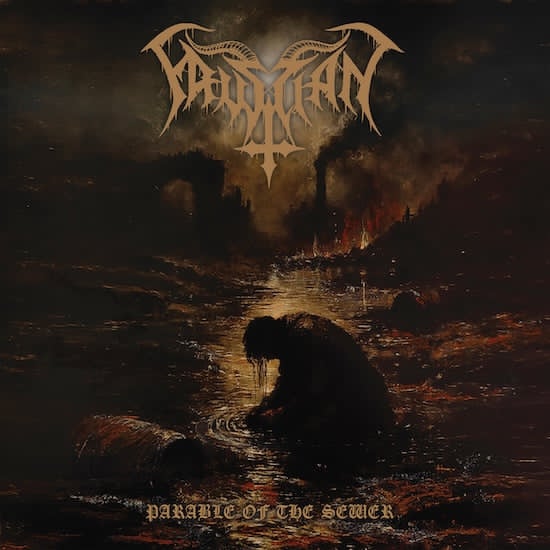
Faustian – Parable of the Sewer
Release Date: July 24, 2026
If you ever wondered what Werewolves would sound like if they went full black metal, well, you shouldn’t. Partly because two of the three are part of the devilish and wholly underrated The Antichrist Imperium, but the whole trio unfurled our next subject Faustian back in 2023 with We Come as Angels, because the staggering productivity of Werewolves simply wasn’t enough. We’re all the better for it, of course, as said Faustian debut is a blistering black metal onslaught of the most barbarous proportions. Out to prove that yet again they can do no wrong, Faustian return with Parable of the Sewer, aiming to fiendishly thrust us into the filth as only they can.
A thread in common with Werewolves and what we’ve heard so far from Faustian is the sheer unrelenting aggressiveness, though obviously with contrary attributes. As guitarist Matt Wilcock stated previously, “If the Werewolves aesthetic is violence, then Faustian’s is fear and horror.” We certainly agree thus far, and if you have to ask if Parable of the Sewer can keep their scorching hot streak going, well, the answer is unsurprisingly and emphatically positive.
Black metal of many flavors appeals to my brain, but the sort that entices the most is the vindictive, enraged in-your-face variety, and do Faustian have that in immeasurable quantity on Parable of the Sewer. As Sam Bean roars “I curse you” on the opening salvo of the same name simultaneously as a barrage of roaring guitars and torrid drums engulfs you, it’s evident that all within earshot are going to get a hammering. This is black metal with bite, but also not one-note, as there’s plenty of influence from the Scandinavian scene’s early days within the melodies and an uncontrolled fire like that of Marduk or Darkened Nocturn Slaughtercult. “Broken Better” and “Tenements (Only the Wicked Walk in Circles)” are fine examples of these combined elements, as is the fiery “We Do Not Use Names Here.”
For pure adrenaline in a furious black metal skin, try “I Want the Ride to Begin Again” on for size for a full-on aural bludgeoning in a way these fellows produce like it’s a reflex. With that, there’s also plenty of dynamics and crafty compositional skill to be heard – the way the previously mentioned cut pulls back to allow the song to take a brief breath, all while Bean roars like an unleashed beast on the hunt is one of many exemplary illustrations. “Immaculate” is another; grotesque as it gets while Wilcock shreds away, with speedy tremolos and icy atmospheres balancing the onerous with the hideous.
Of what stands out to these ears, other than all of it, is the extremely dynamic and towering “Cephalophore”, an impenetrable force that offers varying purviews. The chanting vocals that start the track, the melo-black segments that remind of Sacramentum, all encased amidst varied and slick pacing that again flexes top-level writing skill. “The Rot Shall Inherit the Earth” ranks just as highly, boasting riffs that slice and dice with ease, conjuring that trademark rage-fueled quality that the three bring to anything they assemble, all while summoning that calamitous malevolence that the best black metal exhibits.
Not an afterthought, of course, is the drum master that is David Haley, who regularly seems to outdo most skinsmen in the game while making it sound easy. His work here is inspired and utterly divine, adding muscle when required and steering a song with the highest of dexterity and versatility.
Faustian is top-draw black metal with little frills and a whole lot of moxie, and Parable of the Sewer doesn’t let up for a second. Combined, this triumvirate continue to master whatever musical style they set out for themselves – from the craft of death metal (their yearly example was just announced) to this eviscerating sort of black metal. What can’t they do, you ask? It wouldn’t surprise me to hear them take on another genre and nail it – how about old school doom metal or some old school thrash? Who knows, but we’ll always tune in for whatever concoction they can muster, and we can’t imagine they’ll ever miss.
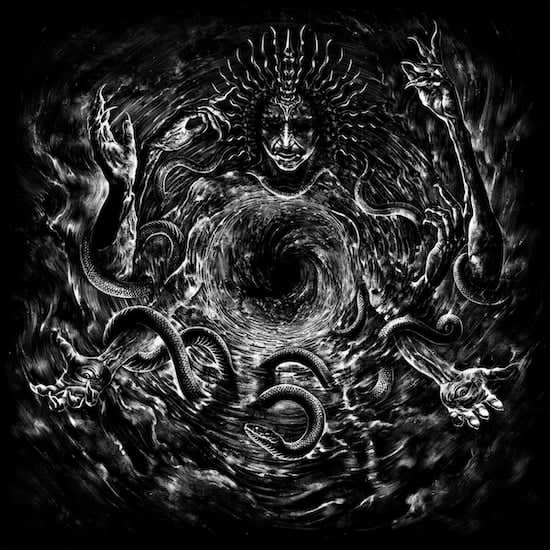
Heretic Cult Redeemer – In Oculum Chaos
Release Date: July 24, 2026
Black metal with a heavy lean into the occult and the ritualistic in both theme and sound, Heretic Cult Redeemer are anything but ordinary. Much in common with acts such as Mephorash and Thy Darkened Shade is evident, especially in their devotion towards the previously mentioned occult spirituality, but also in the wide-ranging sounds they all embody. Acrimonious, too, though with founding member and vocalist Funus having previously been amongst that act’s ranks, that specific comparable isn’t so surprising in hindsight.
The band caught these ears with 2023’s Flagellum Universalis; a release full of experimentation and rhythmic majesty, wielding the ability to enchant the listener, despite the avant-garde nature of their writings. In Oculum Chaos continues this path, but like all of the band’s works thus far, it stands on its own, further honing their approach to another plane of both cunning innovation and enveloping hypnotism by sound.
A yarn of bewitching, spinning soundscapes immediately captivates via “I Saw the Void” to tempt the curious into their web. Chaotic, yet intrinsically focused. The way Funus is able to contort his vocal chords is otherworldly, unleashing a seemingly unlimited span of wails, moans, howls, and roars. The rhythmic waltz that the band dialed into on Flagellum Universalis is ever present, but perhaps more twisted and volatile. The untrained ear could be tricked into thinking that there isn’t a whole lot of structure, but therein lies the beauty of what Heretic Cult Redeemer are summoning – spastic offerings such as “Death’s Black Shadow” and “Ancient Terror” perform countless wild movements, but all are in concert with each other, slithering into the listener’s brain with little ability to resist. C. Docre’s drums have much to do with that distinctive intonation, carefully designed and executed with gusto.
The level of instrumentation is of an impressive degree, and unlike many black metal acts, the bass is used for much more than supporting other rhythm elements, but standing out as a unique entity. “Miracle of the Fallen” and its ill-intended elasticity is driven by T’s bass lines, who also helms the guitars, weaving both together in pronounced and incalculable ways. Both his technical proficiency and creative zeal are in full bloom on In Oculum Chaos – the aforementioned “I Saw the Void” is devilishly precise, and cuts such as “The Wondrous Strand of Time” summon a pointed assault and a heinous charm concurrently for maximum overall effect.
Heretic Cult Redeemer saved the most experimental for last via “An Atavistic Perfusion of the Cosmic Womb” – as tempestuous of a track as one will hear, being a suitable soundtrack for a dance with a nefarious demonic entity. Altogether alluring and hysterical, be prepared to be pulled in a plethora of directions and enjoy every second of it.
Heretic Cult Redeemer have an extremely potent and uncontrollable menace with In Oculum Chaos. The collective have never sounded so crisp (the production elevates every note) while their creations remain vehemently caustic and finely balanced in tenacious furor. Greece is home to many of black metal’s most offbeat, and with this record, Heretic Cult Redeemer have earned even further merit, standing tall next to the most accomplished of both country and genre.
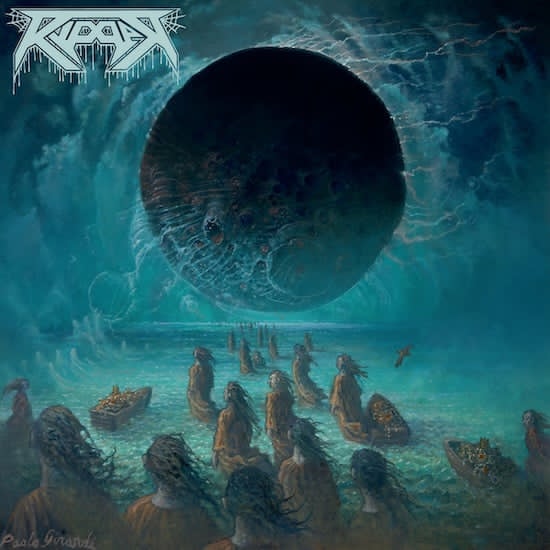
Ripper – Towards Rebirth
Release Date: July 24, 2026
Time to end on a ripper, both figuratively and literally. To the uninitiated, we’re speaking of Chilean death/thrashers Ripper, who have dropped certified leviathans in Raising the Corpse and Experiment of Existence to satiate the need for a helping of scorching riffs and unmistakable swagger. Truth be told, as we’ve stated multiple times in the past, the general state of thrash metal is a fascinating subject in and of itself, and the acts who really do it well aren’t as plentiful as we’d prefer. When one hits, however, they do so with unencumbered fortitude – just look at standouts such as Daeva, Devastator, Void, etc. Similar to those choice selections, Ripper has it where it counts, invoking a modernized Sadus vibe within their own abrasive ideations, and their latest Towards Rebirth overflows with piss, vinegar, and riffs galore.
Founding member and vocalist/guitarist Patricio Spalinger has a fresh supporting cast at his disposal this time around, and it’s immediately obvious that they’ve got what it takes. “World of Darkness” is a bulldozer with afterburners attached, filled with steely, shredding riffage and enough velocity and might to level the most steady of structures. Pure speed demon “Into the Coldness of Land of Dead” is of a similar ilk, as drummer Javier Buzeta obliterates his kit into dust, as Spalinger and guitar-wielding counterpart Nicolás Young wail away with zero hesitation here and on particularly maniacal entries such as “Final Hologram.”
It’s not just full-throttle brutality that Ripper are after, but both improved songwriting prowess and an ingrained need to shred are paramount. The title track “Towards Rebirth” and “The Source Exterminator” both contain plenty of six-stringed tricks up their respective leather jacket sleeves, utilizing the right amount of groove and dominance to compliment the numerous quick-hitting bits. This thing grows on you with repeat listens, as any album with staying power will do.
Are there any moments to get a modicum of air inside Towards Rebirth and its tight 42-minutes? Sure, “The Secret Dawn” might not be as pedal to the floor as others, but in its early mid-tempo flow (as much as this genre can muster, mind you), addictive rhythms and pure nastiness are everywhere, as well as nifty contributions from bass slinger Tomás Barriga to add variance to the low-end that’s much appreciated. “Messages from the Other Side” meanwhile stands as a clinic on how to pen thrash riffs and not sound recycled and dull; a hallmark for Ripper that many other modern acts fall prey to.
We end this roller-coaster via a slightly melodic but still nasty “The End of Universe” and a last example of tight, blinding speed via the brief-but-punchy “Procession to the Eternal Rest.” Looking at Towards Rebirth zoomed out, it’s an album that connects with a swift kick to the chin and doesn’t stop until you’re down for the count. Ripper has the riffs and the savvy of long-time stalwarts like Legion of the Damned, while at the same time infusing their own sweltering interpretation of death-infused thrash goodness. Moreover, Ripper plays with such a dialed-in savagery that scratches an itch that in this genre these days is often unsatisfied. More of this, please.
Spotify
That Emptiness kicks ass.