
(written by Islander)
As I did yesterday, I decided to dramatically cut back the number of selections in this Sunday column, but it still includes a great many minutes of music because two of the three selections are complete albums.
SPIDER GOD (UK)
This happens to me with embarrassing frequency: I find a band whose music hooks me hard, I follow them fairly closely for a time, and then I lose track of what they’re doing. Undoubtedly this is the result of my hummingbird-like flitting from one thorny musical flower to the next.
Nowadays I listen to and write about the music of hundreds of bands every year, as compared to the Stone Age days when I’d buy a dozen albums a year and listen to them over and over again. The sheer volume of what I pay attention to now makes it difficult for me to consistently follow all the groups I’ve enjoyed. Which brings me to Spider God.
I first fell for them when a 2022 MILIM KASHOT compilation included their cover of Men At Work’s “Down Under”. I then became fascinated by their 2022 album Fly in the Trap, but then managed to overlook (as far as I can remember) all the many releases they made during 2023, including their next album The Killing Room and an EP named Fau5tu5 – Soul Music. I re-connected with their 2024 album Possess The Devil, which included a song I put on our list of that year’s Most Infectious Extreme Metal Songs. And then I lost track again.
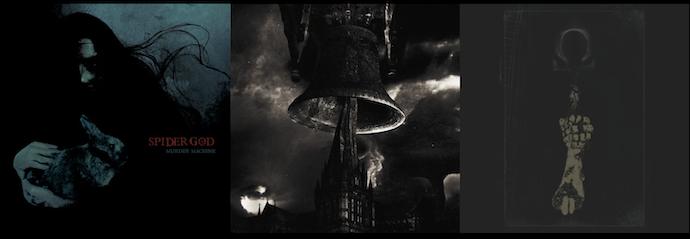
Spider God is so prolific that even losing track for a short time means you might miss a lot. I probably would have overlooked the fact that earlier this month they released a new album named Murder Machine had I not seen it included in a Machine Music roundup.
This new album is part of what turns out to be a conceptual trilogy. The trilogy began as a two-album tale narrated over the course of The Killing Room and Possess the Devil. But Spider God decided to add Murder Machine as a third installment, although it jumps backward to reveal the origins of the otherworldly techno-futuristic forces that were the focus of those two previous albums. I’ll refer you to the new album’s Bandcamp page for a summary of the overarching narrative (which is fascinating), so I can get right to the music.
Spider God’s music has always been unconventional, one might even say “quirky”. Not the kind of thing that hidebound fans of black metal (or any other kind of metal) were likely to embrace. That remains true of Murder Machine.
The album does unfold like a story, one that lyrically becomes as nightmarish as the conceptual narrative. But again, this isn’t a conventional black metal nightmare. The songs do include bursts of blast-beat mayhem, thorny strangled snarls, and rabid screams, but they also include vibrantly bounding bass-lines, keyboard melodies that brightly dance and fluidly swirl, rocking riffs, rippling lead guitars that are sparkling of tone, and bits of clean singing. They often make me think of ’80s pop and New Wave music filtered through a black metal prism.
The ragged and raging harsh vocals sound tormented, and the songs do increasingly descend into menacing and fearful moods. The keyboards are prominent throughout and sometimes used in ways that conjure futuristic visions in keeping with the narrative, but for the most part the songs are, hooky, head-moving and hoof-lifting. I can imagine people who would be repelled by black metal dancing to a lot of these songs, if they could get past the vocals.
I should confess that one reason I find this album so appealing is that I listened to and danced to music like this in the ’80s (without these vocals, of course). It’s how my wife-to-be and I spent a year’s worth of weekends before we tied the knot, and after that as well.
On the other hand, some aspects of the songs other than the vocals do pull them in other directions too, especially in the later tracks. “400 Victims of Joji Obara” includes melodies I think of as Arabian; the electrifying lead guitar parts in “XY Hexed Swine” sound like a mandolin or balalaika accompanying a dervish whirl; and the equally riveting tremolo’d riffing in “Future Killer” enhances a soaring song that includes ravishing sweep, surging thrust, and melancholy moods; whereas “California Tech Bitch” creates musical scenes of frantic distress as well as futuristic seduction (and it’s one of the album’s catchiest songs too).
The songs I like best are all in the album’s second half — the afore-mentioned “Future Killer“, “California Tech Bitch“, and the closer “Built-in Obsolescence“. They’re all more guitar-driven than songs in the first half. But I wouldn’t ditch any of those earlier tracks — they’re integral parts of what makes the album so much fun.
https://spider-god.bandcamp.com/album/murder-machine
https://www.facebook.com/spidergodband/
KNOLL (U.S.)
I assume some of you (most of you?) will be wanting a palate cleanser at this point, or rather a palate lacerator. And so I turn to Knoll.
In February of next year this Tennessee band will release a new album named Doth Appear. It’s their fourth full-length. My friend Andy reviewed their third one, As Spoken, in 2024, and I reviewed their second one, Metempiric, in 2022. Those albums have left us very curious to hear the new one.
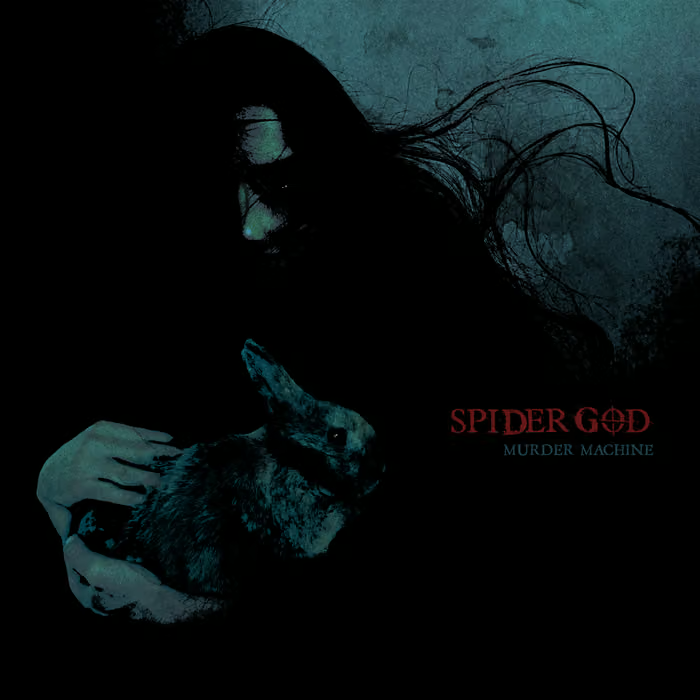
So far, I’ve only absorbed the one song from Doth Appear that the band have publicly released so far. Its name is “Inopportune“. The materials for the album that the band have kindly sent us include photo images of the lyric pages that will accompany the album. They are rendered in unusual calligraphy, which, while beautiful, isn’t easy to read. That plus the archaic nature of the language leaves me less than entirely confident I understand what “Inopportune” is about, but it seems to concern “a loathsome organ of many fames” presiding over silent pews and silent choirs, and sinister occurrences that ensue.
I should also add a note about the instrumentation in the album, which (as has become one of Knoll’s hallmarks) goes beyond conventional metal instruments. Here’s their description:
We find it adds to the experience of the record to inform you that all of the extraneous instrumentation you will hear is very much not programmed. At the centerpiece of Doth Appear is a late-19th century reed organ hand restored by our James Eubanks. Two bell towers were recorded and their audio pressed onto gramophone records, then sounded through the horn of our Pathéphone 4. This is the process used for the wind, music boxes, and other atmospherics. It should be known that Ode is our rendition of both Rimsky-Korsakov’s “Night on Bald Mountain” and Mussorgsky’s “St. John’s Eve on the Bare Mountain.”
“Inopportune” doesn’t appear to include that unusual instrumentation. It begins with feverishly swarming and abrasive riffage that drills and whines. Coupled with momentous booming undertones, the music generates tension and menace.
As thunderous double-kicks and scalding vocals arrive, the riffing grows more vicious, gnashing and surging. The lead guitar feverishly writhes; the vocals scream and howl in unhinged signs of madness; the drums briefly slow and the bass seems to wander and curiously throb, but they become furious again too.
The unpredictability of the rhythm section’s often off-kilter appearances are part of what makes the song so unsettling. Periodically they fall silent, but the riffing remains convulsive and frighteningly surreal, rising and falling in sensations both dismal and desperate. Gruesome roars trade off with throat-ripping screams, and by the end, when the rhythm section silence themselves one last time, the song becomes even more deeply the stuff of nightmares.
Doth Appear will be released by Knoll on February 5th. I suspect we will have more to say about it as we near the release date.
https://www.untoviewing.com
https://www.facebook.com/KnollGrind/
https://www.instagram.com/knollgrind/
ODIOSORDO (Italy)
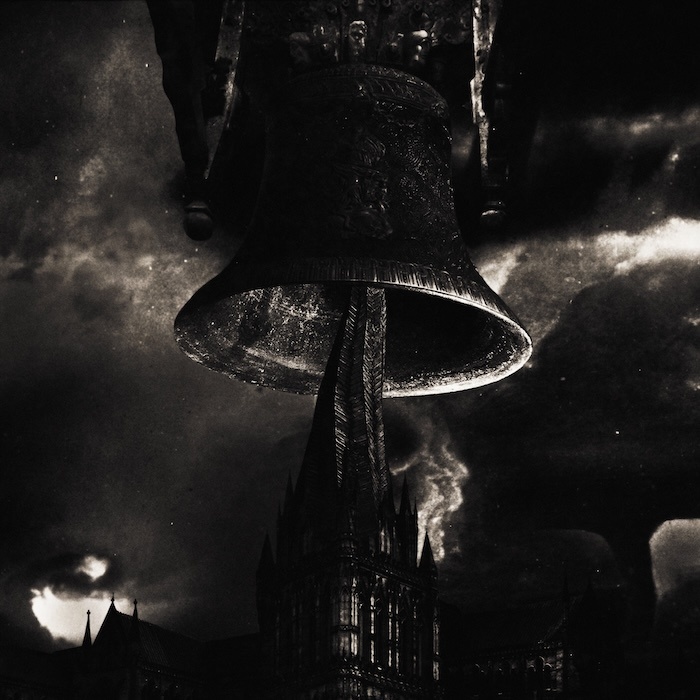
This last entry is very much an impulsive choice. I didn’t know of this album’s existence until waking up this morning and seeing a message about it from Rennie Resmini of starkweather. And in fact, I had forgotten about the band in the seven years that have passed since we premiered their debut album Con Il Buio Nel Sangue, and overlooked their second album from two years ago.
I didn’t plan to listen to all of Effimera today, just wanted to take in one song so as to decide whether to come back to it. But man, I got pulled all the way in, and was left so thrilled by the album that, as you can see, I jumped it over other choices I had already made for this column.
The song that pulled me in, head over heels, was the opener “Destino comune per una fossa comune“. Like all of the album’s five songs, it’s a long one, but so electrifying and ultimately haunting that I had no sense of time passing. It also introduces us to Odiosordo’s use of the hurdy-gurdy as a lead instrument.
After a few bars of brazen and booming sound, the layered riffing generates an exhilarating firestorm, creating dense sonic swaths that swarm and blaze, surmounted by torching screams of unbridled passion and the lead instrument’s shrill, piercing ripple as it traces a soaring melody that sounds like fervent yearning.
Despite how astonishing all that is, you can still make out the nimbleness of the bass, and the drumming proves to be dynamic too as it shifts from blasting gallops to cantering beats and solemn staggers. Synths send the song soaring to even more magnificent heights, though they are heights that seem lightly shrouded in mists of melancholy.
The moods of melancholy become even deeper as the song proceeds, and the rapid, tidally moving whir of a solo has a lot to do with that — an extended solo that becomes the song’s centerpiece. But other ingredients of the music also become darker, more dismal, and also more desperate. Near the end, sounds of distant booming timpani can be heard, in the midst of an otherworldly organ melody that sounds utterly bereft, and the abrasion of an anguished guitar
Honestly, I’m not sure I can always differentiate the hardy-gurdy from the guitars in this song, but I assume those flickering vibrations in the upper end of the range are the former rather than a fleet-fingered, tremolo-picked guitar. At any rate, it doesn’t sound like what you may have heard in folk music or folk metal for that matter.
But regardless of what instrument’s doing what, the song left me stunned and captivated, and without any doubt that I’d be moving right along. The other four songs are equally stunning.
“Esistenza rubata, serva del pianto” is shattering to hear, in part because of the pain in the vocalist’s wild cries and in part because the wailing melodies, which expand to panoramic breadths, are so emotionally stricken (it’s the hardy-gurdy that’s clearly weeping at the end).
And then we have… what?… a cover of The Cure? Yes that’s what comes next, a cover of “Cold” off The Cure’s Pornography album. After hearing what Odiosordo did with “Esistenza rubata, serva del pianto“, it’s a choice that made sense, because the original is such a dark and depressive, albeit surreal, experience.
Odiosordo preserve the original’s melodies, and initially its slow pacing as well, but they embellish and transform the song and accelerate it too. They add abrasive riffing, grimly heaving and dramatically sweeping chords, blasting drums, incendiary screams, vibrant bass-lines, and of course those shrill hurdy-gurdy fevers.
They also transform the song into a kind of spinning dance, and in the closing phase they make it a very haunting experience as well, with acoustic guitars providing accompaniment to ethereal singing by the band’s guest Florencia Petronace; that final phase really is beautiful and spellbinding. In short, Odiosordo definitely put their own distinctive creative stamp on the song.
Without going into nearly as much detail about the final two long songs, I’ll say that “Dispnea” mostly moves like a hybrid of wildfire and flood, with equally calamitous consequences and an emotionally wrenching spirit (though it proves to be tempo-dynamic, like everything else on the album), while “Il cantore mortifero” is at first a slow and very bleak crusher and then rocks and swells, furiously blasts and stridently whirls, but never drops the thread of emotional abandonment and distress — though the vocals again sound like a volatile mix of rage and despair.
I’m not sure how to sum up Effimera other than to say it proves that Odiosordo aren’t doing anything by half measures. They’ve created emotionally dark music but have richly embellished it and greatly magnified its scope. It’s beautifully produced, with an appreciable clarity that nevertheless doesn’t sap the music’s heaviness and power. It’s easy to become captivated by it, to lose yourself in it, and to lose track of time as it goes by.
https://odiosordo.bandcamp.com/album/effimera
http://facebook.com/odiosordo16
https://www.instagram.com/odiosordo/