(The Dutch metal extremists Soulburn will release their fifth album on June 12th through Testimony Records, and that created a good opportunity for our Comrade Aleks to check in with Soulburn co-founder Eric Daniels. A great discussuion ensued, and you can check it out below along with the album’s first two singles.)
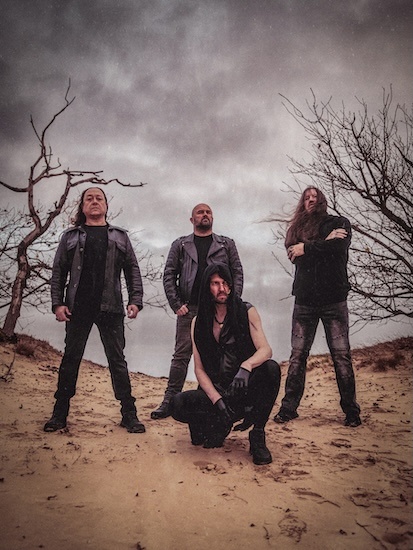
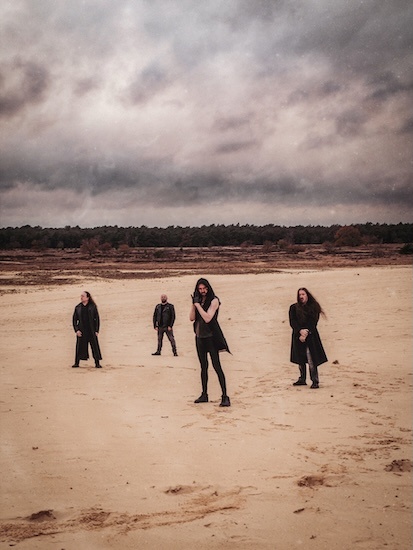
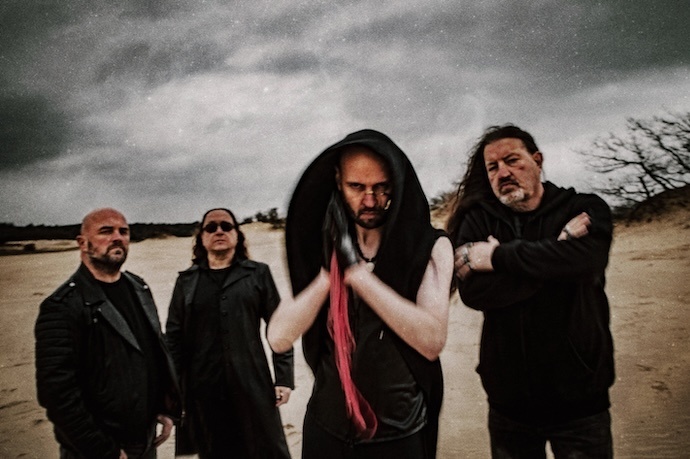
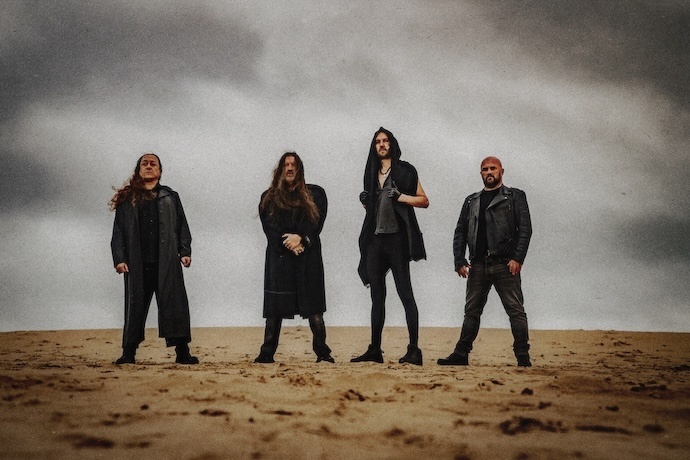
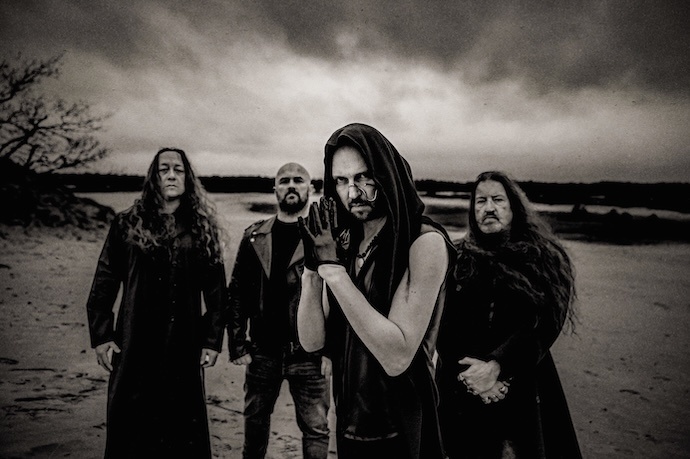
Dutch extreme metal act Soulburn was born 30 years ago after the first disbanding of legendary death-doom aggressors Asphyx whose core members Eric Daniels (guitars) and Bob Bagchus (drums) taught a new lesson of extremity with the devastating debut Feeding on Angels (1998). Years passed, and Eric is the only original Soulburn member now, although his bandmates Twan van Geel (bass, vocals), Remco Kreft (guitars), and Marc Verhaar (drums) are hardened veterans of the metal underground too.
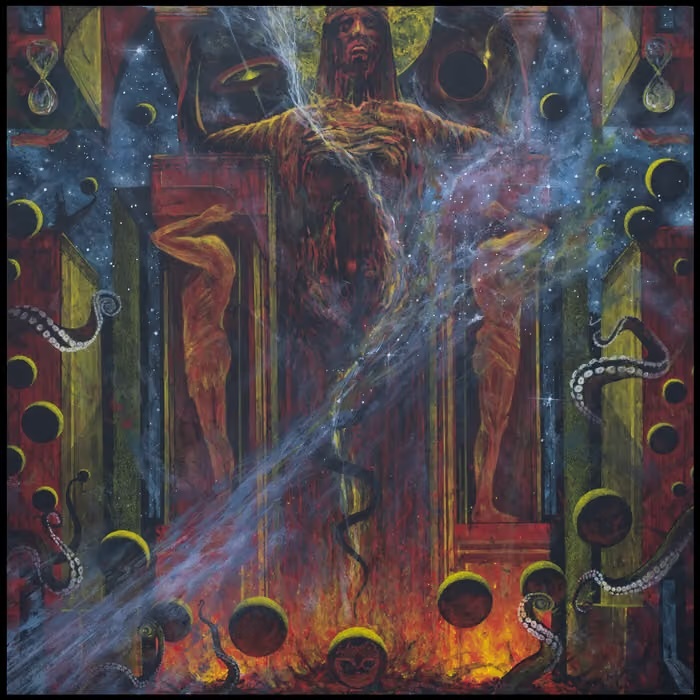
Honestly, I didn’t expect any surprises from the band’s new album Quantifying Cosmic Doom but more good old blasphemous extreme stuff, yet the album strikes me not only with its high technical quality but also with a much wider concept, both lyrically and music-wise. The album is scheduled for the 12th of June by Testimony Records, so be forewarned! Quantifying Cosmic Doom this way comes.
I was lucky to get this in-depth interview with Eric himself, and there’s no better way to learn more about Soulburn than to read it.
Hi Eric! Thanks for your time, it’s much appreciated, as I believe you’re busy with regular promotion stuff due to the new release. Have you become used to this routine or does all this necessary mess bring a “not again!” feeling?
You’re welcome! Yes, that’s right — interviews are coming in steadily now for our new album Quantifying Cosmic Doom. Haha, no, I never get that ‘oh no, not again’ feeling. I actually enjoy doing interviews, and it’s simply part of releasing a new album. The routine is definitely there after all the previous albums I’ve played on.
Eric, you’ve been in the metal underground for almost 40 years. Do old contacts still work nowadays regarding bands’ promotion or gigs’ organization? How much of that old surrounding is left?
So long already? Gosh, time really flies — especially as you get older. As the years go by, the contacts I once had naturally fade. It’s always a surprise — and a joy — to run into people from the good old days, from the late eighties and early nineties. There’s simply a generational difference, and of course people still know me, but as you said, it’s from the metal underground. Sometimes it’s useful that they know me, but in general you still have to earn your place as a band in the current metal scene. I have my memories, my experience, what works and what doesn’t, but above all, I want to make music and make people happy with the riffs and ideas. That has always been the most important thing for me.
Soulburn’s previous album Noa’s D’ark was released in 2020. What else, besides Covid, slowed down the shaping of new material? How did you spend this period as the band?
We always take our time when creating a new album; it’s not assembly-line work. Ideas need to come in, take shape, and be arranged. We simply want to present the best material possible. So nothing has been delayed — our previous album Noa’s D’ark was actually a stepping stone toward this new one. In the meantime, we played many live shows, and throughout it all there was a continuous thread of composing new songs, ultimately resulting in the new album.
Did you perform some of your new songs before the release? Oh, by the way, are there any songs in your discography which you never perform live or avoid to perform? What’s the reason if you have some?
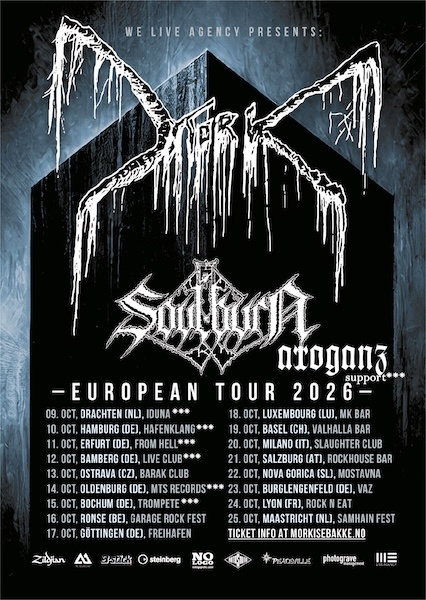
No, we haven’t played any new material at our previous shows yet. We were also busy working on the new album. We’re currently putting together the new setlist for the European tour planned for October this year, and that one will be richly filled with the new songs from our upcoming album Quantifying Cosmic Doom. We always try to create a good mix of new and older material from the previous albums. There’s simply no reason why we wouldn’t want to play certain songs — it just comes down to how a setlist has to be arranged depending on the amount of showtime you’re given.
Years pass, but Soulburn remains focused, professional, and turns even bitter, yet Quantifiyng Cosmic Doom demonstrates some new melodic solutions, quite atypical for the band. How can you explain this state of affairs? What did lead you to these changes?
We don’t feel tied to creating the same type of style every time. The core aspects of Soulburn can also be found on our new album. We play the music we think is exciting — including all the nuances within it. The new songs came to us naturally, and as a whole the music is more diverse than on the previous albums. We also don’t want to keep fishing in the same musical pond, because then every album would end up sounding the same. We’re versatile, and that’s exactly how we like it.
Melancholic masterpieces like “An Innocuous Swathe of Sky” or “M87 – What Hopes to Be Born?” bring that new feeling to Soulburn’s followers. Do you dig such clean-singing stuff? Or is it a guilty pleasure of your youth?
These songs simply called for using clean vocal parts. Twan is incredibly inventive, and we see his voice as an instrument in its own right. It gives the album exactly the kind of versatility we’re aiming for. There’s nothing to ‘feel guilty’ about — we make the music we think is exciting, and when it comes to inspiration, we listen to all kinds of music. We’re musicians, and we like to broaden our musical horizons.
I’d prefer to avoid a question about influences, but can you give some references? I’m really curious what inspired you to compose songs like these. How do you define their direction?
I don’t mind if you’re asking this, its also important too, where a band gets shaped from. We actually have a lot of influences, because we listen to many different kinds of music — from Pink Floyd to Oranssi Pazuzu, or from Marilyn Manson to Nick Cave. We draw our influences from everywhere, even from Fleetwood Mac, but also from extreme bands like Trelldom, Gaahl, and of course the Asphyx doom that still flows through my veins. We’re also fans of Type O Negative. In short, whatever we think is great to listen to finds its way into us musically, and we always, always give our own twist to our music. We don’t do copying — we create the music from our own experience and perception.
The doomy “Down Among the Stars” almost stands out from Soulburn’s concept, and yet it lies inside the territory which you explored for years. Soulburn is known for its mix of genres, but we’re used to its extreme “face”, so what attracted you to this side of metal music?
Soulburn still creates aggressive and massive music. We do indeed enjoy many different musical styles, and we incorporate those influences in our own way. We don’t feel tied to the old style, nor to the number of years we’ve been writing songs. We keep expanding our musical horizon. The contrast you mention — the extreme side combined with more nuanced elements — is the common thread running through our work. We do dare to deviate at times, but we don’t see it as a deviation. It’s simply Soulburn as it exists today.
Eric, once you said that Noa’s D’Ark was your comfort zone . Can you say the same about Quantifying Cosmic Doom with all the new things you tried there?
Absolutely — it actually feels even better now, more within my comfort zone. Quantifying Cosmic Doom is the album we’d been searching for, and it’s amazing that we’ve brought it to life. I feel completely at home with it. Creating even more varied music brings a sense of relief to both body and mind. It almost is a spiritual peace of mind to say.
There’s a lot of extreme material in Quantifying Cosmic Doom as well. How natural is this artistic extremity for you today? How much of Feeding on Angels is actual for you now?
That’s right — there are plenty of extreme musical parts on our new album. We remain true to that, and it’s still a core thread running through our music. We’re still an extreme music band. We simply love having variety within the songs, and even today we cherish that approach. You can’t really compare it to our first album Feeding on Angels — there are 30 years between them, and as a musician you evolve. Still, I believe that if you compare that first album to Quantifying Cosmic Doom, the essential elements are still there. The songwriting process was just different. Nowadays you have all the digital tools at your disposal, which simply didn’t exist back then. That alone makes a big difference.
Do you feel limits of extremity for Soulburn nowadays? Do you have in mind some topics for your songs which may demand a more violent approach?
Not at all — we’re never limited, and we don’t think that way either. We think about how we can create the coolest music for ourselves, and if people enjoy it, that’s fantastic of course. You can’t make music for everyone; there are simply too many tastes and differences.
On the extreme side, we definitely have a lot of parts on our new album — fans of the more extreme genre will certainly appreciate it. The songs just develop that way when there’s enough inspiration; that’s how it goes as a musician.
The extreme musical character will never disappear from Soulburn, and therefore never from us.
You’re veterans of death metal, you’ve gained your reputation. When was the last time someone criticized your album?
Well, as a musician and as a band, you have to be able to handle criticism of your music. That’s only logical — music is something personal; you either think it’s great or you don’t. That’s just how it works. And alongside all the positive reactions, there will naturally be negative ones as well. It doesn’t affect us — we make the music we believe in, and if people join us on that journey, they’ll get something they enjoy. On social media everything tends to be very black‑and‑white anyway: people either love it or they don’t. In short, you get criticism and you get praise. And as veterans, as you put it, we know how to deal with that.
By the way, don’t you feel that metal lost its extreme charms some years ago? It’s difficult to shock people today — a lot of extreme music exists beyond metal genres, and even image and cultural references of this music are wider spread than ever. For good or for bad, it’s just a way of living, like many others. Hah, or so it seems when you’re into this for decades.
Well, maybe the intention to shock through music isn’t really there anymore. Of course things have changed, but I think that’s simply how music develops and what people want to listen to. I don’t mind that at all — if everything is only extreme and full of aggression, that becomes boring too. There’s plenty of variety, too many bands to even mention, but when you’ve been around this long it’s inevitable that music changes from time to time. Everything has already been done at least once, and being truly original as a musician or as a band is almost an impossible task. In short, as an old-timer I actually enjoy standing among the younger generation of metalheads.
You started Soulburn’s discography with the songs having such classic metal names as “Hellish Entrapment”, “Throne of Hatred”, or “Crypts of the Black” in the Feeding on Angels (1998) album, and I think that The Suffocating Darkness (2014) was about the same. In the end you turned to natural eschatological topics with Noa’s D’Ark(2020). Do all the band’s members accept these changes in lyrics or is there someone who demands more “hell” and “Satan” in the texts?
This is also, as I mentioned before, the result of the 30‑year gap between the first album and the new one. Lyrically we’ve grown as well, and Twan is incredibly skilled and inventive when it comes to writing stories, finding ideas and themes. As a band we really appreciate the way he expresses all of that straight from his mind. Soulburn is still a Satanically‑tinged band — we love doom and destruction — but we also look beyond that. Quantifying Cosmic Doom is an enrichment in terms of perspective: exploring the universe, that cosmic atmosphere. And if you read the lyrics closely, you’ll understand what our music is about. The lyrics and the music are one.
Some bands combine a Satanic vibe with a cosmic one, addressing things like “cosmic chaos” or whatever. Honestly, I’m not really into it. So is Quantifying Cosmic Doom about this connection of science and magic or do you separate one from another?
No, this album isn’t directly connected to Satanism or in relation with the cosmic universe. Of course we do believe in the dark, in Satan, but for this album we chose a different theme. As Twan, our bass player and vocalist, put it in one word; he says the core concept behind the title is fearlessness. He thought about it, and still does, how much the title resonates on so many levels. It also switches from internal to external meaning, depending on one’s mood and how deep you want to dive into the dark matter it holds.
For instance, it can be about dealing with depression and anxiety for the things that are out of reach, being lost, and isolated within a crowd and how to outshine that noise and dirt that holds you down. But also, it literally means anticipation towards the end of the universe and existence as we know it. His wife was reading this book called The End of Everything: (Astrophysically Speaking) by Katie Mack, where he stumbled upon a chapter with the same name. It immediately spoke to him and became the perfect words that fitted the music I had written so far for the album. Because if one thing became sure, it was that these new songs were massive and layered, delightful with details, for some wild philosophical depth.
I remember only one song with “cosmic” lyrics or at least with a cosmic vibe in your discography – it’s “Assailed by Cosmic Lightning” from Noa’s D’Ark (2020). Now you have “M87” named after a galaxy, “Powehi, the Embelished Dark Source” named after a black hole, and titles like the mentioned-above “An Innocuous Swathe of Sky” and “Down Among the Stars”. How did it happen that Quantifying Cosmic Doom turned out to be such a space-oriented album?
The lyrics naturally emerged from the process of composing the music. Twan heard the first demo tracks we had created at home in Cubase, and that’s when the inspiration started flowing for him. The title Quantifying Cosmic Doom is indeed oriented toward the universe, the cosmic realm, and everything that can be found within it. The sound of the new album contributes to that as well. Even though the album is massive‑sounding, it also feels organic, which enhances the effect of the lyrics and ultimately the title. The music is intertwined with the words.
How do you see the spiritual side of Soulburn nowadays? You’ve performed this devastating extreme metal for years, so is it your creed? Extreme metal for extreme metal’s sake?
The spiritual side — or the vibe, as we call it — has always been part of us. We feel a certain kind of magic, and when we play together that feeling becomes even stronger. The extreme parts we create also grow out of that; it’s simply part of the whole process of making our music.
No, never — we don’t play extreme music just for the sake of being extreme. That would mean we’re playing what people supposedly want to hear. We’re musicians who play with heart and soul, so that idea doesn’t apply to us at all.
By the way, Eric, Soulburn was born in 1996, thirty years ago! How do you plan to mark this date?
We actually haven’t thought about it that much — the years just fly by, and especially when you get older, time moves even faster. Our new album Quantifying Cosmic Doom is a fitting gesture to mark our 30th anniversary. Not many bands can say that. We simply continue with our musical explosion of ideas. So we’re marking our 30 years of existence with Quantifying Cosmic Doom.
Soulburn records are unregular yet you remain active despite anything. Do you see the band as a kind of weekend club? And how would you sum up this voyage?
We are definitely not a weekend club. We’ve toured through South America and even played a show in the USA, near Chicago. Soulburn is a musical journey, and we take our time when creating new albums. We’re not a band that feels the need to release a record every two years. As I mentioned before, we simply enjoy turning ideas into music and composing.
And we’re not professionals — we all have jobs outside the band. So yes, a lot has to happen during the weekends, but don’t forget that we’re also busy with music in the evenings after work. That’s what many bands do. Being a full‑time professional musician is something only a few can achieve, which is why I say this. And believe me, people will be seeing a lot of Soulburn live!
So your thirst to play your music live is still not satiated?
No, and as long as I live it will never be satiated. Playing live is the most beautiful and enjoyable thing there is — the expression and the interaction with our fans, it’s amazing, almost magical. I love cherishing the passion I have for the guitar, whether it’s live on stage, in the studio, at home while composing, or playing together with the other guys.
It gives a wonderful feeling, a sense of freedom, and also an outlet for pent‑up emotions that you can finally let flow. In short, to the readers: we’ll see each other at the Soulburn live shows!
Thanks for the interview and thanks for your time Eric! We touched quite a lot of topics but I wonder whether we skipped something regarding Quantifying Cosmic Doom?
You’re welcome — it was great doing this interview for No Clean Singing. I like the contrast in that name, because we actually do have clean singing on the album, yes!
Well, I can’t really think of anything we’ve forgotten. I just want to say to our fans: see you at our live shows, and enjoy our new album Quantifying Cosmic Doom!!
https://spkr.store/collections/soulburn
https://soulburn666.bandcamp.com/album/quantifying-cosmic-doom
https://www.facebook.com/OfficialSoulburn/