
(written by Islander)
Building upon a pair of EPs (Die Sünde and Strega), the Italian post-black metal band Die Sünde have created a debut album named Effemeridi that will be released this coming Friday, November 13th, by Time To Kill Records, and we are in the fortunate position of sharing all of it with you today.
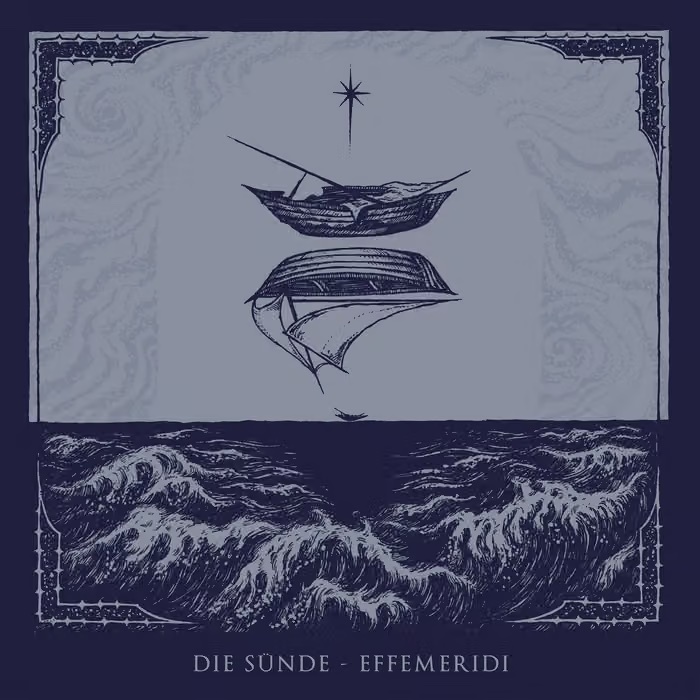
Both the album’s name and its intriguing cover art connect with both the evolution of the band’s music and the deeper meaning of their new songs. With regard to the music, Die Sünde explain:
“Effemeridi are tables that reveal the position of an astronomical body at a given moment. They are consulted when navigation is needed and there are no other points of reference. In that sense, this album was a way for us to mark our position four years after the release of Strega, to understand where we were and in which direction we were heading.
As for the deeper meanings behind the nautical references, Die Sünde have shared these words:

“The explanation beyond the human conception of how deep the roots of our pain are lies in the immobility of human nature in taking refuge from it. Here is Effemeridi a journey in which we are navigators on the labile balance of our subconscious towards the route dictated by our desires that breaks against the inevitability of life. And we are shipwrecked in our self and in our fears in search of an answer, a meaning of salvation to finally be able to re-emerge and understand where we ended up, where everything led us to the discovery of a new I.”
The journey that Die Sünde have charted on their new album begins with “Come sogni speranze son promesse“. If online translation tools are to be trusted, that title might mean “As dreams, hopes are promised”, or perhaps “Like dreams, hopes are promises”. The meanings differ; all we non-Italian speakers can apparently be sure of is that as our navigators embark on their journey, hopes and dreams fill their sails — though we already now that they will eventually be dashed in the teeth of storms.
The music does feel like hopes and dreams, as glinting notes ring and soft sonic seas shimmer, with a bass gently musing as its gazes ahead. The song’s overture channels a feeling of wonder, and it’s mesmerizing to hear. But deeper and more abrasive notes begin to buzz and then to ominously groan and wail in tandem with enormous percussive blows.
The drums begin to rumble and rock just as harsh, sharp-edged vocals begin to bark, howl, and scream. The music throbs and heaves like waves, but grows more turbulent through grim tremolo’d riffing and blast-beat fusillades. Harrowing growls also roar forth, magnifying the already-tormented impact of the vocals. It seems that hopes and dreams are already imperiled.
The next song on the album is one that Die Sünde presented through a mysterious and ultimately harrowing video. The band introduced it this way:
“’Su una rotta d’un mar di perigli‘ is the second stop of our journey and it’s the sound of a violent storm coming ready to hit us. A storm that we are not really ready to face. The turbulent sailing under the blows of a rough sea is broken only by a rapid glimmer of light suspended in time, a hope confined to the eye of the storm that will soon suffocate under the inexorable vehemence of an announced tragedy”.
At first, the video might seem like a a seafarer’s dream, which begins hazily and in expectant solitude but becomes more frighteningly real as seas storm and violently toss the symbolic husk of the protagonist’s ship.
Like the video, the song itself is both dreamlike and storming, and it’s chilling in all of its changing phases. The vocals have a lot to do with that. They flow seamlessly between ardent but haunting singing, crackling snarls, raging howls, tormented yells, fervent choral voices, and rasping spoken words.
As for what surrounds those wide-ranging voices, Die Sünde deploy dismal guitar harmonies that both ring and growl, as well as vividly rippling tremolo’d melodies that channel despair. They cause the music to swell and expand with symphonic power, to heavily heave in darkness, and to boil and burn. It is every bit as harrowing as it is haunting.
These first two songs reveal a lot about Die Sünde’s songwriting and execution within Effemeridi, and especially their formidable ability to channel great emotional intensity and translate the kind of changing moods that the album’s thesis targets.
In doing that they artfully reach across genre lines as their needs demand, and dynamically create episodes of both crushing heaviness and elaborately rendered turmoil, of both heartbreaking sorrow and shattering despair, of gentle beauty and ravaging violence.
They continue doing that as their navigators of life forge ahead. No one of the next four songs is easily summed up, because each one incorporates its own changes of course, but at a very high level:
“Ed egli mostrerà noi il suo volere” is emotionally wrenching and seems to manifest dismay, confusion, anguish, and anger on a broad and devastating scale, while “A cui inermi siamo” initially pulls back, slowly and gently sinking listeners beneath the waves, like the gradual drowning of hope in a sea of loss.
That latter song’s rendering of grief and yearning is comparatively simple, yet the music also creates a shimmering space in which these feelings emerge. But, dynamism being Die Sünde’s forte, they lower the boom with bursts of humongous heaviness, they generate swaths of musical bleakness, and they send near-sung choral cries wildly arcing very high.
Shivering keys create a seamless segue from there into “Contro cui nulla possiamo se non fendere tenebre“, whose own melancholy overture is connected to the preceding song. But this time, when the music explodes, it inflicts a shattering black metal assault before retrieving the melody and dramatically deepening its feeling of hopelessness. You’ll notice other phases and motifs that seem to call back to earlier songs in the album (though that’s really true of all the songs – they are all connected).

“Con occhi fissi verso orizzonti attesi” brings the journey’s end, and does so with big pounding beats, surging guitar abrasiveness that seems to cry out in stricken terms, and completely unhinged vocal intensity. When the band dramatically reduce the intensity (as we knew they would) the guitar notes gently ring again, moody and melancholy, with naught by gasping spoken words as the companion, and then Die Sünde strikingly elevate the melody and stupendously bring the heaviness.
Maybe it’s wishful thinking, but the song’s closing phase seems to channel a mighty resilience, a fiery refusal to surrender, a feeling driven in part by the return of impassioned choral vocals. Even the raging harsh vocals in this context sound triumphant.
In short, Effemeridi is a tremendously accomplished album, very carefully crafted with great attention to all the facets that carry the journey forward, but also viscerally powerful, captivating, and cathartic. And now we’ll leave you with a few final words from the band before (finally!) presenting the album stream:
“All we ask for is your time and attention: listen to it, ideally with the lights off. If by the end you feel like you’ve been through something, then the record has done its job.
“Thank you, and enjoy the listen.”
DIE SÜNDE:
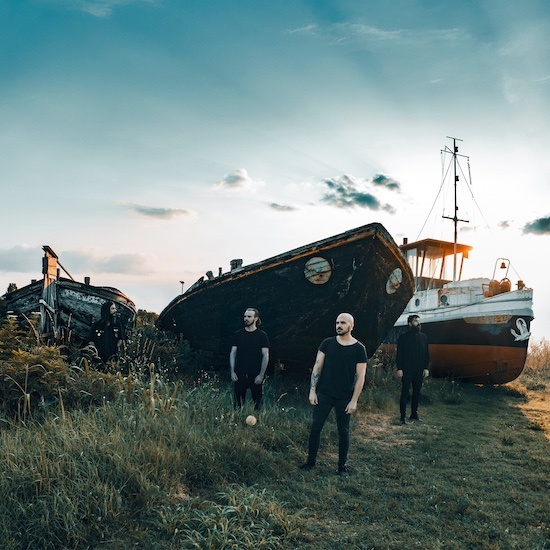
Michael Anthony Foti – vocals
Simone Carraro – guitar
Nicola Rizzo – bass
Filippo Baccega – drums
Additional composer for the the album:
Carlo Giacomel – guitar
Effemeridi was written by Die Sünde, recorded by Die Sünde and Davide Guerri, and mixed and mastered by Tim De Gieter at Much Luv Studio. The artwork was created by Ikosidio. The album will be released by Time To Kill on multiple formats: vinyl LP (with variant editions), digipack CD, cassette tape, and digital formats. Orders can be placed via the links below.
PRE-ORDER:
https://timetokillrecords.com/collections/die-sunde
https://diesuende.bandcamp.com/album/effemeridi
DIE SÜNDE:
https://www.instagram.com/diesuendeband
https://www.facebook.com/diesuende