
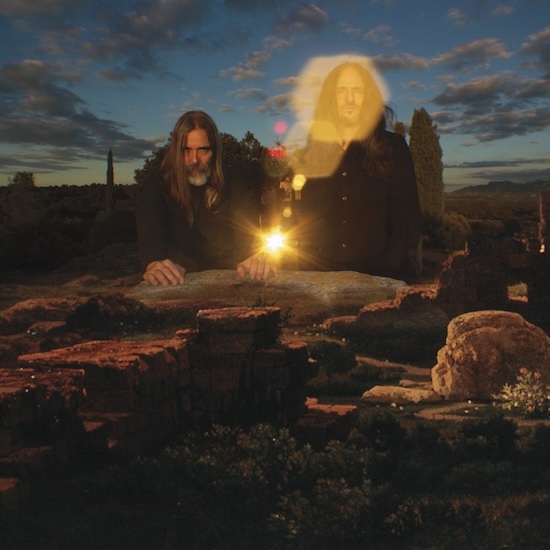
(Earlier this year our Comrade Aleks interviewed Javier Fernández Milla, one of the two members of the Spanish doom metal band TodoMal. Today we present an English translation of that very good discussion. TodoMal’s newest album Graveyards of Joy was released on July 3rd by Season of Mist, and we reviewed it, along with their two previous albums, here.)
We simply couldn’t ignore the third album by the Spanish band TodoMal, Graveyards of Joy. While their second release, A Greater Good, clearly showcased innovative, luxurious doom metal with the global cinematic backdrop and emotional vibe of Anathema in the late ’90s, today the band’s founders Javier Fernández Milla and Christopher B. Wildman have taken a step beyond that. TodoMal’s new material sets a new standard for melodic, still-heavy doom music, laced with a genuine sadness and an ineradicable humanity.
What is this doom with a human face about? I believe Javier will answer that question, too.
Hi Javier! How are you? Who’s online today?
Hi there! I’m Javier Fernández. I’m really happy to answer your questions, and we’d like to thank you for featuring us in your publication. I think this is actually the first time we’ve done an interview for a Russian media outlet, which is pretty amazing.
Your third album Graveyards of Joy is just released, but I believe that you already have some expectations towards people’s feedback, as your previous album A Greater Good was warmly welcomed. Was it such an inspiring experience? For how long did it last?
The album will actually be released to the general public on July 3rd. And yes, it’s very inspiring to know that, in some way, what you put into your music connects with other people. The response has been quite positive so far, and we hope it stays that way with the new album.
There aren’t any major changes compared to what we’ve been doing before, and we think the overall feeling people get from the new album—despite its own particular character—is more or less similar.
Since our first album, our goal has never been to have a successful career or to last forever. We were just two friends making music for the pleasure of it, so we’ve approached every record as if it were going to be our last. It’s really been a series of events that brought us to where we are today. Things gradually started to grow, so we decided to just go with the flow. And here we are, with a new label behind and a european tour ahead. It’s been quite a journey.
I guess, we can tell that A Greater Good was a success. How did you feel it? Was it strictly feedback or the number of publications that proved it?
The reception from critics was actually very positive, albeit on a relatively small scale, since we’re still a very unknown band. But even outlets like No Clean Singing — ironic as that may sound — praised the album, much to our surprise. Almost overnight people started talking about it.
What was particularly interesting was that many of those people claiming they were “fans”, so to speak, came from bands that are very different from what we do musically. It obviously gave us a big push of the confidence we needed to keep the project going. We also received very positive reviews from publications such as Mondo Sonoro, Zwarenmetalen and Metal Revolution, among many others. Overall, we were quite overwhelmed by the reaction.
It’s not our main motivation, of course, but that kind of external validation does make you look at your music from a different perspective. It makes you even more excited to share it with others. I don’t really believe it when bands say they don’t care about people’s reactions to their music. Obviously, you do it for yourself first, because you need some way to express what you’re feeling. But one of the goals of making music—or art in general—is to share it with as many people as possible. And all the musicians have this tiny bit of an ego to feed.
For us, it’s amazing to be talking to you right now. The fact that our music has reached Russia at all feels like a miracle when we look back at where we started. And it’s fantastic. We’ve already begun doing interviews with media from all over the world, and honestly, that’s something we wouldn’t even have imagined three or four years ago.
You both were involved in bands like the thrash metal Harmpit or that old melodic black piece The Heretic and Dejadeath. How natural is it for you to express your ideas in a way that TodoMal allows?
Christopher and I have always been very into music in general. With each of those bands, the goal was different. But we both felt like slowing things down a bit and exploring something deeper.
Harmpit was just a pure fun project, with no real goal behind it. The other bands were more a product of a specific period in time. TodoMal came more from the need to do something more personal, more unclassifiable—something where we could enjoy making more atmospheric music, with more room to grow.
The thing is, in a completely unplanned way, it started becoming a very comfortable space, with a lot to explore, where we could develop a big part of our musical background that had remained more or less untouched until then. On top of that, right after we finished our first album, Ultracrepidarian, a label stepped in and offered to release it (Ardua Music), which helped the project really take shape and solidify.
Let’s say we had just found something like our own identity as musicians. It doesn’t mean that we cannot – or not be willing to – do different things in the future. But for the moment we feel comfortable doing what we are doing now. And it seems to be lasting longer….
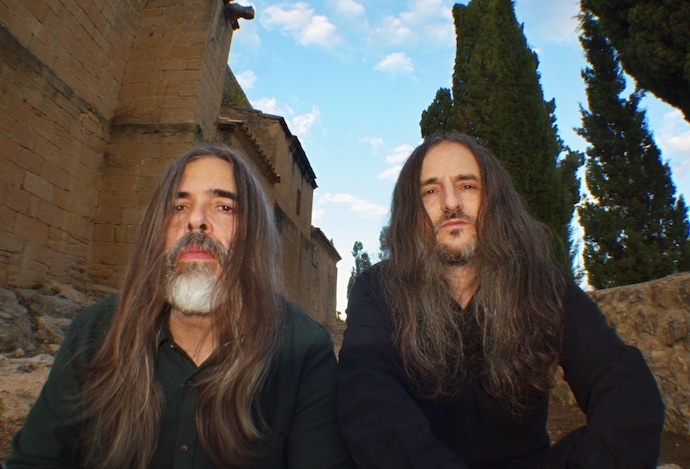
Although Graveyards of Joy is a sort of gloomy title, and a fitting one for a doom metal album, the songs sound exalted, lofty. TodoMal has something in common with the humanism of Green Carnation and the elevated melancholy of Anathema’s Eternity. What was your initial vision for TodoMal when you together started the band?
I think you’ve described it very well. Our vision for TodoMal was to strip away all that paraphernalia that’s often closely associated with many sub-scenes within metal music. We always had the feeling that, with our previous bands, we were only scratching the surface. As musicians and as people, we’re deeper and more complex than what we had been expressing before, and we had never really dared to show that side of ourselves so openly.
Getting older also plays an important role in that process. You gradually lose the fear of showing vulnerability, of revealing a part of yourself that you’ve never shared through music before. And then you realize you’re actually comfortable doing it.
Musically, new paths start to open up as well, and little by little you find yourself exploring unfamiliar territory. You develop a taste for melody, for atmosphere, for leaving space between the notes. You learn to enjoy something that’s shaped by different emotions, beyond anger and aggression. And eventually you realize it’s something you can genuinely identify with in the long run.
And the fact that you mentioned Green Carnation and Anathema is very fitting; these are two bands that we really enjoy. Fun fact: Green Carnation is also part of the roster of Season of Mist, our current label.
Subjectively, the new album follows almost the same efficient formula as A Greater Good did. How is it seen from inside TodoMal? Did you aim to improve some of your previous, already well-working, ideas?
Like I mentioned before, there aren’t really any big changes compared to what we’ve been doing. The process has been pretty much the same across all three albums. Christopher and I write the material, we put together a lot of demos with different ideas, and then we just slowly shape and refine whatever feels right, at our own pace.
Of course, you’re always trying to improve things. Having previous records helps a lot, because you’ve got a clear reference point of what you want to change, what could be better, and what actually works for you.
That said, with this album—while still staying on the same path—we’ve definitely dared to go further in some directions we hadn’t explored before. You lose a bit of that fear of letting go, and you just gain confidence in what you’re doing. We know our audience tends to be pretty open-minded anyway, and at this point the main rule we’ve set ourselves is just to make honest music. So you feel like you can take the jump without a safety net. In general, our music has both darkness and light. That’s kind of how we are as well, and honestly, that’s how life is too. That contrast makes both sides hit even harder.
On the production side and all that “less exciting” stuff… yeah, there have been changes. It’s more ambitious, but not a radical shift in sound. It’s more powerful, cleaner, but it still keeps that atmosphere we’re always looking for. There’s a pretty visual aspect to our music, so it needs a certain kind of space and mood.
And this time, one of the real highlights has been working with people like Manu Clavijo, who recorded some amazing string parts, and Cecilia Tallo, who’s part of the live lineup and also recorded some really great vocals.
I read that – at least partly – TodoMal’s overwhelming feeling of melancholy flows out of the place where you and Christopher worked on these songs. At the same time, I got an impression due to a press-sheet that Graveyards of Joy is a personal album which focused on your own experience. Is it a right time to reveal its plot?
Yeah, the landscape really plays a key role in how we make our music. Once we’ve got the demos for what will become an album, we usually pack our bags and head out to a more remote place in the Matarraña region (Teruel). That whole area, along with nearby provinces, is part of what’s known as the “Empty Spain” — rural places with huge stretches of land and very isolated villages.
It’s our meeting point away from everything else, and it gives everything we do a different kind of light. An old stone house, the landscapes, the silence… it all becomes part of the process.
The Alcarria region, where I live, is also a place of endless plains and golden skies, and it’s basically been the backdrop for a lot of the band’s aesthetic as well. Getting away from the city is essential for us.
On a personal level, things haven’t been easy for us these past few years. We’ve gone through a lot of losses and complicated situations. Our lives have been shaken up quite deeply. Not always in a bad way, to be fair, but it’s definitely something that has shaped a big part of this record—and I think you can hear it pretty clearly on first listen.
There are songs that carry that darkness and melancholy, and I think it’s easy to connect with those feelings. But there’s also light, and above all, a sense of bravery. Life just pushes through, one way or another. Without going into specific examples, the general idea is that we don’t know if we’ll still be here tomorrow. So you hold on to what makes you happy, surround yourself with the people who love you, and try to enjoy it as much as you can.
We’ve said before that we want to make emotional music, not something bleak or hopeless. Part of this album is about learning how to say goodbye, about letting go of a part of yourself and leaving it behind—but as a way of healing, so you can move forward.
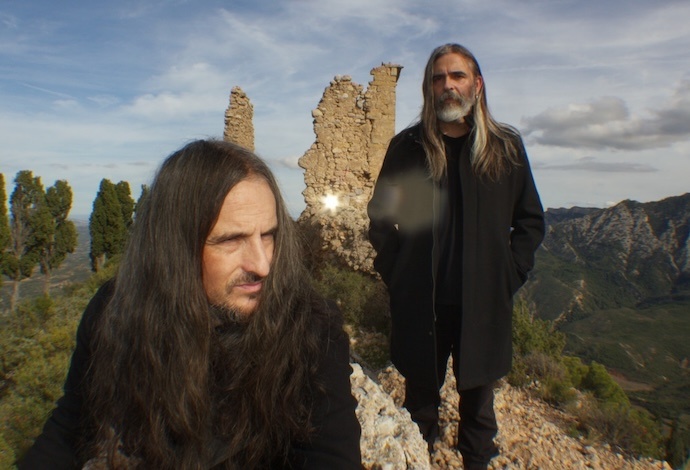
The lyrics of “Deliverance” have references to Ancient Greek philosophy or culture in general — what inspired you to write the song? What kind of message did you put into it?
That lyric in particular is very personal to Christopher. The chorus is painfully descriptive on its own. And the mythological references—like the island of Anthemoessa, for example—come from the idea of pointing to a place that drags you in, a place you feel like you somehow belong to, but at the same time you desperately need to escape from, at any cost, because it consumes you. A place that ends up destroying what you’ve built as a person.
It’s that kind of duality you can feel with family ties or toxic relationships that shape your life. And sometimes the only way forward is to leave them behind. Even though, in the end, you may have to return to them in order to redeem yourself, or to heal certain wounds.
We always try not to be too literal or descriptive in what we write, because that allows each person to take the meaning of the song in their own direction. So it can become something personal to them as well.
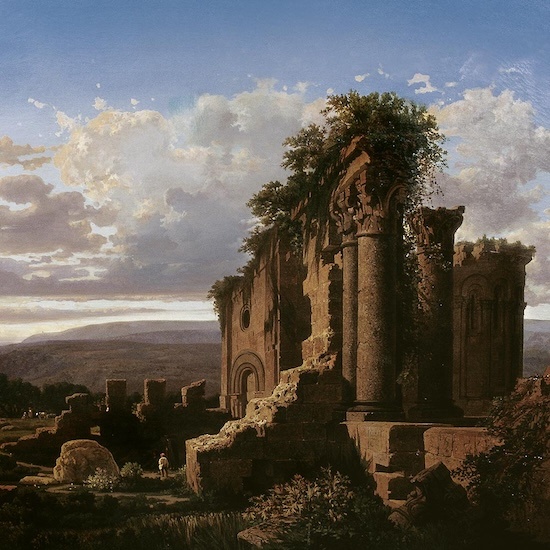
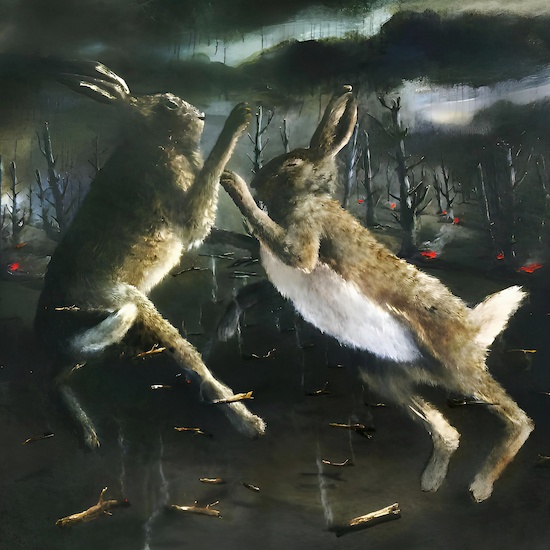
Did you choose Lluís Rigalt’s painting because it depicts a landscape familiar for you? How familiar were his paintings for you before?
To a large extent, a big part of the environment I was describing earlier—where we usually develop our music—has a lot in common with the cover. In fact, the back cover photo comes from that same region. And there’s a very particular kind of light that connects everything; open skies, ruins, small semi-abandoned hermitages… when we first came across the painting, it felt like seeing a more dramatized, almost romantic version of the landscape in which we develope our music. Long walks in nature, sunsets with no visual obstacles…
Lluís Rigalt was a Catalan Romantic landscape painter from the 19th century. We were already familiar with some of his work, but this particular piece titled “Ruines” caught our attention immediately. Something similar happened with our previous album A Greater Good. As soon as we saw that painting, we knew it had to be the cover. Sometimes an image just puts you in the right mental space to frame the meaning of your music.
TodoMal isn’t a studio project, and I found that you do gigs from time to time. What’s the band’s current lineup? Or do you have some sessions musicians who lend you a helping hand during tours?
Yeah, we’re actually going on a pretty extensive tour across a big part of Europe next summer. We didn’t really plan to become a live band at the beginning—it just wasn’t the idea. It just has been the natural evolution of the project that brought us here.
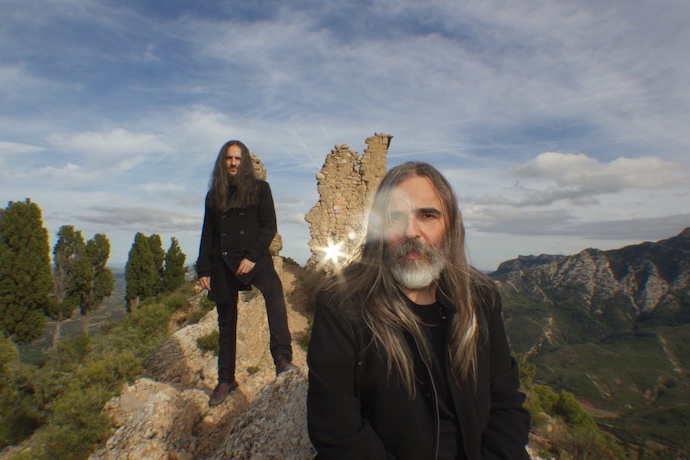
The live band basically formed itself, with musician friends of ours who liked the project and decided to join in. The live lineup has always been the same: Javi Félez on guitar, Bud on drums, Cecilia Tallo on keyboards, Christopher and myself. We’ve been around for a good while now, having played in bands like Teitanboold, Asgaroth, The Heretic…to name a few…
Each of them has become a key part of the band, so we really couldn’t be happier with how it all came together.
You performed both Be Prog! My Friend festival in Barcelona and Under the Doom Fest in Lisbon. How comfortable and natural was it for you to take part in both fests with such different lineups?
It was actually pretty strange, because Be Prog! was our very first show as a band, which was quite intimidating. And then, almost overnight, we were sharing the bill with bands like Candlemass, My Dying Bride or Dødheimsgard, and playing some pretty well-known festivals.That said, even though we’re a relatively new band, all of us have plenty of previous experience, so being on stage isn’t anything new for us at this point.
What’s been really great is building up this experience over time—it’s made us tighter and more solid as a band. Traveling, discovering new places, and eventually reconnecting with friends from the scene or meeting new ones along the way. We really enjoy playing live. On top of that, our shows have a strong visual element, with video projections. It creates a very specific atmosphere—something quite cinematic.
Thanks for the interview Javier! Let’s sum up: what are your further plans for the rest of 2026?
The goal now is to reach as many people as possible, and also to take a bit of a break after the rough few months we’ve had, so we can focus again on continuing to write and make music. That’s the other 50% of who we are.
Right now we’re fully inmersed in finishing the last promo video for the upcoming album, and starting rehearsals for the tour… and go back to those remote places, that stillness, to reconnect with the writing process that we’re honestly missing a bit at the moment.
Thanks a lot for the interview. We hope you’ve enjoyed Graveyards Of Joy, and hopefully in the near future the stars will align and we’ll be able to visit Russia. Best regards to everyone.
https://todomalband.bandcamp.com/album/graveyards-of-joy
https://www.facebook.com/todomalofficial/
Toda la suerte del mundo chicos, habéis sacado un discazo. Que vaya genial la gira, a ver si os dejáis caer por Valencia!