Apr 182011
 

(Andy Synn is back with another SYNN REPORT. Today, the subject is Becoming the Archetype, and Andy discusses the band’s discography leading up to the newest release, Celestial Completion. Tomorrow we’ll have Andy’s review of that album.)

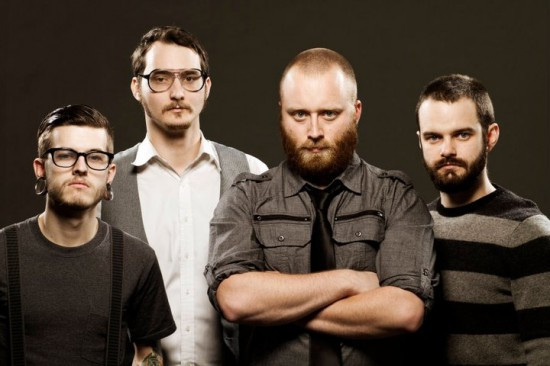
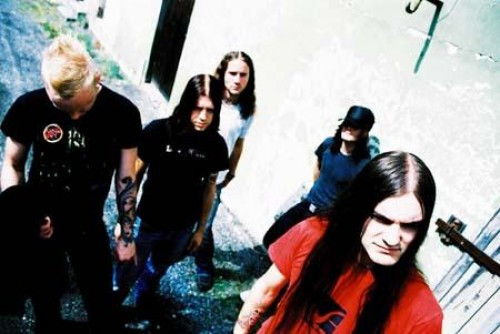
Becoming The Archetype, the four piece Progressive death metal band from Georgia, have gone through numerous line-up changes in their time, yet still consistently deliver vibrant, distinctive albums of stunning musicianship and complex compositions based around a core of crunching, shredding guitar, intricate, growling bass-lines, subtle yet dominating drums and the terrifying, lion-like roar of front-man Jason Wisdom.

Weaving in and out of this maelstrom of metallic might are the extra (yet never superfluous) elements which serve to add yet another string to the band’s progressive bow. Complex keys, piano and organ, transcendent clean singing, buzzing electronics, all tied together in a convoluted, genre-ambiguous package that at all times bleeds passion and sincerity.

With four albums under their belt so far, the band have carved themselves out a distinctive and instantly recognisable identity, despite the sheer variety of styles and approaches they employ. Terminate Damnation was their original exploration of controlled chaos and violent emotion, The Physics Of Fire” a labyrinthine mosaic of enigmatic musicianship and progressive drive, Dichotomy a cryptic synthesis of the band’s history and renewed aggression, with Celestial Completion a tangled yet profound fusion of old and new influences which opens up new doors for the band’s future.  (more after the jump, including sample songs from each album . . .) Continue reading »

Mar 222011
 

NCS contributor Andy Synn returns with yet another retrospective. This time the subject is Oceans of Sadness from Belgium.

Unfortunately, this edition of The Synn Report is a posthumous one, as Oceans Of Sadness recently announced their split. I had originally intended to write something about this band at a later date, hoping that they would have a new release by then as their last album (their sixth) was released way back in 2008.

Sadly, these Belgian visionaries have made the decision to part ways, leaving behind them six full-length albums of darkly romantic, proggy metal whose lack of boundaries makes their sound both fascinating and at the same time difficult to classify in its entirety. As such I’m giving each album its own recommendation separately this time around. Quick warning: the band relies primarily on clean vocals accented by some death metal growls and black metal shrieks, not the other way around!

To my mind there are (broadly speaking) two forms of progressive music, linear progressive music and spherical progressive music. The former usually involves bands moving in a linear direction away from their original forms, growing and evolving along the way, often to a point where their sound and style are totally different from that of their earliest releases. The latter involves a band carving out a sound with a large potential scope based on a central point of consistency – this allows the band to experiment within this sphere (which varies in size and scope depending upon genre limitations, technical and compositional skills, etc) whilst maintaining a core sound.

Neither of these forms is entirely mutually exclusive, as bands who have mined their sonic sphere of all possibilities can be seen to break out onto a linear path in response, just as bands who have made a career out of linear growth can eventually find a sphere to inhabit in which they are most happy to exist. (more after the jump, including songs . . .) Continue reading »

Mar 162011
 

Yesterday we posted an interview with Michiel Dekker of The Monolith Deathcult. Today, our UK contributor Andy Synn, who apparently writes as fast as a peregrine falcon can fly, prepared this companion retrospective in his latest edition of THE SYNN REPORT.

In order to keep up a bit of consistency on the site, I’ve shuffled The Monolith Deathcult up a few notches in my list of bands, so as to best take advantage of Islander’s interview with band main-man Michiel Dekker. Rest assured that the next Synn Report will finally get me back on track with the band I have been wanting to address for several weeks now!

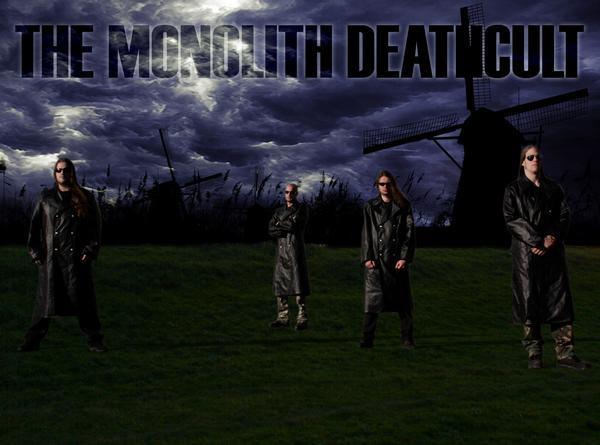
Stormtroopers of avant-garde death metal, The Monolith Deathcult originally formed in 2002 under the moniker “Monolith” before switching to the far more verbose and distinctive title they operate under today. Fusing brutal, technical death metal with grandiose symphonic sounds, industrial strength electronics and a historically focussed lyrical bent, the band have thus far crafted three albums of devastating yet artistically complex death metal.

Eschewing the “more for more’s sake” attitude of speed and technicality so prevalent in death metal, TMDC chose to step sideways, incorporating and exploring new ideas, more twisted song-structures and an array of extraneous instrumentation into their sonic sculptures. Less of a “progressive” band than they are an “experimental” one, TMDC’s main goal appears to be the stretching of traditional death metal boundaries to, and perhaps even beyond, their breaking point. (more after the jump, including music . . .) Continue reading »

Mar 072011
 

(NCS contributor Andy Synn joins us again with a look back at the music of Myrkskog.)

Hello ladies and gents. This edition of The Synn Report is going to be somewhat shorter than usual as I’ve also been focussing on getting one or two reviews done as well. Not to worry though, the next edition will once again be a lengthy and comprehensive retrospective (truth be told, next week’s band was originally intended to be this week’s band, but their discography is longer and a lot harder to define than this one, so I’ve gone for the easy option this time around!).

Forming in 1993 in Drammen Norway, Myrkskog fuse rampaging death metal brutality with the bleakness of black metal and the harsh clamour of industrial elements into a focussed, unstoppable killing machine. Their first release, Deathmachine, was an intense powerhouse of wall-of-sound industrial noise, blackened melody and death metal power. Second album Superior Massacre saw the band pursuing a more death metal oriented direction (partially due to the departure of guitarist Savant M) which paid tribute to the Floridian death metal sound, albeit still incorporating some darker, black metal tones and underlying, inhuman synths.

The band’s notoriety is partially down to their connection to Zyklon, the post-Emperor project of Samoth and Trym, effectively a continuation of Myrkskog’s musical legacy and featuring both Destruchthor and Secthdamon of Myrkskog. Early guitarist Savant M also went on to form the militant industrial black metal outfit Disiplin after playing his part in the recording of Deathmachine. However, you may or may not be aware of the members’ more high-profile positions in some legendary extreme metal acts, as drummer Secthdamon played bass for Emperor on their recent reunion dates and guitarist Destructhor has served time as a touring guitarist for 1349 and is currently a permanent member of Morbid Angel. (more after the jump . . .) Continue reading »

Feb 212011
 

In this latest edition of The Synn Report, our UK contributor Andy Synn focuses on the music of Hacride.

France has given us so many great things. Art, architecture, literature… fine wine, beautiful women, pain au chocolat…. but more important than all of these things, France has given us some great metal over the years.

From the more well-known of today’s metal acts, like Gojira and Deathspell Omega, to lesser known (but no less stellar) bands like Scarve and Alcest, even through to newer, up-and-coming bands such as The Bridal Procession, the country has a rich and vibrant metal scene. Interestingly enough, though, the bands who have broken through to greater exposure often seem to have very little in common.

Prog-metal artistes Hacride are another great name to add to the list of internationally renowned French metal acts. Formed in 2001 the band have so far produced 3 albums of modernised, progressively structured, technically gifted, avant-garde death metal. Though the core elements of heavy, crushing guitars, weaving bass, pummelling drums and raw, over-wrought vocals are all very much present and correct, the songs themselves are put together in a much less standard and predictable fashion. Utilising an array of different additional instrumentation, along with prominent keyboards and synthesisers, the band carefully fashion long, epic songs juxtaposing moments of cool ambience with fiery polemic and vicious metallic clamouring. Continue reading »

Feb 102011
 

(EDITOR’S NOTE: Our UK contributor Andy Synn returns with another edition of The Synn Report. This edition serves as part retrospective and part review of Iskald’s newest CD, The Sun I Carried Alone, which has just been released.)

Primarily described as a Black/Thrash hybrid, Iskald is the brainchild of Simon Larsen (Vocals, Guitars, Bass and Keyboards) and Aage André Krekling (drums and vocals) whose progressive, open take on furious yet melodic black metal is like a scalpel to death metal’s sledgehammer, vicious and precise but no less lethal in intent.

With lyrics in both English and Norwegian, the band maintains a keen grasp of its own cultural heritage, informed by a wider world view than can be attributed to many of their peers. Thematically, the lyrics cover a lot of bleak and epic ground, addressing the mystery of forbidden secrets and cataclysmic ruin, but also dip into darkly romantic waters similar to what one might expect of My Dying Bride and Katatonia.

The use of keys is subtle and interesting, neither overtly symphonic and overwhelming or poorly produced and underwhelming (as can so often be the case).  The drums provide more than just standard blast-heavy backing beats, performing quick and capable fills and tempo changes as part of an overall technically impressive display, while the bass remains a key component in the band’s sound. The duo’s real strength however is their ability to effortlessly reel off an endless supply of quality riffs, accented by intricate drum work and progressively inclined song-structures. (more after the jump, including songs from the band’s discography . . .) Continue reading »

Feb 022011
 

(Our UK contributor Andy Synn returns with another edition of The Synn Report.)

Ah “Deathcore”. In today’s current climate the word carries so many mixed connotations that it’s less of a genre-descriptive term and more of a full-on assault on a band’s right to exist. What’s worse is that, wrongly or rightly applied, the term has become synonymous with the WORST proponents of the style, rather than the BEST.

Young British tykes Trigger The Bloodshed were tarnished with the stain of ‘core from their earliest album. Granted, THAT name, their age, precociousness, and the timing of their first release didn’t help them much, but it’s still worth noting that although their first album did flirt with many of the elements so currently associated with the “deathcore” genre, the band always seemed less interested in being associated with a particular scene or style than they were in simply creating good, heavy music, placing a much greater emphasis on the “death” over the “core”.

All this, however, is not to say that associating purely with Big Daddy Death Metaltm doesn’t create some similar issues (the two genres being genetically intertwined after all). Both genre and sub-genre often suffer from an “overabundance of brutality” – a directionless focus on a perceived holy grail of heaviness, at the expense of actually saying anything lasting with the music. (more after the jump, including recommended songs from the TTB discography . . .) Continue reading »

Jan 272011
 

Our UK contributor Andy Synn returns with another edition of The Synn Report.

A band with a profound, and vastly underrated, influence on many of today’s bands, Norway’s Extol were in many ways the epitome of counter-culture in metal circles at one time. Whereas the majority of their countrymen were quite happy to worship Satan and live out their darkest black metal fantasies, these 5 individuals decided to play a progressive form of technical death/thrash metal with a lyrical bent covering their own shared Christian spirituality. Blasphemy!

Over the course of their career this Norwegian five-piece were never afraid to push the envelope with their sound and playing, their technical skills and song-writing prowess a real testament to their dedicated pursuit of musical perfection and progression. Difficult to precisely define in terms of sound and scene-affiliation, the band is most broadly described as a Progressive Metal band; at times (particularly in the early days) the band were notably extreme.

(more after the jump, including sample songs from Extol’s discography . . .)

Continue reading »

Jan 172011
 

Our UK contributor Andy Synn returns with another edition of The Synn Report.

Hello everyone. For those of you who enjoyed my last column, I’m back again with another band recommended and dissected – this time it’s the turn of THE GREAT DECEIVER.

The band have been active since the late 1990’s and feature in their ranks two particularly famous men from the Swedish metal scene. Whilst you may well recognise the name Tomas Lindberg (vocals) quite easily, you may not be aware that guitarist Kristian Wåhlin is also known by the name “Necrolord” and has famously produced cover art for many of metal’s elite, from Dissection, At The Gates and Emperor, to newer bands such as The Black Dahlia Murder and Becoming The Archetype.

With a musical foundation in both the Swedish hardcore and melodic death metal scenes, coupled with an intense fascination for the moody post-punk atmospheres of Joy Division (of whom vocalist Tomas Lindberg has claimed to be an avowed fan), the sound of The Great Deceiver is difficult to precisely pigeon-hole.

Whilst the guitars have a distinctly metal edge to them, the song structures and tempos lend themselves more towards the hardcore-leaning listener, albeit coupled with a distinctly odd use of twisted melody. The use of heavy tremolo-pedal distortion on the guitar leads and ringing chords is perhaps the most distinctive and consistent motif throughout the band’s work, on a par with the distinctive vocal delivery of Mr Tomas Lindberg himself. (more after the jump, including sample tracks from the band’s discography) Continue reading »

Jan 072011
 

Ladies and gentlemen, this is the debut of a new column which Islander has kindly allowed me to write and display here at NoCleanSinging.

Each week (ok, whenever I get round to it, they may not be weekly – or they may be more frequent, we’ll see) I’m going to be providing an introduction, a retrospective, or simply a re-consideration of  a band which I feel merits the treatment. Certain bands will be more well known than others, and primarily these bands will be part of THE SYNN REPORT simply because I feel that with all the bullshit media hype in the world, the band in question has been perhaps judged unfairly due to the influence of matters non-musical. Certain bands, however, you may not have heard of before at all, as although I do not consider myself a paragon of underground taste, there is only so much time each of us can devote to finding new music and really exploring it. Hopefully this column will help a little!

Each column will deal with a single musical entity, considering their works and progression in turn. Certain columns will be dedicated perhaps simply to eras in a band’s career and progression, considering and evaluating changes in style and direction with the benefit of hindsight and (hopefully) critical objectivity. Although that probably won’t last very long!

Anyway, for my first column I would like to introduce you to the Greek band ASTARTE (more after the jump, including sample songs from the band’s discography . . .) Continue reading »