Islander

Sep 212022
 

For reasons that our man Andy Synn incisively explained in his review last year, Acausal Intrusion‘s debut album Nulitas was a rare piece of work. My favorite fragment from the review was this one: “[T]his is one record that actively feels like it’s evolving and mutating as you’re listening to it, which is no mean feat”.

It wasn’t just that Nulitas morphed from song to song, it was that the individual songs themselves seemed to change when listening to them a second and third time, which was a strange experience. But as Andy also noted, it was only after repeat listens that the album began to make sense — albeit a weird and warped kind of sense.

Now this dizzying and devastating duo are fast returning with a new album, this one named Seeping Evocation. Not surprisingly, it’s a challenging listen, and a frequently disturbing one. As the band’s label I, Voidhanger Records, expresses it:

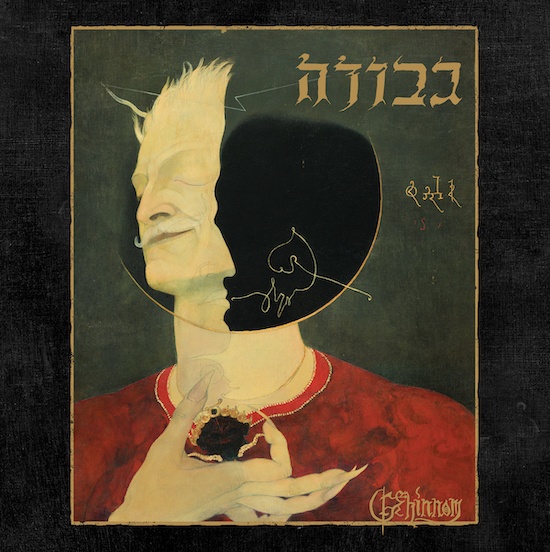
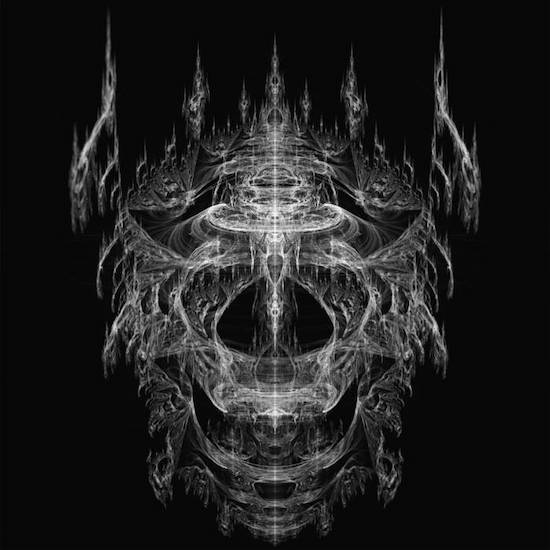
“Once again the watchwords are chaos and transformation…. Seeping Evocation is like a living organism from another dimension, a giant black hole that pulsates and breathes, the eye of a forgotten Lovecraftian god open to our reality, ready to burn and destroy everything.” Continue reading »
Sep 212022
 

The last time I wrote at NCS about a song by Majestic Mass, back in 2018, I tried to explain my enthusiasm by spewing out a string of addled words that didn’t come close to a complete sentence, and ended by referring to the track as “a song with sensations of lewdness and lust, fire and triumph….”

Majestic Mass now have another album on the way, following up on that 2018 debut full-length Savage Empire of Death (and a 2019 EP named Onwards). And look at the epigram featured in the PR materials for the new record.

Feel no fear nor woe
Embrace the final blow
See the crimson glow
Let lust and fire grow… Continue reading »

Sep 202022
 

(Today we present Comrade Aleks‘ interview of Markus Laakso from the Finnish band Kuolemanlaakso (among other endeavors he’s involved in, which are also discussed below). The band’s newest album Kuusumu was released this past spring by Svart Records.)

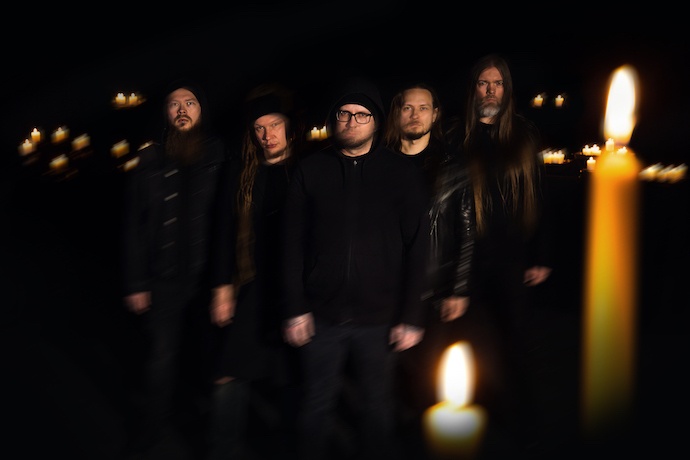
Kuolemanlaakso (“death valley” in Finnish) once was known as the “death-doom band with Swallow the Sun’s vocalist”. It was started in 2010 and the band’s line-up didn’t change since then: Mikko Johannes Kotamäki (vocals), Markus Laakso (guitars, keyboards, vocals), Toni Ronkainen (drums), Tuomo Räisänen (bass), and Petteri Ruotsalainen (guitars).

Their first album Uljas uusi maailma (2012) was already too progressive and melodic for any rigid “death-doom” tag. The EP Musta aurinko nousee (2013) and the LP Tulijoutsen (2014) developed Kuolemanlaakso’s eclectic style only further until Markus recorded M. Laakso – Vol. 1: The Gothic Tapes (2016), something like his own gothic Kuolemanlaakso-based spin-off…

Besides that, Markus Laasko is the author of two metal books which we need to mention in this interview, which is focused on the band’s fourth album Kuusumu. Continue reading »

Sep 202022
 

Many much-beloved metal albums, both very old and much newer, follow a straight and narrow path, charting a consistent stylistic course and staying in the lane, without much interest shown in the openings that lead off elsewhere into the thorny brambles and dark woods on either side. They work because the bands are so good at what they chose to do, and make their trails wander just enough to keep the eyes and ears of listeners alert.

On the other hand, some bands only seem to have eyes for the paths that twist and turn, the more tangled and unpredictable the better, and they relish the chance to dart off into side-openings whenever the opportunity presents itself. Some of those bands get lost, and lose listeners along the way, but others succeed in making their less-traveled paths more exciting than the straight and narrow.

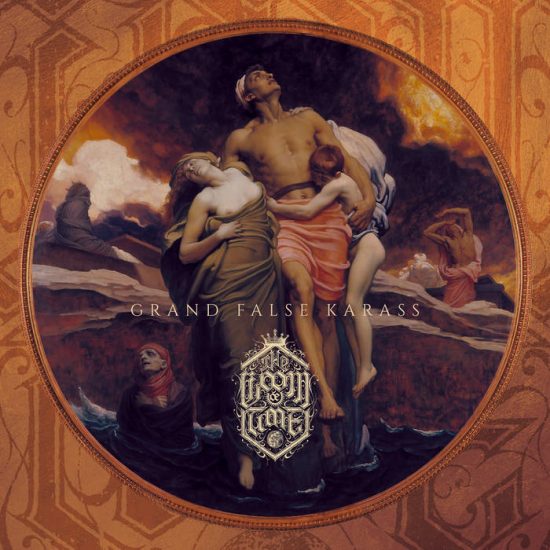
The Loom of Time‘s new album Grand False Karass is certainly a vivid example of the latter, and an even more surprising one in light of the bamboozling (and dangerous) new adventures it offers by comparison to the band’s debut. Continue reading »

Sep 202022
 

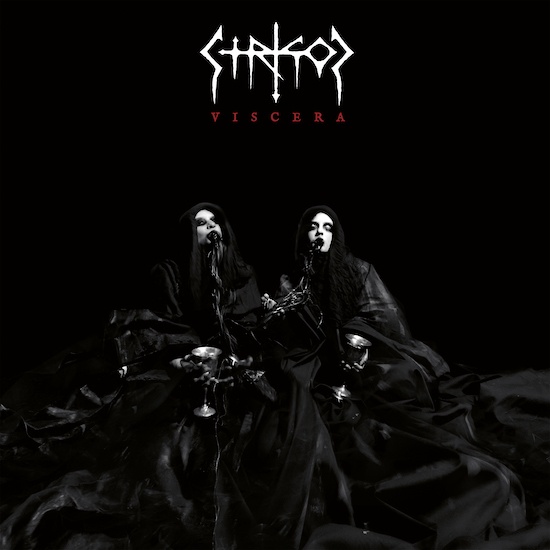
(We present DGR‘s review of a new album by the UK’s Strigoi, which will be coming out on September 30th on the Season of Mist label. Photos by Hal Sinden.)

It is a wonder how we always cycle back around to the start musically, isn’t it?

Although at this point Vallenfyre has been a long-retired project, with founding member and mainstay Gregor Mackintosh instead launching Strigoi a year and a half after the previous band’s final album, the group’s influence throughout releases has been hard to deny. For many, Strigoi is a natural continuation of the prior project – mainly another outlet for Greg to unleash his varied tastes for death and doom metal alongside new cohorts, so much so that the line between the two projects is often blurred.

When Vallenfyre‘s debut A Fragile King was released, it was a densely packed and thundering take on the hybrid death-and-doom genre. Vallenfyre‘s later two releases would travel in different directions from that initial launch, adding in a heap of crust punk and grind influence, resulting in a project that got much faster and little bit more traditionally vicious over the course of its three-release career.

Strigoi picked up the baton in that relay, adding even more elements to the fire, and Greg – now joined by Chris Casket – would release a grungier take on those first three albums with 2019’s Abandon All Faith. Which is what makes things interesting for Strigoi‘s sophomore album Viscera – their first for Season Of Mist – because it seems that even though the group is now reinforced with drummer Guido Zima and guitarist Ben Ash, the initial influence of that first solo project release has never fully left. Viscera has cycled back around, and Strigoi once again returns to the realm of dense, slow-crawling dirge, death, and doom. Continue reading »

Sep 192022
 

This was supposed to be “Seen And Heard On A Saturday (Part 3)“. Even when I mentioned the idea for it on this past Saturday I knew in my heart of hearts that the odds of getting it done were vanishingly small. Completing two parts was tough enough. At least this time I didn’t toss the idea in a mental dustbin, never to be recovered.

The idea for this one originated last Friday night, with most of it taking shape during a regular Zoom confab among metal writers that I sometimes drop in on when my spouse is out having fun without me. I can’t exactly reconstruct how all these songs popped into my head during that conversation. Free-flowing gin might have had something to do with that, both the surfacing of the songs and my inability to explain how it all happened.

I’m also not sure this assemblage of music is going to connect with anyone else (it begins with some new things but then tunnels far back in time), but fuck it, worth a try. Continue reading »

Sep 192022
 

(We’re joined today by a new NCS contributor, Rob Tamplin, with his review of a new album by Texas-based Gonemage, set for release on September 30th.)

With Handheld Demise, Garry Brents, emerging master of high-concept narrative genre-spanning almost-metal, rounds off a trilogy of albums which started with 2021’s Mythical Extraction.

While it’s difficult to pinpoint the eye of Brents’ particular musical hurricane, the nucleus seems to be Phase Out, Cara Neir’s ongoing trilogy of 8-bit black metal homages to RPGs. The Phase Out cycle is a trilogy of loosely-narrative albums inspired by dungeon crawler games like Neverwinter Nights, Pools of Darkness and Death Knights of Krynn, in which the listener ‘experience[s] a range of bits, bleeps, beats, and buzzing sounds you might hear from 90’s dungeon crawlers and JRPG’s.’

Like its parent project, Handheld Demise presents an entrancing medley of metal and geek culture (the cassette version of Sudden Deluge, the trilogy’s middle-child, came with its own custom printed Magic: The Gathering card). So, If Cara Neir is the main show, then Gonemage is the spin off. Continue reading »

Sep 192022
 

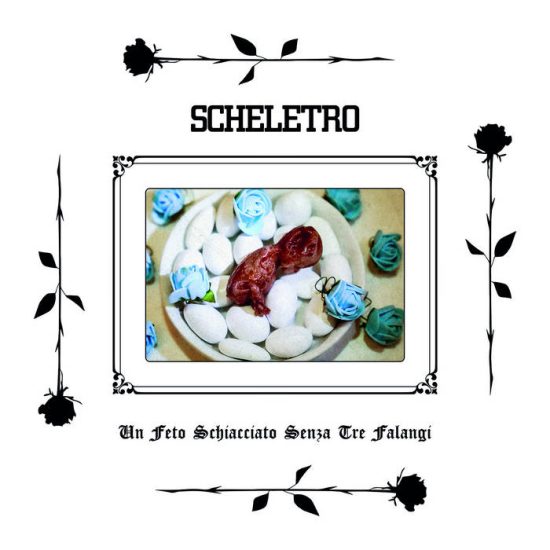
If you’re not fluent in Italian and feel the urge to resort to google translate, we’ll save you that step: Un feto schiacciato senza tre falangi, the name of Scheletro‘s new album, means “A crushed fetus without three phalanges”.

That’s a grim and gruesome image to contemplate, but it’s just a hint of the traumatic nature of the album concept as a whole, which is described as a narrative “in which rebellion against patriarchy ends in suicide, social emancipation is humiliated by sexual blackmail, revenge is swept away by repression, and perversion is sublimated into necrophilia”.

How Scheletro tell this harrowing tale through their music is a tale all its own, one in which the group bring together ingredients of traditional Italian old-school hardcore, D-beat crust punk, and strands of old school death metal and thrash. The results are bleak, punishing, and emotionally moving, but also explosively wild and exhilarating. Continue reading »

Sep 192022
 

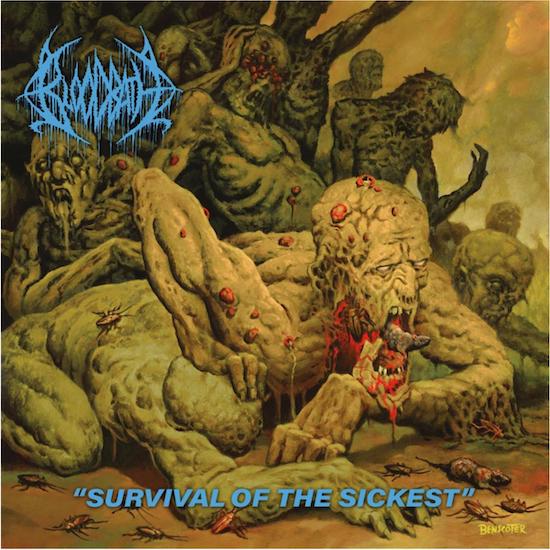
(Earlier this month Bloodbath released their sixth album, and their first on Napalm Records, and today DGR has some thoughts to share with you about it.)

The thing reiterated with Bloodbath time and time again is how the group have always existed as partial tribute act, partial throwback, and definite lovers of the phrase “playing for the cheap seats”.

They were formed in a time when the wave of death metal throwback wasn’t yet even a cogent idea to a lot of people, with some of the groups that Bloodbath sought to emulate only just hanging their hats up to go quiet for a decade or so — only to return as the old school death metal revival hit full swing. At the time it made logical sense since they became a bastion of old school chainsaw guitar and ethos, likely exposing waves of people to the genre for the first time, boosted by the popularity of its various members’ other projects. It would feel like a lie to say that the gateway to Bloodbath at that time for a lot of people wasn’t a starting point with Opeth and Katatonia.

What’s been interesting for Bloodbath is that they’re in a weird spot now, as the revival and throwback movements have now long been factors within the genre, which means they’ve no longer the flag-bearers for a style that has waned in popularity. Instead, they’re now at the forefront of an active movement within death metal and one that often asks the question, “well how hard can you throw us backward in time?” Continue reading »

Sep 182022
 

To save time (yours and mine), I’ll dispense with the usual windy introduction and say only that some of the choices I made this week stretch the admittedly elastic musical bounds of this column, and eventually wind up completely outside them… but that doesn’t happen right away, as you’ll soon see.

GEVURAH (Canada)

Gevurah probably need no introduction to our visitors, or to anyone else who wants to feel consumed by fire when listening to black metal. As I’ve observed both in the case of their 2016 debut album Hallelujah! (which we premiered and reviewed here) and their 2018 EP Sulphur Soul (discussed here), Gevurah are devoted to the fierce power of chaos, and the unrelenting intensity of their music can be overwhelming. Based on the first song from their forthcoming second album, they’ve not moderated their stance. Continue reading »