Mar 182014
 

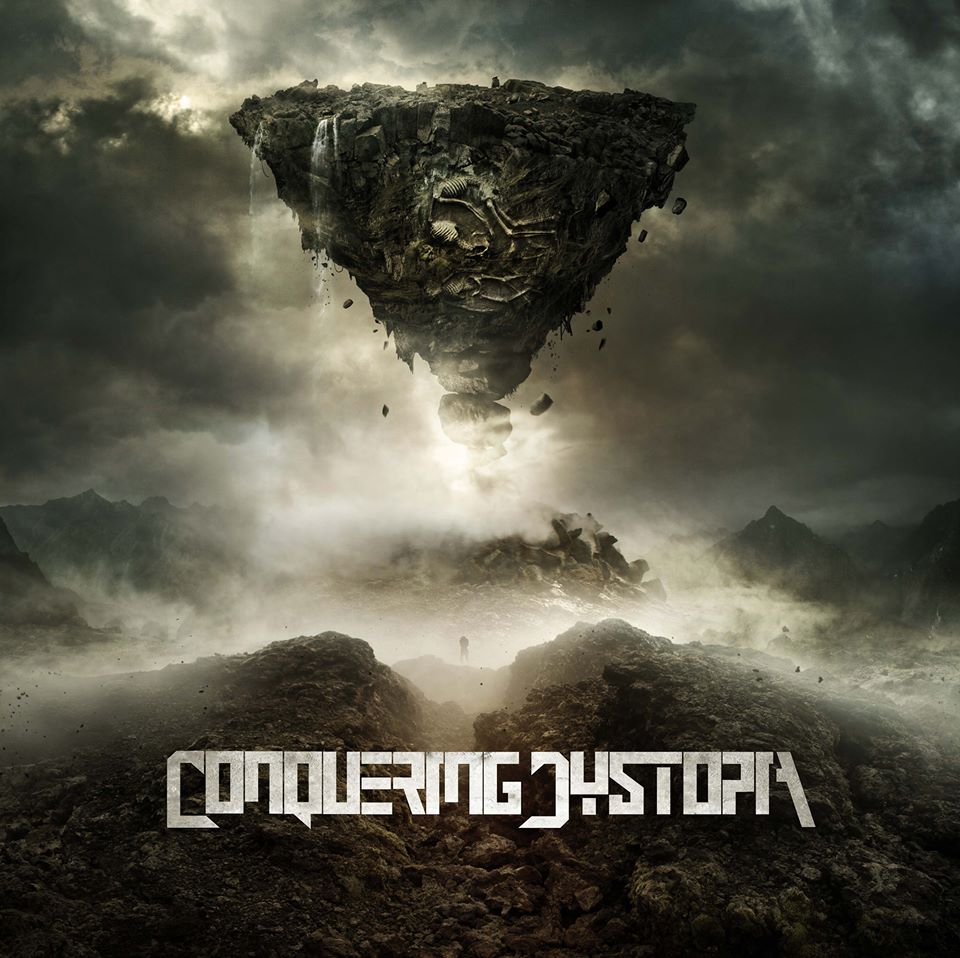
(TheMadIsraeli reviews the debut album by Conquering Dystopia, the instrumental supergroup that features Jeff Loomis, Keith Merrow, Alex Webster, and Alex Rüdinger.)

The instrumental metal conversation has perpetually carried a narrative that it’s inevitably dying, always about to reach its life expectancy, with no room soon to be left for it because no one wants to hear a bunch of musicians directly line-in to a PC and show off.  It’s amazing to me that in a genre that is partially, in some of its sub-cultures, built around technical proficiency, and sometimes excess, that such things are said.  Although to be fair, there is good reason for that narrative as of late, and it boils down to djent.  Djent, especially bedroom djent, nearly killed the instrumental metal market for any widespread appeal. You hear so many Axe-FX rich kids trying to compose generic, boring, ambient soundscapes with chugs — can you blame those who now shy away from instrumental metal?

The thing is, the idea that instrumental metal is an unwanted musical movement not worth exploring is just false.  We’re now seeing some of the best composers, both bands and solo individuals, putting out some of the most stunning material in years:  Mendel, Angel Vivaldi, Exivious, Blotted Science with their comeback a couple years ago, and most relevant for this review, Jeff Loomis with his post-Nevermore output and Keith Merrow.  Not only do these guys all write stellar music, I see educated fans slobbering over this kind of music a lot.  The problem is, we’ve been bombarded by so many bedroom djenters that the good music sometimes seems to be drowned out. Continue reading »
Mar 172014
 

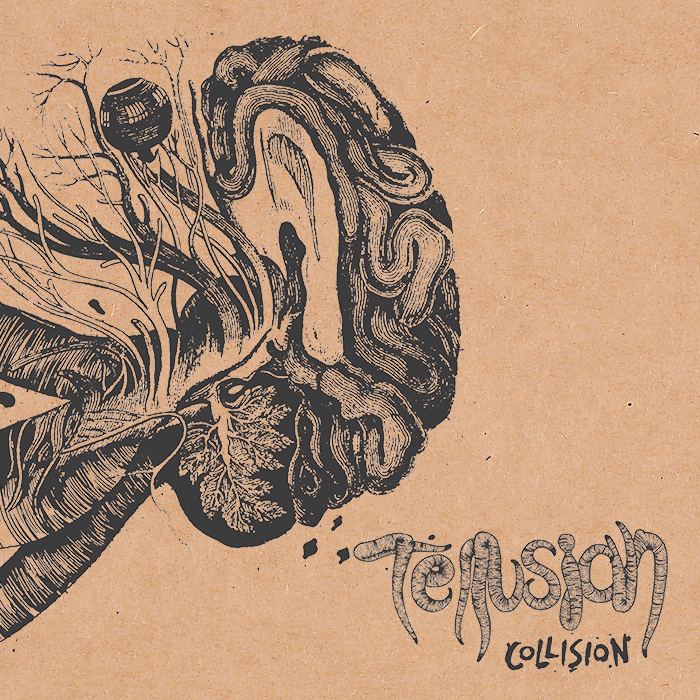
(In this post Austin Weber reviews the debut album by Tellusian from Malmö, Sweden, and we’re also bringing you a full-album stream.)

When Crowpath bit the dust  a few years ago, the metal scene was poorer for that loss. Thankfully a group with former members of Crowpath called Tellusian exists, and it comes as no surprise that they are likewise a highly talented and forward-thinking act. It’s not the same line-up exactly, as only drummer Erik Hall  and vocalist Henrik Ivarsson have carried over from Crowpath. Tellusian’s guitarist John Rönnerblad and bassist  Robert Fuchs round out the band. Together, this foursome bring to the table  a fresh chemistry and style that meshes perfectly with the remnants of Crowpath to create something that flashes hints of their former sound — while simultaneously sounding like a completely different group overall. Really, the biggest similarity is the unique way in which they skillfully draw from so many kinds of metal to create their own recognizable style, which sounds like no one else.

Collision takes shape from a dense re-combination of various styles sewn together in a variety of different ways to create a destructive force that thrives on a counterbalance of melody enhanced by progressive experimentation. The core of Tellusian’s sound lies within technically adept sludge, with their use of off-kilter leads amidst heaving grooves coming across in a way that reminds of both The Ocean and Mastodon. Interspersed throughout their high-quality sludge antics are a smattering of death metal, shards of black and thrash, and grind–inserted in whatever way best suits each song and particular moment, for transition purposes and to build and release tension expertly. Continue reading »

Mar 142014
 

(In this post Andy Synn reviews the debut album by Liverpool’s Coltsblood.)

Pure soul-crushing, bowel-clenching, knee-shaking doom. That’s what we have here. Make no mistake, this is not designed to be a pleasant or an easy listen.

This whole album is a bleeding, gasping slog through a black morass of sludgy, slime-drenched chords and crumbling, fractured vocals, punctuated by sky-splitting explosions of crackling snare.

It’s dense. It’s claustrophobic. It’s brutish and unrepentantly severe.

And I love it. Continue reading »

Mar 142014
 

I’ve been trying to understand why I find the kind of music on the excellent new split by Aphonic Threnody and Ennui (entitled Immortal In Death) so appealing. I didn’t always. When I got into metal, the music that grabbed me raced like thoroughbreds with their bloodstreams flooded by adrenaline.  Immortal In Death moves like draught horses pulling a granite crypt, with no finish line in sight. Yet the music is immensely powerful and emotionally intense despite its glacial pacing and its black moods. It overwhelms the senses, maybe even more thoroughly than the kind of high-octane romps that were my first loves.

Each band contributes one very long song to the split, and although they are more alike than they are dissimilar, I’ll still take them one at a time.

APHONIC THRENODY

My own experience with this multinational funeral doom band (whose members come from other well-regarded underground groups) goes back to 2011, when I came across their debut album First Funeral (and wrote about some of the music here).  Though the band favored long songs on that release (all of them in the 9-10 minute range), “Ruins” dwarfs them. It’s a nearly 21-minute monolith — and it represents Aphonic Threnody’s crowning achievement so far. Continue reading »

Mar 132014
 

(In this post Austin Weber reviews the forthcoming fourth album by a Dutch band with an eye-catching new line-up — Winter of Sin.)

Lately I’ve been craving a fist-pumping metal album, the kind that kicks your ass from the first minute and never relents (save for maybe one tiny little breather, the almost required instrumental break). Very recently I was allowed to hear such a glorious album, by a decade-and-a-half-old melodic black/death metal band from The Netherlands called Winter Of Sin, whose line-up now includes two former members of the sorely missed God Dethroned.

I freely admit to not having heard the band’s prior albums so I can’t say how this compares, but I can confidently say that on its own merits Violence Reigns Supreme is the sort of album whose high consistency and powerful energy make it hard not to replay frequently. Beyond the relentless nature of their music, they get an extra boost from the cancerous, throaty screams and stout mid-paced growls of God Dethroned mastermind Henri Sattler. His howled proclamations cover these unholy hymns with a pained damnation that adds materially to the experience.

Right from the start, opener “Astral Death Reign Algorithm” sets the tone and palette of the album: Wailing, sinewy black metal interlocks with melodic bursts and fiery buzzsaw death metal riffs — supplemented by thrash undertones, accented by sinister leads, and topped off with a coating of orchestral flourishes. All these ingredients are smashed together into a deadly union of speed and finesse, a sleekly crafted vehicle designed for the purpose of superior serrated destruction. Continue reading »

Mar 122014
 

(Austin Weber introduces our premiere of a song from the new EP by NYC’s Epistasis with this review.)

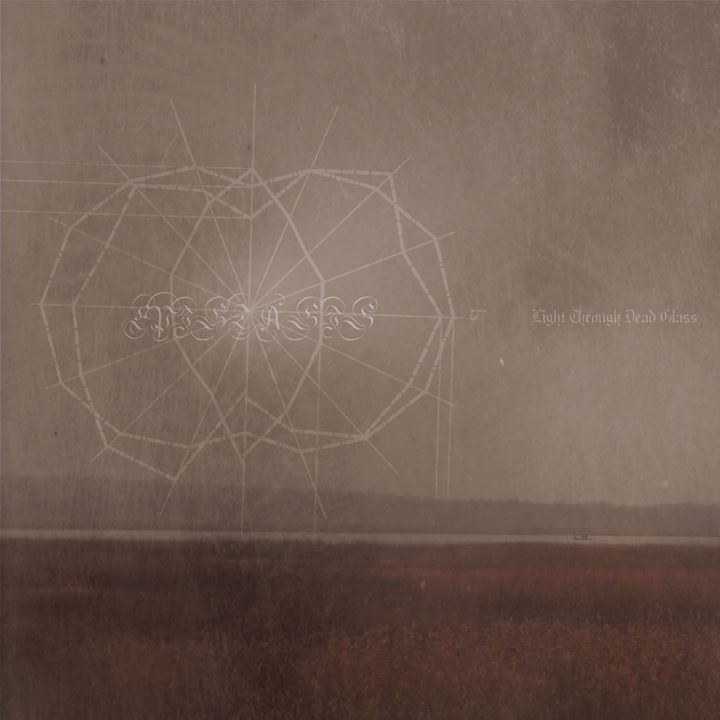
Change and evolution in a musical context is a mighty double-edged sword for artists and fans alike, with fickle listener attitudes and the artists’ desire to keep the fans interested providing both a reason to change and a reason not to change. If we are being honest, evolution is necessary for any artists to feel they are not stagnating, but we as fans often have a hard time accepting this. At this perilous point of intersection is where Looking Through The Dead Glass, the new EP from New York City natives Epistasis comes in.

When I wrote about their 2012 self-titled EP last year at NCS they were a quirky, adventurous group tackling a potent merger of classical influences, metal, and elements of rock to create a dense web of ever-shifting madness. Now they’ve added vocals, and evolved their sound to include a strong black metal undercurrent. Both are bold moves that pay off for Epistasis, allowing them to explore new frontiers musically, while not repeating what they have done before. Continue reading »

Mar 122014
 

(In this post DGR reviews a resurrected album by Separatist from Hobart, Tasmania.)

This disc has become something of an obsession.

The way I discover music these days is an odd combination of factors, some of which can be more old-school grognard than others. I know I’ve sung the praises of last.fm many a time, despite the fact that it seems like everyone has jumped to Spotify or Pandora and, speaking of old-ass technology, I still find quite a few bands just surfing through the many concentric circles of bands on Facebook — a service I have been told many times is uncool and old these days. Often it’s a way to discover stuff that we may never have gotten press releases about, really good bands who may have no idea how PR works, or likewise, stuff that just never seems to cross our paths. Occasionally, we even discover smaller foreign bands just starting out, and sometimes you even pull off something like landing on the Facebook page of a melodeath/doom band hailing from Iran.

You can thank Psycroptic for this review though, because it was out of curiosity that I found myself bouncing from band to band, sating my “What the hell has _____ been up to?” sense as it struck me, and I saw a small shoutout to a band called Separatist on their page. We here at NCS seem to have had pretty good luck with bands from Australia, New Zealand, and surrounding areas as of late — especially those that lie on the death metal side of the spectrum, so the jump on my end was one easily performed.

However, what I found was not only a really good death metal band but also a small story that was part relic, part lost to time — a story of an album lost after a distressingly frequent issue that heavy metal bands seem to have, an issue known as a hard-drive crash, and a band long since broken up — everyone going their separate ways after the disc was lost, before one of the members — their vocalist — would attempt to resurrect the group and add a new chapter to a band that was a part of his life. Such is the story behind the recently released album Closure, by a now-solo musician hailing from Tasmania and going by the name Disho (name: Sam Dishington) and his group, Separatist. Continue reading »

Mar 112014
 

About three weeks ago we featured an advance song from Hyperion, the forthcoming sixth album by the Parisian band Dirge. Today, in cooperation with the band’s new label Debemur Morti, we’re thrilled to help premiere a stream of Hyperion in its entirety.

On Hyperion, Dirge prove themselves to be immaculate practitioners of a dark and beautiful art. They stand like potent spellcasters at the intersection of doom, sludge, and post-metal, a place cloaked in perpetual night, hemmed in by black thorns, lit only by a sliver of moon above and the shimmer of winking stars.

The songs are long, culminating in a 16-minute instrumental closing track. They manage to be both ghostly and very heavy, both ethereal and menacing in the power of their undertow, like the siren song and the bottomless whirlpool. Combining low distorted chords and massive drum strikes with rippling lead guitar lines, mixing raw howling vocals with ghostly, subdued, clean ones, they walk a line between pain and perseverance without ever losing their balance. Continue reading »

Mar 102014
 

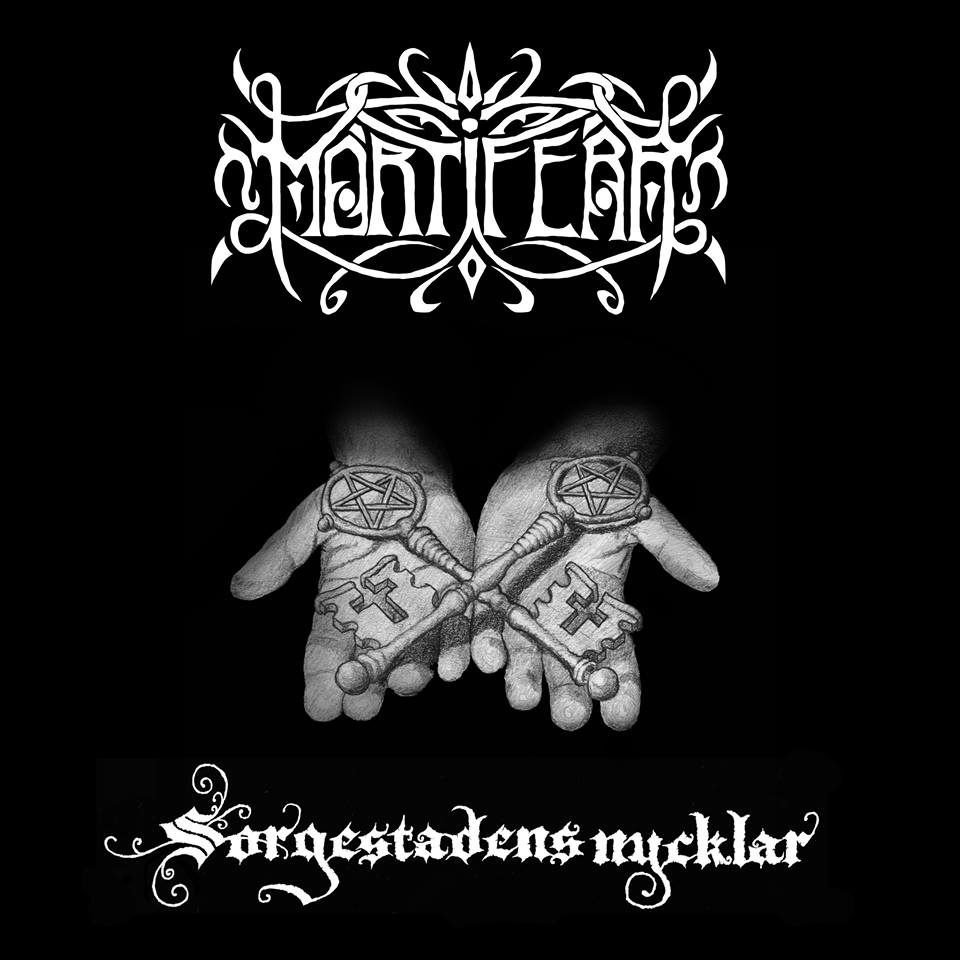
It is said, and rightfully so, that music tells a story unlike any other art form. It interacts directly with our subconscious, evoking emotions and inspiring images and narratives without any conscious interpretation. It connects with memories and it fosters fantasies of things never actually experienced. Lyrics actually get in the way of this process. It’s better if you can’t make out the words, which may be one reason why I like extreme metal so much.

I listen to Sorgestadens Nycklar, the debut EP by Sweden’s Mortifera, and I smell the evergreens, feel the bite of a cold wind, hear the slap of leggings against horsehide and the rattle of blades in their scabbards. My spine is jolted by the gallop, my blood accelerating with the charge. Axes fall, blood flows, songs of victory are sung near a blazing fire under the constellations of the far north. Continue reading »

Mar 092014
 

Sometimes my listening decisions are completely ruled by impulse. I have carefully conceived plans in mind, and then they vanish in an instant, for reasons I can only dimly fathom after the fact. Yesterday afternoon, for example, I finally had a short break from my paying job. I had many forthcoming albums I could have dived into, but instead I listened to something that came out in October 2013. I later decided that at a subconscious level I must have felt a yearning to be pounded flat.

I had heard about this debut EP by Liverpool’s Crypt Lurker from many respected sources, including our curmudgeonly contributor SurgicalBrute, who put it on his Best of 2013 list.  He characterized it as “a rolling monolith of raw blackened doom”, and so it is.

The music is simple in its construction, yet it’s ingeniously effective and tremendously compelling. The tools of Crypt Lurker’s trade are mammoth, vibrating riffs, methodical hammering drums, and scalding shrieked vocals that radiate malevolent intent. The band concoct grim, morbid melodies and then wield those implements to beat them relentlessly into your memory. Continue reading »