Aug 262013
 

I don’t know how many people visit NCS every day versus the number of people who come here once a week or once in a lifetime, at gunpoint. But in case someone has missed the last four days, this will alert you that your intrepid NCS staff is in the midst of a week-long fuck-off.

All five of us are here in the Emerald City, getting to know each other better. Things are going even better than expected, with the announcement last night that two of the staff are marrying each other and have picked me to officiate. However, because this happened after a solid 12 hours of drinking beer, I’m hoping that they sleep on that decision instead of sleeping with each other before the sun comes up today, no matter how much I would enjoy being the officiant.

I’m almost certain we have done other things in Seattle besides drink beer and talk metal and drink more beer, but this is more a matter of faith than memory at this point. One thing I do know is that since this hellish communion began last Thursday we’ve had two days go by with no posts whatsoever, after having previously missed only one day in the nearly four years since NCS began. Continue reading »

Aug 212013
 

(This is the third in a series of guest posts by NCS supporter Utmu in which he poses questions and seeks answers.  In the last installment, he sought reader input for a paper about metal that he has been preparing for a college Composition course, which we may be seeing here soon.  And in this post, he’s asking for reader opinions again. Please leave your thoughts in the Comment section after the post.)

I’d like to apologize for the untimely manner in which I’m going about my paper. My composition class ended on August 2 and I’ve been on break since then. The reason why I’ve been reluctant to submit it to Islander is because I want to make a few changes with the structuring. Also, I’d like to proofread it to make sure that it impresses upon people in the way that I want it to, and I’d also like to make sure all of my arguments are cogent. But to the matter at hand!

In the last installment of RitV, I surveyed you all about the general well-being of metal in order to gather information for the paper. Part of me thinks that the results weren’t what I was looking for, but the other part of me does. Regardless of whether or not my respondents understood what I was asking depended entirely on the way in which I asked it—that is to say, any faults in the survey were my doing, not the respondents’. I’ve diagnosed the possible faults of my survey as a symptom of not actually knowing how to conduct one. Specifically, I don’t know when I’m leading my respondents and when I’m informing them (my instructor intended for this to occur as a form of “on-the-job training”, I suppose). However, I still got the general idea from the respondents that metal is indeed alive and well.

Now I’d like to take a moment and ask you how you define living metal. What makes metal alive? Is it based on the extent of perceived innovation in the music? Or is it a function of the simple fact that new music continues to be made, whether innovative or not? Perhaps you would subscribe to a different explanation entirely. Continue reading »

Aug 182013
 

(photo credit: Jessie Rose)

I read a couple of things recently that I thought were worth passing on. One is funny, one is thought-provoking and a bit surprising. One is about a band who unexpectedly broke up, one is about a band who just keep going and going. We’ll start with the latter one first.

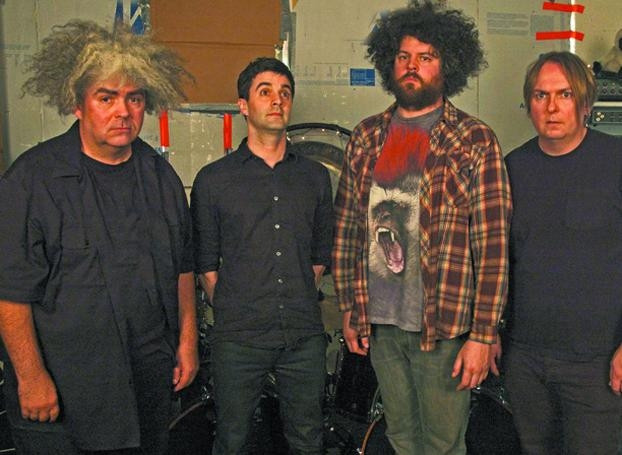
MELVINS

This piece is the funny one. Melvins were formed way back in 1983 by guitarist/vocalist Buzz Osborne, bass-player Matt Lukin, and drummer Mike Dillard, who were all schoolmates in Montesano, Washington. Dale Crover came on board in place of Mike Dillard in ’84, though Dillard came back to the band more than 20 years later and he will be appearing on their 30th anniversary album Tres Cabrones, which is due in November (with Crover moving over to bass for that record).

The band have had a changing cast of bass players. I count six since the band performed, with Jared Warren being the most recent, and that’s not counting about six more who have toured with the band but weren’t present on recordings. Yet with Osborne and Crover in place for nearly 30 years, Melvins are one of those rare bands who’ve stayed the course through life’s ups and downs.

A few days ago Dale Crover revealed the secrets of Melvins’ longevity for a Portland (Oregon) publication called Willamette Week. “Top Five Tips For Keeping A Band Together 30 Years” is a short read, so I’m going to paste it right here: Continue reading »

Aug 122013
 

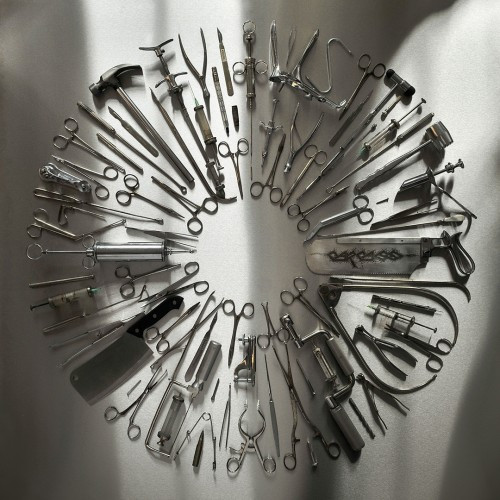
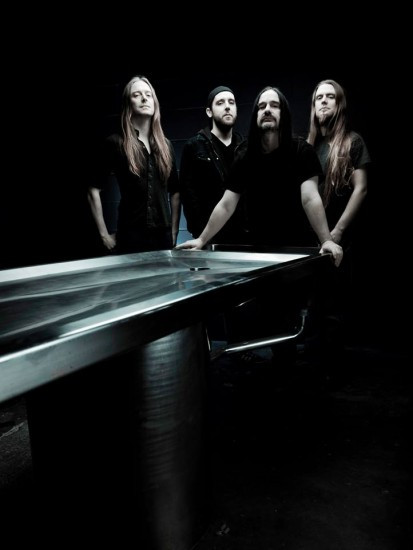
The week before last Jordan Campbell, one of the editors at Last Rites, wrote a piece entitled “Your Carcass Is Leaking – The Surgical Steel Saga”, in which he took the Nuclear Blast label to task for withholding promos of the new Carcass album (Surgical Steel) from web zines, accused DECIBEL magazine and NB of colluding to promote the album, and suggested that NB had intentionally leaked Surgical Steel to justify its discriminatory treatment of bloggers in the handing out of promos.  I thought he was off-base, and wrote a rejoinder.

To my pleasant surprise, I got a nice note from Jordan (who I didn’t know before then) suggesting that we continue the debate, and I agreed.  We traded arguments by e-mail, and I’m now posting the dialogue (with Jordan’s consent).  I don’t know whether it sheds more light than heat.  Judge for yourselves.

After the first pair of e-mail exchanges occurred, my messages got sufficiently long-winded that Jordan started putting his responses after each paragraph of what I originally sent him.  So I’ve divided our debate into parts in an effort to make the chronology of the back-and-forth more clear. Continue reading »

Aug 052013
 

Three days ago a writer named Jordan Campbell wrote a piece on the Last Rites web site under the title “Your Carcass Is Leaking – The Surgical Steel Saga”. As the title suggests, what prompted the article was the recent leak of the highly anticipated “comeback” album by Carcass on the Nuclear Blast label — an album that isn’t due for release until mid-September. I saw references to the article, most of them complimentary, by several metal bloggers I keep up with on Facebook. It’s a lively, punchy diatribe, and I was sympathetic to parts of it, but the more I thought about it the more I disagreed with it. So I thought I’d provide a contrary point of view.

To explain why I don’t buy most of the arguments, I need to summarize them. Summarizing arguments with which you don’t agree runs the risk of failing to do them justice, so I’d encourage you to read it for yourself HERE. In a nutshell, Campbell makes these assertions:

Nuclear Blast is still living in the dark ages, ignoring the power of online media and limiting their distribution of advance album promos to print magazines such as DECIBEL. (“Essentially, they’re still mired in the old-world record label M.O., refusing to alter their business model until the roof collapses. . . . Thus, print mags get the advances, and their readers the spoils. Digital ‘zines get the album at the release date, if they’re lucky.”)

Nuclear Blast does this as a form of collusion with DECIBEL and its ilk, in which the print zines get content that will boost their advertising and in return they help promote Nuclear Blast releases. (“One filthy hand washes the other, and their iron fists lord high above the lowly ‘net serfs. We clamor for the scraps.”)

To make this business arrangement work, Nuclear Blast must prevent leaks, which is another reason why they don’t give promos to webzines. (“Along this winding road, the entire package is carefully kept out of undeserving hands, preventing the dreaded leak.”) Continue reading »

Jul 192013
 

(Here’s Part 2 of Andy Synn’s two-part article, the first part of which you can read here.)

In part one of this short series of musings on the place of “technicality” in today’s metal world I made some short mentions about how the specificity and restrictive nature of the “Tech Death” moniker is often seen as a wholly negative epithet. However, you could equally say that it also grants those bands an instantly recognisable identity. You know it’s going to be “Tech” and it’s going to be “Death”, and the sheer brevity of the name gives you a clue that it’s going to be an all-out, no-frills assault on the senses. And sometimes that’s exactly what you’re looking for.

By contrast, however, there’s been a big thing for a while now of bands proclaiming themselves (or being proclaimed as) just “Tech Metal”. And I’m not entirely certain what to make of it. Certainly, the bands seem to be saying that they don’t fit within, and shouldn’t be associated with, any one particular sub-type of Metal (Thrash, Death, Black, etc) and they’re often right to make this distinction – after all, few things are more irritating than bands miscategorising themselves in an attempt to graft on some credibility. But this very lack of a specific identity seems to BE the identity for many of these bands. It’s as if the entire sub-genre is composed of left-overs.

Obviously, though, high-speed intensity is not the only way to display technicality in your music, and one thing indeed that defines much of the “Tech Metal” movement is a tendency for less extreme speeds (and less extremity overall), while retaining a similar level of complexity, particularly when it comes to shifting time-signatures and clever, often wonderfully complex, rhythmic transitions. Continue reading »

Jul 172013
 

(This is the first part of a two-part post by Andy Synn. Part 2 will be delivered to your doorstep tomorrow.)

Technique. Technicality. Technical skill and flair. However you describe it, it’s one of metal’s most defining traits when compared with the majority of other genres. After all, it takes a level of commitment (and, often, underlying talent) to achieve even a general level of proficiency, let alone a mastery, of metal’s traditional instruments.

As both skills and equipment have developed over the years, we’ve seen an increasing focus being placed on the technicality and complexity of metal across almost all its sub-genres (and, of course, a resultant reactionary backlash as well). The drums have gotten faster, the rhythms have gotten more poly-rhythmic, the guitars have gotten more note-crazy, and the time-signatures have gotten more algebraic – sometimes all within the same song!

Understandably, there have been those who’ve said that this focus on relentless technique and flashy playing often comes at the expense of good songwriting, and in many cases you’d be hard-pressed to contradict this assertion. But still, painting things as if they’re simply black and white is a mistake neither side in the pro-/con- technical debate should be making. Continue reading »

Jun 282013
 

Earlier this week, I posted an article listing five albums that changed my life, the ones that led me down the path into heavy music, and invited readers to share their own lists. I can’t claim credit for the idea — it was inspired by a similar article written by Topon Das of Fuck the Facts. But it has turned out to be the most-read piece at NCS this week and it led to a lengthy and fascinating group of comments — 100 of them so far — in essence a collection of short memoirs about personal musical journeys. It has spawned more posts along the same lines at NCS (with more to come), and now the idea has spread to another blog.

This morning, fellow blogger Full Metal Attorney posted his own list of five albums that changed his life. In the preamble, he explains why the idea for this kind of list has proven to be so interesting:

“This isn’t, ‘What are your five favorite albums?’ That’s pertinent information, yes. But it only tells of current taste. It doesn’t tell you anything deeper. But this question asks for your history, your personality, your memories. It invites you to tell a story.”

Full Metal Attorney’s list, and the explanations for the five albums that appear there, is yet another personal story. I won’t spoil the discovery of what’s on there, but I’ll say it includes two albums that I didn’t see coming. Continue reading »

Jun 282013
 

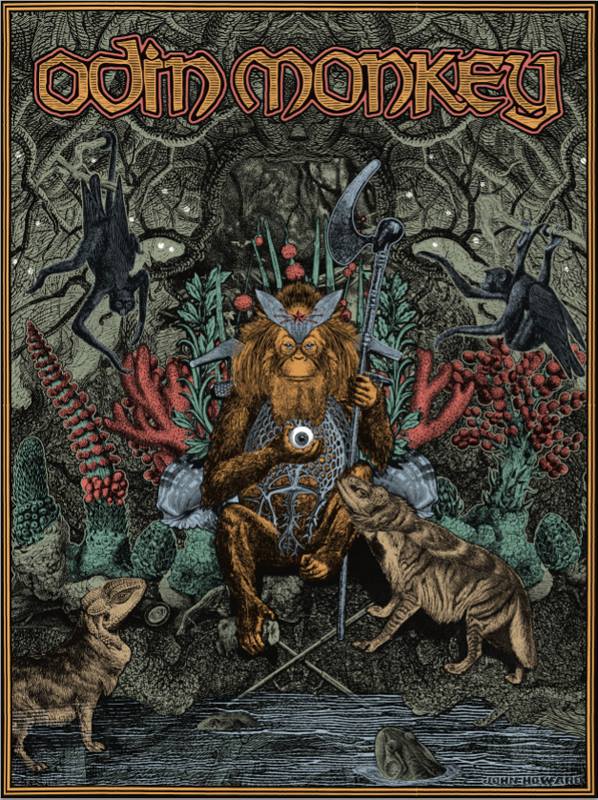
This news item isn’t the kind of thing you see every day. In March, the company that makes the Firefox web browser (Mozilla) rolled out in test mode a significant new module for the browser called OdinMonkey — and gave credit to Amon Amarth as the musical inspiration for the name. And as of this week that module is now included in the latest Firefox release.

Now I know a few things about computer hardware and software, but the knowledge doesn’t go especially deep, so there will be a limit on how well I can explain what OdinMonkey does. But here goes (and I hope readers who know this stuff better than I do will correct me if I fuck it up):

Every web browser includes a JavaScript engine, which is software that interprets and executes JavaScript (a type of programming code) delivered by web servers, and that allows users to see and interact with web pages on their computers and other personal devices. OdinMonkey is a module for the JavaScript engine embedded in Firefox that will dramatically speed up the execution of JavaScript, boosting performance by 1000% or more, improving the ability to play games online and to use web-based applications. According to an article I found on the ExtremeTech web site:

“With OdinMonkey optimizing this process, code executed this way is only two times slower than native execution (as if the code was executed locally, outside the browser, without the JS-to-assembly transcompiling). While this might not sound particularly fast, normal JavaScript (such as when you load the ExtremeTech website) is maybe 20 or 30 times slower than native code. For comparison, Chrome executes asm.js code at around 10 times slower than native speed, and Firefox (without OdinMonkey) is around 12 times slower than native.

…Not only does it boost performance by a huge margin, but it could also act as a cornerstone for web apps that actually perform like their installed, native cousins. In short, OdinMonkey could finally allow for a web-based Adobe Photoshop or Crysis.”

And now here’s the metal part of this story. According to Luke Wagner, a software engineer at Mozilla who announced OdinMonkey on his blog, this was “the musical inspiration for OdinMonkey”: Continue reading »

Jun 272013
 

(Here’s another in Andy Synn’s irregular series of things that come in five’s.)

This edition of the “Five of my favourite…” column should be pretty self-explanatory. For those of you unaware, I’m currently in two bands here in the UK, a high-velocity technical/melodic death metal band called Bloodguard, and a slower, doomier melancholic death metal band called Twilight’s Embrace. So, stemming somewhat from the recent clamor over “Five albums that changed your life”, I thought it might be interesting to list five of the frontmen who inspired me to pick up the microphone myself.

Now, to be clear, these aren’t necessarily the frontmen/singers I count as my current influences as a vocalist (there’s little to no correlation between some of their vocal styles and the way I sing today), but they are the ones who I looked up to and who made me want to be like them.

TIM WILLIAMS – VISION OF DISORDER

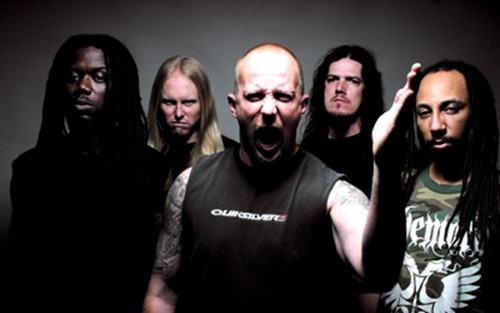
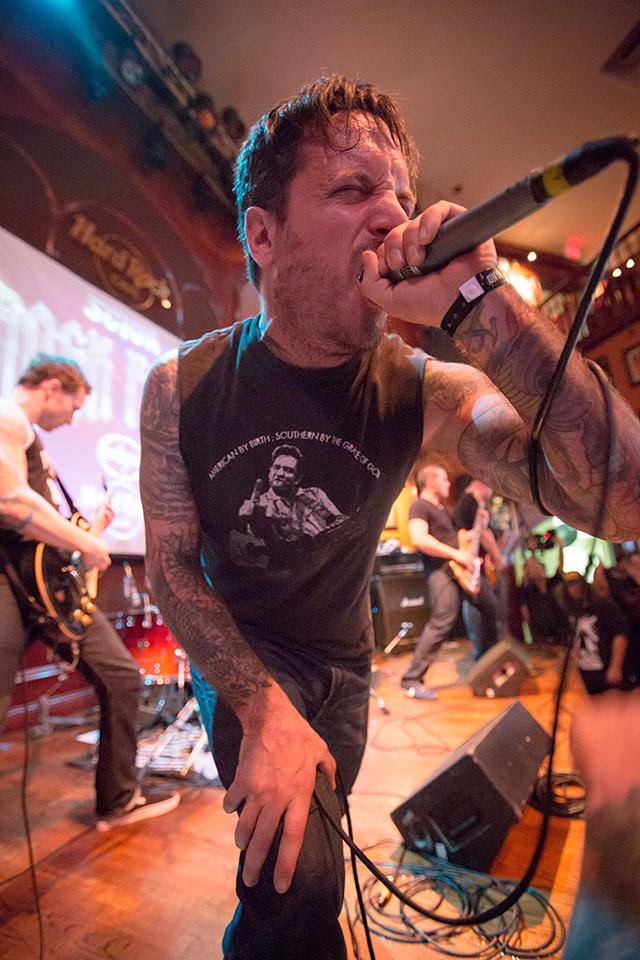
One of my early loves, I actually only got to see V.O.D. live for the first time earlier this year. Thank god it lived up to my long-gestating expectations. Tim Williams (above) is an absolute ball of barely contained fury onstage, a mix of frustrated repression and calculated rage, with a voice that simply bleeds passion. You can tell he means every word that passes from his tortured throat. Continue reading »