Jul 122013
 

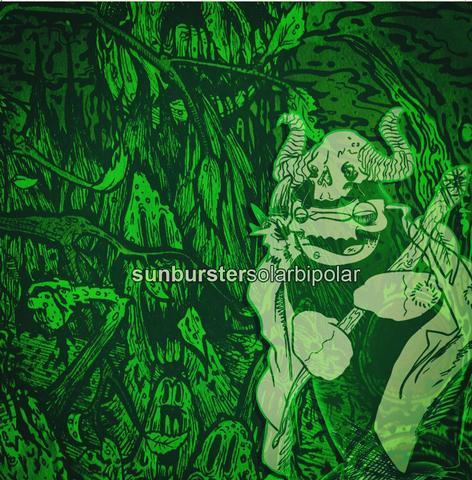
One thing leads to another. In late May I came across a compilation by the name of Anthrosphere IV assembled by Philadelphia label Anthropic Records. It includes some stellar tunes, and so I wrote about it here. One song that I singled out for specific praise was from a stoner/sludge/doom band I hadn’t heard of before named Sunburster. And that led to the discovery that they’ve got a new EP coming this August named SolarBipolar, and a chance to hear it in advance.

The EP includes three songs of increasing length. All three remind me that you don’t need brain-scrambling complexity or high-wire instrumental acrobatics to make a great song. Sometimes the simplest tunes can be the ones you remember the longest and enjoy the most, though it takes a special kind of songwriting ingenuity to pull off that trick, and it helps a lot for the band  to have the power of the music in their blood. Sunburster bring all that to the table on SolarBipolar.

“War Torn” is the shortest and simplest of the EP’s songs. From start to finish, it’s essentially one repeating riff, in sync with the drumbeats. It’s immense, spine-smashing music that exerts its magnetic pull almost immediately, and most definitely will bind itself to your head by the end. Mike Murro’s raw, high-pitched, bleeding-wound vocals contrast effectively with the music’s staggering low end. Continue reading »
Jul 112013
 

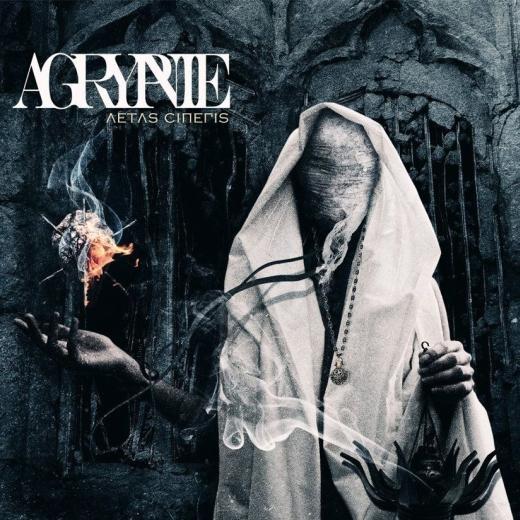
(In this post Andy Synn review the fourth album by German post black metal band Agrypnie.)

Those of you who have been with the site for a while may recall when I first discovered German post-black metal masters Agrypnie. It was just over a year ago when they were announced for Summer Breeze, so it seems fitting that with the festival coming round again I finally get round to producing a review for their newest album, which I’ve been listening to almost religiously ever since it came out back in February.

For the unfamiliar amongst you (exactly why haven’t you read their entry in The Synn Report by the way?), the band, although loosely positioned within the ‘post-black metal’ genre, eschew the hazy fuzz of the Cascadian scene and the introverted ambience of the Gallic sound in favour of a heavier, more overtly metallic sound which possesses a more restless and tormented aura.

That’s not to say that the elements of the band’s sound are entirely divorced from their fellow brothers in bleakness – you’ll find that this album possesses an air of haunted desolation at times reminiscent of Agalloch’s Marrow Of The Spirit, as well as a grasp of subtle melody that echoes Alcest at their most sublime. Yet the Agrypnie sound is undeniably more driving and aggressive than that of their peers, melding the searing melancholy of black metal with a crushing post-metal heft and flashes of melodic death metal grandeur. Continue reading »

Jul 092013
 

(Andy Synn reviews the new album by Narcotic Death from Wakefield, England.)

Are you looking for your daily dose of brutality, the sort that hits hard, cuts deep, and leaves a lasting impression? Then allow me to introduce you to Narcotic Death.

Back in April the band released their second album, Dies Irae, a gloriously nasty little death/black hybrid of Suffocation-style brutality, Dismember-ish aggression, and pulsating, Mayhem-esque evil.

The bludgeoning guitars have a thick and ugly tone, rough and rancorous and yet brutally clear, all buzz-saw teeth and sick, diseased chords. The drums cut through the filth and fury with almost reckless abandon, producing a bone-rattling racket that’s both pleasingly organic to listen to, and perversely intoxicating to experience.

The grimy, cancerous vocals add the icing to this poisonous cake, delivering their misanthropic magic in a repellent snarl that at times descends into a cavernous growl, before rising to a savage, sulphurous shriek. Continue reading »

Jul 092013
 

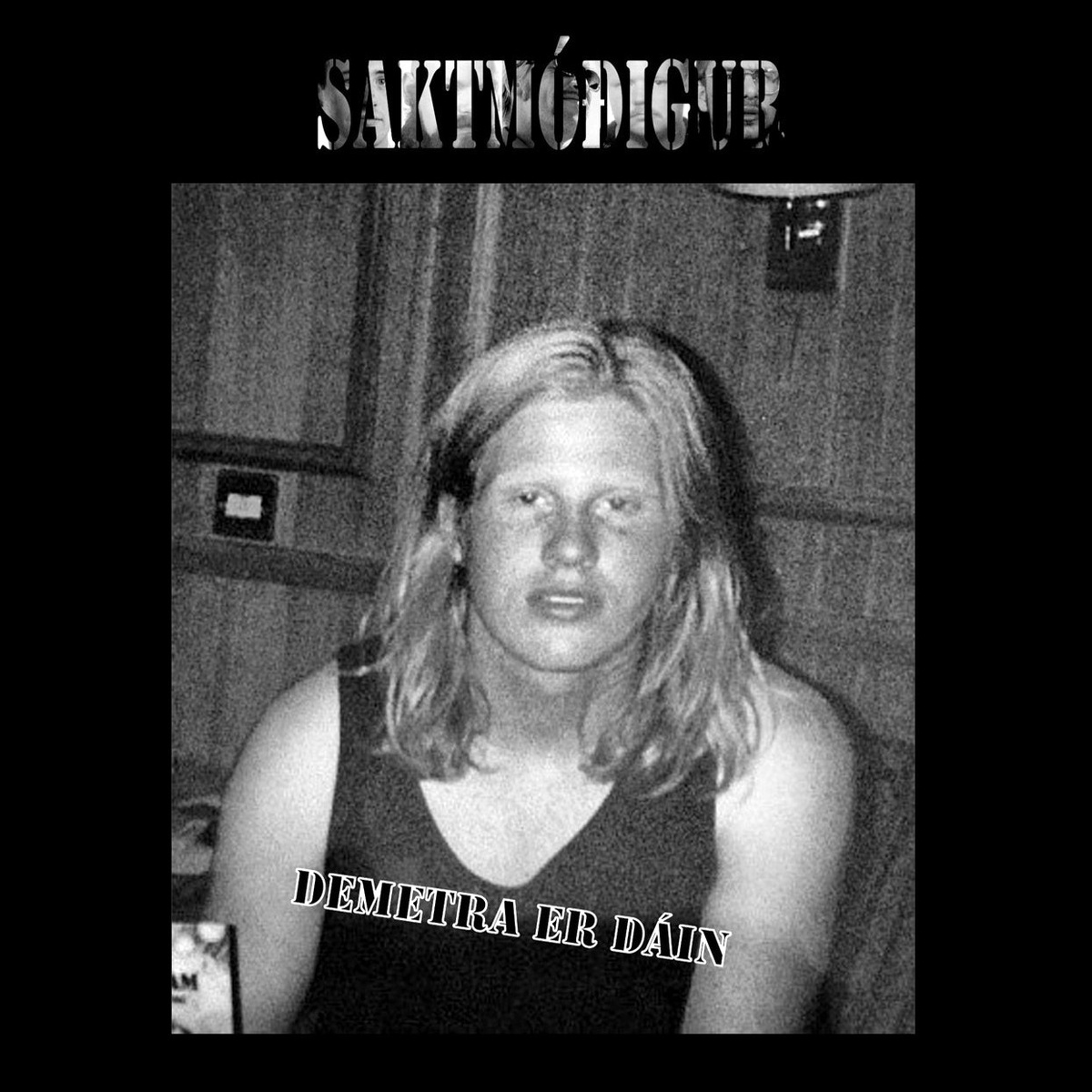
Word of mouth is still a good way to find new music, especially when the word comes from Iceland’s Sólstafir. They wrote something in Icelandic on their Facebook wall a few days ago about a band named Saktmóðigur who are scheduled to perform at the Eistnaflug festival this summer, and provided a link to a song. Figuring that it would take less time to listen to the song than to grapple with Google Translate’s mutant efforts to render Icelandic into English, I listened.

The song turned out to be one of three on a free digital EP released by Saktmóðigur last month. The EP’s name is Demetra er dáin, which means “Demetra has died”. I got that from a posting by the band, not Google Translate. I also read that Saktmóðigur are based in Reykjavík and were formed in 1991 (!). Their first release was the tape cassette Legill in 1992, followed by two 10″ vinyl EPs in 1993 and 1996. They’ve also released three full-length CDs, Ég á mér líf (1995), Plata (1998), and most recently Guð hann myndi gráta (2011).

The EP grabbed me by the throat, but I have to tell you that it’s off the beaten path at this site. The music is more punk than metal, and the vocals aren’t the usual bestial growls or acidic shrieks that tend to rip through most of the music I write about. I also really wanted to sing along with these three tracks, if only I had a phonetic guide to the Icelandic lyrics. But none of that means the music is pretty or sweet. Continue reading »

Jul 082013
 

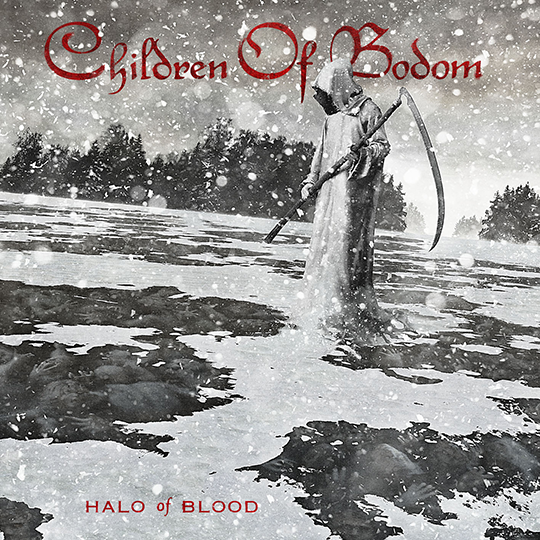
(DGR reviews the latest effort by Finland’s Children of Bodom.)

Almost every review dealing with Children of Bodom these days tends to open exactly the same way. Someone will start talking about how awesome they were years back, and inevitably the discussion becomes focused on how people think the band has stagnated…and why. I have no solutions or magical spells to chant that can make up for CoB’s past two somewhat uninspired efforts. However, let’s just get this bit out of the way: Yes, there was a time when Children of Bodom were one of the most important bands out there for me (and I assume the same for many others). The guitar work alone was enough to bring me over, and worshiping at the altar of Alexi Laiho felt so much better at the time than the alternative of drowning in a tide of interchangeable metalcore.

It may have been that as I heard more of their music, I burned out on this band. I definitely fell into the block of people for whom a lot of their music was beginning to feel like the same song over and over again. While you could make the argument that a lot of folks complain when a band changes their sound too much, and other folks complain when a band stays the same and sticks with what got them to where they are, I think there’s a way for a band to do both and still retain people’s attention.

With Children Of Bodom’s latest releases beginning with Blooddrunk, there were maybe three or four songs on each disc that you could probably combine into one hell of an EP (I actually liked a lot of Are You Dead Yet – though I don’t view it as integral as everything up to Hatecrew). Halo Of Blood on the other hand, feels a little different. If you were to view each disc as an incremental improvement on their sound after some unspecified dip in quality, then Halo Of Blood is once again a step in the right direction. There are glimpses of something here that were missing on Blooddrunk and Relentless; it’s small, but enough of a change that I found myself enjoying about half of the disc this time – as opposed to my rigid three-to-four-song grumpiness from before. Continue reading »

Jul 032013
 

(A review of Anti-Cosmic Tyranny, the debut album by A.S.M.G. from Edmonton, Canada, scheduled for release by Profound Lore on August 20, 2013.)

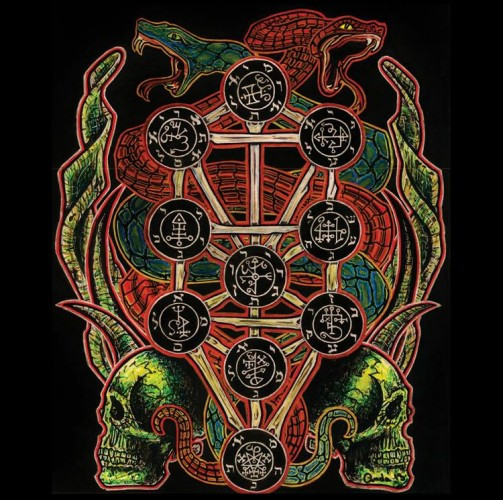
A dark aura surrounds A.M.S.G. even before you make your way into the band’s music. “A.M.S.G.” stands for Ad Majorem Satanae Gloriam, which means “for the greater glory of Satan”. The band calls its music “Holocaustik Canadian Terrorist Black Metal” and “Black Magik Terrorism”. The striking artwork (or at least part of it) for the band’s forthcoming album Anti-Cosmic Tyranny resembles (and perhaps it is) the Qliphoth, alternately known in the Hermetic Qabalah and Kabbalistic mysticism as the Tree of Knowledge or the Tree of Death.

And then there’s AngelFukk Witchhammer, formerly of Canadian black metal bands Ouroboros and Rites Of Thy Degringolade, as well as a member of Gloria Diaboli. He does everything for A.M.S.G. except play drums. He wrote Anti-Cosmic Tyranny while serving a term in prison (not his first) for charges related to possession and sale of guns and drugs, an enterprise used to finance band activities. In his words, “We were building black metal on crime.” He is out of prison now, but no less serious about his dedication to Luciferian philosophies and steadfast opposition to the “cosmic tyranny” of religion in all of its forms.

Anti-Cosmic Tyranny is uncompromising, too, but maybe not in the way you would assume from what I’ve just written. For a genre of music born in an ethos of rebellion and resistance, black metal in the hands of many bands ironically has become calcified and orthodox. But Anti-Cosmic Tyranny lives and breathes the principle of “Do what thou wilt”. It follows its own unique path, and musically, it’s a thoroughly unpredictable mind-fuck. Continue reading »

Jul 032013
 

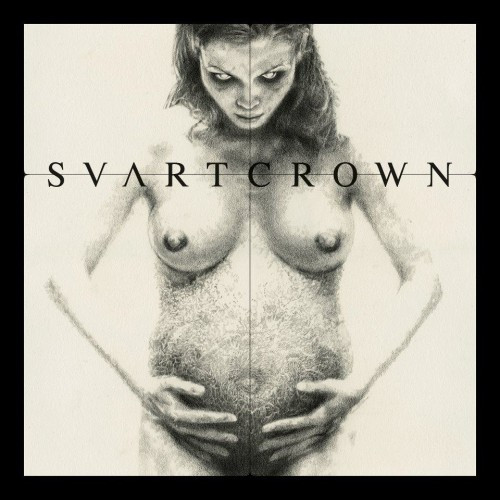
(Andy Synn reviews the latest album by French metal band Svart Crown, which is out now via Listenable Records.)

“Heavy” is one of those recurring words we all like to use when talking about metal. It brings with it connotations of thunderous power and crushing force. Beyond this it can be used to suggest the sheer density of an album’s ominous atmosphere, or the bruising emotional weight it carries.

Sometimes it’s misused. Something simply being loud or well-produced is not the same as being really heavy – or at least, it’s nowhere near the same realms I’m talking about here. I can’t help but smile when I see others refer to certain albums as “really heavy” – whether they’re talking about the current big thing in metal, or even waxing lyrical on the supposed substance of the latest indie darlings – because I sometimes think we’re not even using the same yardstick to measure by.

Let me tell you one thing though, Profane, Svart Crown’s third album, is heavy. Very fucking heavy. Continue reading »

Jul 022013
 

(DGR wrote this.)

Begin: SHOW FADES in to reveal office door, sign on door says NOCLEANSINGING.COM. Door opens to reveal small room with single fan spinning overhead. One corner appears charred black as if set on fire. Camera pans over to reveal a single table up against wall with four computers, a typewriter, a telegraph, and a cage with a pigeon sitting in it by the window. Camera turns to show another table with people sitting around it. Three long-haired guys, one headless guy, and one with short hair.

DGR: It’s nice to have a bit of downtime between releases, we’ve basically run through everything that’s come out within the past couple of months.
Islander: Yep
Israel: Yeah
Andy: Oi; don’t you think I’m worth more thought than a cheap British accent for this gag?
DGR: Nope.
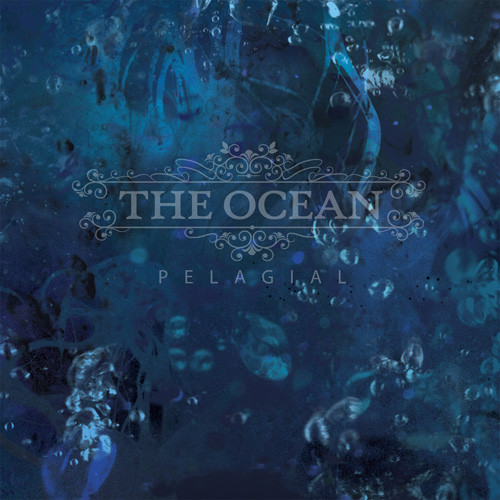
Islander: *nervously* Actually, we still have a couple sitting in the backlog after all. Apparently no one has done The Ocean yet.
DGR: Seriously? No one? That album had a lot of heat behind it, they were the critical darlings for a little bit there. Islander?
Islander: Don’t look at me, I’m busy with work….and trips for work…and stuff.
DGR: Andy?
Andy: Busy, playing a bunch of shows. Also that album came out, like a month ago.
DGR: Israel?
Israel: Don’t ask me, working on ways to write a review for the Amon Amarth album.

Cut to blackboard with “It is an Amon Amarth album” scrawled over and over on it. Continue reading »

Jul 012013
 

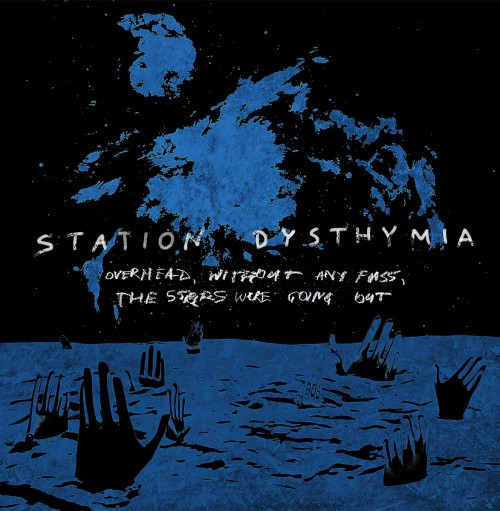
If someone were to tell you that one of the best, most original doom albums of 2013 would be coming your way as a debut release from a band in Siberian Russia, you might be understandably skeptical. But that’s what I’m telling you, in no uncertain terms. Both massively crushing and cosmically ethereal, the first album by Station Dysthymia is a multifaceted gem that no self-respecting fan of doom should miss.

The album’s name is a mouthful, but one that should resonate with fans of classic science fiction: Overhead, Without Any Fuss, The Stars Were Going Out. That’s the last line of The Nine Billion Names of God, by Sir Arthur C. Clarke, one of the most honored and widely read short stories in the genre. It wasn’t chosen as the album’s title arbitrarily. Both in the way the album sounds and in the concepts that inspired the music, Overhead can be thought of as funeral-doom-goes-into-space, which is part of what makes it such a surprising and satisfying discovery.

The music can easily be appreciated without knowing the back story, but there is an undeniable connection between the underlying concepts and what you will hear. Inspired by the writing of not only Clarke but also such luminaries as Isaac Asimov and Stanislaw Lem, the band have tried to capture in their music a tale of humanity’s gradual (and perhaps inevitable) self-destruction, smothering itself in the cradle of limitless petty consumerism in the here and now, while turning away from a future life among the planets and ultimately the stars. That heartbreaking dichotomy between the dead-end road we’re on and the path not taken is at the core of the album’s atmospherics.

Grand concepts and big ideas indeed, but the music is huge, too. Continue reading »

Jul 012013
 

(In this post, Andy Synn reviews the debut album by Old Corpse Road.)

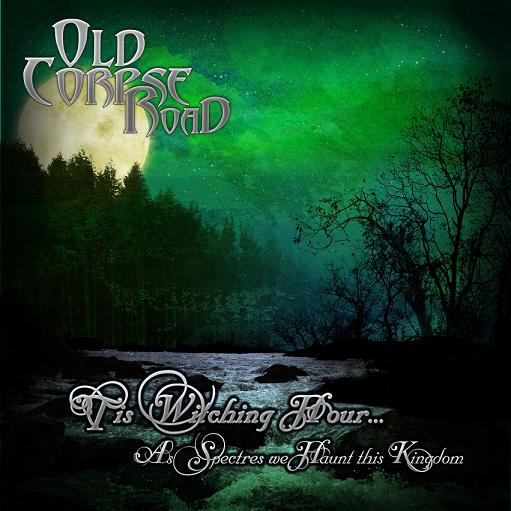
We’ve only mentioned Old Corpse Road in passing before at NCS, but (for various reasons) never got round to giving them their due. I’m hoping to rectify that though, because ’Tis Witching Hour… is a prime example of the lavish creativity and complexity one can find amidst the swirling murk of the UK black metal scene.

Released at the tail-end of last year, the band’s first full-length release is a bombastic, unapologetic display of gothic grandiosity, folk-ish eccentricity, and black metal ferocity.

Instrumentally, every song is performed impeccably, with a life and vitality that’s a far cry from the sterile and over-processed performances that clutter the metal mainstream. Unsurprisingly, the guitars play a central role, transmuting from scalding tremolo runs into shape-shifting, visceral riffage or lachrymose acoustic lamentation. The drums blast and shatter with necromantic vigour, yet are equally capable of restraining themselves when the song calls for it, shadowy rhythms prowling with a predatory patience. All of this is shrouded in a layer of brooding, gothic drama by the ever-present, ostentatious keys, which provide each track with an air of dark, ominous theatricality. Continue reading »