http://www.youtube.com/watch?v=wsMiBqK4hnk
Well, whaddaya know? It appears we have, not two, but three reviews of Agony today. Sometimes actions speak louder than words. Thank you Phro.

http://www.youtube.com/watch?v=wsMiBqK4hnk
Well, whaddaya know? It appears we have, not two, but three reviews of Agony today. Sometimes actions speak louder than words. Thank you Phro.
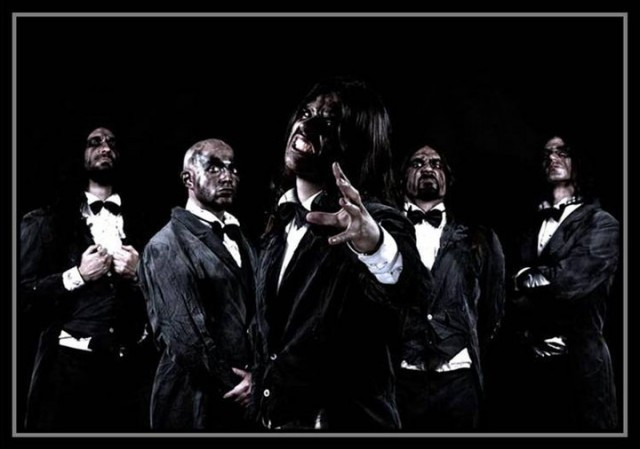
No one sounds like Fleshgod Apocalypse. No one. Not even close. In a remarkably short time, over a span of only two albums and an intervening EP, the band have established a unique and immediately recognizable style. The second of those albums, Agony, fully and brilliantly achieves what the band have been moving toward since their inception — a remarkable union of classical music and blistering death metal, heated to a full boil. The album is a bombastic whirlwind that leaves you breathless and wide-eyed in wonder.
On Agony, all of Fleshgod Apocalypse’s signature ingredients are now firmly in place. The extravagant symphonic keyboards and piano instrumentals of Francesco Ferrini are now woven completely through the magic carpet of every song, a completely co-equal partner with the thunderous performances of the other band members. Although even the timing and power of the guitar riffing and bass rhythms give off the favor of orchestral composition, Ferrini’s musical creations, more than anything else, put an indelible stamp on the music, invoking the ornate classical masters of the band’s Italian homeland in their most extravagantly fiery moments — Vivaldi, Paganini, and Rossini.
Of course, other metal bands use symphonic keyboards in their music, though more often in an effort to add background ambience and atmosphere than as a co-starring role in the performance. But, as Fleshgod Apocalypse have explained, they view the classical music of the 17th and 18th centuries as the death metal of that era — as music that was (and is) powerful, dramatic, and heavy — and so their goal, now fully realized, has been to unite music from two very different worlds that nevertheless have in common the ability to produce (in my words, not theirs) complete emotional catharsis. And that brings us to the drumming. (after the jump . . .) Continue reading »
(Today we have not one but two reviews of the just-released album, Agony, by Fleshgod Apocalypse. Israel Flanders turns in this one.)
This is the very image and sound of death approaching you.
Let’s get something straight from the get-go: This is a no-holds-barred, no-messing-around, no-nonsense, non-stop symphonic blitzkrieg of insurmountable proportions that may very well top The Monolith Deathcult’s legendary sophomore album Triumvirate.
Yes. I just said it.
If you’re looking for ham-fisted forced diversity, get the fuck out. If you’re looking for pretentious “boundary breaking” and lots of pretty, clean vocal sections to make it feel “sophisticated,” I highly suggest you turn in your brutal-ass war-bringer club membership card. This is metal, in all of its epitomizing glory.
There are only three ingredients here: guitars tuned to B, copious amounts of blazing speed, and brutality with the heft and weight of a bag full of sledgehammers being flung at you by by an iron golem out of the most badass of fantasy realms. Did I forget the orchestra? You know why I didn’t include it as an ingredient? Orchestras are brutal. Got a problem with that concept? Didn’t think so. (more after the jump . . .) Continue reading »
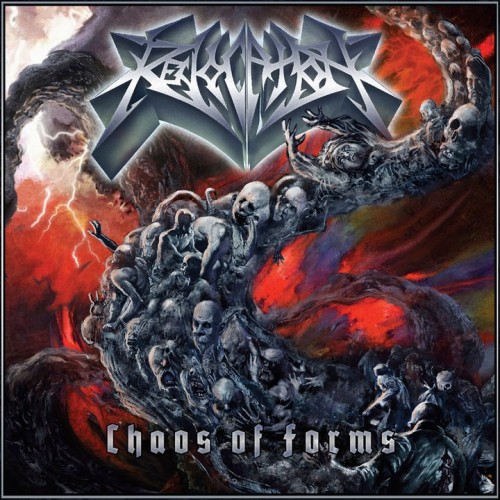
(Israel Flanders reviews the new album from Revocation. He likes it big-time. So do I.)
Yeah, it’s Revocation time. Which means it’s fuck-shit-up time.
I think we’d all be full of it if we, as a collective, denied that this was an extremely anticipated album. Empire Of The Obscene was like being put through the deathrash equivalent of a butcher shop, Existence Is Futile was like having your brain scrambled (cheesy song reference for the win) by hot pokers and sewing needles. So what does that make Chaos of Forms?
THE HUMAN BLENDER TO END ALL FLESH-RIPPING MONSTROSITIES!
If the ferocious opening riff of “Cretin” doesn’t snarl at you like the most savage and demonic of wolves waiting to tear your liver out and force you to eat the remnants after they’ve feasted, the rest of the song will certainly teach you right. Ferocious thrash riffing, blast beats abounding, shredderific solos, and that sense of signature Revocation experimentation and flirtation with jazz fusion and even southern rock (mostly found in David Davidson’s solos) we’ve all come to love. (more after the jump . . .) Continue reading »
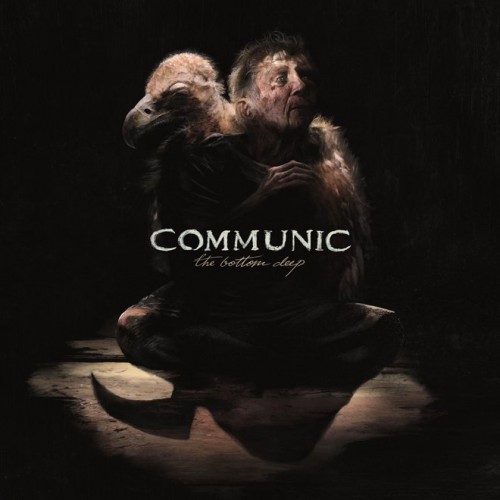
(Andy Synn follows his SYNN REPORT on the discography of Norway’s Communic (located here) with this review of the band’s brand new album.)
After several listens, my impression is that The Bottom Deep is an overall darker affair than we have seen before from Communic. The progression from Payment Of Existence has seen the group shift their focus slightly from their characteristically expressive melodic nuances to a pressurised, gloomier form of morose and self-absorbed introspection. The songs have a doom-laden vibe that matches the enigmatic concept which underpins the record. The ever-present and insidious synths have taken on a far darker tone, working for the band as yet another tool with which they can mine the rich seam of deep-seated personal tragedy which fits the conceptually-bound constraints of the album perfectly.
“Facing Tomorrow” begins the record in striking style, inflicting heavy damage with a wall of guitars that bears remorselessly down upon the listener from the off. Cryptic and convoluted, the song bulges at the seams with ferocious metallic power, the sheer meatiness of the guitar tone giving every power-house riff and nimble scattering of lead notes a sense of prodigious potency that, coupled with Tor Atle Andersen’s display of manic, multi-limbed drumming, provides each song with a dense, unshakeable foundation.
Singer Oddleif Stensland has altered his vocal style subtly, delivering his abstract lyrics with a more resonant croon, deeper and more constrained than before. His grittier delivery adds another string to his bow, not yet as strong as his traditional mode of singing, but showcasing the man attempting to grow and develop the use of his instrument further. (more after the jump . . .) Continue reading »
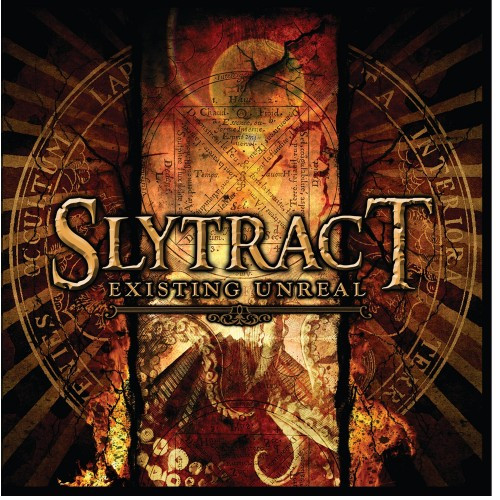
Slytract is a three-man band from Hungary whose new album (their second) is one of the most pleasant discoveries I’ve made this year. I gather from my reading that their 2008 debut, Explanation: Unknown, was a raw mix of thrash and death metal, but the new release, Existing Unreal (which will become available on August 26), stands four-square in the territory of hi-octane melodic death metal, and man, is it an accomplished planting of the flag in that territory.
There are no ho-hum songs on this album — I thoroughly enjoyed every one of them. Because of the mature song construction and the band’s facility in the creation of distinctive melody and rhythm, I looked forward to each track on the third and fourth listens as much as on the first. Though there’s continuity in the band’s stylistic identity from the record’s beginning to its end, most reminiscent to me of the almighty Insomnium (except with more pedal-to-the-floor pacing), each song has its own personality.
In its execution, what makes Existing Unreal a cut above the average MDM offering comes down to one person — Gábor B. Melegh. He provides most of the vocals and he’s the band’s sole studio guitarist (Gyula Czeglédi is the second guitarist when the band plays live). Vocals first: He sounds like Amon Amarth’s Johan Hegg, which means that no matter how high-flying or approachable the melodies may become, the songs have a counter-balancing bestial edge that will scare away all the hipsters and casual metal dabblers, which is just fucking fine by me. (more after the jump . . .) Continue reading »
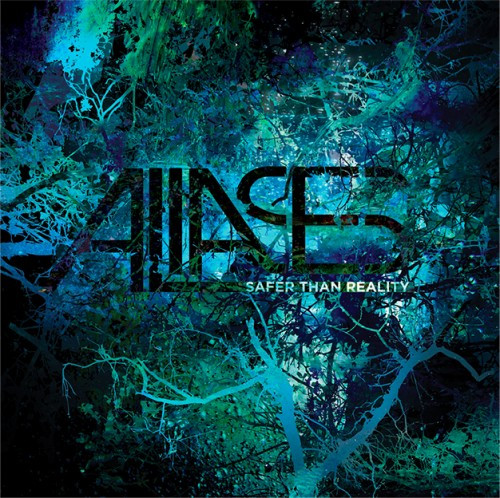
(Israel continues to pump out the reviews. Here’s his take on the latest from UK tech-metallers Aliases.)
I love SikTh. I don’t think any band is ever going to be able to recapture the sense of quirkiness and eccentricity they had in their unique sound. People have been waiting for them to reform. It hasn’t happened YET, and I’m more or less reconciled to it never happening. So now what?
Well… one of the masterminds, if not THE mastermind, behind SikTh, guitarist Graham “Pin” Pinney, has formed a new project by the name of Aliases. What is Aliases you ask? The initial reaction would be, most definitely, to brand them as djent, although this isn’t entirely fair. Graham’s signature style of guitar playing is indeed on display here, but the man has obviously evolved beyond his initial roots in SikTh to something, dare I say, more sophisticated.
Aliases is comprised of guitarists Graham and Leah Woodward, Jay Berast on vocals, Darren Pugh on drums, and Joe Heaton on bass. All are extremely proficient at what they do, all definitely in it to win it. So the question is, just how good is the music found on Aliases’ debut, Safer Than Reality?
What do you think? (hold that thought until you see what comes right after the jump) Continue reading »
At NCS, we do our best to cover a broad swath of metal, but there’s one genre we’ve almost completely ignored — that union of dubstep and death metal known as deathstep. There are reasons for that, principally because your humble author knows virtually fuck-all about the genre and has a low tolerance for electronica. I say “almost completely ignored” and “virtually fuck all” because once upon a time we did pay attention (here) to a remix by Cam Argon (Big Chocolate, Disfiguring the Goddess) of a Suicide Silence song. In addition, occasional NCS guest writer The Artist Formerly Known As Dan (who, by the way, needs to send me more posts!) provided this feature about dubstep, which included one of the deathstep tracks created by the Cam Argon-Mitch Lucker collaboration known as Commissioner.
Earlier this week, I got an e-mail from NCS reader and musician Ray Heberer (who has some big news on the way about several of his projects — but more on that later) suggesting that deathstep is worth more attention. As Ray pointed out, prototypes of the genre have been popping up with increasing frequency, but you won’t find much of it dating back more than a year — it may be the first new metal genre of this decade. Does that mean it’s worth anyone’s time? Well, that’s the question, innit?
I’m certainly not yet prepared to shower deathstep with accolades, and I have little doubt that metal elitists (which means about 99% of all metalheads) are or will be inclined to vomit all over the style at the slightest provocation. But while withholding judgment about the budding genre as a whole, I definitely am prepared to shower some accolades on one example of the genre that Ray turned me onto in his e-mail. It’s a full-length album — as far as I know, the first full-length deathstep production, period. Not only is it an album-length work, it’s one song — 39:54 in length — and it’s available for free download.
And, unexpectedly, it’s unusually good. Ray wrote that it may be a genre-defining piece of music, and he may be right. The musician goes by the name Switchup, the album is called Hell’s Symphony. (more after the jump . . .) Continue reading »

(NCS contributor BadWolf weighs in with his thoughts about the new Metal Blade release from Battlecross.)
In the interest of full disclosure, readers beware: I have a personal interest in Battlecross. I have known them from the earliest demo tapes, been involved in their scene for years, pimped their debut album endlessly, and have a vested interest in their success.
None of that changes that Pursuit of Honor, their debut album on Metal Blade, is a triumphant achievement, as well as a testament to the perseverance of Detroit, and the virility of modern American metal.
Let’s take the story back five years. I was a freshman at a liberal arts college in Michigan and met my best friend there. At that time I was metal to the bone but wholly disinterested in modern metal. He changed that with two albums: Lamb of God’s Sacrament, Trivium’s Ascendency. Suddenly I got the connection between the late-80’s thrash titans I worshipped and contemporary metal.
Months later Machine Head’s The Blackening was released and I was adrift in the middle of the American metal renaissance. This style is directly descended from Slayer, Pantera and Metallica, but incorporated the mosh-friendly rhythm of hardcore and the triumphant melodicism of European death metal. After a Trivium gig that year, my BFF and I sat up drinking 40’s of Miller Lite and jamming to the Battlecross demo we got in the parking lot. The next year that style was dead—suffocated by pop-metalcore (which we rejected) and the prog-death explosion (which we embraced).
Flash forward to now and the style is attempting to revive: Revocation are trying to cash in on their critical acclaim, as are Lazarus A.D., and finally Machine Head are releasing the follow-up to The Blackening. None of that matters: Battlecross have revived the genre all their own. (more after the jump . . .) Continue reading »

(Israel Flanders reviews Jamey Jasta’s new, self-titled solo album. He is expecting some disagreement.)
Ok, so Islander posted a song from this album recently and people didn’t care for it that much. I suspect that many of those opinions were simply pre-conceptions brought on by Jasta’s infamous brocore outfit Hatebreed. Yes, Hatebreed are the bro-est of bros, if there is such a thing as an epitomizing band, but it is unfair to apply it to Jasta in this case. This is really good music that deserves a shot.
So what does Jasta as an album have to offer? This album, according to the man himself, is an amalgamation of all of his musical influences. He plays everything, and wrote everything. Jasta’s preferences seem to cater toward thrash metal, old school hardcore, a taste for some slight metalcore sensibilities, and a little bit of that Crowbar southern sludge weight.
The album opens with “Walk That Path Alone”, a totally old-school throwback hardcore song with a catchy breakdown at the end that doesn’t bore me to tears. The next three songs “Mourn The Illusion”, “Screams From The Sanctuary”, and “Nothing They Say” demonstrate Jasta’s more metalcore leanings. We get to hear for the first time that the man is actually good at clean singing. I know, sounds impossible right? It isn’t. (more after the jump . . .) Continue reading »