May 192013
 

(After a six-month absence, guest writer Tyler Lowery is back with some thoughts that I suspect will draw some disagreement.)

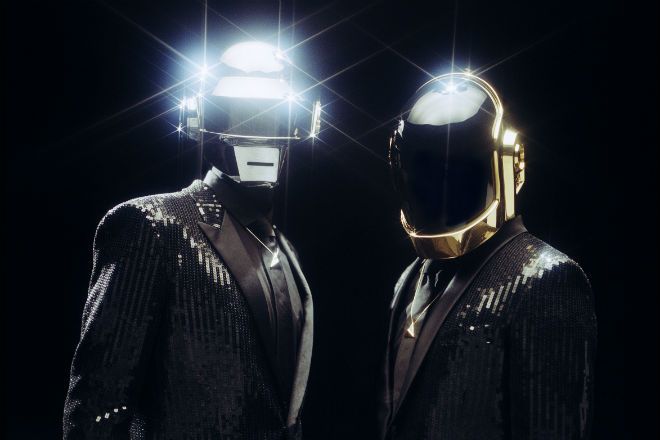
I’m going to start by referencing a band that may or may not be appreciated in these hallowed halls. Recently, EDM titans Daft Punk released their highly anticipated follow-up to 2005’s Human After All, titled Random Access Memories. The album opens with a phenomenal song called “Give Life Back to Music.” At first listen it sounds like what you would normally expect from Daft Punk, but as you go along, you notice that everything sounds a bit crisper, more organic. The entire album is performed on live instruments, using no loops, programming, or anything of the such. Now, I promise this isn’t an attempt to slip an album review in here, so just bear with me. In a recent interview, Daft Punk stated that they believe music has no soul anymore. I think that “Give Life Back to Music” is a plea not only to the realm of EDM, but to all genres of music…including metal.

Now I can honestly say that metal music has so many excellent releases each and every year that it’s hard to conceive the idea of it becoming a dying genre, but there are signs in the tea leaves everywhere. Metal, much like EDM, is subject to fads that spread like wildfire. Once something comes along that is remotely successful, countless bands, both new and established bands, latch on and quickly drive it into the ground. Sometimes it’s for the better, but that may not always be the case. In addition, once a band finds something that worked for them, many of them assume that they can settle down and crank out just that, until they’re fat enough to retire happy. Again, sometimes this weeds out a number of false starts from the get-go, but more than a couple of bands come to mind who had a good idea but let it ruin them in the end. Continue reading »

May 172013
 

(Occasional NCS contributor Mike Yost joins us again with this post. Mike is a U.S. Air Force vet, a writer, and a resident of Colorado. His own blog can be found here.)

“Why do you have to listen to it loudly?” my partner yelled, looking at me from the passenger seat, his face twisted into a tight knot.  I didn’t respond right away as the speakers in my truck pummeled out some random metal lunacy.  “I can’t hear myself think!” he pleaded.

“That’s the point!” I yelled back with a smile.  He didn’t return the grin.  I then had to choose between turning the music down or sleeping in my truck.  It’s a good thing I keep a pillow in the cab.

But that really is the point.   Sometimes I just want to shut my mind off, and drinking a bottle of whiskey every day isn’t really an option (though I sometimes wish it were).

It’s metal that keeps me (somewhat) sane.  It certainly keeps me from lighting the mall on fire, laughing maniacally while I pour kerosene on my head in front of a burning Abercrombie & Fitch store surrounded by screaming shoppers choking on smoke and the smell of burnt flesh.

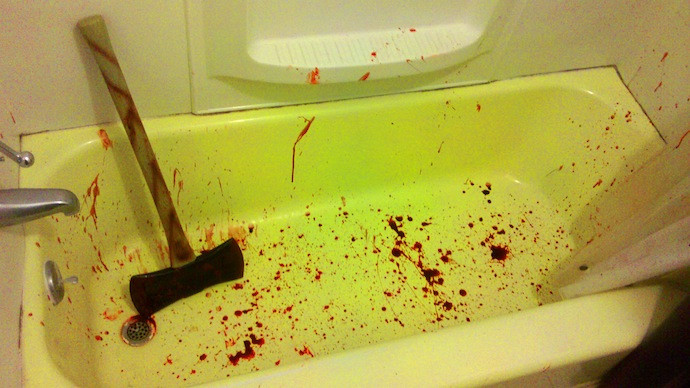
And when I worked customer service to put myself through college, metal kept me from bringing an axe to work and lopping off the heads of all those condescending customers—laughing maniacally while I did it, of course. Continue reading »

May 162013


John Hyduk (photo by Andrew Spear)

I love to read good writing. The subject matter doesn’t even matter much. When the writing is lively and evocative, when it has style and flair, the prose is its own reward.

Unfortunately, I don’t read as much as I used to back before I began messing with this blog. But yesterday I read two things that were really good; part of why they’re good is that both writers use short, punchy sentences and phrases. They have a cadence, like a drum beat. I try to remember this lesson in my own writing, but for some perverse reason I continually forget it. What made both essays even more striking is that the authors — John Hyduk and Randy Blythe — aren’t people whose main occupation is writing.

One of the pieces is hilarious. The other is powerfully moving. The first one has nothing to do with metal, the other is very much about metal. I’m putting both of the articles right in this post.

I think I’ll start with the funny piece first. A fellow sufferer in the decade-long woe of the Seattle Mariners baseball team sent me the link. You’ll probably understand why if you read it (misery loves company). The author is a man named John Hyduk. As you’ll see, he works the graveyard shift for a beverage distributor outside Cleveland, Ohio. In his words, he’s “a yard monkey, climbing around inside semitrailers in the dark with a flashlight, checking pallet tickets against the product loaded, matching invoices . . . making the world safe for carbonated refreshment.” He writes as a hobby, or maybe he actually collects some extra money in doing so, I don’t know. He’s good enough that one of his essays got him nominated for a 2012 National Magazine Award.

Continue reading »

May 102013
 

(NCS writer BadWolf, who is based in Toledo, Ohio, shares some thoughts about a week that brought us horrors from Cleveland and a rude surprise in San Diego.)

Phew.

It’s been quite the week, hasn’t it? I’m not a higher-power sort of man, but if I were I would call this week a ‘test.’ In particular, it’s been a rough week to be a man with any interest in the well-being of women, in general. As a metalhead, and as an Ohioan.

Let’s recap:

Earlier this week, three women in Cleveland escaped from, according to estimates, a decade of private captivity. These three young women, Amanda Berry, Gina DeJesus, and Michelle Knight, were kidnapped and held against their will in what any reasonable person can assume was a private hell, set up for the sexual satisfactions of their captor. A six-year-old girl was found at the house, and is thought to be Berry’s daughter, born in captivity and conceived through rape. According to some reports, an unnamed victim said she was impregnated and forced to miscarry through blunt force trauma.

Fuck. Continue reading »

May 082013
 

(Andy Synn offers some observations about two seemingly divergent perspectives within metal that may not be so divergent after all.  Discuss!)

Let me make something clear from the outset here: I am not trying to build up an argument with this piece insomuch as I simply felt like writing down and acknowledging some stuff that (to me) seems pretty self-evident in the metal scene.

The two points I am going to address are, largely, intertwined – though at first they might seem almost diametrically opposed to one another.

First, I’m going to address the issue of “privilege”. Now “privilege” is a word that often crops up in feminist discussions (often I think to the detriment of that discussion) referring to how supposedly Middle (and Upper) class feminists can’t really relate to the issues affecting other women because they speak from a position of “privilege”. Their position of “privilege” might come with certain specific problems of its own, but ultimately it invalidates their experience, as it can’t be generalised. The same things happen in the metal media. Continue reading »

Apr 252013
 

Yesterday I mentioned that I had recently made a trip to Austin, Texas, to visit my brother. Whenever I go to Austin I also check in with my oldest friend and his spouse, who is also an old friend. They’re not lovers of metal, but they’re definitely metal, if you know what I mean. One of the times I hung out with them, they mentioned that they had heard some kind of program (I can’t remember if it was radio or TV) about uncomfortable words. These are words that make most people uncomfortable for one of two reasons.

First, they can be uncomfortable because of the way they sound, even if what they mean isn’t discomfiting at all. It helps if you enunciate such words in a way that draws them out, preferably with a layer of creepy accents (I’m thinking of Vincent Price, but anyone who sounds like a child molester would work).  Second, they can be uncomfortable because they actually mean something that makes people uneasy, or queasy.

Of course, we had to play the game. I think we did a pretty good job, taking turns swapping uncomfortable words. I think it helped to have a few shots and beers, though conceivably some of the words we picked might be less humorously uncomfortable to a sober listener. But even though my old friends were pretty good at this, I thought we could extend the list by turning to the pro’s, and by “pro’s” I mean people like you. Y’know, lovers of extreme metal — people who make everyone around them uncomfortable just by existing, people with a diseased turn of mind, people who don’t blanch at song lyrics that would get you jailed in 99% of the geographic United States if spoken aloud.

Here are the words we came up with: Continue reading »

Apr 182013
 

Yesterday Trevor Strnad of The Black Dahlia Murder (a band we like quite a bit around here) went on a rant about piracy on Facebook. That was yesterday. Today, he posted this on the band’s Facebook page:

I want to apologize to any of you guys that were bummed out by my frustrated, overly aggressive, and pessimistic posts yesterday. Me and the guys are eternally grateful for all of you and your support, whatever form. THANK YOU! We’ll see you this Summer and beyond… – Trevor”

Apart from sounding a retreat, it looks like he and the band have also deleted the original rant, too.

I sort of wish he had stuck to his guns, even if he did go a bit overboard with yesterday’s missives to the masses. Saying nothing that might conceivably alienate a potentially paying customer, or apologizing when you do, is the way mainstream recording artists are trained (and ordered) to behave by their handlers, and are therefore bland as shit to listen to (except when they’re wasted and going after the paparazzi). And besides, what potentially paying customers did Trevor risk alienating? A bunch of thieves who think they’re entitled to download and probably aren’t going to spend any money on TBDM anyway?

Truthfully, Trevor really didn’t say anything new, and nothing new has come  out of the flood of vitriolic comments, rants, and counter-rants that have swept through the interhole since his first broadside. It’s the same old story. It’s like listening to the latest round of “debates” over gun control. Not one new thing gets said, and not one thing seems to change. But still, I think Trevor should have been making a different argument than the one he made. Continue reading »

Apr 122013
 

(Occasional NCS contributor Mike Yost has kindly allowed us to re-publish this recent piece he wrote about the importance of metal on long road trips.)

Denver, Colorado to Harrisburg, Pennsylvania.  About 1,638 miles.   That’s 2,882,880 yards of asphalt.  Burning through almost 200 gallons of diesel fuel.  Passing what must have been over 1,000,000,000 fucking construction cones.  The vehicle:  A 22 foot-long Penske moving van with a dolly towing a car.  12 foot, 7 inch height clearance.  Ten tires on the road.  Total weight of about 30,000lbs.

Yes, this was (dare I say) an epic trip.  And an expedition of this magnitude required tunes.  Lots of tunes.   Lots of metal.  With almost 30 hours of drive time, silence for that long would have driven me into a bridge.   Or rather, I would have driven willfully into a bridge, laughing manically while beating my head against the steering wheel.

Combine the claustrophobia of a truck cab, the inability to sleep while occupying such a contraption, the stomach aches from eating shitty gas-station sandwiches made with meat shaved from the hind-end of a decaying maggot-infested human carcass laying out back, the traffic jams in the middle of fucking nowhere due to construction, the congested cities you must fight your way through, and just the general mind-numbing tedium of miles and miles of road rolling out in front of you—endless and without mercy or conscience—then you understand the function and importance of metal to sooth nerves and subdue the urge to suddenly veer into oncoming traffic. Continue reading »

Apr 112013
 

I am humbled on a daily basis by the creativity of others. Fortunately, this hasn’t made me bitter, because I just steal all that creativity and slap it up here on this site, and that makes me feel like I’ve done a good deed, and that makes me feel less like hunting down the creators and setting them on fire because they’re more creative than I am.

Except for the thing I’m writing about in this post. This is so fuckin’ choice that it makes me bitter because I didn’t think of it first. So while you enjoy it I’ll be tracking down the creators with a backpack full of gasoline and a road flare.

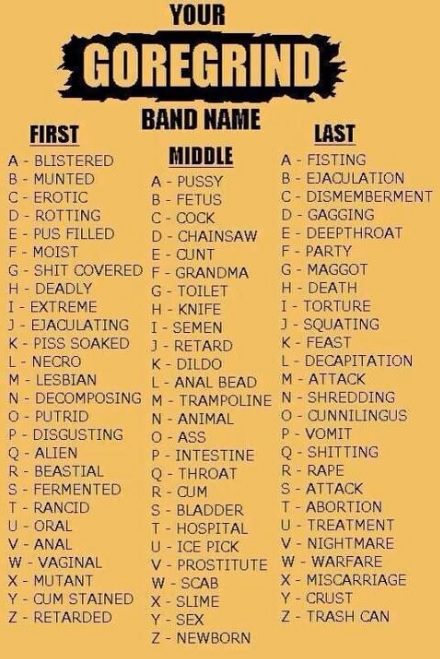
Here’s how this works: Think about your initials (yeah, this means you have to fuckin’ sober up to play this game). Then, use your initials to pick a name from each column in the chart above, and voila, you have your very own goregrind band name!

Don’t worry, you don’t have to squint at the chart because I’m putting a much bigger version of it after the jump. Continue reading »

Feb 152013
 

(This is Part 5 of a 5-part series about metal culture by guest contributor David Mollica, a trained cultural anthropologist and dedicated metal head. This series is based in part on David’s Master’s dissertation and the interviews he conducted in preparation for writing it. You can download the actual Master’s paper at the end of this post.  The previous Parts of the series can be found here.)

Well everyone, here we are at the end. It’s been great being able to put this stuff out and to read the discussions in the comments. I hope you enjoyed the series and I want to thank Islander for letting me do it. I’ve got two subjects I want to tie up the discussion with: The sort of communities we create and what heavy metal means to fans in context of the larger world.

Obviously, metal heads don’t build communities like towns, share the same ethnic groups, or even share the same governments. The social groups we build are loose and informal, based on a shared interest in the music and to a certain extent, aesthetic preferences for stuff like horror movies and occult themes that come out in the music. We also don’t always cluster together and exclude everyone else at every turn, unless we are talking about high school cliques or some such. Despite this sort of cultural preference being very real, the study of informal fan communities is a fairly new trend in most social sciences, because many had previously dismissed such groups as being invalid artifacts of youth culture that get shucked off when we enter the world of adults.

That we grow out of the stuff we like when we age and basically get boring is a rather depressing way to look at things and I don’t really buy it as a universal. It happens, of course. I’ve lost some friends because they “grew up”. When I was 16 I liked Ozzy, Iron Maiden, and Metallica, but I didn’t know what song was on what album or the names of most of the band members. Now that I’m almost 28, I visit 2 to 4 metal blogs a day, spent a year studying groups of metal heads so I could write a dissertation about it, and know more than I probably need about not just Metallica and Iron Maiden, but also about a whole metric crap ton of other, less well known groups. I’m not trying to tell you I know more about metal than everyone else, I certainly don’t. I’m just pointing out that my interest in the music has grown as I’ve aged, not diminished. Continue reading »