Feb 242011
 

(Today, NCS contributor BadWolf reviews the new album by New Zealand’s Ulcerate.)

Give it up for New Zealand’s Ulcerate for knowing how to throw a curveball at me. The band is signed to Willowtip, my go-to label for death metal that has as much Dillinger Escape Plan in the mix as Cannibal Corpse. When I see Willowtip on a CD, I expect winding technical and chaotic riffage (on bass and drums, as well as guitars) to force my skull into a state of rapid decompression. In effect, I fully expect their records to be all experience and no songwriting—in this case the experience of being “that guy” in Scanners.

The Destroyers of All does nothing of the sort. Instead, it bakes its listener to death—a fitting follow-up to their last album, Everything is Fire. The album is in every possible way comparable to a desert, so much so that I want Ulcerate to do the soundtrack to the next stupid adaptation of Dune—this is the sound of wandering sand-worms. The song structures are vast and majestic, and make good use of so-called negative space. The last record burned the earth; this record sifts through the cinders at a leisurely (torturous) pace.

As has been pretty openly stated over at Invisible Oranges, this is a death metal record made by people who like “-post,” metal. That is to say, it has songs with long and irregular structures without refrains or choruses, and a general sense of minimalism.

Full disclosure: I am a filthy, filthy whore for this sort of thing. Neurosis and Isis make me shiver with anticipation when the proper mood strikes. I even like long-form repetitive black metal (Dear Wolves in the Throne Room, play Ohio, you bastards!). Coincidentally, I feel the same way about films with long, majestic shots of deserts. Yes, I am that asshole, and this album seems tailor-made to suit my taste.  (more after the jump, including a track to stream . . .) Continue reading »

Feb 222011
 

(NCS contributor BadWolf weighs in with his review of the new album by DevilDriver — which debuts today in its official release.)

The American melodic metalcore wave was (can we say “was” now? I think we can) unstable. The bands that, to me at the time, seemed like the true spearheads of the genre, the artistic and energetic studs, fell off the map fast. Killswitch had two back-to-back classics, one after a lead vocalist swap, and then became lost in their own shtick. Trivium (whose Ascendancy record is the wave’s crest as far as I’m concerned) became lost in other people’s shtick. As far as I’m concerned, all As I Lay Dying had was shtick in the first place. Shtick and lots of frosting to cover up the sour Christian taste.

Half a decade later and on the same day, two bands I had pegged for second tier at best are releasing two consistent records. Slow and steady wins the race; both are solid. Andy Synn’s taking on Darkest Hour’s new record (here), so I’m going head to head with DevilDriver’s Beast.

It is one fun fight. Darkest Hour write breakup records, pure and simple. So what kind of records do DevilDriver write? Workout records. And the best thing I can say about and to describe Beast is that it makes me want to pump iron and hit things for its entire duration.  (more after the jump, including a track to hear . . .) Continue reading »

Feb 222011
 

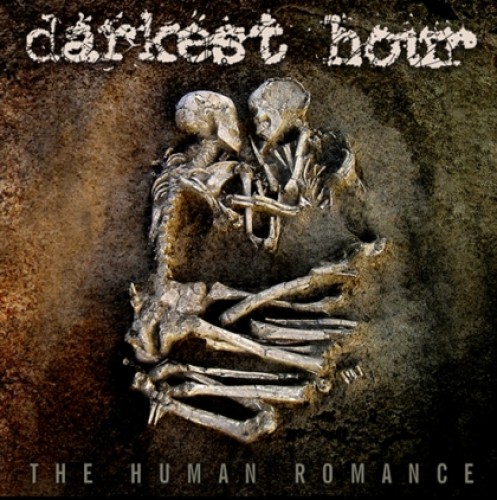
Our UK contributor Andy Synn checks in for the second day in a row — this time with a review of Darkest Hour‘s latest album, The Human Romance, which is being released today.

Seven albums. Seven full-length albums of original songs. That’s a lot of material, stemming from Darkest Hour’s punky early origins to the more streamlined and expansive sound of modern times, touching base with hardcore, thrash and death metal along the way. After all this time, however, it wouldn’t be blasphemous to wonder if the band still have anything left to offer that is in any way better or different.

Thankfully, the answer to that question is yes, with perhaps a greater emphasis on the “better” rather than the “different”. Although definitely more aggressive than any of their post-Hidden Hands… albums (although this was hinted at by The Eternal Return), The Human Romance also sees the band using the means and methods of their traditional sound and song-writing style to explore different melodic textures.

Despite some initial reservations about the band potentially repeating song structures and styles from their previous releases, I have found the album to be a more intelligent, refined variation on their core sounds. Some sophisticated new elements are utilised in an unobtrusive manner, so that the album, whilst fiery and heavy, is most rewarding after repeat listens. (more after the jump . . .) Continue reading »

Feb 182011
 

From its origins in the U.S. and Sweden in the late 80s and early 90s, death metal has remained a vibrant genre of extreme music. It has branched off in countless directions, and its signal characteristics have been spliced into other genres of music to good effect, giving rise to multiple sub-genres — and there’s no reason to think that evolutionary process will end.

But many of us still find ourselves periodically drawn back to the classic records of the old gods, which in the case of the Swedish school of death metal means those lethal technicians who stuck the word “chainsaw” into the parlance of death metal — the music of bands like Carnage, Nihilist, Unleashed, Entombed, Dismember, Grave, and Interment. For us, there’s something about that thick, downtuned, distorted riffing chained together with horror-show vocals that hits the old aural g-spot like almost nothing else.

Puteraeon is a Swedish death metal band whose members grew up listening to that music in the late 80s and early 90s and have completely embraced not only the sound, but also the ghoulish, corpse-littered lyrical focus. Their debut album, The Esoteric Order, doesn’t push the genre envelope, but their execution of old-school Swedish death is so damned well done that devotees of the genre (like us) will care little about that — because they’ll be too busy rocking’ the fuck out with this titanic dose of industrial grade skull-coring. (more after the jump . . .) Continue reading »

Feb 152011
 

(NCS contributor BadWolf joins us today with some timely thoughts about Death‘s final album.)

Today super-quality metal label Relapse Records is releasing a re-master of Death’s seventh and final studio album, The Sound of Perseverance. The re-master will come with a slew of extras including liner notes from cover artist Travis Smith (Opeth’s go-to man) and guitarist Shannon Hamm, as well as a second disc of unreleased material. Order it from Relapse themselves, or on iTunes, and get a third disc of bonus material.

But, to be honest, all that rigamaroll may just be distracting you from what’s at stake here: a great opportunity to re-visit one of the very best metal albums ever made. Unreleased tracks and demos are just empty calories on one of the leanest and most ruthlessly efficient musical death machines ever put to tape.

These days it seems to me that Death doesn’t get mentioned alongside classic American DM bands like Cannibal Corpse, Suffocation, and Deicide. This makes sense; Death was always the odd band out. Death began brutal and grew more melodic and complex with TSoP being the culmination of that evolution.

In fact, The Sound of Perseverance is as much a power metal record as a DM record (Schuldiner had composed some, perhaps all, of the material with his trad-metal outfit Control Denied in mind). That it functions so well as a slice of brutality as a series of guitar playing exercises is a testament to the forward-thinking nature of Chuck Schuldiner. (more after the jump, including some of the re-mastered songs . . .) Continue reading »

Feb 092011


J.R.R. Tolkien had a talent for creating evocative names for beings and places in his writings about Middle Earth, and many of those have exerted a magnetic attraction on metal bands. To name a few: Amon Amarth (the Elvish name for Mount Doom), Gorgoroth, Nazgul, Ephel Duath, and Burzum (one of the words written in Black Speech on the One Ring of Sauron).

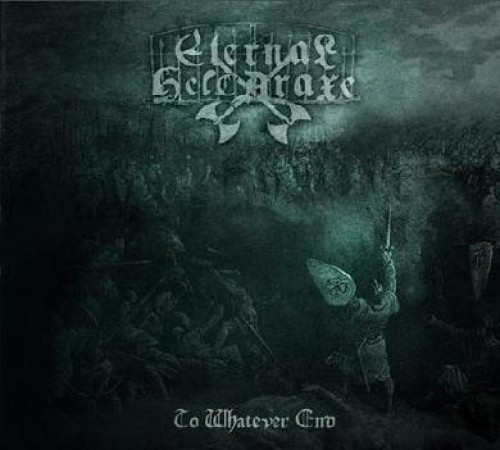
Helcaraxe is a lesser known place-name, probably due to its appearance in one of Tolkien’s less-frequently read (and posthumously published) works about Middle Earth, The Silmarillion. It doesn’t sound like a hospitable place. Tolkien describes it as a wasteland of bitter cold and grinding ice (we’ll have his full description at the end of this post). And yet it’s the name chosen by Irish black-metal band Eternal Helcaraxe.

Many black-metal bands are drawn to imagery that conveys bitter cold and bleakness, yet the words that came to me as I listened to this band’s wonderful recent release, To Whatever End, were “sweeping”, “soaring”, “anthemic” — and yes, “epic” (my NCS cohort Alexis will try to shoot me for using that word, but a better one isn’t coming to my lazy mind). I just fucking love this music. (more after the jump . . .) Continue reading »

Feb 072011
 

(NCS contributor Siddharth Darbha returns with his review of a debut EP from India’s Blood Meridian)

Just around two years and a few shows old, Blood Meridian are the new kids on the block. They’ve got things to prove and stereotypes to shed. Elements Of Brutality is their first offering. I’ve always been a fan of anything related to words, and I fell in love with their band name despite what some would call a childish EP title. Initially, they gigged with a drum machine and a stand-in bassist, only completing their line-up much later and starting work on the EP in August 2010.

A first listen introduces you to a technical death metal outfit, quite a good one at that. The drummer, Pushkar Joshi, springs forth in the mix. He seems like he knows what he’s doing and he’s doing it good. The vocalist is a weird one — as in one would either like his vocals or hate them. Bhaskar Baruah, on the mike, tries very hard to cover a spectrum of low growls and high squeals, and though he pulls them off decently, there is a certain thrust lacking in his emissions. After multiple run-throughs of the EP, however, one would get quite comfortable with the vocals, too.

Aurko Mukhopadhyay and Anuj Gupta on guitars gel well and come up with quite a set of sweet riffs. Nile, Decapitated and some more bands influencing them, they sound good as long as one doesn’t concede to tagging them ‘confused’. The tones are rawer than one would expect in today’s times — the mixing is not up to the mark. The guitars are quite subdued and should have been, in amateur terms, louder. The bass, as fingered by Ashwin Shriyan, seems to have been almost irrelevant in the mind of the mixer, Arun Iyer (Devoid). Overall, it is evident that finding a signature sound for the band was a very involved effort. No lasting harm done, yet no cookies in place for the production either.  (more after the jump . . .) Continue reading »

Feb 032011
 

Join us once again in our continuing quest for new ways to describe music in mere words. This review will be filled with metaphors and similes (necessarily pathetic ones because we are writing them ourselves) because The Famine‘s new album, Architects of Guilt, demands more than usual review verbiage is capable of expressing.

Imagine this: You come across a big nest of dormant, Texas-sized red wasps, and you drop it gently into a big bag. Carefully, you walk over and stand on an electrified floor, you shake the bag vigorously until all the wasps are awake and really pissed off, then you stick your head in the bag while big pulses of electric current shoot up through the soles of your feet in a syncopated rhythm — and a welterweight boxer uses your kidneys as a punching bag.

And for good measure, your friend the welder periodically applies a burst of acetylene flame to the base of your neck, without so much as a reach-around.

There you have it: That pretty much describes what we felt when listening to The Famine‘s new album, Architects of Guilt. We could just stop there, but we get paid by the word here at NCS, so there’s more to come!  (after the jump . . .) Continue reading »

Feb 022011
 

(Our UK contributor Andy Synn returns with another edition of The Synn Report.)

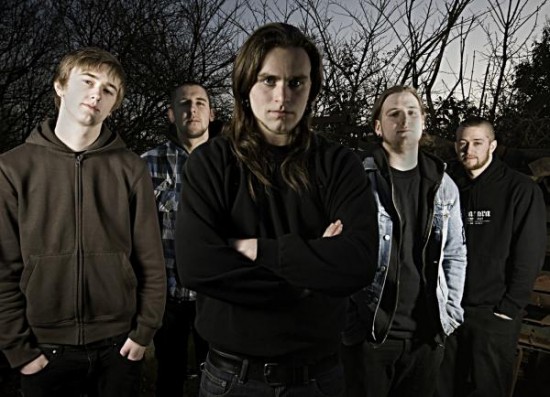
Ah “Deathcore”. In today’s current climate the word carries so many mixed connotations that it’s less of a genre-descriptive term and more of a full-on assault on a band’s right to exist. What’s worse is that, wrongly or rightly applied, the term has become synonymous with the WORST proponents of the style, rather than the BEST.

Young British tykes Trigger The Bloodshed were tarnished with the stain of ‘core from their earliest album. Granted, THAT name, their age, precociousness, and the timing of their first release didn’t help them much, but it’s still worth noting that although their first album did flirt with many of the elements so currently associated with the “deathcore” genre, the band always seemed less interested in being associated with a particular scene or style than they were in simply creating good, heavy music, placing a much greater emphasis on the “death” over the “core”.

All this, however, is not to say that associating purely with Big Daddy Death Metaltm doesn’t create some similar issues (the two genres being genetically intertwined after all). Both genre and sub-genre often suffer from an “overabundance of brutality” – a directionless focus on a perceived holy grail of heaviness, at the expense of actually saying anything lasting with the music. (more after the jump, including recommended songs from the TTB discography . . .) Continue reading »

Feb 012011
 

Have you ever listened to metal you really liked that you tried to describe to someone else — even another metalhead — and your brain and tongue locked up because you couldn’t find the right words, or even other bands that you could use as references? That’s the affliction that’s been inflicted on me by an unsigned band from San Miguel de Tucuman, Argentina, called Random.

Random is composed of only three people — Raul (guitars and vox), Pablo (bass and chorus), and Marcos (drums and chorus) — but on their debut EP, Prrimo, The, they sound like an army. Yeah, sure, with modern recording equipment, one person can sound like an army, but that’s not what I mean. I mean they’re so damned talented, they sound like more skill than three young musicians ought to be capable of summoning.

I will warn you: The music isn’t quite our usual fare here at NCS. For example, this band includes among their cited influences Tool, The Mars Volta, Deftones, and King Crimson — and there’s a lot of clean singing. On the other hand, they also cite Meshuggah, Mastodon, The Dillinger Escape Plan, and Between The Buried and Me. What’s really freaky is that the music they make is in line with all those influences, and it’s so well executed that dropping names like those isn’t overreaching.

I shit you not — this is brash, brilliantly inventive, creatively constructed music, densely packed with stylistic extravagance and technical wizardry, and it deserves a big audience. Getting there will just take a little word-of-mouth, and some receptive ears. We’ll supply some words — you supply your ears.  (more after the jump . . .) Continue reading »