Sep 192019


The broad genre of doom metal bears that name for a reason. In different ways, the sub-genres under that banner summon sensations of dread, despair, gloom, and grief, sometimes of supernatural origin and often deriving from the familiar afflictions of daily human existence and the ultimate one that awaits us all at the end. But while the genre label of doom may have the naming rights for all our woes, it has no monopoly on the channeling of those feelings through extreme music.

Certain schools of atmospheric black metal are equally devoted to soul-crushing sensations, and arguably are even better suited to capturing the severity of intense suffering and the madness it can produce. The self-titled debut album by Iffernet that we’re premiering today in advance of its October 2nd release is a prime example. It presents emotionally wrenching music that penetrates deeply, relying on continuing cycles of squalling and searing riffs and severely tortured vocals to saturate the mind with changing moods of abandonment, fear, pain, delirious agony, and crushing grief. The album is a colossal panorama of despondency and despair that’s unrelenting in the intensity of its devotion to those visions, and so powerful in its achievements that it won’t leave most listeners unaffected. Continue reading »
Sep 192019


(This is the third installment in an extensive series of posts by TheMadIsraeli devoted to a retrospective analysis of the discography of Slayer. Our plan is to continue posting the remaining installments on a daily basis until it’s completed.)

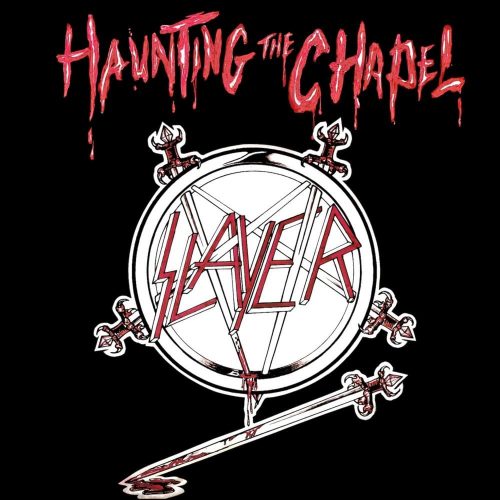
I really want to know what inspired Slayer going into the writing of Haunting The Chapel.  It’s such an overnight transformation that the question of what caused it to occur boggles the mind. This EP is one of the best ever created in the history of metal.  It’s a top 10er at minimum.  It’s concise, vicious, and unrelenting, and the song-writing and riff-craft speak to a release that had obsessive amounts of loving attention and detail put into it. Everything about this EP is in that sweet spot between speed, technicality, drama, and unrelenting brutality. Continue reading »

Sep 182019


(This is Andy Synn‘s review of the new album by Sweden’s Cult of Luna, which will be released by Metal Blade Records on September 20th.)

It’s only natural for any fan to want a band’s new album to be the best thing they’ve ever done.

Partially it’s because we’ve all been conditioned to believe that if an artist’s newest release doesn’t sell more, get a higher score, increase their exposure, etc, that it’s somehow a failure, but there’s also the simple fact that, as fans, we want the bands we love to keep getting better, to keep impressing and surprising us and making us feel that electric frisson of excitement every time.

As a writer/reviewer you’ve got to be doubly careful about this. After all, if you start throwing around 10/10 scores every time a band’s newest release drops, what does it mean when their next one is even better? Do you pull a Nigel Tufnel and go up to eleven? And does every subsequent album get a higher and higher score?

I suppose that’s one benefit of not using numerical scores here at NCS. Our readers are forced to actively engage with what we write in order to find out what we really think about an album, rather than just lazily relying on context-less numbers that never give you the full picture.

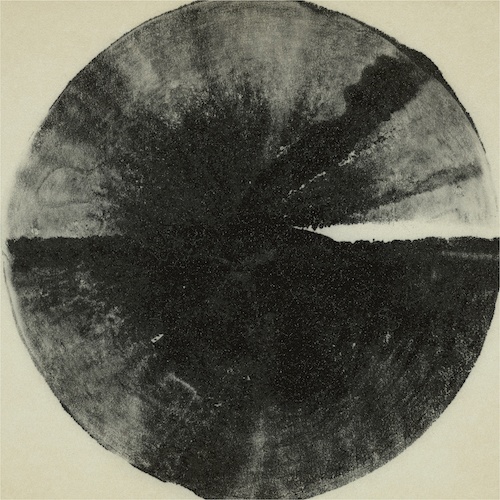
So when I say, as a huge fan of this band, that their latest album ultimately falls a little short of the stupendously high bar set by both Vertikal and Mariner, you shouldn’t be disheartened. Because this is still Cult of Luna we’re talking about, and A Dawn to Fear remains a thrillingly heavy, emotionally resonant journey regardless. Continue reading »

Sep 182019


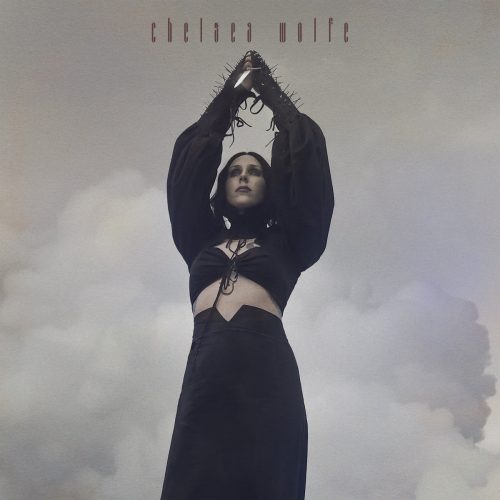
(This is Wil Cifer‘s review of the new album by Chelsea Wolfe, which is out now on the Sargent House label.)

Metal is a sound. Heavy is a feeling. There are plenty of bands that on paper are metal, but when played are not heavy. There are some entire genres of metal that might be suited for the Friday night D&D game or drinking mead with your mates, but are not heavy. Then there are artists who are not metal, but given their sense of darkness, despair, or pure sonic gravity, are heavier than a great number of metal bands. Artists like Swans, Diamanda Galas, and The Birthday Party come to mind. Chelsea Wolfe is also one of those.

Her Burzum cover brought her to the attention of metal fans early in her career before she caught the ear of the indie rock crowd. I have obviously covered her here before, since I tend to prefer sonic heaviness and melancholic heaviness over metallic heaviness. This album falls more under melancholic heaviness and is less sonically heavy than her past three albums. Continue reading »

Sep 182019


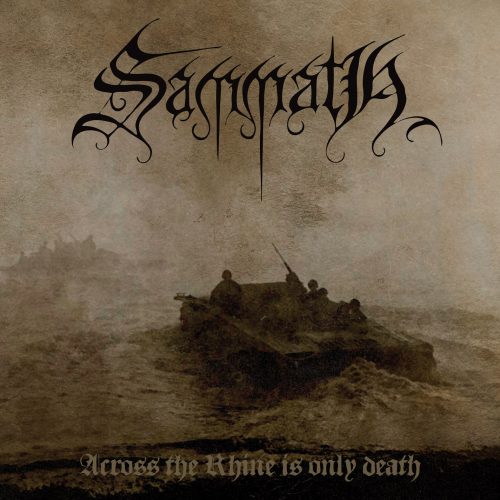
Over the last 30 years many metal albums have taken inspiration from the two World Wars, and have used episodes from those terrible conflicts to form lyrical themes, but few records have so breathtakingly channeled the unchained ferocity, the horrifying decimation, the mind-shattering fear, and the oppressive bleakness of total war as Sammath’s new album, Across the Rhine Is Only Death.

As the title suggests, and as the band explain, this new release (Sammath‘s sixth studio album in a career that now spans 25 years) is “a true tale of death and destruction”, conceptually focused on the final months of World War II when Germany desperately tried to hold the Rhine as its western border. Far from a celebration of war, it represents an effort — and a very successful one — to summon the horrific annihilation that humanity is capable of inflicting on itself. Continue reading »

Sep 182019


(This is the second installment in an extensive series of posts by TheMadIsraeli devoted to a retrospective analysis of the discography of Slayer. With luck, we’ll manage to post the remaining installments on a daily basis until it’s completed.)

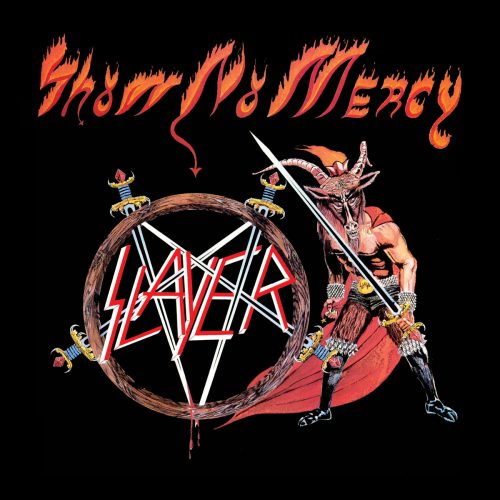
The thing about these early proto-thrash albums is, frankly, that a lot of them kind of sound the same. Obviously, this isn’t a fault of the musicians, as this was a developing style at the time and a lot of people fail to remember that these bands all came up in the same area and no doubt fed off each other creatively.

For a proto-thrash record, however, Slayer’s Show No Mercy remains distinctive even for it’s time. While Metallica had a simplistic, straight-forward approach and Megadeth rejoiced in excessive technicality, Slayer knew how to write songs, and this record makes that fact more obvious than any other when placed in the context of when it came out. It’s brimming with energy, its mix is incredibly good for its era, and some of the song-writing ideas here were ahead of their time. Continue reading »

Sep 172019


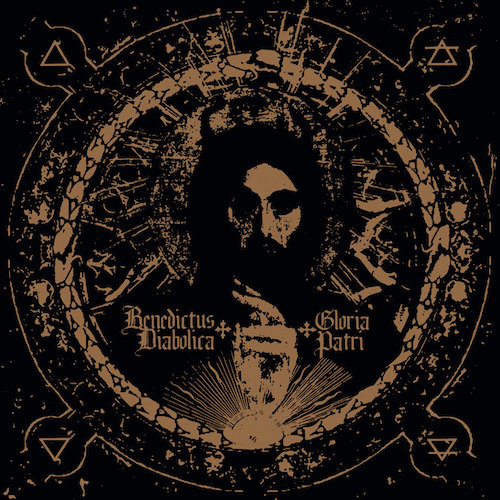
Two tracks. One of them nearly 17 1/2 minutes long, the other one just over 20 minutes, each of them denominated as a Part of a single work. That’s the new album by the black metal band Ancient Moon, Benedictus diabolica, Gloria Patri, which will be released by Iron Bonehead Productions on September 20th. Two very long pieces composed and performed by anonymous artists, locations unknown, but apparently crossing continents.

Music of such daunting length can be… daunting to listeners, and to people such as myself who feel compelled to wrestle with words as a means of communicating sound. But don’t be daunted, or deterred from listening. Patience is obviously required, but in this case it will be richly rewarded. Continue reading »

Sep 172019


(This is the first part of an extensive series of posts by TheMadIsraeli devoted to a retrospective analysis of the discography of Slayer. With luck, we’ll manage to post each installment on a daily basis until it’s completed.)

I fucking love Slayer. The blasphemous flesh flayers are no doubt legendary in metal’s history and its evolution, for good reason. The speed, sheer technicality, outright viciousness, and the new wave of dark tonality they brought was absolutely, existentially crucial in the birth of what we now know as extreme metal.

However, there’s always been a lot of conjecture around this band. Lots of fluff about legacy, how they influenced metal, etc., but no one (that I’ve seen) has applied a hard critical eye and evaluated this band’s entire catalogue of albums as a work of art. Not as a piece of history, not as an influence, not as an example of innovation, but as an assessment of how Slayer have performed as musicians across their body of  work over time. Continue reading »

Sep 162019


Following hot on the heels of their 2018 album Continuum, the English instrumental post-rock band Sons of Alpha Centauri (SOAC) have created a second part to the journey which began there, and have done so in a stunning collaboration with industrial metal icon Justin K. Broadrick (Godflesh, Jesu…) and ambient gloom metal maestro James Plotkin (Khanate, Jodis, etc.). The results of these creative unions are relentlessly fascinating, amalgamating a wide range of stylistic ingredients in a way that’s both compulsively head-moving and equally mind-bending. The music has genuinely primal power, yet also transports listeners into an alien cosmos and seemingly spirits us away into haunting realms that we enter at our peril.

This new album, Buried Memories includes two 10-minute monoliths of eclectic ambient progressive rock by SOAC — “Hitmen” and “Warhero“. “Hitmen” was mixed by Broadrick, and the album further includes his interpetive remixes of the track, one in his guise as Jesu and the second as the eponymous JK Flesh. James Plotkin created the mix for the second long SOAC track, “Warhero“, and then the album further includes a third, shorter SOAC track (“Remembrance“) mixed by Plotkin, as well as his remix of “SS Montgomery“, a single from the band’s landmark self-titled debut album.

What we’re presenting today is the premiere of the Jesu remix of “Hitmen“, as well as an impressionistic review of Buried Memories as a whole, in advance of its release on October 13th. Continue reading »

Sep 162019


(This is Andy Synn‘s review of the new album by the Ukrainian band White Ward, which will be released by Debemur Morti Productions on September 20.)

To say that White Ward are the band Ulver might be today if they hadn’t totally abandoned the Black Metal aesthetic would, probably, be an over-simplification.

Both bands are, after all, distinct entities in their own right, and to imply that the former are simply a more metallic variant of the latter would be to do them a major disservice.

And, yet, there’s more than a hint of Perdition City to the Ukranian quintet’s new album, whose unusual mix of biting riffs, moody jazz inflections and neo-noirish vibes purposefully eschews the more “traditional” aspects of Black Metal – the nature worship, the rustic spirituality – in favour of a sound that’s distinctly urban in both tone and texture, all neon and glass and cold concrete.

But whereas Perdition City was billed as “music to an interior film”, this one is much more physical and grounded. It’s the soundtrack to the world outside your window, a world of digital prophets and ephemeral profits, social media sirens and vicarious virtual violence.

A world where what we put in no longer equals what we get out. Where what we give no longer balances what we take. A world on the brink of total Love Exchange Failure. Continue reading »