Feb 142013
 

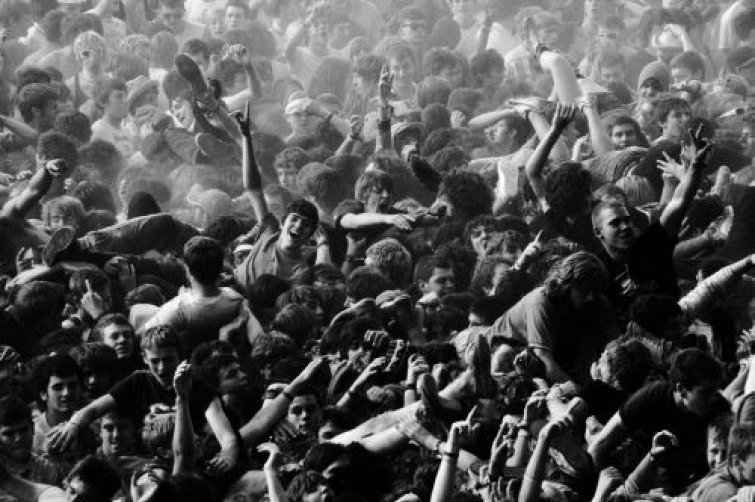
“Human collective behavior can vary from calm to panicked depending on social context. Using videos publicly available online, we study the highly energized collective motion of attendees at heavy metal concerts. We find these extreme social gatherings generate similarly extreme behaviors: a disordered gas-like state called a mosh pit and an ordered vortex-like state called a circle pit. Both phenomena are reproduced in flocking simulations demonstrating that human collective behavior is consistent with the predictions of simplified models.”

Thus reads the abstract for a scientific paper published today with the title, “Collective Motion of Moshers at Heavy Metal Concerts”. The authors are four gents at The Laboratory of Atomic and Solid State Physics at Cornell University in upstate New York. To avoid confusion, allow me to repeat: This was written by actual scientists, not stand-up comedians.

The authors described pit action as follows, “Often resulting in injuries, the collective mood is influenced by the combination of loud, fast music (130 dB, 350 beats per minute), synchronized with bright, flashing lights, and frequent intoxication.” Stunningly, they observed that “[t]his variety and  magnitude of stimuli are atypical of more moderate settings.”

They expected to find a broad distribution of speeds and chaotic movement that could not be “well described by simple analytic expressions.” Instead, they found that mosh pits closely resemble the equilibirum state of molecules in classical gases. Continue reading »
Feb 142013
 

(This is Part 4 of a 5-part series about metal culture by guest contributor David Mollica, a trained cultural anthropologist and dedicated metal head. This series is based in part on David’s Master’s dissertation and the interviews he conducted in preparation for writing it. The previous Parts of the series can be found here.)

I had planned on yesterday’s post being about gender and ethnicity, but before I knew it I was well over my self-imposed word limit without a single mention of ethnicity. Maybe I like to talk about girls more than I thought… So today I am going to combine the topic of race with the discussion on exclusivity that I promised deckard cain the other day. Sorry if I get a little brief on these last two posts. I’m starting a new job tomorrow and that blasted real-world thing is interfering with the stuff I care about again!

If you live in a Western country most of the metal heads you know are probably white and if you don’t live in one there is a chance that there aren’t so very many of you. Metal heads in Europe and the US also get accused of being racist often enough, and statements made by people like Phil Anselmo and Varg Vikernes don’t always help to put that image down. However, there are large pockets of fans from almost every ethnic group across the globe, especially in larger cities.

Further, out of the ten people I interviewed, three of them weren’t white. If my group was at all representative of the larger fan base, and things like Sam Dunn’s Global Metal would suggest that they are, it means there are a lot of non-white metal heads out there. They are a group that most academics who study metal have somehow missed. Since I met these people hanging out together in bars it also puts up some strong evidence for something I’m guessing you knew already — most of us aren’t racist.  Continue reading »

Feb 132013
 

(Here we have another installment in UK-based Andy Synn’s occasional series on favorites of his that come in five’s.  Music is included.)

Chance and coincidence are funny little things. One of the various ideas I had noted down for these “Favourite” columns was a short insight into my own collection of non-musical metal materials, specifically the various merch (shirts, etc) I’d picked up over the years.

So when David appeared on the scene with his series of posts on Metal Culture it seemed like the perfect time to actually put this piece together, and hopefully see what items of your ‘metal uniform’ you guys particularly cherish as well!

The funny thing is, I’m actually currently in the process of getting rid of a host of shirts, to various good homes and good people, because I feel like I’ve amassed a rather unnecessary collection, many of which I never/rarely ever wear. So I’ve been winnowing through my wardrobe, selecting the ones I don’t really have a need for, and simultaneously identifying my favourites, all of which plays nicely into this column.

Ok, so we’ll go in some sort of sartorial order, shall we? Continue reading »

Feb 132013
 

(Here’s Part 3 of a 5-part series about metal culture by guest contributor David Mollica, a trained cultural anthropologist and dedicated metal head. This series is based in part on David’s Master’s dissertation and the interviews he conducted in preparation for writing it. The previous Parts of the series can be found here.)

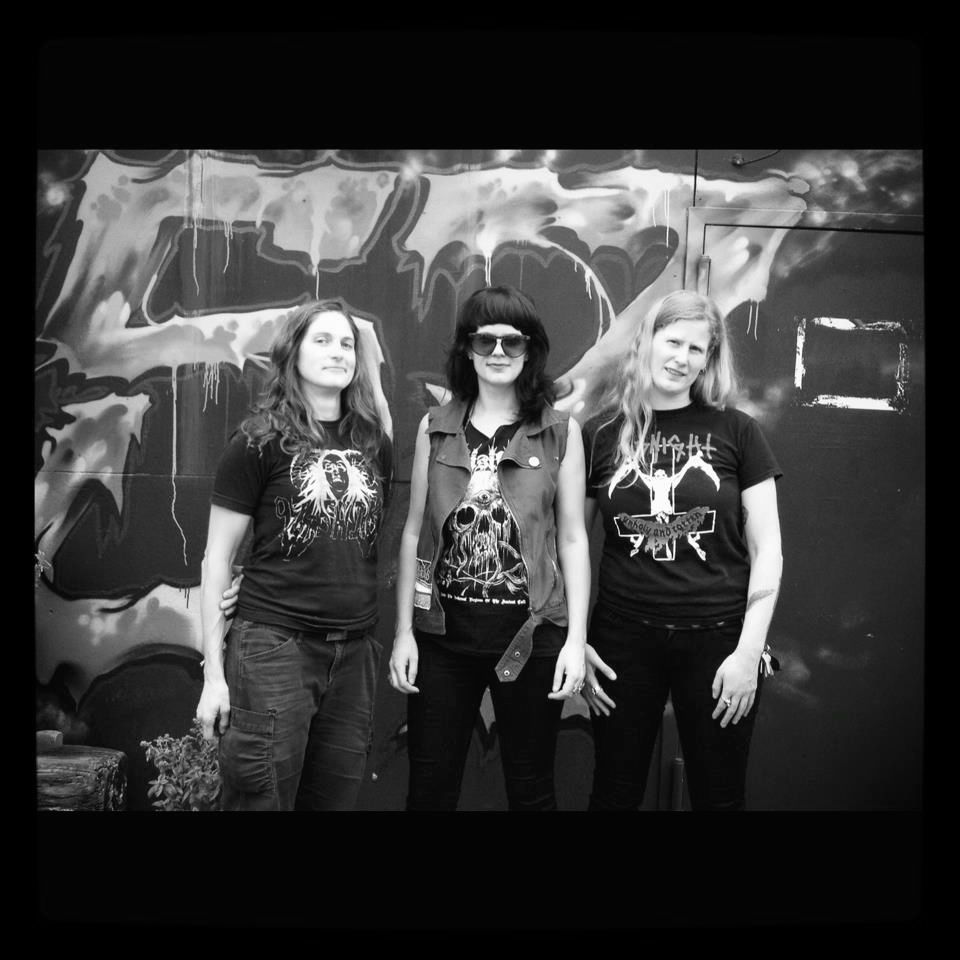
Lets talk about sex and heavy metal…Get your mind out of the gutter, I mean gender, not how to spawn while listening to Slayer. It’s a pretty universal truth that there are more male metal heads than female. Of course anyone can rattle off a huge list of metal bands that have some women in them, like Into Darkness, and even a few all female acts such as Derketa or Mortals (all of which are pretty sweet bands), but these groups tend to be exceptions to the rule. The field is male dominated and always has been. I found this to be one of the most difficult things to inquire about during my study because I got a different answer from every guy I interviewed and the few female metal heads I knew at the time didn’t want to do an interview. My conclusions on the subject didn’t entirely satisfy me, as most of them are speculative and one can even be construed as vaguely sexist, so I hope this post spurs some healthy discussion.

First, think about the social environment at your average metal venue. If it’s even a halfway decent night there is going be yelling, pushing, drinking, headbanging, and mosh pits. According to Beth Winegarner, who has contributed to Invisible Oranges, she never liked to go to concerts because of that sort behavior. However, she still felt the emotional connection to metal that many people reported when I asked them why they liked the music. In other words, Beth is a fan even if she doesn’t socialize with the group all that often. She felt uncomfortable about being around what she saw as the aggressive behavior of male fans. Obviously this sort of feeling doesn’t account for everyone — one of my most gnarly pit-related black eyes was administered by a girl who looked to be about 16 — but it might be a contributing factor to why so many gigs end up being sausage fests. Continue reading »

Feb 122013
 

(Here’s Part 2 of a 5-part series about metal culture by guest contributor David Mollica, a trained cultural anthropologist and dedicated metal head. This series is based in part on David’s Master’s dissertation and the interviews he conducted in preparation for writing it.)

Today I want to talk about physical culture and the group/individual dynamic. Anyone who has ever been to a gig or looked inside Gaahl’s closet knows the metal uniform: Jeans, camo shorts, chains, denim vests, black band shirts, guys with long hair, tattoos, piercings, and so on. It makes us stand out a bit, attracting wary looks from ‘normal’ people on their way to work when we are trying to buy a Red Bull at 6:00 am for the after-gig drive home. On a surface level this helps create that group cohesion thing I was talking about yesterday. There is a certain amount of comfort we get from being around people who look and act like ourselves; that’s why immigrant groups often move into neighborhoods together instead of dispersing all over the place.

Personally, I never thought of why I choose to dress the way I do (minus the camo shorts…that’s just too much for me) until I started my fieldwork. That whole being able to see the other guy as a person and not just part of a sea of bodies at gigs is obviously important, and I think that’s partially why mosh pit etiquette is so universal. However, the way we dress goes beyond that simple level of making groups of strangers work together more easily. It’s also how a lot of us make friends, myself included. Think back to when you first met the people you know in the metal scene. The first thing that was said by way of introduction was probably something along the lines of “Nice shirt man!”. That’s how I met half the people I interviewed and some of us are friends to this day even though we don’t live anywhere near each other anymore. Continue reading »

Feb 112013
 

photo by Peter Beste

(We’ve got something different for you, something I hope will provoke thinking and discussion.  This begins a 5-part post by cultural anthropologist [and metalhead] David Mollica on the subject of metal culture, based in part on extensive field research in bars.)

Hey NCS readers, Islander has kindly allowed me to talk at you about the metal community and why we do what we do for a little bit. I’m going to cover the whole media perception, violence, and counter-culture thing first to get it out of the way, then move on to some more interesting stuff in later posts. So first a little background:

I study cultural anthropology and mass media in addition to being a metal head and thought it would be cool to mix a little fun with my serious business. So, a couple years back I somehow managed to convince my adviser that letting me hang out in bars and listen to Iron Maiden was a legitimate form of fieldwork for my Master’s dissertation. The end result was a rambling 33 pages of material, some of which I’ll be talking about here. Since most of my field work took me to places where I had to keep up with the livers of London natives I may have missed a few things, so feel free to voice your thoughts in the comments. I like discussion. If you want a copy of the paper email me at gilderling@gmail.com.

Let’s start with a question you might not think about all the time: Why do you like Heavy Metal and what got you into it in the first place? Not only is this stuff grim, aggressive, angry and over the top, but we also see those things as standard positive qualities of the music. We expect macabre subjects and weird note progressions. So what drives us to listen to this instead of more mainstream or easy going stuff? Continue reading »

Feb 022013
 

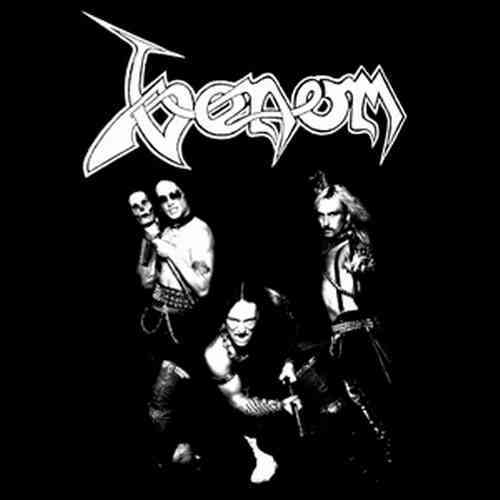
On April 2, 1986, the seminal British metal band Venom played a gig in Trenton, New Jersey, at a punk club called City Gardens. Also on the bill: Black Flag, as then fronted by Henry Rollins.

Legend has it that a Black Flag roadie recorded the entire show — and then cut out all the songs in Venom’s set except a few nano-seconds of the guitar intros and outros, leaving behind the between-song stage banter of Venom’s frontman Chronos. The only part of that story that’s legend is who did it — because someone plainly did.

This 8+ minute bootleg montage of Chronos communing with the punks, metalheads, and assorted refugees from the law in the audience was subsequently released as a seven-inch “single” on the Ecstatic Peace label. Somehow, I’d never heard this until a good friend sent me a link to an mp3 of the single yesterday.

Let’s just say it’s not the finest example of metal stage banter, but let’s also say that it’s representative of the majority of metal stage banter, which is to say that it’s a caricature of itself. It’s dumb, meaningless, and unintentionally funny, but also kind of endearing. To quote one blogger who wrote about this in 2009, “There’s a lot of Spinal Tap in so much heavy metal…” Continue reading »

Jan 282013
 

(In this post, guest writer Graffiti Petey provides a look back at California’s Antagony.)

Metalhead A: “Suicide Silence. White Chapel. All Shall Perish. Job for a Cowboy.” 
Metalhead B: “Yup, heard of all these bands.” 
A: “How about Despised Icon? Animosity?” 
B: “Yeah, I think I remember them.”
A: “Okay, what about ANTAGONY?”
B: “Who???”

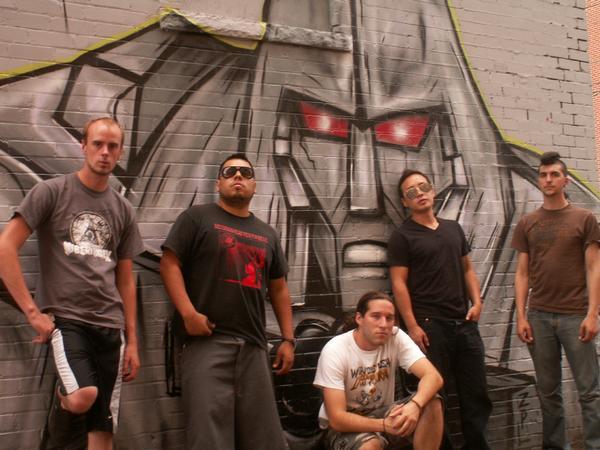
Chances are if you are reading this you have never heard about the seminal Bay Area-based metal band–Antagony (circa 1999-2009). Their story is a tragic account of bad timing and bad luck. Why is this band still relevant? Well, it’s been almost 4 years since they disbanded but their loyal fanbase is still passionate about what they did and what they could have been. To put it simply: Antagony mixed elements of Death/Grind and Hardcore before all of the aforementioned bands. Now you know this. If you are familiar with Hollywood tragedies, a good analogy would be River Phoenix: an experienced actor who influenced his generation but never quite hit stardom. After his untimely death–fellow actors like Leonardo DiCaprio, Johnny Depp, Keanu Reeves, and his brother Joaquin have gone on to super-stardom. This is the pattern we’ll see with Antagony.

Reading over Antagony’s past members is like reading a who’s who in the modern metal scene. The thirteen former members of Antagony have gone on to such bands as Oblivion, All Shall Perish, Hacksaw to the Throat, Suffokate, Oblige, Misericordiam, and more. You may be asking yourselves—how did all of these bands gain more recognition than their originator? The answer to that is a fateful combination of bad luck and bad timing, as we’ll discuss during the chronological analysis of the band history. Continue reading »

Jan 242013
 

(In this opinion piece Andy Synn offers some thoughts about what it should really mean to be a “progressive” band — and about when the label is just a cover-up for a band’s failure to establish its own identity.)

Let me start off by saying something controversial…

Prog ≠ Progressive

These days the term ‘Prog’ is thrown around so much it’s lost almost all meaning. It’s become a go-to word for bands afraid to admit to their real genre. The worst offender these days is djent, where every other band now describes themselves as “Progressive Metal”, when what they really mean is “Axe-FX polyrhythms, spacey keyboards, and shreddy directionless guitars”, but it’s not the only one. We now have “Progressive Deathcore”, “Progressive Thrash”, and about a billion other genres carelessly welding the “progressive” tag onto themselves in the hope of wallpapering over the cracks in their identity.

I’d even go so far as to say that “Prog” itself is its own genre nowadays, and more than just a qualifier for other genres. My father is an avid reader of Prog Rock magazine, and I take the opportunity to read it whenever I visit the family home. It’s an interesting magazine, trying to keep up with the old-school originators of the “Prog” sound, as well as expose new bands to an interested audience. But I’d say that a lot of the bands featured in its pages aren’t really “Progressive”. There’s too much commonality, too many shared influences and sounds, for that. They’re “Prog” as defined by the boundaries of genre and style, just as “Death”, “Black” and “Hardcore” are defined. Continue reading »

Dec 242012
 

Yes, it’s time for my annual Christmas rant. I don’t have much new to say, though I have tried to think of new ways to say it.

Serious question before this post goes downhill like a mountain goat in an avalanche: Is there a country or culture outside the West where people commemorate the birth of a major religious figure by spending galactic amounts of money they don’t have buying gifts for people who don’t want them (or at least don’t really need them), especially where the major religious figure himself probably wouldn’t approve if he had any say in the matter?

Hell, why limit it to the commemoration of births? Let’s include death, marriage, getting laid for the first time, performing a big miracle, or any other key event in the life of a god, demi-god, child of god, messiah, prophet, saint, wise man, or fool who occupies an important place in a religious faith.

Here in the U.S. I’ve got a bird’s eye view of the Christmas pocket-emptying, but I have no idea whether anything like this happens outside the part of the world in which Christianity is the dominant creed. I could do some research myself, but who has time for research when you need to be thinking about what needless presents to buy and for whom?

I’m guessing the answer is No. Not because cultures and countries outside the West are any smarter than we are, but because they’re not as rich or as fully engulfed by capitalism as we are. It’s tougher to induce people to blow money in the name of religion when they’re kinda short on discretionary income. Continue reading »