Nov 082013
 

(In this post DGR reviews the new album released last month by Austria’s Distaste.)

Distaste are one of those bands I can only claim to have gone into recently. Probably the fault of Man Must Die, Mumakil, Afgrund, and a few others, but I’ve found myself really digging into the short-song/blastbeat-filled/punk-riff segment of grind recently. Basically, it has started to boil down to where if a band puts a circle pit riff over some blasts and some dude starts screaming about how much of a wreck the world is, then chances are my adrenaline has shot through the roof.

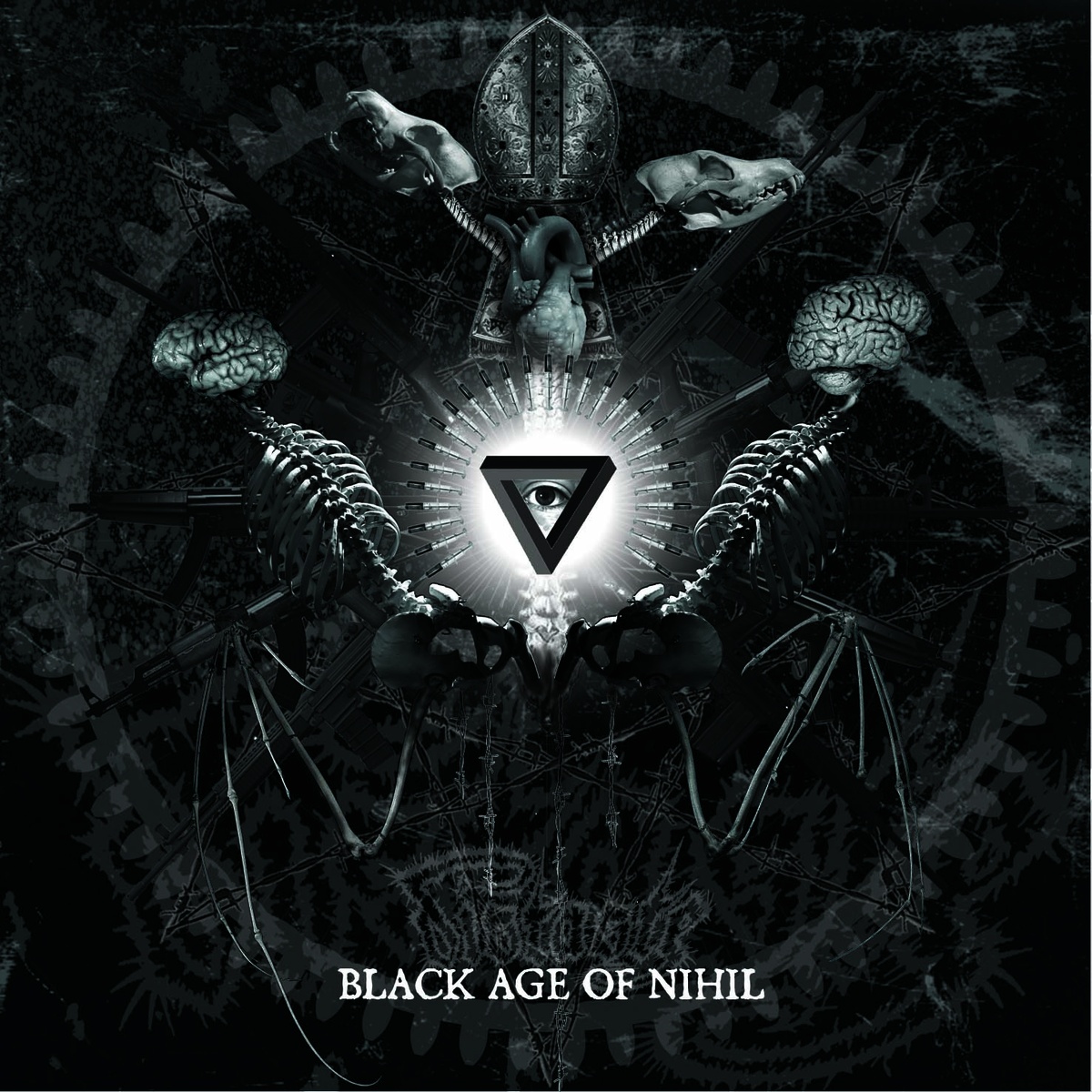
I came upon Distaste rather randomly, just surfing through Bandcamp and coming across the three-piece Austrian group’s album Black Age Of Nihil just a little over three weeks after it saw release in early October. Coming off of about a million spins at that point of Afgrund’s Corporatocracy and its predecessor The Age Of Dumb, Black Age Of Nihil immediately grabbed me. At first, I couldn’t quite figure out why, until it came to light that Afgrund’s front man as of 2010, Armin Schweiger, is one-third of this band, playing guitar and doing vocals in this troupe as a founding member of the band rather than simply being the voice behind all the yelling. Continue reading »
Nov 052013
 

(Austin Weber is back for the second day in a row, this time with a review of the new album by Montreal’s Unhuman.)

As any good metalhead knows, the Canadian metal scene is insane. So many amazing, influential bands have come from here, though overall it’s always been their death metal scene I’ve been drawn to the most. A big part of what makes their scene so strong is that many of the best performers have shared their talents among multiple groups/studio projects/playing live for each other.

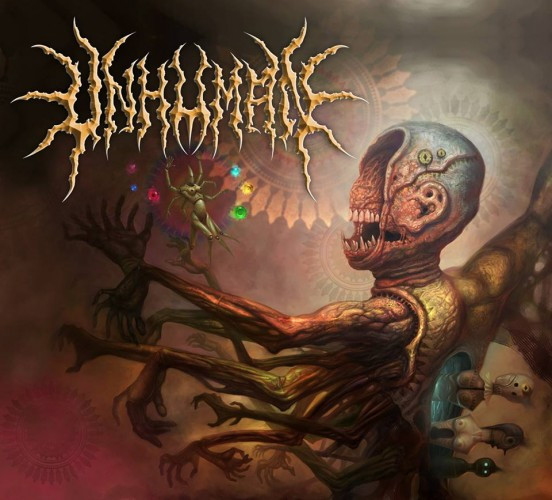
Unhuman falls in that category, as a group collectively steeped in years of death metal mayhem that starts with founding member and composer of almost all of the music on Unhuman’s Unhuman — Youri Raymond. It’s a name some will have heard before as a member/songwriting contributor for some of the tracks on last year’s amazing Cryptopsy album. Still others may know him due to his involvement with Secret Chiefs 3, as he contributed vocals on several tracks on Book Of Horizons, which is what led me to Unhuman a long time ago. He added current drummer Alexandre Dupras (The Plasma Rifle, Teramobil) in 1999 and then added current bassist Mathieu Bérubé (Teramobil again, whose latest release I previously reviewed hereat NCS) in 2008, and rounded out their line-up with guitarist Kevin Chartré (Beyond Creation, Brought By Pain) in 2011. Continue reading »

Nov 042013
 

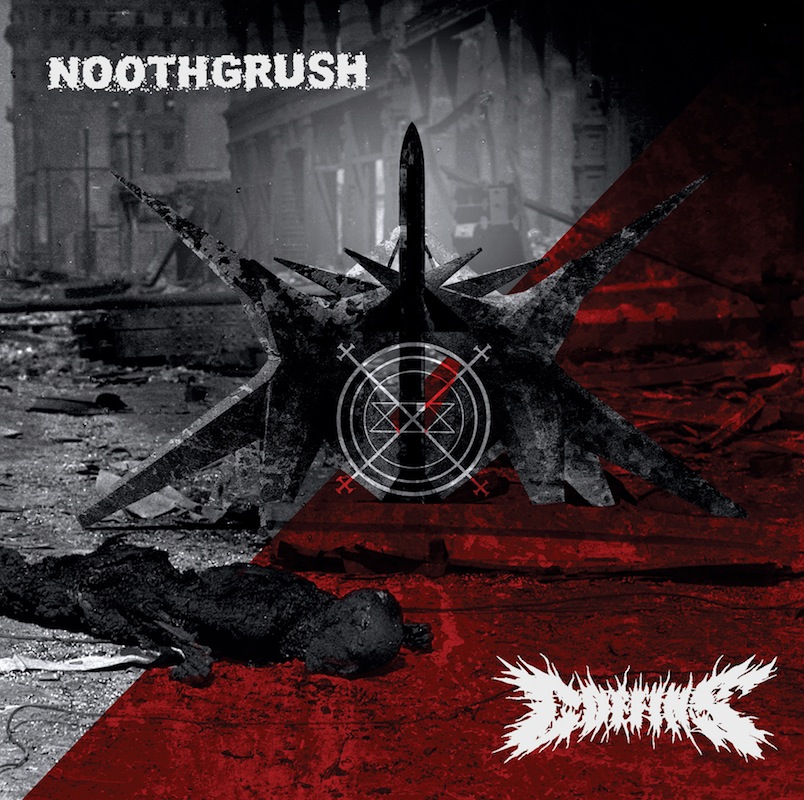
Doom comes in many flavors, but at the core of the sound there’s always a black hole, no matter what else may be draped around it. It’s just a question of how big that light-sucking core happens to be. On the forthcoming Southern Lord split LP by Noothgrush and Coffins, it’s massive.

NOOTHGRUSH

My introduction to Oakland’s Noothgrush came in 2011 via Southern Lord’s The Power of the Riff tour, a limited run of west coast dates that marked the band’s return after splitting up in 2001 (and their first show in Seattle since 1997). Reading again what I wrote about the show (here) reminds me of what a revelation the band’s music was:

“Imagine this: You’re chained in an iron receptacle, and through vents in the bottom, hot paving tar slowly flows in. Inexorably, at a glacial pace, it covers your feet, it climbs up your legs, it reaches and passes the part of your body that does all the thinking, it covers your abdomen and your chest, your arms strain at their chains and you scream as the tar boils the flesh away until it reaches the empty cavity on top of your shoulders and pours into your ears, mouth, and nose, suffocating you in a blistering black agony. Your last sensations are the smell of your own incinerating flesh and the shrieking chants of this band’s vocalist…. Sick, sloooooow, sludgy, and ultimately irresistible.”

Pelican, who performed later the same night, posted this on their Facebook page right about the time Noothgrush finished their set: “Good lord, Noothgrush are heavier than a knapsack full of anvils.” Continue reading »

Nov 032013
 

A week ago I posted a list of the best releases I’d heard over the last five years by newer bands whose sound was strongly influenced by old school Swedish death metal. The last release I put on that list before posting it, though you couldn’t tell, was the 2013 demo by a Swedish band named Under the Church. I heard it for the first time the day I finished the list, and one listen was all it took. Since then I’ve listened to it again and again, and the more I’ve listened, the more I’ve liked it.

Word has been spreading ever since the demo became available months ago, probably in part because the band was started by two former members of Nirvana 2002 — drummer Erik Qvick and bassist Lars Henriksson — but mainly because the music is so good. And sure enough, in the week since my list went up, Under the Church announced some good news: They’re going to record an album, and the album is going to be released by Pulverised Records. If you’ve already heard the demo, then you know just how good this news is. If you haven’t, I’m going to explain. Continue reading »

Nov 032013
 

This is a review of a forthcoming 7″ EP by Vancouver’s Auroch, but it happens to coincide with a piece of significant news announced yesterday, so we’ll start with that: After making a particularly striking impression with their 2012 album From Forgotten Worlds, Auroch have now signed with Profound Lore, who will be releasing the band’s next album during 2014. Recording is expected to begin in February. Congratulations are in order, both for the band and for the label. That album goes on our highly anticipated list for the new year.

Now, back to the new EP. The name is Seven Veils and it includes two songs — the title track and a b-side called “Coronation”, which is a re-titled and re-recorded version of a much earlier demo track.

“Seven Veils” is a rip-roaring, no-holds-barred onslaught of blackened death metal, with meat-tenderizing drum blasts and a maelstrom of ravaging guitar and bass distortion. The blast-furnace effect of the music is regularly punctuated by brief moments of separation, sometimes no longer than one big twang of a bass string or a few morbid arpeggio notes. The music finds its groove here and there, but its mainly a fascinating over-the-top frenzy. The vocals are also completely unhinged, ranging from boiling-in-oil shrieking to the rapid-fire barking of what sounds like a really big mastiff. When you listen, your first impulse may be to duck and cover. Continue reading »

Oct 302013
 

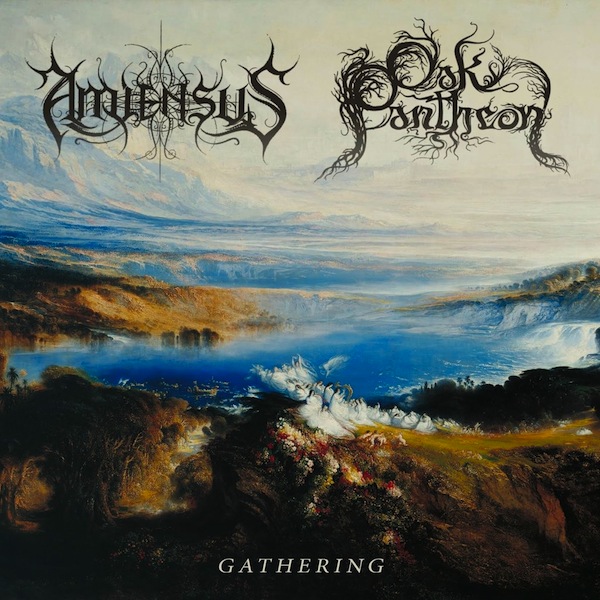
Amiensus and Oak Pantheon are two Minnesota bands we watch closely at this site. Both of them produced debut albums in 2012 that we praised in our reviews — Restoration by Amiensus (reviewed here) and From A Whisper by Oak Pantheon (reviewed here). Both of them can be considered black metal bands, but both of them have incorporated so many other musical elements that diverge from the Scandinavian orthodoxy that one day we will have to concoct a new genre name for what they are doing. “American black metal” isn’t specific enough, and although both bands come far closer to Agalloch than they do Marduk or Taake, “Cascadian black metal” isn’t right either.

While we continue to ponder just what shorthand to use in describing what each of these bands are doing, we can now consider their latest creations, which come conveniently packaged together in a new forthcoming split release entitled Gathering. Before I heard a note, I had a good feeling, because both the main album cover (“The Plains of Heaven”) and the alternate cover (“The Great Day of His Wrath”) were crafted from 1849 paintings by John Martin, and that just exudes good taste, as does the decision to have both tracks mastered by Arsafes (Kartikeya, Above the Earth) (and he mixed the Amiensus track too). Those good feelings proved to be prescient, because both bands’ contributions to the split are stellar. Continue reading »

Oct 292013
 

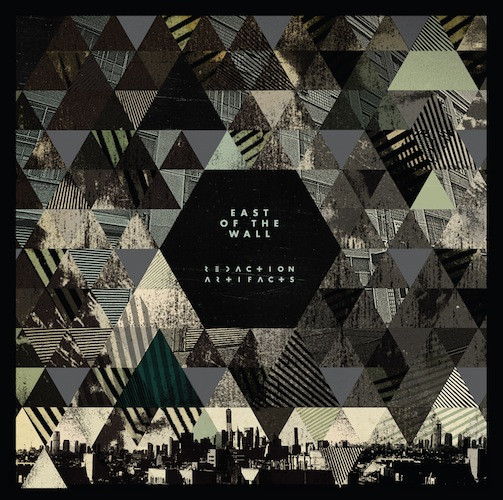
(NCS contributor Austin Weber reviews the new album by New Jersey’s East of the Wall.)

I first heard about East Of The Wall a few years ago while talking to their old bass player Brett Bamberger in Indianapolis. I talked to him after The Binary Code set when he proceeded to tell me he was merely a touring bass player and his actual band was called East Of The Wall. He ended up giving me their debut because I had spent all my money on merch. I listened to Farmer’s Almanac several times on the way home and became an instant fan. Now a few years later, and times have changed, yet East Of The Wall have only grown stronger with age. Since Farmer’s Almanac, they added vocals to their music and dropped several more albums, each a different snapshot of a multi-faceted style always in flux. This new album Redaction Artifacts is no different in that regard and is yet another welcome change sonically for the group.

A series of recent line-up shifts has seen Brett Bamberger leave and their guitarist/harsh vocalist Chris Alfano switch to bass in his absence. Guitarist Kevin Conway left as well, which made room for two new guitarists⎯Ray Suhy and Greg Kuter. While this did inevitably change some of their sound, the music here is no less experimental or tastefully complex than before. Redaction Artifacts includes the most clean singing of any album, as new guitarist Greg Kuter sings frequently in addition to an enhanced singing output from longtime guitarist Matt Lupo. Their combined range hits everywhere from what Tommy Rogers to what Chino Moreno sounds like, and then some. For a truly progressive band such as East Of The Wall, all this new blood and focus on singing are just more tools in the shed for them to use in making their music even more eclectic and captivating. Continue reading »

Oct 292013
 

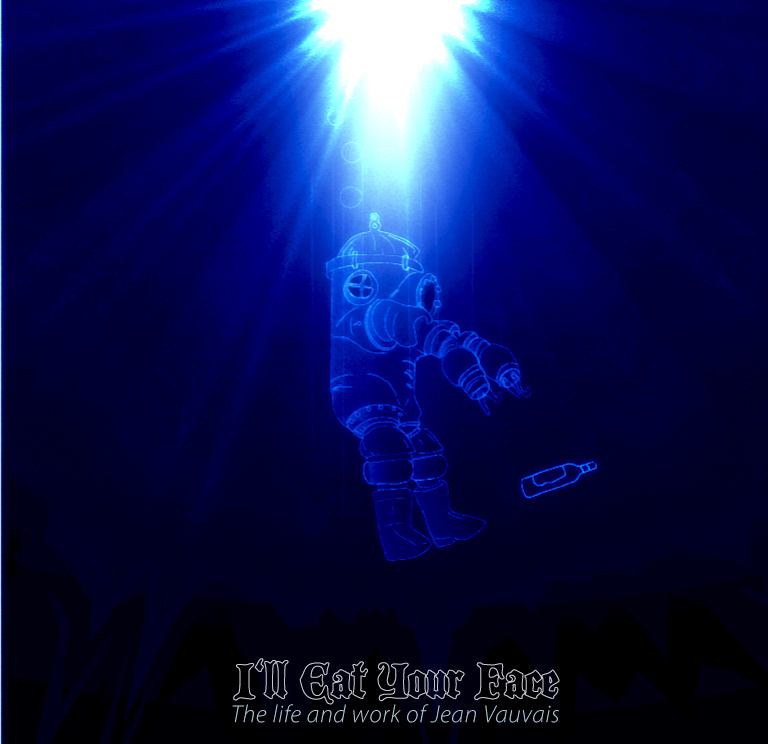
(We are honored to bring you this review, epitaph, and fictional imagining from Professor D. Grover the XIIIth in honor of the last gasp of Ireland’s I’ll Eat Your Face.)

Greetings and salutations, friends. Your Esteemed Professor has returned, albeit briefly, to mourn the passing of a personal favorite band, that dastardly Irish prog/grind duo known as I’ll Eat Your Face. A few of you, peering back through the mists of time to the heyday of The Number Of The Blog, will recall that the band’s 2010 release Irritant appeared, almost from the æther, and promptly seized the top spot on my year-end album list. Since that day, I have kept in touch with The Boy and Barrytron, the two miscreants whose cartoonish musical misadventures fill the brief discography of I’ll Eat Your Face, and thus was saddened to receive notice from the both of them that they were laying their project to rest and going their separate ways.

Now, I suspect this won’t be the last that we hear from these fanciful lads. Barrytron is, to my knowledge, still manning the skins in [r]evolution of a sun and also drumming for the delightfully odd StreisBAND, a hardcore band that does Streisand covers with only drums and vocals. And The Boy, well, he’s currently pursuing his PhD, but I suspect that he may pick up his guitar again somewhere down the line. Continue reading »

Oct 282013
 

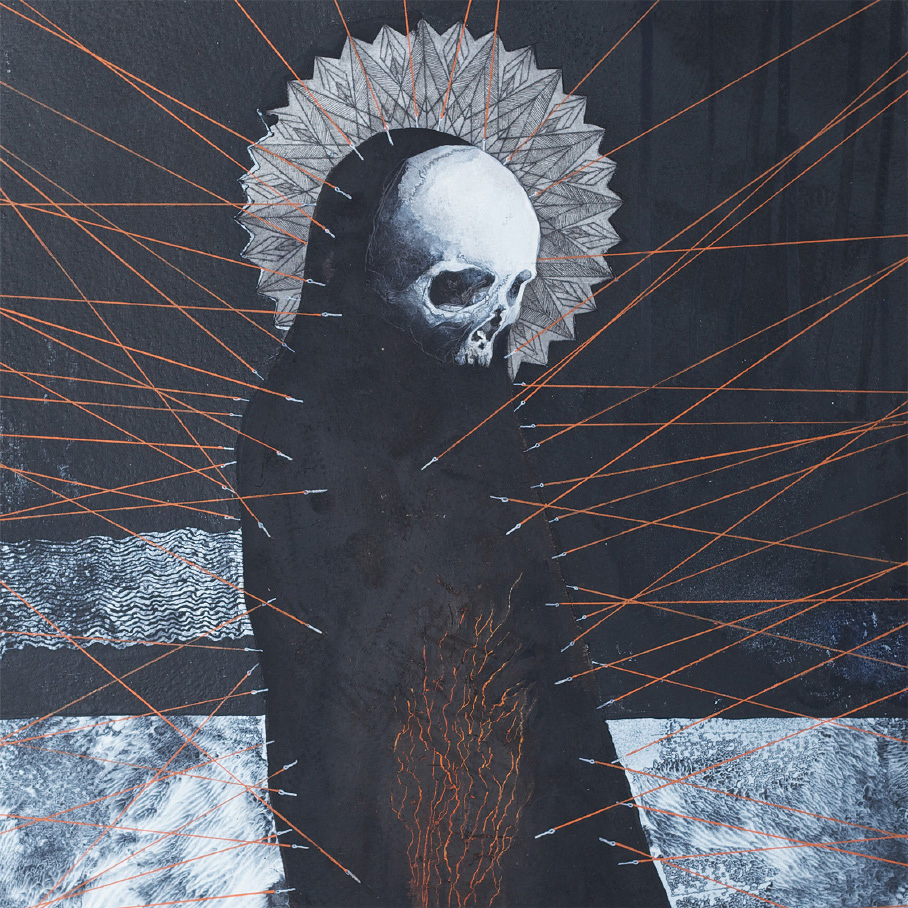
There’s an unusual story behind the making of his album, one that’s both painful and inspiring. If you know the story, it can’t help but affect the way you hear the music. And that’s as it should be, because the story is at the heart of the writing and the recording of the music, too. That story has been told elsewhere, through our own interview of the music’s creator Aaron Edge, and an even more in-depth interview that appeared last week at The Obelisk. But even if you were ignorant about the album’s deeper significance, it would still hit with tremendous force.

For an album that consists of seven tracks totaling only about 25 minutes of music, there’s a temptation to say that it flies by. It does, and it doesn’t. You can read first-hand accounts of combat or other traumatic events, in which time seems to slow down. The intensity of Lumbar’s album plays a similar trick on the mind. The music itself moves in slow time, the massive distorted chords flowing like magma, groaning like titanic drawbridges being raised with rusted chains, pounding like a wrecking ball. But the slow rhythms are only part of the explanation for the music’s time-warping effect.

The sound is incredibly dense and contaminated, the guitars fuzz-bombed to the max, the music vibrating with radioactive decay, almost every second shrouded in a storm of static. The black, hallucinatory aura of the music is intensified by the layering of shrill, skittering electronic noise, shimmering cymbals, and a mega-dose of reverb. The harrowing sense of things falling apart, which pervades the album, reaches its apotheosis in “Day Five”, where rhythms and even the rudiments of melody are abandoned, leaving only the sounds of distant thunder growing into a battlefield bombardment and the howling of demented voices. Continue reading »

Oct 272013
 

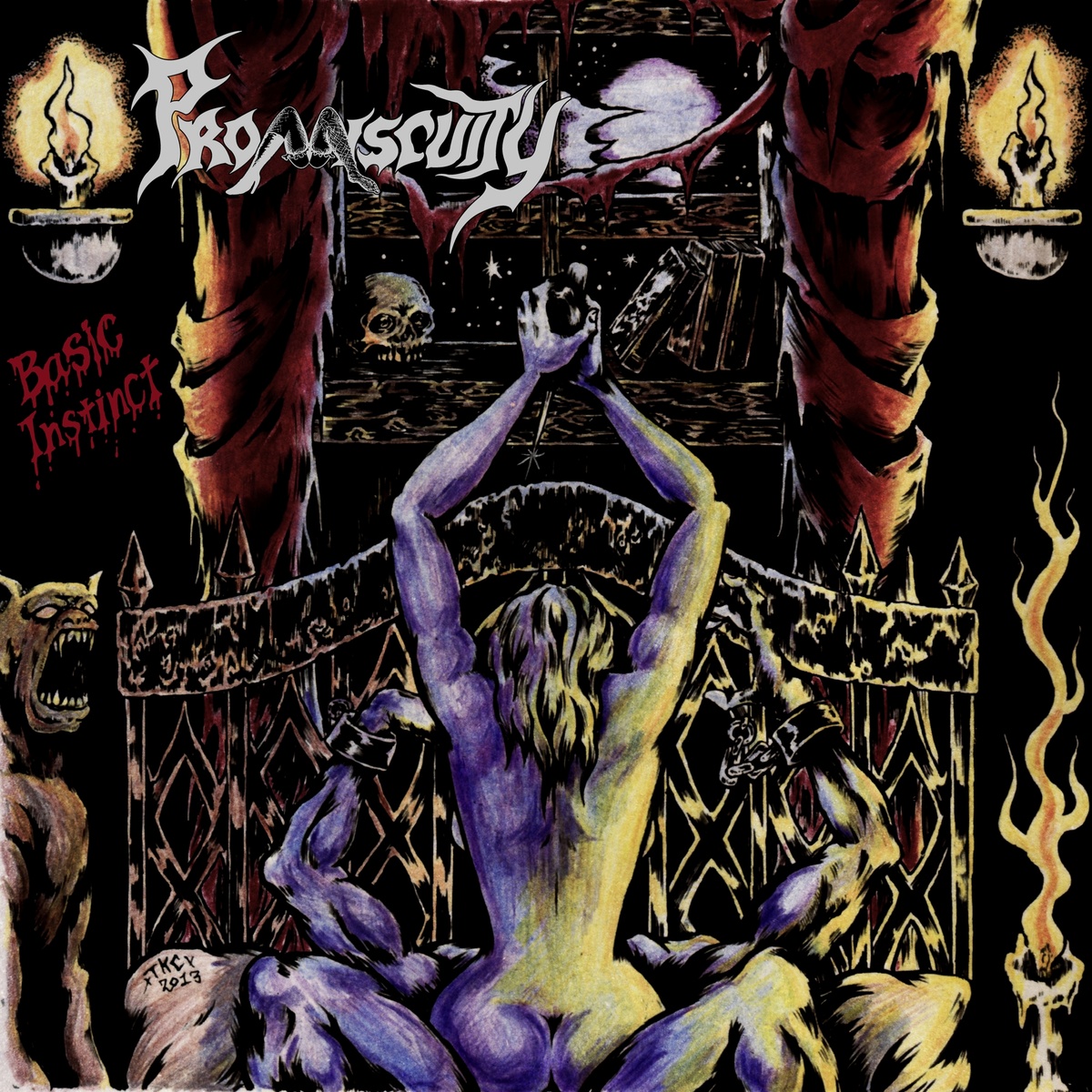
Israel’s Promiscuity proudly wear their influences like patches on the vest: Right there on the third track of their hellaciously romping EP Basic Instinct is a cover of Celtic Frost’s “Into the Crypts of Rays” from 1984’s Morbid Tales. That album, we know now, was a pivot point in the history of heavy music, along with rough contemporaries such as Bathory’s first full-length and Venom’s Black Metal, and Promiscuity are quite unabashedly happy to plant their flag in the same ground, albeit 30 years later.

Basic Instinct is an unholy stew of punk, speed metal, NWOBHM, and sulfuric acid — the kind of primitive, proto-black-thrash that conjures images of whisky-splashed moshpits in Lucifer’s favorite dive bar. With fairly simple, straight-ahead song structures, Promiscuity rely on the infernal infectiousness of their riffs and an array of screaming, unhinged guitar solos as the main source of their appeal — along with some truly venomous, echo-drenched vocals, the kind you can imagine came from gargling with a cocktail of crushed glass and lye. Continue reading »