
May 132013
 

I’m usually racing so fast to keep up with the continual advent of new music that it’s rare to take a breath long enough to explore music from a previous year. But I did that yesterday, and I’m sure glad I did.

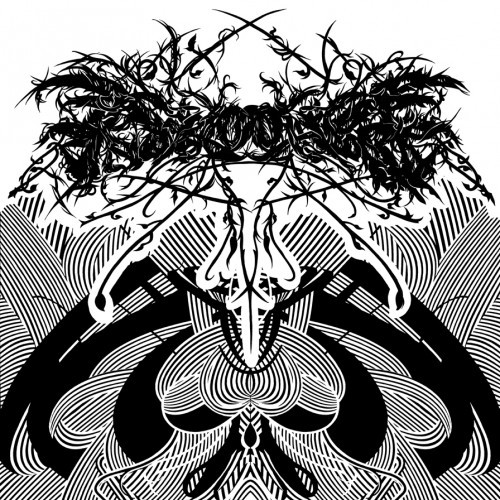
The Furor is a band from Western Australia that released three full-length albums between 2004 and 2011, after which the membership dwindled to a single individual, Disaster (Louis Rando). Undeterred by going it alone, he put out an EP in 2012 under The Furor name entitled Sermon of Slaughter, and it is indeed a sermon of slaughter. The exceptional quality of the EP is perhaps surprising, because Disaster’s forte is drumming.

He is a ridiculously good drummer and a true metal veteran, as witnessed by his current participation in bands such as Singapore’s Impiety and Australia’s Mhorgl, as well as his past membership in the likes of Dybbuk, Pagan, Pathogen, and Psychonaut. But it turns out that his talents are manifold, and he shows them off to good effect on Sermon of Slaughter.

The music reminds me of a cross between Marduk and Satyricon. It is unquestionably warlike. The songs generally move at a furious pace, with hell-ripping guitars, booming bass notes, and the kind of murderous percussion that makes full-auto machine-gun fire seem slothful by comparison. Disaster’s scalding, clawing vocals also remind me of Mortuus and Satyr — full of fire and venom. Continue reading »

May 132013
 

(BadWolf reviews the new album from The Dillinger Escape Plan.) 

Originality is The Dillinger Escape Plan’s stock-and-trade. Their blend of atonal mathcore and pop hooks still stands out a decade after they first perfected it, despite the run of knockoff bands. However unique their style remains, they’ve done fairly little to change the formula since their sophomore record, 2004’s Miss Machine. The two albums since more-or-less re-tread that amazing album’s ground, albeit with a few different experiments here and there. And every record since has been incrementally less brilliant. Until now.

2013’s One of Us Is the Killer is another stab at that classic album’s formula, but it comes closest to catching that record’s spark. While Dillinger always produce excellent records, they progress more like books of Bukowski poems than novels—by that I mean they’re often best digested a few random songs at a time. (I wonder how much time DEP spend on track-listing their albums.) And of course, as is often the case with experimental music, some songs work better as stand-alone pieces, and some don’t work at all.

Each song works on One of Us Is the Killer. It dials down the bullshit: only one laptop interlude a la Ire Works, and no six-plus-minute trudges—I expected the album to tack toward radio play after DEP signed to Sumerian Records, who seem more interested in pimping Asking Alexandria than making good metal these days, but I found myself pleasantly surprised. The record sounds more savage than Miss Machine by a hair’s breadth. Continue reading »

May 122013
 

Indricotheriinae are an extinct subfamily of giant, long-limbed, hornless rhinoceroses. They are the largest land mammals that have ever lived. Indricothere is also the name that Colin Marston gave a solo project that he used to record some songs he wrote before forming Behold… the Arctopus.

Indricothere’s first album (self-titled) came out in 2007. This morning I discovered to my surprise that Marston has just today released a second Indricothere album entitled II, which is available for purchase on Bandcamp.

I’ve been listening to the album, which is entirely instrumental, and it’s blowing my fuckin’ mind. There is no pithy way of describing it. Stylistically, its principal kinship is with technical death metal, but it’s part black metal, part prog, part post-metal, and part avant-garde, too. The music is dense, intricate, constantly changing, intensely interesting. Of course, it’s also a high-wire acrobatic performance that will drop jaws. Also, heads will bang. Continue reading »

May 072013
 

I certainly don’t pretend to be an historian of “groove metal” as a genre. But when I think about it at a high level, two evolutionary pathways come to mind. One line runs through bands such as Pantera and perhaps, in a more extreme vein, early Sepultura, encompassing music that’s primal, relatively stripped-down, visceral, generally mid-paced, and melodic. That line detoured through things like nu-metal and, in the more modern era, runs through bands such as Lamb of God.

I think of the second line as one that started with Meshuggah, a more rhythmically complex, highly syncopated, speedier, and less melodic kind of music that in the modern era branched off into sub-genres such as djent and the less easily classifiable kind of metal created by Gojira.

Sweden’s Deathember proudly carry the “groove metal” flag in their debut album Going Postal, but they represent an intersection of those two lines I’m hypothesizing. They tap into the infectious, primal appeal of the first line, but their music also incorporates unusual rhythmic patterns and technically demanding instrumental interaction of the kind that’s closer to the second line. It’s definitely not djent or any other form of overt Meshuggah worship, yet it’s highly percussive music, grounded in the power of beat and rhythm, while also incorporating infectious melodies. It’s a very appealing combination. Continue reading »

May 062013
 

(In this post TheMadIsraeli reviews the debut album by a Romanian band named Decease.)

Death-thrash is one of those sub-sub genres of metal I will be eternally in love with. The rancid, putrid vocals, the scorching riffs that mix thrash’s precision and technicality with death metal’s heft and skin-flaying speed, the non-stop assault of an old-fashioned thrash beat (or skank beat, as Suffocation call it), I’m just all bout’ it. I ran across the video for Decease’s single off their debut Exhort to Obliterate called “Atrocious Deeds”, and my ears were immediately hooked. After Islander shared that video in a round-up, the band was kind enough to hook us up with the album.

I’m glad they did. Decease have a lot going for them. Influences can be heard from early Kreator, early Sepultura, and Exhorder. The resulting sound is a blitzkrieg of surgical precision, raw intensity (balls to the wall, as it were), and a paradoxical sense of reckless abandon. The band is a three-piece, consisting of guitarist/vocalist Radu Vulpe, bassist Catalin Vulpe, and drummer George Alb.

The rusty-blade attack of the production, combined with the zealot-like attack of the riffs and unrelenting assault of the rhythm section, all topped off by Radu’s Chaos A.D.-era Sepultura death grunts, should send you into a whiplash-inducing trance. I would certainly hope so, considering we do usually favor the obscenely brutal and intense around here. Continue reading »

May 052013
 

Cognitive’s debut EP The Horrid Swarm really crossed  me up. As I started listening to it, I thought it was going to be one thing, and it turned out to be many things. By the time it ended, my head had been spun around, like that possessed chick in The Exorcist. You know, all the way around, but somehow still attached.

The opening track, “In the Form of A Drone”, is a speedy, brutal battering about the head and shoulders, a tech-death manifesto that proclaims itself with pummeling riffs, blasting drums, and skittering guitar leads, not to mention a harsh vocalist who bellows, roars, and barks like a demon hound quite convincingly.

The song even has a bass drop, a breakdown, and some slam chords woven into the mix. And like everything else on the EP, the music channels the power of compulsive groove even when the rhythms are changing rapidly and the notes are flying like bullets.

But looking back on it, I can see that the song included hints of something more to come — a couple of brief guitar solos that writhe and spiral, and whose prog-ish melodicism contrasts with all the surrounding brutishness. Continue reading »

May 042013
 

In April of this year a Belgian band named Disinterred released their first demo. They wrote us to see if NCS might review it. I made a mental note to check out the music. Unfortunately, it was a mental note instead of a real note. You see, mental notes depend on my mind, so at least half the time that means they’re fucked. Fortunately, yesterday a friend independently suggested that I check out Disinterred. This time I did it before I had time to forget.

How does this music work? The basics seem pretty simple. You figure out how to tune the guitars and apply the right distortion pedal (an HM-2 will do nicely), so the chords sound radioactive. This is a matter of technology and ear. I presume it helps to be possessed by an undead spirit. I’m pretty sure Disinterred are possessed.

You figure out that you want to go with up-tempo pacing, and you get a drummer who can hit that simple, old-school, d-beat, two-step kind of Swedeath drum thing . . . no blasting or double-bass needed. You find a vocalist who can get down really low but sound like he’s barking with a throat full of phlegm, or possibly blood. In the case of Disinterred, I’m pretty sure it’s blood. Is that it? Nope, it’s not.

You also need a guitarist who can deliver bursts of pure shred, like a welder’s torch that’s been opened wide and then dropped on the concrete and left to skitter around like a demented snake. You also want that vocalist to be able to elevate, get up into some ghastly shrieks, and hold them for  long time. Check.

Will that do it? Unh unh, not yet. Continue reading »

May 032013
 

(TheMadIsraeli reviews the new album from Malefice of Reading, England.)

Malefice are one of the only metalcore bands still worth listening to. Hailing from Britain, long time vets of the scene, their new album Five is exactly the kind of thing I was looking for. For the uninitiated, Malefice play a style of metalcore that, while old school (very KSE/Unearth/God Forbid), also incorporates quite a bit of love for thrash metal. The result has been a sound completely soaked in violence, jolting whiplash-inducing riffs, and circle-pit-inducing grooves.

The opener “V” pretty much speaks for the album. The galvanizing jackhammer of its verse is enough to get the blood pumping, but it’s the anthem of a chorus that really seals the deal. This is metalcore at its best, when it’s got that intensity, energy, and commitment to bruising the listener, whether being melodic or not. The rest of the music appropriately follows suit, all fast-as-fuck, balls-of-steel metalcore that borders on pure melodic death metal. The sound of Malefice has changed a little bit, though — they’ve tuned their guitars lower and their particular approach to riffs and melodies has definitely taken on a more epic, energetic feel. Continue reading »

May 022013
 

(Andy Synn reviews the latest album from Sweden’s Cult of Luna.)

To our shame we almost missed this one. I don’t know why. I’d conjecture that it was simply one of those cases where everyone here at NCS assumed that SOMEONE must be doing a review, right? And hence no-one did a review, a situation which, if left unremedied, would have been a huge failure on our part, and would have led (quite possibly) to many of you missing out on one of 2013’s densest and most rewarding musical experiences.

Loosely inspired and influenced by Fritz Lang’s “Metropolis”, the album manifests as a seething monolith of despair and discordance, incorporating sections of sublime beauty and haunting ambience (both trademarks of the Cult of Luna sound) into its grinding cacophony of heaving aggression and backbreaking heaviness.

The rigours of a concept album are often demanding, and have broken many a lesser band.  That Cult of Luna succeed (and succeed they most certainly do) attests to just how perfectly their sound and vision fits the themes at hand.

Life as a mechanism. Existence as industry. Loneliness. Alienation. Dehumanisation. These are themes that the band have either flirted with before, or been slowly drifting towards for some time – depending on where you stand and how you look at things. Continue reading »

May 012013
 

(DGR wrote this review of the new album by Swedish group Quest of Aidance. It’s scheduled for release on June 3 by Pulverised Records.)

Quest Of Aidance’s Misanthropic Propaganda is one of the few albums out there that can effectively be described as a blur. It’s a sometimes incomprehensible, speed-focused chunk of deathgrind that at fourteen tracks still feels incredibly short – if not just because pretty much every song on it moves at breakneck speed and rarely slows down for anything.

Most of us are probably familiar with the 40-second smash-and-grab of a song known as “Anyx” that was the band’s recent premiere (outside of a couple of demos), but it hardly represents the rest of this disc. In fact, it feels almost like no one song really represents Misanthropic Propaganda. It feels like fourteen different, really fast experiments in death metal with the occasional leaning toward grind. It’s an album that at times can feel a little too familiar to those who know the roster of musicians that make up the band, but is still interesting and varied enough to be appealing.

Misanthropic Propaganda is a rare breed because it is one of those albums that doesn’t make an immediate first impression. Most albums you can get a spin or two in and you’ll find yourself in love-it-or-hate-it mode by that point, but I found myself acknowledging that the music was enjoyable but not settling on a lasting opinion. However, I have been drawn back to the disc because something about it hinted at far greater things, as if buried beneath those layers of blasts and walls of guitars there would always be something new to discover. It has – for lack of a better term – pulled me into its grip. Continue reading »